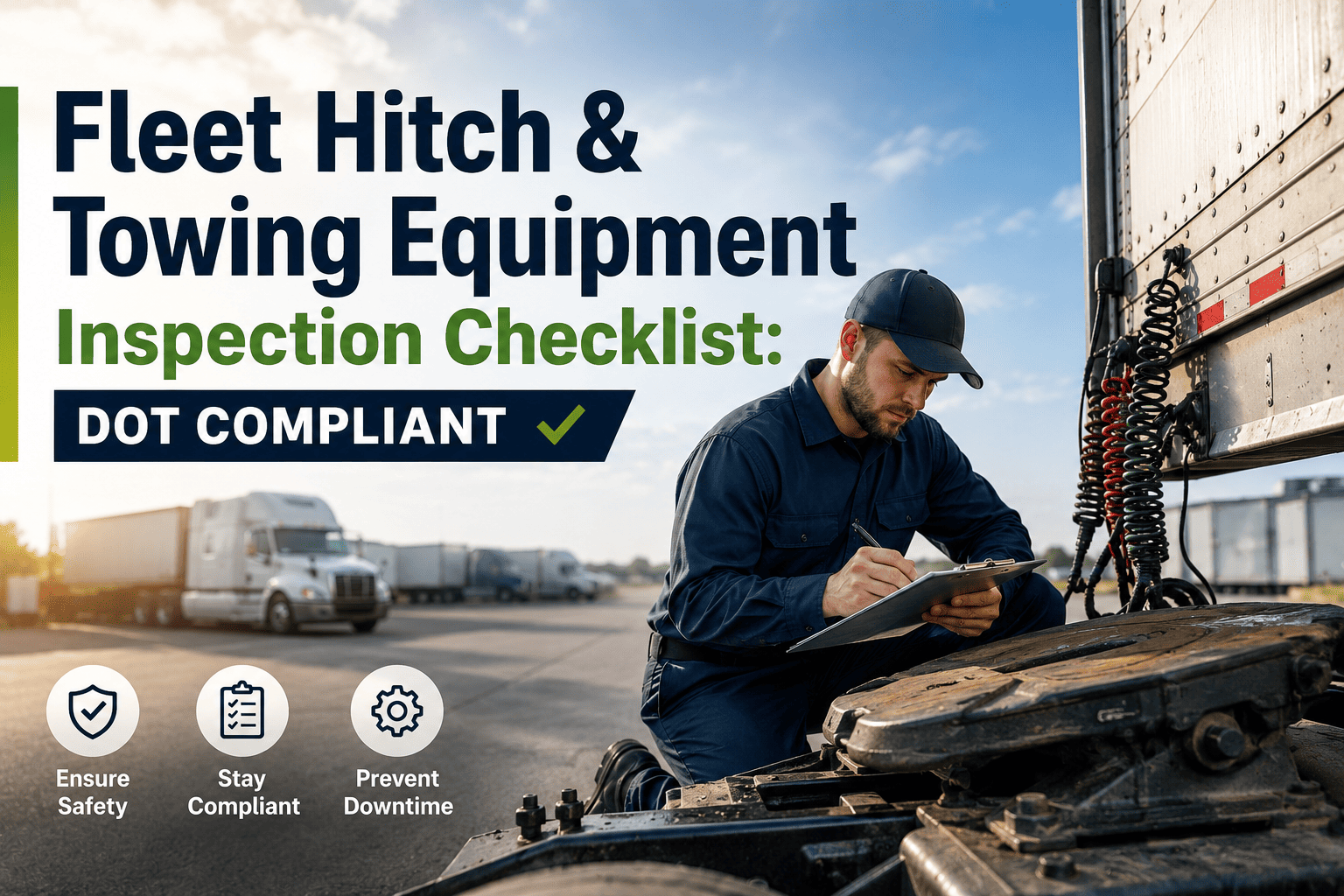
In 2026, only 7% of motor carriers pass a DOT compliance review without a single violation. The other 93% face fines, out-of-service orders, or worse. The single most common reason vehicles get pulled off the road during roadside inspections is something that should have been caught before the truck ever left the yard — brake defects, lighting failures, tire issues, and missing documentation that a proper pre-trip inspection would have identified in minutes. FMCSA estimates that DVIRs help prevent approximately 14,000 accidents annually through early defect identification, yet incomplete or missing inspection reports remain one of the most frequently cited violations nationwide. A single out-of-service violation averages $4,200 in penalties, and under the overhauled CSA scoring system now splitting Vehicle Maintenance into two categories — standard maintenance and "Driver Observed" violations — what your drivers catch during their walkaround matters more than ever to your safety rating. This checklist gives your drivers and fleet managers every inspection point required by 49 CFR 396.11 and 392.7, organized by the 7-point walkaround method, with the exact defects that trigger out-of-service orders highlighted so nothing gets missed. Start your free trial with Oxmaint to digitize every pre-trip inspection, auto-generate compliant DVIRs, and route defects to maintenance instantly — before they become roadside violations.
FMCSA Compliance 2026
Fleet DOT Pre-Trip Inspection Checklist: FMCSA Compliant 2026
The complete 7-point walkaround inspection checklist covering every FMCSA-required component — brakes, tires, lights, steering, suspension, coupling, and cab systems. Organized for CDL drivers, built for fleet compliance managers, and aligned with the 2026 CSA scoring overhaul.
93%Carriers Fail DOT Audit with at Least One Violation
$4,200Average Penalty Per Out-of-Service Violation
14,000Accidents Prevented Annually by DVIRs (FMCSA)
15-30 minTime for a Thorough CDL Pre-Trip Inspection
What FMCSA Requires Before Every Trip
Under 49 CFR 392.7, a driver may not operate a commercial motor vehicle unless satisfied that its parts and accessories are in good working order. Under 49 CFR 396.13, before driving, a driver must review the last DVIR and sign acknowledgment that any reported defects were repaired. These are not optional best practices — they are federal requirements that FMCSA enforces through roadside inspections, compliance reviews, and the CSA Safety Measurement System. The 2026 CSA overhaul now splits Vehicle Maintenance into two separate compliance categories, making driver-observed defects during walkaround inspections directly impact your carrier safety score.
49 CFR 396.11 (DVIR Requirement)
Critical
49 CFR 392.7 (Safe Operating Condition)
Critical
49 CFR 396.13 (Previous DVIR Review)
Required
CSA 2026 (Driver Observed Category)
New
The 7-Point Walkaround: Complete Inspection Checklist
The 7-point walkaround method ensures systematic coverage of every critical vehicle system. Walk around the vehicle in a specific pattern — front, driver side, rear, passenger side, engine compartment, cab interior, and under-vehicle — to ensure nothing is missed. Each point below lists the specific components FMCSA inspectors check during roadside inspections. If your drivers inspect these same items before departure, they will catch the defects that cause out-of-service orders before they leave the yard.
7-Point DOT Pre-Trip Walkaround Checklist49 CFR 396
Point 1
Front of Vehicle
Headlights (high/low beam operation and alignment), front turn signals, clearance lights, windshield condition (no cracks in wiper sweep area), wiper blades and washer fluid, front bumper and license plate, air dam condition.
Lighting #1 OOS Trigger
Point 2
Driver Side
Tire condition (tread depth minimum 4/32" steer, 2/32" drive), tire inflation, lug nuts tight, wheel seals for leaks, brake drum/rotor condition, brake hose and lines, suspension components (springs, shocks, U-bolts), fuel tank cap and leaks, exhaust system, side marker lights and reflectors.
Brake + Tire OOS
Point 3
Rear of Vehicle
Tail lights, brake lights, turn signals, clearance lights, reflectors and reflective tape, license plate light, rear bumper/ICC bar (underride guard), cargo doors secured, mud flaps present and undamaged.
Lighting + Reflector OOS
Point 4
Passenger Side
Mirror same checks as driver side: tire condition, inflation, lug nuts, wheel seals, brake components, suspension, fuel tank, exhaust, side markers, and reflectors. Check for fluid leaks under frame. Verify all lights functional.
Brake + Tire OOS
Point 5
Engine Compartment
Engine oil level, coolant level, power steering fluid, belt condition (cracks, fraying, tension), hose connections, wiring for chafing or exposed conductors, air compressor and lines, alternator, water pump, fan blade condition, leaks of any fluid.
Fluid Leak Violation
Point 6
Cab Interior + Controls
Gauges functional (oil pressure, air pressure, coolant temp, voltmeter), mirrors adjusted, horn operational, windshield wipers/defroster, seatbelt, parking brake, air brake tests (build-up rate, governor cut-out 120-140 PSI, low-air warning at 60 PSI, spring brake pop-out at 20-45 PSI).
Air Brake Test Critical
Digitize Your Pre-Trip Inspections Today
Oxmaint replaces paper checklists with guided digital inspections that auto-generate FMCSA-compliant DVIRs, route defects to maintenance instantly, and create an audit-ready compliance trail — reducing inspection time by 60% while catching more defects.
Brake System Deep Dive: The #1 Out-of-Service Trigger
Brake violations are the leading cause of out-of-service orders in roadside inspections. FMCSA requires specific air brake tests performed in sequence before every trip. Failing these tests — or skipping them — is the fastest path to a roadside violation and a hit on your CSA safety score. Penalties for brake-related violations average $4,200 per incident, with repeat violations escalating to $19,277 for operating an out-of-service vehicle.
1
Build Pressure
Engine running, build air to governor cut-out: 120-140 PSI. Pressure should build from 85-100 PSI in 45 seconds or less.
2
Governor Test
Air compressor should cut out at governor setting. Note the cut-out PSI. Air should not continue building past governed pressure.
3
Leak-Down Test
Engine off, release parking brake, apply foot brake fully. Hold for 1 minute. Loss must not exceed 3 PSI (single) or 4 PSI (combination).
4
Low-Air Warning
Fan brakes to reduce air pressure. Low-air warning buzzer/light must activate before 60 PSI. If it does not, vehicle is out-of-service.
5
Spring Brake Pop
Continue fanning. Parking brake valve (tractor protection) must pop out between 20-45 PSI. Confirms emergency braking system functional.
Top Violations That Trigger Out-of-Service Orders
Understanding the most frequently cited violations helps drivers know exactly what to look for during pre-trip inspections. These are the component failures and defects that roadside inspectors cite most often — and every one of them is catchable during a proper walkaround. Under the 2026 CSA overhaul, "Driver Observed" violations that should have been caught during pre-trip now carry their own compliance category score.
OOS Critical
Brake System Defects
Most Common OOS Violation
Worn brake pads/shoes, air leaks in lines or chambers, cracked drums or rotors, out-of-adjustment brakes, inoperative parking brake. Manual inspections miss 35-45% of critical brake defects without guided checklists.
Pad WearAir LeaksAdjustmentDrums
OOS Critical
Tire and Wheel Failures
Second Most Common OOS
Tread depth below minimum (4/32" steer axle, 2/32" drive), exposed cord or belt material, flat or under-inflated tires, loose or missing lug nuts, cracked or broken wheel rims, leaking wheel seals.
Tread DepthInflationLug NutsRim Cracks
High Frequency
Lighting and Reflector Issues
Easiest to Prevent
Inoperative headlights, tail lights, turn signals, or clearance lights. Missing or damaged reflectors and reflective tape. Cracked or broken lens covers. These are the simplest defects to catch and fix during pre-trip.
HeadlightsTail LightsSignalsReflectors
Compliance
Missing or Incomplete DVIRs
Documentation Violation
No DVIR on file, unsigned previous-day report, defects reported but no repair verification signed by driver, incomplete inspection forms missing required fields. Digital DVIRs through
Oxmaint eliminate all documentation gaps.
Missing DVIRNo SignatureNo Repair NoteIncomplete
Mechanical
Steering and Suspension
Safety-Critical
Loose steering linkage, leaking power steering, worn or broken leaf springs, cracked U-bolts, shifted axles, damaged shock absorbers, worn king pins or ball joints exceeding tolerances.
LinkagePS FluidSpringsShocks
Required
Safety Equipment and Cargo
Often Overlooked
Fire extinguisher (charged, mounted, accessible), three reflective triangles, spare fuses. Cargo securement — tie-downs, straps, chains properly tensioned per FMCSA 393.100-393.136. Load not shifting or protruding.
ExtinguisherTrianglesFusesTie-Downs
Trailer/Combination Vehicle Additional Checks
If pulling a trailer, these additional inspection points are required beyond the power unit walkaround. Coupling device failures are a top-tier safety violation that can result in immediate out-of-service orders and significant CSA score impact.
A
Fifth Wheel Coupling
Kingpin fully engaged in fifth wheel jaw, locking mechanism secured, release handle in locked position, no visible cracks in fifth wheel plate, mounting bolts tight, proper greasing.
B
Air and Electrical Lines
Glad hands properly connected and sealed (no air leaks), service and emergency air lines not rubbing or kinked, electrical cord connected and all trailer lights functional, pigtail not dragging.
C
Trailer Brakes and Tires
All trailer axle brakes functional, tread depth minimum 2/32", proper inflation, no damage to rims, wheel seals not leaking, brake adjustment within tolerance, ABS light functional on dash and trailer.
D
Landing Gear and Frame
Landing gear fully raised and crank handle secured, cross-members and frame rails no visible cracks or damage, mud flaps present, reflective tape intact, ICC bumper secure.
Turn Every Pre-Trip Into a Compliance Record
Oxmaint's mobile inspection app guides drivers through every walkaround checkpoint, captures photo evidence of defects, auto-generates FMCSA-compliant DVIRs, and routes critical issues to maintenance before the truck leaves the yard. Reduce violations, protect your CSA score, and create an audit trail that survives any compliance review.
Paper DVIRs vs. Digital Inspections: The Compliance Gap
Paper DVIRs
The Compliance Risk
Forms go missing, handwriting illegible, defects reported but repair verification unsigned, no photo evidence, maintenance notified hours or days later, impossible to prove actual inspection occurred during audits.
70-80% Defect Detection
Digital DVIRs
The Compliance Solution
Guided checklists prevent skipping items, photo evidence proves inspection occurred, defects route to maintenance instantly, required fields enforce completeness, timestamped audit trail survives any review.
95-99% Defect Detection
Record Retention: What FMCSA Requires You to Keep
Daily DVIRs
Retain for minimum 3 months
Include defects found and repairs made
Driver signature and date required
Repair verification signed by driver
Electronic DVIRs accepted by FMCSA
Annual DOT Inspections
Proof of inspection retained 14 months
Copy must be on vehicle or available
Covers all 49 CFR 396 Appendix A items
Brake, steering, suspension, coupling, frame
Performed by qualified inspector only
Maintenance Records
12 months while vehicle in service
6 months after vehicle leaves service
All repairs and corrective actions documented
Parts replaced with dates and descriptions
Oxmaint auto-archives all records digitally
Frequently Asked Questions
Q. Is a pre-trip inspection legally required before every trip?
Yes. Under FMCSA 396.13, before driving a CMV, the driver must be satisfied the vehicle is in safe operating condition and must review the previous DVIR to confirm reported defects were repaired. Skipping pre-trip inspections can result in roadside citations, out-of-service orders, CSA score impacts, and increased liability if an accident occurs with an uninspected vehicle.
Q. How long should a proper pre-trip inspection take?
A thorough pre-trip inspection takes 15-30 minutes for experienced CDL drivers depending on vehicle type. Combination vehicles take longer than straight trucks due to additional trailer and coupling checks. Rushing or shortcutting inspections leads to missed defects that cause roadside violations. Digital inspection tools can reduce this to 5-10 minutes while catching 40% more defects.
Try Oxmaint free to see how digital inspections save time while improving compliance.
Q. Are electronic DVIRs accepted by FMCSA?
Yes. Electronic DVIRs are fully accepted when they capture all required information, include driver signatures/timestamps, and are retained per FMCSA requirements. Digital DVIRs through Oxmaint include required fields that prevent incomplete submissions, photo evidence, and instant routing to maintenance — creating stronger compliance documentation than paper forms.
Q. What changed in 2026 CSA scoring for vehicle maintenance?
FMCSA split the Vehicle Maintenance BASIC into two categories: standard "Vehicle Maintenance" for issues found during routine maintenance or Level 1 inspections, and "Vehicle Maintenance: Driver Observed" for violations drivers should reasonably catch during walkaround inspections. This means defects that your drivers miss during pre-trip now directly impact a separate compliance category in your CSA score — making consistent, thorough pre-trip inspections more important than ever.
Q. How does Oxmaint help with DOT pre-trip compliance?
Oxmaint provides guided digital inspection checklists on mobile devices that walk drivers through every FMCSA-required checkpoint. Photo capture proves inspection occurred, required fields prevent skipping items, defects auto-generate maintenance work orders with priority levels, and every inspection creates a timestamped DVIR that routes to your compliance archive. Fleet managers see real-time dashboards showing inspection completion rates across all vehicles and drivers.
Schedule a demo to see the inspection workflow in action.