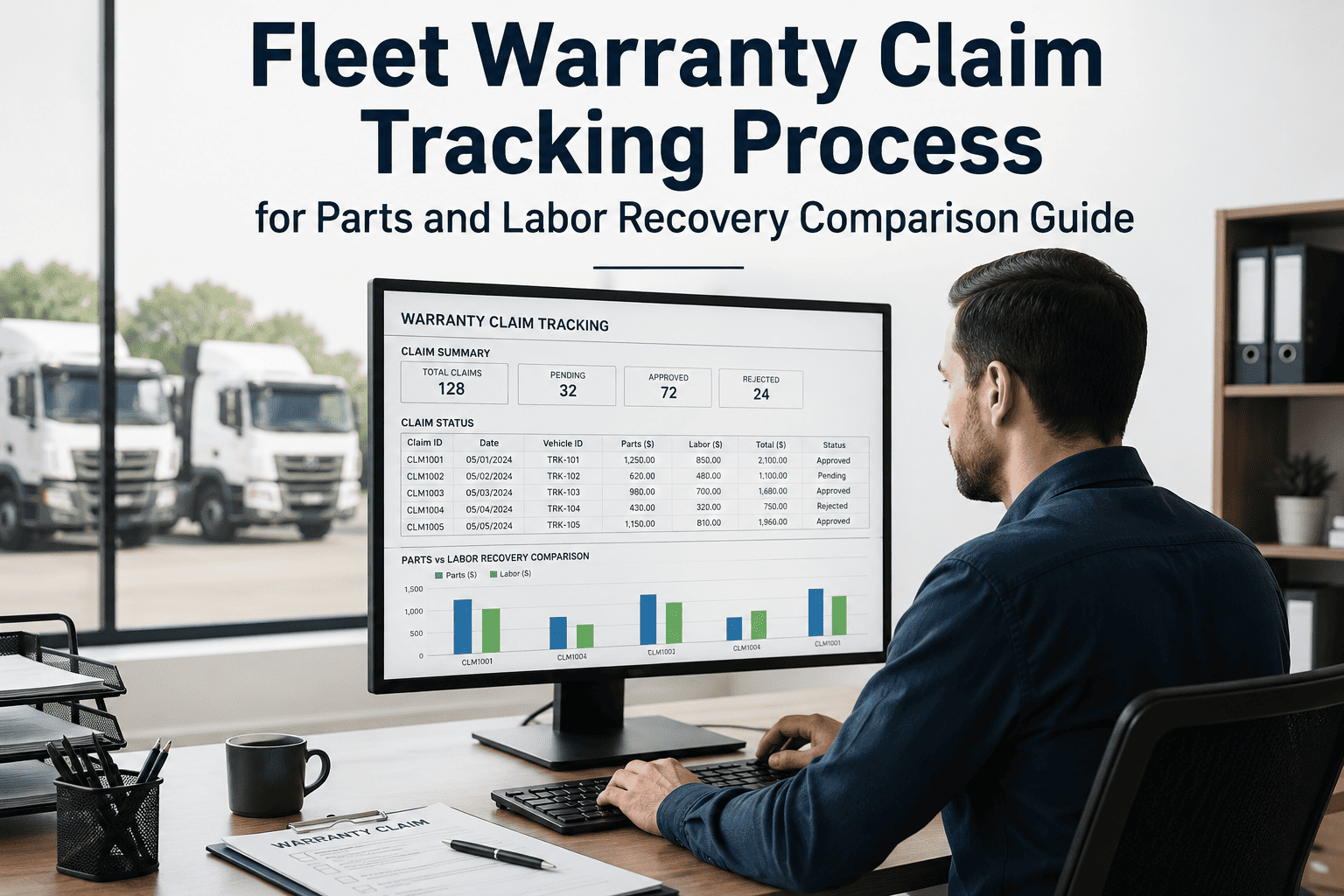
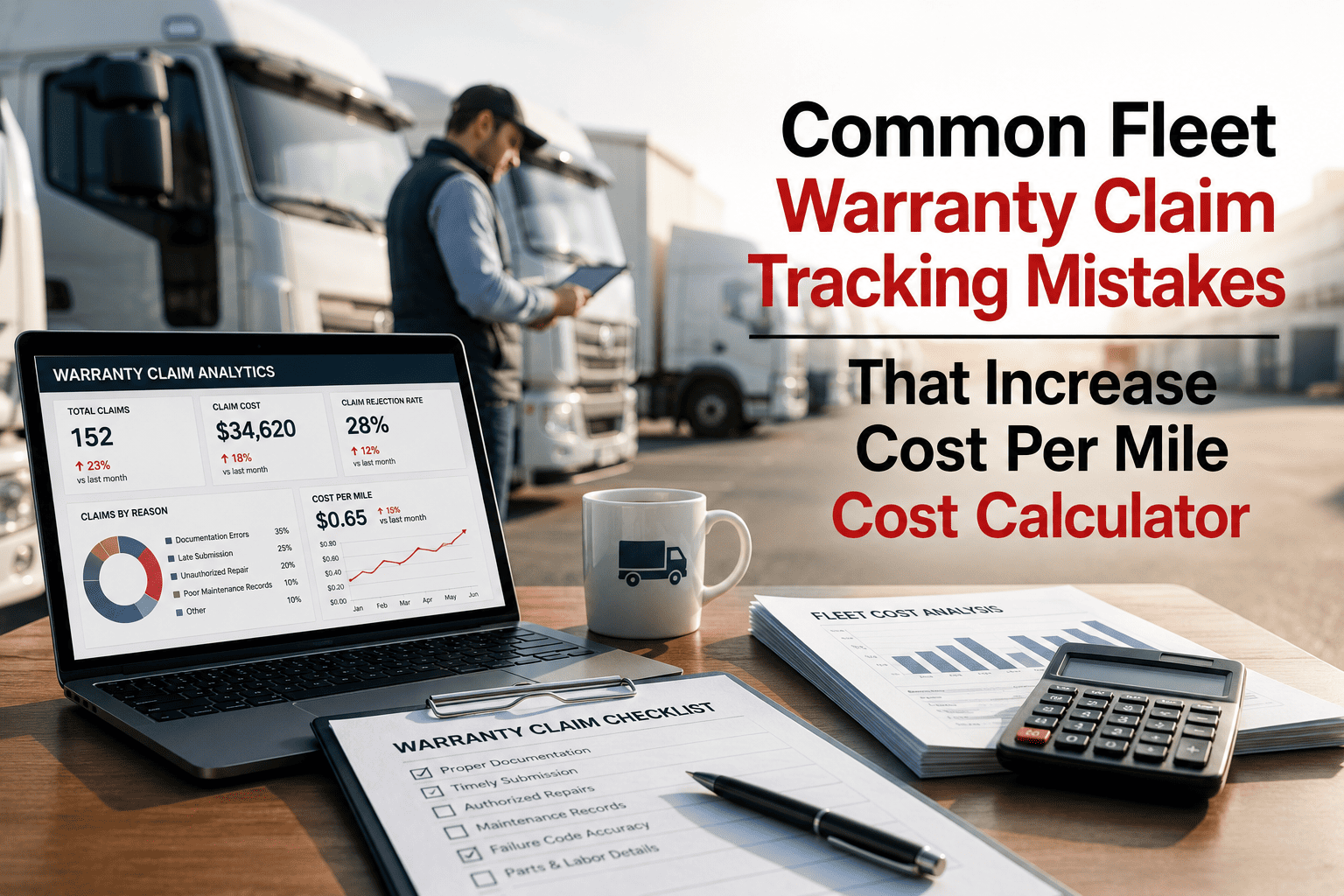
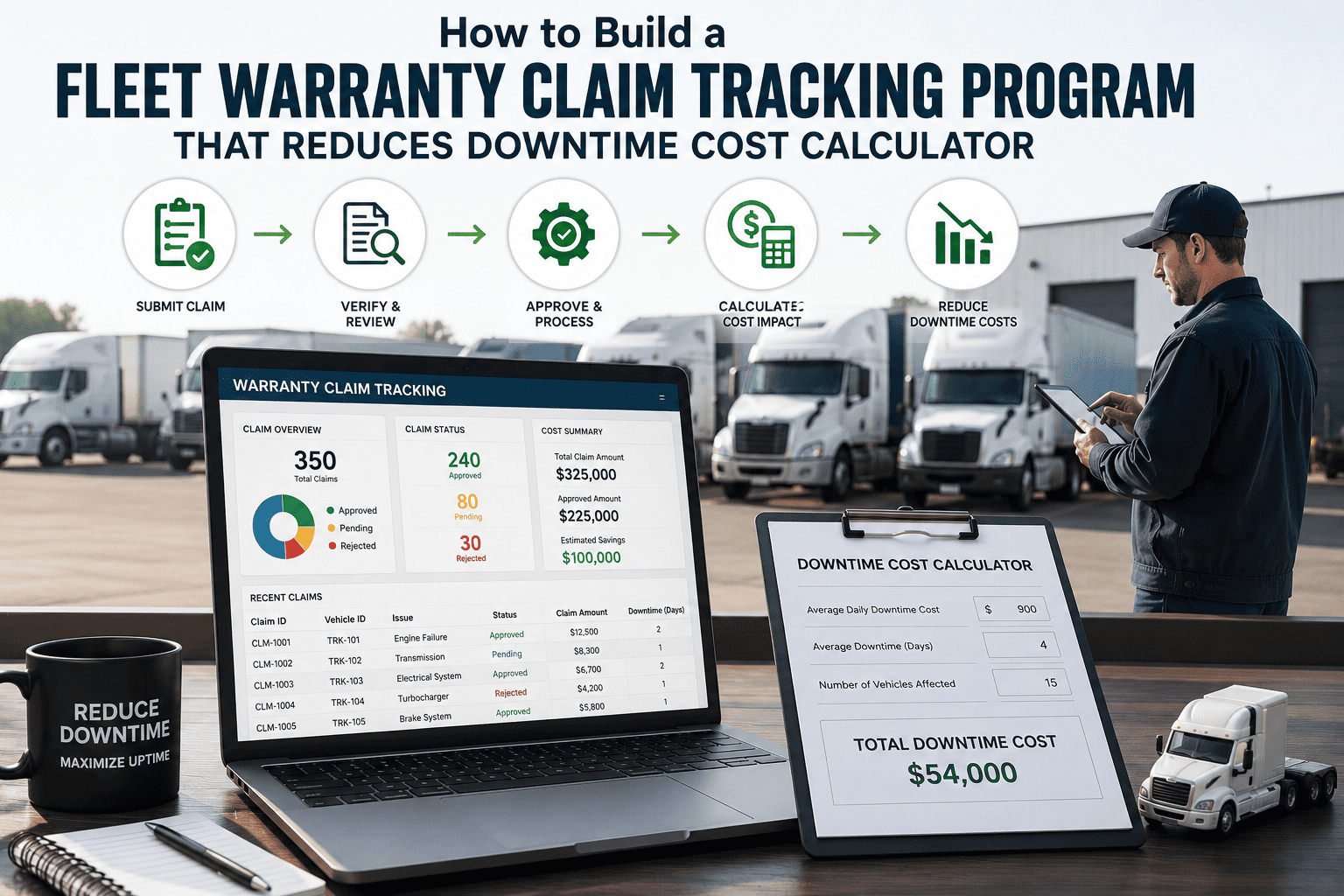
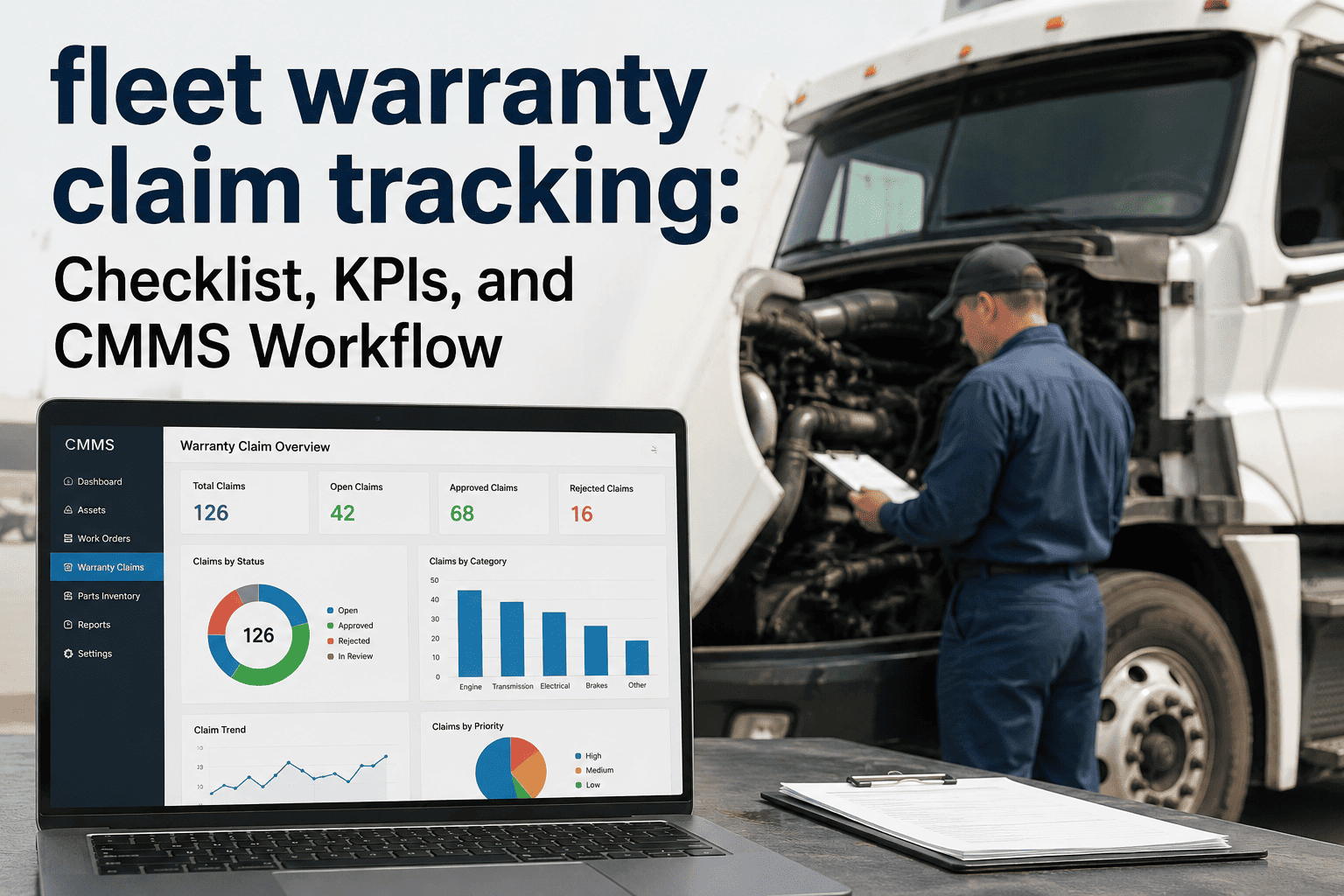
A fleet that files 200 warranty claims in a year typically recovers between 45 and 60 percent of what it could have claimed if the process had worked properly. The other 40 to 55 percent disappears into three black holes: claims that expired before they were filed, claims that were denied for missing documentation that the technician simply did not capture, and claims where the parts-and-labour split was misallocated and the OEM only paid for half. The cost of these gaps on a 100-truck fleet is typically $80,000 to $140,000 annually — not from bad warranty terms but from a tracking process that loses information between the bay and the claim form. The comparison guide below maps the warranty claim tracking process step by step against the manual baseline, names the four points where money leaks out, and shows the digital workflow that lifts recovery by 10 percent or more — see how it runs against your fleet's claim mix with OxMaint's warranty claim tracking module.
Warranty Claim Tracking · Parts & Labour Recovery Comparison
Why 40 Percent of Recoverable Warranty Dollars Never Reach Your Bank Account
Manufacturer warranty money sits in a tracking process most fleets cannot describe. The comparison below names every step where dollars leak — and the difference between the manual process and the digital process where they do not.
10+%
Recovery uplift from digital warranty tracking
30-90d
Typical OEM claim filing window
$300K+
Monthly recovery for large fleets with proper tracking
Side-by-Side: Manual Process vs Digital Workflow
Same OEM, same warranty terms, same fleet. Two tracking processes. One recovers the money, one does not.
Manual Process
Step 1 · Repair raised
Technician opens work order on paper or local spreadsheet. Warranty eligibility unknown until someone checks the binder.
Risk: WO opens with no warranty flag — covered repair invoiced as customer-paid
Step 2 · Repair performed
Tech completes the repair. Old part may or may not be saved. Labour hours estimated, not stamped. Repair narrative written from memory at end of shift.
Risk: Failed part discarded — OEM requires inspection on most claims
Step 3 · Claim packaged
Warranty admin gathers WO, parts invoice, diagnostic codes, and maintenance history from three or four separate systems. Gaps backfilled from memory.
Risk: Package incomplete — denial reason "insufficient documentation"
Step 4 · Claim filed
Admin manually transcribes claim into OEM portal. Filing date may exceed 30 to 90 day window if claim sat in a queue.
Risk: Filing window missed — automatic denial regardless of merit
Step 5 · Outcome tracked
Approval, partial pay, or denial logged in a spreadsheet. Reimbursement reconciliation to original WO done quarterly, if at all.
Risk: Partial payments not contested — labour rate shortfalls written off
Digital Workflow
Step 1 · Repair raised
System auto-flags warranty eligibility against asset VIN, mileage, and date. Tech sees "WARRANTY" badge on the WO before opening the bay door.
Outcome: No covered repair starts without the warranty flag visible
Step 2 · Repair performed
Tech captures failed part photo, diagnostic codes, before/after images, and labour hours from the mobile app. Old part tagged for warranty hold.
Outcome: Claim package built during the repair, not after
Step 3 · Claim packaged
System auto-assembles WO, parts invoice, maintenance history, and photos into one claim record. PM compliance check runs automatically.
Outcome: Package complete on day of WO close, ready to submit
Step 4 · Claim filed
Claim submitted within 24 to 48 hours of WO close. Filing window automatically tracked against OEM-specific rules. Aging alerts fire at 75 percent of window.
Outcome: Zero claims expire — every claim filed inside its window
Step 5 · Outcome tracked
Approval, partial pay, denial linked back to the original WO automatically. Partial-pay shortfalls trigger appeal workflow. Denial reasons feed back into prevention.
Outcome: Every partial payment audited, every shortfall appealed
The Claim Lifecycle in One Picture
Every warranty claim moves through the same six gates. Each gate has a specific time pressure and a specific document requirement. Miss any one and the recovery is at risk.
Day 0
Eligibility Check
VIN, mileage, in-service date validated against warranty terms before WO opens
Day 0-2
Evidence Capture
Failed part photo, diagnostic codes, labour hours stamped at the bay
Day 2-5
Package Assembly
WO, parts invoice, PM compliance, history bundled into one claim record
Day 5-7
Submission
Claim filed inside OEM portal or EDI within window — typically 30 to 90 days
Day 7-45
OEM Review
Factory has 30 days typical to review. Information requests handled inside 48 hours
Day 45-60
Settlement
Approved, partial-paid, or denied. Shortfalls appealed. Reimbursement matched to WO
Stop leaving OEM money on the table
Lift Your Warranty Recovery Rate by 10 Percent or More — Inside 60 Days
OxMaint's warranty module flags eligibility before the WO opens, captures evidence during the repair, and tracks every claim through to settlement. See the lift on your fleet's specific claim mix.
The Five Reasons Claims Get Denied — Ranked
Denials are not random. They cluster into five categories that account for over 90 percent of denied claims. Knowing the cluster is half the prevention.
D1
42 percent
Missing or incomplete documentation
Failed part not saved, no diagnostic photos, repair narrative thin. Prevented by mobile evidence capture at the bay.
D2
21 percent
Filing window missed
Claim sat in admin queue past the OEM deadline. Prevented by auto-aging alerts at 75 percent of window.
D3
15 percent
PM compliance not demonstrated
OEM requires documented PM history to approve covered repairs. Prevented by central PM logging that exports as proof.
D4
14 percent
Driver or operational fault classification
OEM determines wear was abuse-driven, not defect. Reduced by driver score data attached to claim record.
D5
8 percent
Coverage misinterpretation
Repair filed under wrong warranty type — bumper-to-bumper vs powertrain vs Tier 2 supplier coverage. Prevented by automated eligibility logic.
Parts vs Labour Recovery: Where the Numbers Diverge
Parts warranty recovery is mostly straightforward — the OEM pays for the replacement part. Labour recovery is where fleets get squeezed. The table below shows the typical recovery gap by claim type.
| Claim Category |
Parts Recovery Rate |
Labour Recovery Rate |
Common Gap |
| Engine major component |
92 percent |
68 percent |
OEM flat-rate labour book under-pays actual shop hours |
| Transmission and driveline |
88 percent |
62 percent |
Diagnostic time often excluded from covered labour |
| Aftertreatment (DPF, DEF) |
85 percent |
55 percent |
Sensor cascade failures partially covered, partially denied |
| Electrical and electronic |
76 percent |
48 percent |
Troubleshooting time rarely covered; flat-rate well below actual |
| Tier 2 supplier components |
71 percent |
28 percent |
Supplier covers part replacement only; labour and downstream damage excluded |
| Brake system components |
68 percent |
35 percent |
Wear vs defect dispute; PM history determines outcome |
Frequently Asked Questions
How quickly can a fleet realistically lift its warranty recovery rate?
Filing-discipline gains show up in the first 30 days. Evidence-capture gains take 60 to 90 days as technicians adapt to mobile capture. Partial-pay appeal workflow shows up in the second quarter. Most fleets see double-digit improvement inside 6 months.
Do OEMs treat digitally-filed claims differently from paper claims?
Most OEMs prefer digital because it reduces their adjudication cost. Complete digital packages with photos, diagnostics, and PM proof typically clear review faster — top automotive TPAs resolve in 1 to 2 days versus 3 to 6 for paper.
Book a demo to see digital claim packaging live.
What about claims against Tier 2 suppliers, not the OEM?
Tier 2 supplier claims are tracked separately because they have different coverage rules — often parts-only, no labour, no downstream damage. The system maintains separate claim records and recovery tracking for each supplier, with their specific terms applied automatically.
How is partial payment handled — what if the OEM pays $300 on a $1,000 claim?
Every partial payment is reconciled to the original WO and the shortfall flagged for appeal. The most common partial-pay reason is flat-rate labour book under-paying actual shop hours, which often succeeds on appeal with documentation. Try the workflow at
app.oxmaint.ai.
Can the system work with our existing warranty admin team or does it replace them?
It augments — admins move from paperwork assembly to appeal management and supplier relationships. One Trimble customer cut processing time from 20 minutes to under 2 minutes per WO, freeing 400 hours per year for higher-value claim work.
Every claim filed, every dollar tracked
Run the Warranty Recovery Process That Actually Recovers the Warranty
From eligibility flag at WO open to appeal on partial pay — OxMaint runs the digital workflow that lifts recovery 10 percent or more on your fleet's existing claim mix.