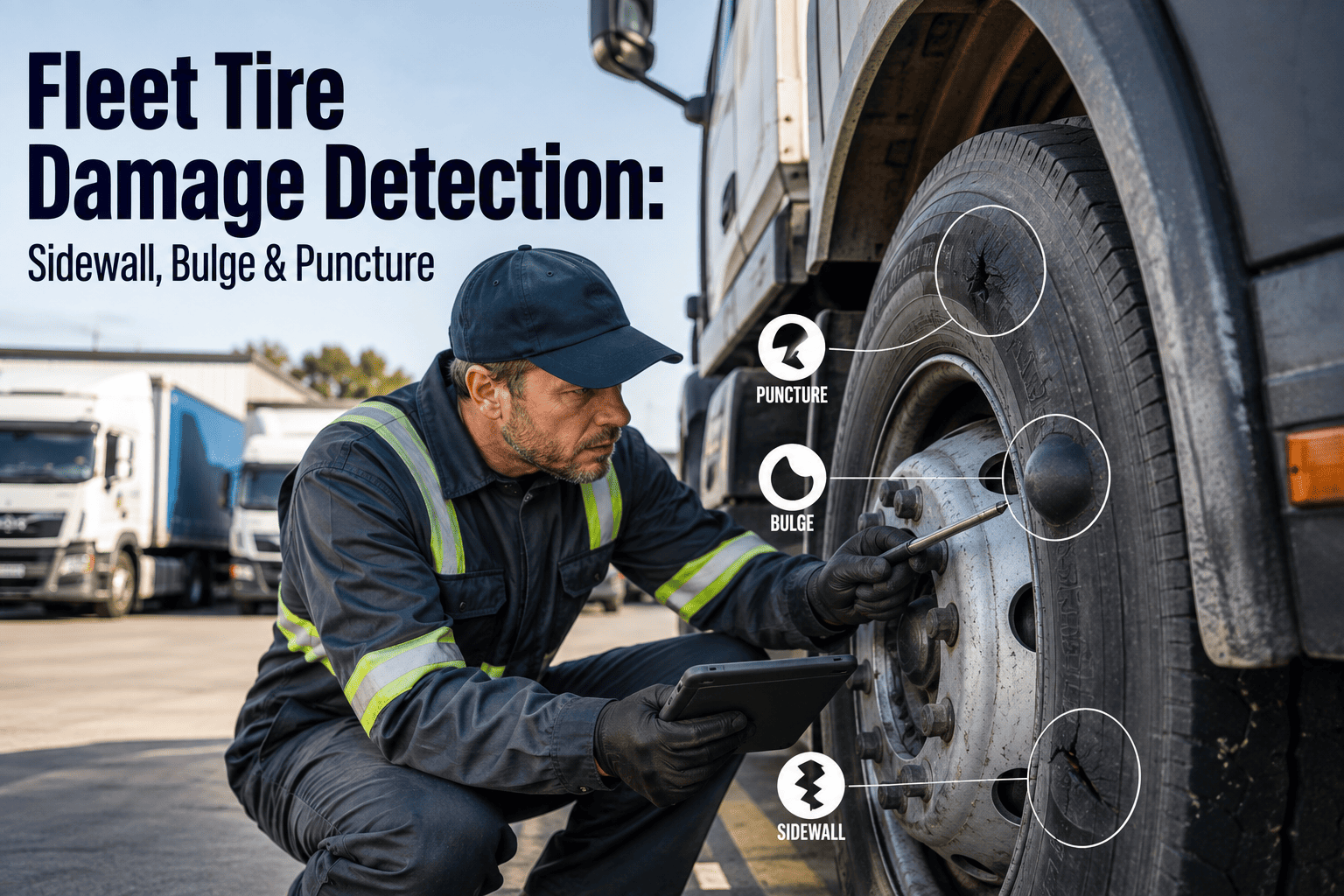
A sidewall bulge gives no warning before it fails — no slow leak, no vibration, no dashboard alert. It sits quietly on the outer wall of the tire until the moment it lets go, usually at highway speed with a loaded trailer behind it. Drivers are asked to catch this during a pre-trip walkaround that runs ten to fifteen minutes and covers over a hundred check points, on a tire surface that is often caked in road grime and parked against a curb in low light. Manual inspection catches an obvious flat. It misses the sidewall cut that has not bulged yet, the puncture sitting a few millimetres from failure, and the bulge forming on the inside dual that no driver ever walks around to see. Sign in to OxMaint to put an AI vision scan on every yard exit before that tire ever reaches the highway.
Fleet Tire Damage Detection · AI Vision Scanning · OxMaint AI
Sidewall Bulges, Cuts & Punctures — Flagged on Every Yard Exit, Before a Driver Rolls
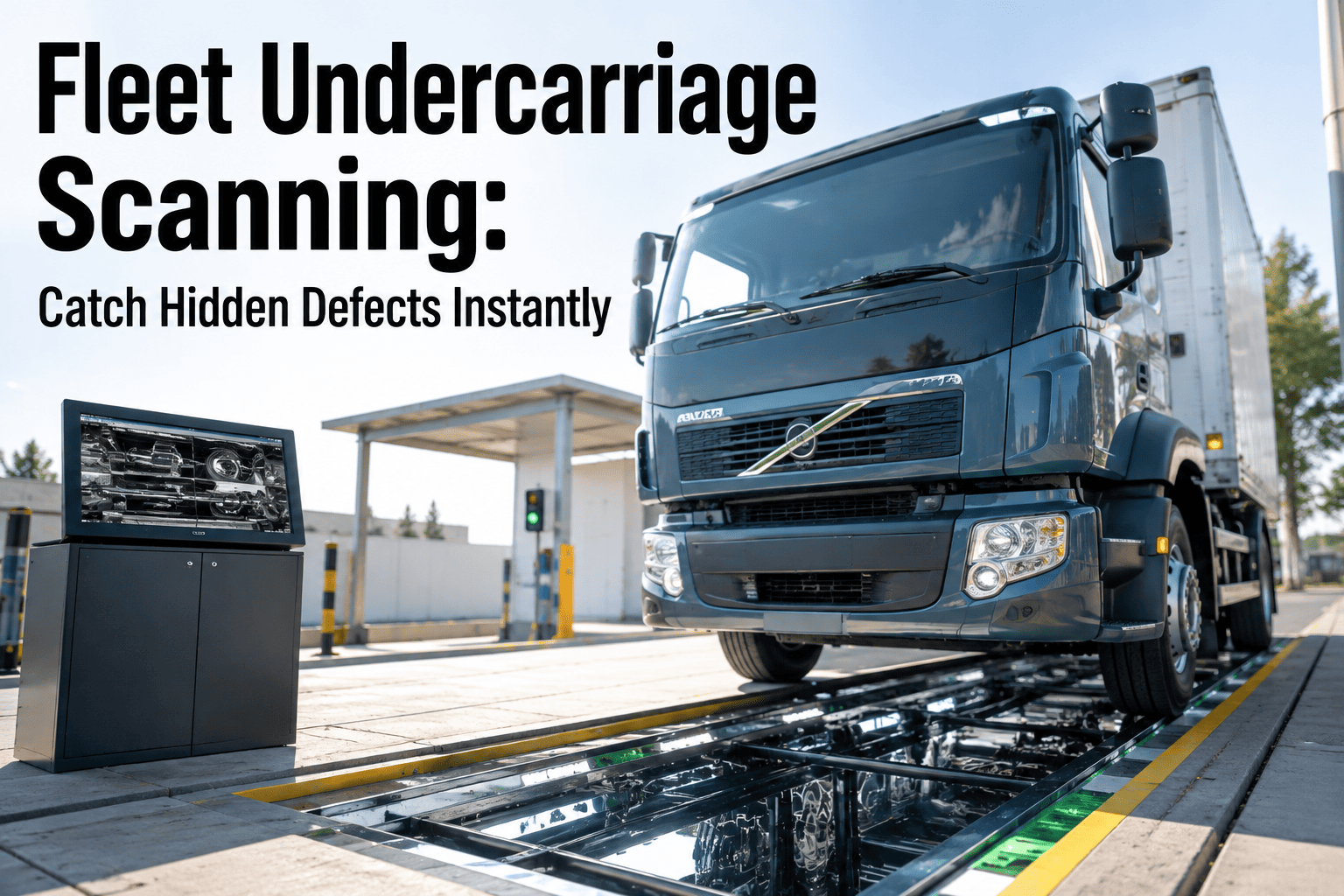
OxMaint's AI vision gate scans every tire position on every vehicle as it leaves the yard — sidewall bulges, cuts, punctures, cracking, and uneven tread wear are flagged, severity-ranked, and routed to a work order automatically, without a technician walking the row with a flashlight.
53%
Share of DOT out-of-service violations during roadside inspections that trace back to tire condition
20 sec
Time for OxMaint's AI vision gate to scan all tire positions on a loaded tractor-trailer at exit
$6,200
Typical cost of one blowout once roadside service, downtime, and missed-delivery penalties are counted
4x
More sidewall bulges and cuts flagged by AI vision scanning than a standard driver walkaround catches
72 hrs
The typical gap between a sidewall impact and the blowout that follows. A curb strike or pothole hit can shear the internal cords of a tire without leaving a visible mark for hours or days — the sidewall looks fine at the morning walkaround and fails on the interstate that afternoon.
Sign in to OxMaint to catch impact damage the same day it happens, not the day it fails.
The Four Tire Damage Types OxMaint's AI Vision Flags at Every Exit
SWB — Sidewall Bulge
Sidewall Bulges & Bubbles — Structural Failure Waiting on a Trigger
A bulge means the internal cords have already broken and only the outer rubber is holding air pressure back — it cannot be repaired, only replaced, and it can fail without any further warning. OxMaint's AI vision compares every scanned tire against its own baseline sidewall curvature and flags any outward swell instantly, tagging the exact position on the vehicle so the flagged tire is pulled before dispatch instead of being reported by a driver on the shoulder.
Key Detection Parameters
Curvature deviation threshold — flags any outward swell beyond baseline sidewall radius
Position tagging — bulge location mapped to steer, drive, or trailer axle automatically
Severity tiering — hard stop for load-bearing positions vs monitor for secondary duals
No manual measurement — no tape or straight edge required at the gate
SWC — Sidewall Cut & Puncture
Cuts & Punctures — Damage That Looks Minor Until It Isn't
Curb strikes, road debris, and dock hardware leave cuts that are easy to miss on a quick walkaround, and industry practice treats any sidewall puncture larger than a quarter inch as non-repairable. OxMaint's vision model measures cut length and depth cues against that threshold on every scan, separating a surface scuff that can wait from a cord-deep cut that needs the tire pulled today.
Key Detection Parameters
Cut length estimation — measured against the quarter-inch repairable threshold
Depth-risk flagging — surface abrasion separated from cord-deep punctures
Foreign object detection — nails, glass, and debris flagged before air loss begins
Auto work order — a flagged tire generates a work order with no yard walk required
SWK — Sidewall Cracking
Dry Rot & Sidewall Cracking — Damage That Progresses in Silence
UV exposure and ozone age rubber from the outside in, and cracking often shows up first on trailers that sit idle between loads rather than on tractors that move daily. OxMaint scans the full trailer pool on the same schedule as the tractor fleet and cross-references crack severity against each tire's installation date, so ageing damage is tracked long before it becomes a roadside call.
Key Detection Parameters
Crack pattern recognition — surface cracking separated from deep structural cracking
Age-correlated risk — crack severity cross-checked against installation date in the asset record
Trailer pool coverage — idle trailers scanned on the same cadence as active tractors
Trend tracking — the same tire re-scanned run over run so progression is visible
TSP — Tread Separation & Wear
Uneven Wear & Tread Separation — The Pattern Before the Failure
Cupping, feathering, and centre wear are visible signals of a root cause — misalignment, underinflation, or a suspension fault — long before a tire fails outright. OxMaint classifies the wear pattern on every scan, estimates remaining tread depth against the DOT minimum, and compares matched dual positions so a mismatched pair gets flagged for review instead of running to failure.
Key Detection Parameters
Wear pattern classification — cupping, feathering, and centre wear matched to likely cause
Tread depth estimation — flagged against the DOT 2/32-inch minimum on steer axles
Cross-axle comparison — mismatched dual wear flagged for alignment or pressure review
Historical baseline — each tire's wear rate tracked scan to scan to predict replacement timing
OxMaint Fleet Tire Damage Detection
Every Tire, Every Exit, Every Day — Scanned in Under 20 Seconds
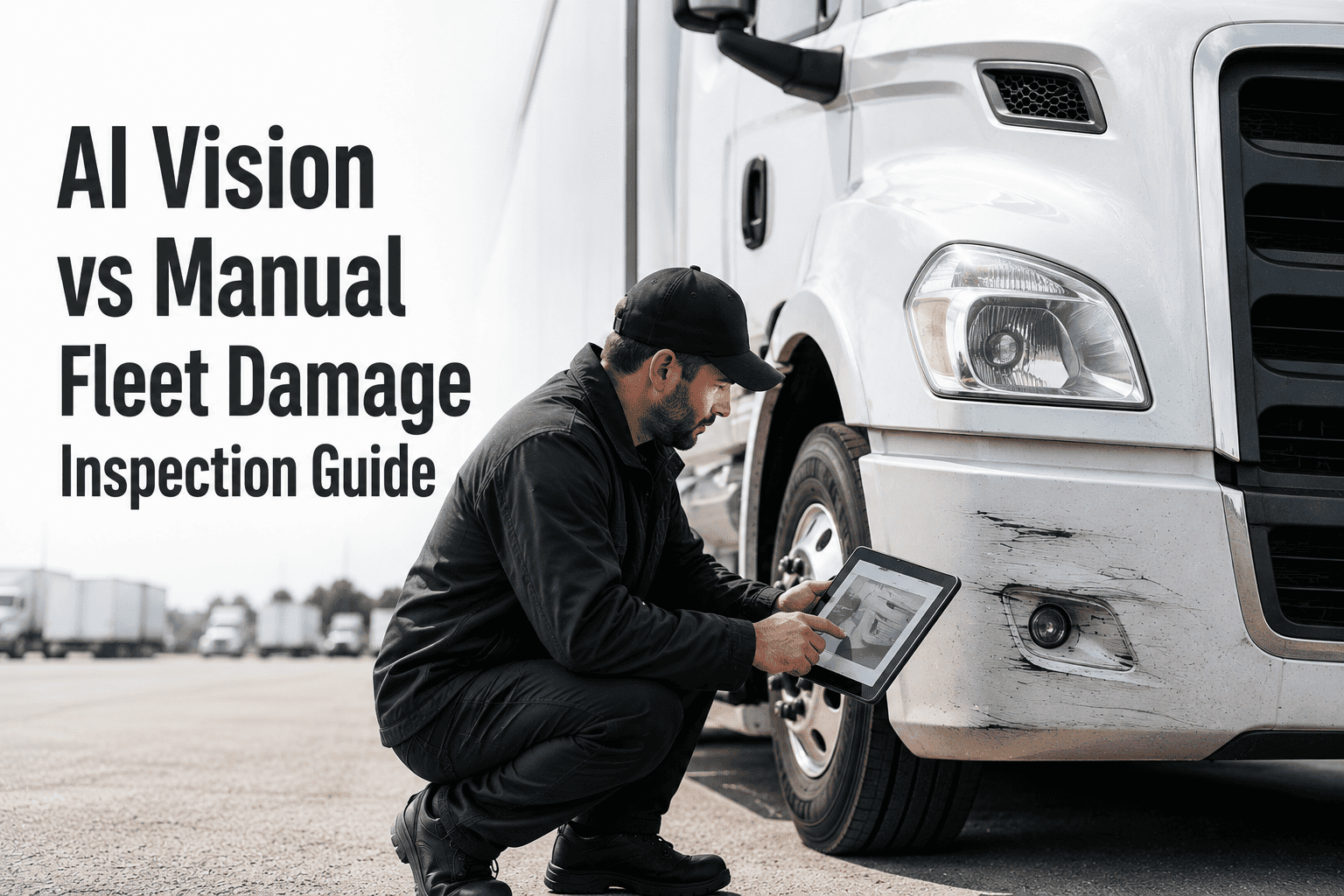
A driver walkaround checks what is visible from four feet away, in whatever light the yard happens to have. AI vision checks what a camera sees at full resolution, on every tire, every single time a vehicle rolls through.
Where AI Vision Scanning Outperforms a Manual Walkaround
Three Areas Where Fleets See the Difference First
Outcome · Detection
Damage Caught Before It's a Road Call
AI vision scans every position at full resolution instead of relying on a rushed visual check, so bulges, cuts, and cracking are flagged while the vehicle is still in the yard, not after it has already rolled.
Typical result: up to 4x more damage flagged pre-dispatch
Outcome · Compliance
Fewer Tire-Related DOT Violations
Since tire condition drives over half of out-of-service roadside violations, catching damage at the gate directly reduces the violations, fines, and CSA score impact that show up weeks later at a scale house.
Typical result: fewer tire-related out-of-service flags
Outcome · Labour
Technician Time Back on the Shop Floor
Manually walking a full yard for tire condition takes a technician away from repair work every single day. OxMaint's gate scan runs automatically as vehicles pass through, freeing that time for work orders that actually need hands on a wrench.
Typical result: yard walkaround time reallocated to repairs
Tire Damage Detection Benchmarks by Fleet Type
Risk by Damage Stage — Where a Missed Flag Becomes a Road Call
Surface Wear
Routine — Monitor on Schedule
Minor tread wear, light surface scuffing, and early cracking are logged and tracked but do not require the vehicle to be pulled. These are scheduled into the next planned tire rotation or replacement window.
Active Damage
Needs Scheduling — Within Days
A repairable puncture, moderate cracking, or an early wear pattern that points to a root cause gets a work order opened within days, before the underlying issue turns into a bulge or blowout.
Structural Risk
Immediate Pull — Do Not Dispatch
A confirmed sidewall bulge, a cut beyond the repairable threshold, or tread separation triggers an immediate hold — the vehicle does not leave the yard until the tire is replaced.
How OxMaint's Tire Damage Detection Works
Vision Gate
A fixed camera array scans every tire position as the vehicle passes through the yard exit, capturing sidewall and tread surface at full resolution in a single pass
Baseline Model
Each tire is compared against its own prior scans and against known damage patterns, so a new bulge, cut, or crack is flagged the moment it appears rather than guessed at
CMMS Link
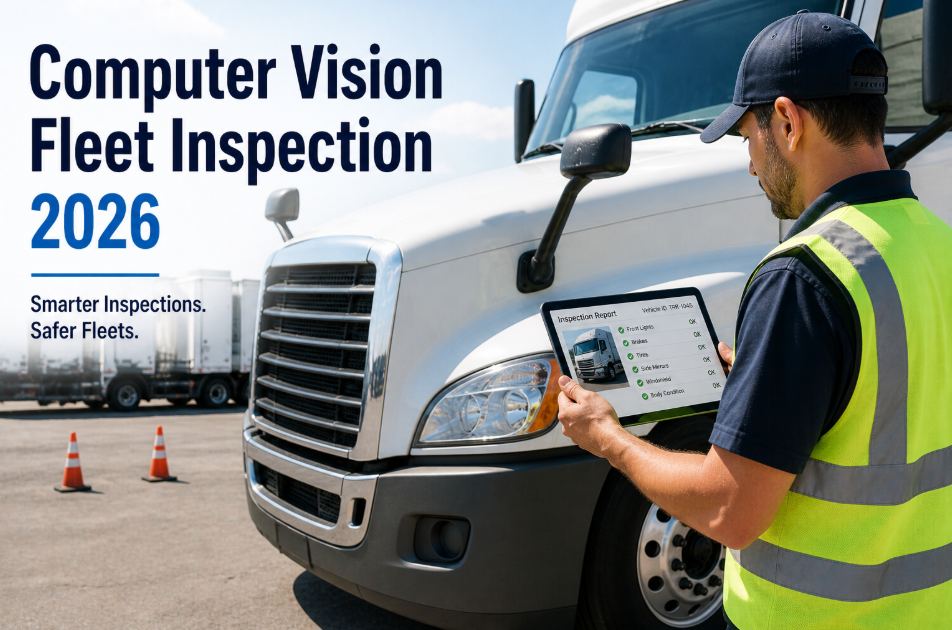
A flagged tire generates a work order automatically inside OxMaint, tagged with position, severity, and photo evidence — no technician has to walk the row to confirm it
6
tire positions scanned per pass on a standard tractor-trailer combination
20 sec
average time for a full vehicle scan at the yard exit gate
4x
more early-stage damage flagged compared with a manual walkaround
0
technicians required to walk the yard for a routine tire condition check
Your drivers are checking tire condition from four feet away, in whatever light the yard has, on a schedule that leaves ten seconds per tire. That is the gap a sidewall bulge lives in.
OxMaint's AI vision gate closes that gap — every tire, every exit, flagged before dispatch.
Frequently Asked Questions — Fleet Tire Damage Detection
How does OxMaint's AI camera tell a bulge apart from a normal-looking tire?
It compares each scanned tire's sidewall curvature against that same tire's own prior scans and against a broader baseline shape, so any outward swell beyond the normal range is flagged instantly.
Sign in to OxMaint to see how the baseline is set for your fleet.
Does the scan replace the driver's DOT-required pre-trip inspection?
No — it runs alongside it. The pre-trip covers brakes, lights, and coupling as required by regulation, while the vision gate adds a consistent, full-resolution tire condition check that a rushed walkaround often misses.
Can it scan trailers that sit in the yard for weeks between loads?
Yes — trailers are scanned on the same schedule as active tractors, which matters most for cracking and dry rot, since that damage often develops during idle time rather than while the vehicle is moving.
How quickly does a flagged tire turn into a work order?
Immediately — a flagged scan creates a work order in OxMaint automatically, tagged with the vehicle, tire position, severity, and a photo, without a technician having to confirm it in person first.
What happens if the AI flags a tire that turns out to be fine?
The work order is closed out as a false flag in seconds, and that outcome feeds back into the baseline model.
Book a demo to see the false-flag rate on real fleet footage.
A Bulge Doesn't Warn You. Your Gate Camera Should.
OxMaint scans every tire on every vehicle at every yard exit — sidewall bulges, cuts, punctures, cracking, and uneven wear flagged and routed to a work order before a driver ever pulls onto the highway.