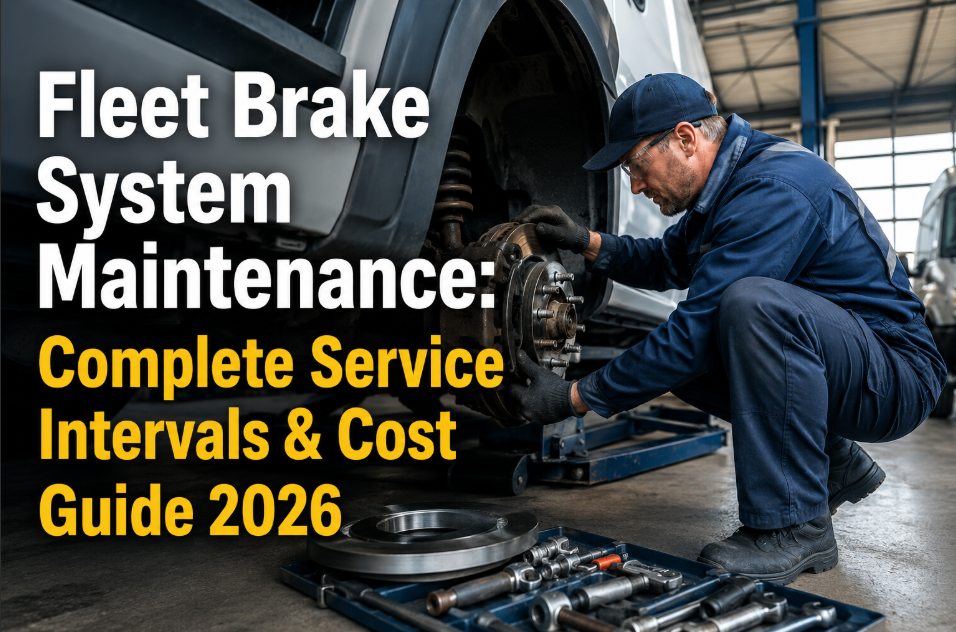
Fleet Brake System Maintenance: Complete Service Intervals & Cost Guide 2026
By Jack Miller on May 21, 2026
Fleet brake systems generate 32.7% of all out-of-service violations during DOT roadside inspections — making brake maintenance the single highest compliance risk in commercial vehicle operations. The average cost of a brake-related breakdown is $4,800 per incident, while a structured preventive brake program costs just $0.04 per mile. The math is clear: fleets that invest in proactive brake maintenance cut total brake costs by 30% and slash CSA violation rates by 58%. Ready to automate brake service scheduling, inspection tracking, and DOT compliance documentation? Start a free trial with Oxmaint to deploy automated brake maintenance workflows, or book a demo to see how fleet operations manage brake compliance at scale.
FLEET MAINTENANCE · BRAKE SYSTEMS · 2026
Fleet Brake System Maintenance: Complete Service Intervals and Cost Guide for 2026
Optimal service intervals, cost benchmarks, DOT compliance requirements, and CMMS automation strategies to cut brake-related downtime by 30%.
Brake-related — the top compliance failure category
$4.8K
avg. brake breakdown cost
Including towing, repair, downtime, and load delays
30%
brake cost reduction possible
With structured PM programs vs. reactive repair
58%
drop in CSA violations
For fleets running automated brake inspection cycles
Why Brake Maintenance Defines Fleet Compliance
Brake violations are not just expensive — they are scrutinized. Every Roadside Annual Inspection that finds defective brakes triggers a CSA point penalty that follows the carrier for 24 months. Fleets with poor brake scores face increased inspection frequency, higher insurance premiums, and potential operating authority risk.
The good news: brake failures are highly predictable. Pad wear, slack adjuster drift, and air system leaks follow measurable patterns. Automating inspection intervals and capturing every measurement digitally eliminates the guesswork. Start a free trial to digitize brake compliance, or book a demo.
Recommended Brake Service Intervals by Vehicle Class
Brake service intervals vary by vehicle class, brake system type, and operating environment. These benchmarks reflect TMC RP 609 recommendations and represent the industry standard for commercial fleet brake maintenance in 2026.
Vehicle Class
Brake System
Inspection Interval
Component Replacement
Class 3-5 (Light Duty)
Hydraulic disc
Every 10,000 miles or 90 days
Pads: 35,000-50,000 mi · Rotors: 70,000 mi
Class 6-7 (Medium Duty)
Hydraulic/Air
Every 15,000 miles or 90 days
Pads: 50,000-75,000 mi · Rotors: 100,000 mi
Class 8 (Tractors)
Air drum or disc
Every 25,000 miles or 90 days
Linings: 100,000-150,000 mi · Drums: 250,000 mi
Trailers
Air drum
Every 25,000 miles or annually
Linings: 100,000-180,000 mi
Severe Service Fleets
All systems
50% of standard interval
Inspect 2x more frequently
DOT Mandatory
All commercial vehicles
Annual inspection per 396.17
Required regardless of mileage
6 Critical Brake Components Every Fleet Must Track
A complete brake inspection touches six core component areas. Missing any single area creates a compliance gap and a safety risk that DOT inspectors will find first.
Brake Pads and Linings
Critical
Measure thickness at three points per pad. Replace at 4mm for hydraulic, 6mm for air drum linings. DOT requires minimum 2mm thickness on steer axles. Worn linings extend stopping distance by 30%.
Slack Adjusters
Critical
Measure push rod stroke at every PM. Out-of-adjustment slack adjusters account for 50% of brake-related OOS violations. Automatic slack adjusters still require periodic verification — they do not eliminate inspection.
Air System and Compressor
Critical
Test compressor build time (85-100 PSI in under 45 seconds), governor cut-in/cut-out, and air leak rate (under 3 PSI per minute static). Air dryer cartridge replaces annually or per moisture indicator.
Rotors and Drums
Critical
Measure rotor thickness and drum inside diameter against OEM minimums stamped on the component. Check for heat checking, cracking, and scoring depth. Replace before reaching machine-to-minimum spec.
Brake Chambers and Diaphragms
Important
Inspect for cracked housings, ruptured diaphragms, and corroded mounting hardware. Spring brake chambers must be tagged out before disassembly — improper handling causes serious technician injuries.
ABS and Electronic Systems
Important
Scan for ABS fault codes at every PM. Test wheel speed sensors and verify ABS warning lamp function. Inoperative ABS on tractors built after March 1997 is an automatic OOS violation under FMCSA 393.55.
The Real Cost of Reactive Brake Maintenance
A reactive brake repair on the roadside averages 6.2x more expensive than the same repair performed during scheduled PM. The reasons are simple: emergency towing ($600-$1,200), premium labor rates ($180-$240/hour roadside), expedited parts shipping, load detention fees, and missed delivery penalties.
Worse, an unplanned brake failure during operation creates immediate FMCSA exposure. If a vehicle is placed out-of-service roadside for brake violations, the carrier inherits CSA points that elevate audit risk for the next 24 months. Start a free trial to prevent these costs, or book a demo.
Reactive vs. Preventive Brake Maintenance Costs
Reactive Brake Repairs
Cost per incident: $4,800 average
Downtime per failure: 18-32 hours
CSA point exposure: 2-7 points per OOS
Roadside repair markup: 6.2x shop cost
Annual brake cost per truck: $3,200-$4,400
Safety incident risk: Severe
Preventive Brake Program
Cost per scheduled service: $380 average
Planned downtime: 2-4 hours
CSA point exposure: Near zero
Shop labor rates: Standard pricing
Annual brake cost per truck: $2,100-$2,800
Safety incident risk: Minimal
How Oxmaint Automates Brake Maintenance
Mileage-Triggered Brake PMs
Telematics-fed mileage data triggers brake inspection work orders automatically at your defined intervals. No more missed PMs, no manual schedule tracking. Vehicles entering the shop already have the right work order waiting.
Digital Measurement Capture
Technicians enter pad thickness, push rod stroke, drum measurements, and leak rates directly into the mobile work order. Out-of-spec values trigger automatic escalation and block vehicle release until reinspected.
DOT Compliance Documentation
Every brake inspection generates a digitally signed record formatted for FMCSA 396.17 annual inspection requirements. Roadside inspectors can verify compliance in seconds via QR code scan of the cab decal.
Brake Wear Trend Analysis
Track pad wear rates per axle, per vehicle, and per driver. Identify outliers — a tractor wearing pads 40% faster than fleet average signals an underlying issue requiring engineering review before catastrophic failure.
Parts Inventory Auto-Reorder
Brake pad, lining, and slack adjuster consumption auto-decrements inventory. Reorder triggers fire before stock-outs interrupt service operations. No more vehicles waiting in the shop for backordered parts.
CSA Score Impact Dashboard
Real-time visibility into how brake maintenance performance affects your Vehicle Maintenance BASIC score. Identify which vehicles or drivers contribute most to CSA risk and intervene before the next roadside inspection.
Brake Program ROI Metrics
$1.6K
saved per truck annually
Switching from reactive to preventive brake programs
94%
DOT inspection pass rate
For fleets running automated brake PM cycles
38%
longer brake component life
With proper adjustment and timely intervention
71%
fewer roadside brake failures
In year one of digital brake management programs
Building Brake Compliance Into Daily Operations
The fleets with the best brake compliance scores share one practice: they treat brake inspection as a daily routine, not an annual event. Pre-trip DVIRs capture brake function checks. PM intervals run on telematics-fed mileage triggers. Every measurement is digital, every deviation escalates automatically.
This level of operational discipline used to require a full-time compliance manager. With Oxmaint, the system enforces the discipline automatically. Start a free trial to see automated brake compliance in action, or book a demo.
Frequently Asked Questions
Does Oxmaint support FMCSA 396.17 annual brake inspection documentation?
Yes, the platform generates digitally signed annual inspection records formatted exactly per FMCSA 396.17 requirements. Records include inspector qualification verification, defect documentation, and required retention periods. Roadside inspectors can verify compliance via QR code on the cab decal.
Can we set different brake PM intervals for different vehicle classes?
Yes, every PM schedule is configurable by vehicle class, brake system type, and operating environment. Class 8 air-brake tractors run on different intervals than Class 5 hydraulic vehicles. Severe-service fleets can run 50% reduced intervals automatically.
How does the system handle ABS fault code tracking?
Telematics integrations pull ABS fault codes in real-time. Active codes trigger automatic work order creation and alert the fleet manager immediately. The system maintains complete fault history per vehicle for warranty claim support and trend analysis.
Can drivers report brake issues from their pre-trip DVIR?
Yes, mobile DVIR forms capture brake defects with photo evidence and severity classification. Critical brake issues block vehicle dispatch automatically and route to the shop for immediate inspection — preventing unsafe vehicles from leaving the yard.
Cut Brake-Related Downtime by 30%
Join fleet operations teams using Oxmaint to automate brake maintenance, ensure DOT compliance, and prevent costly roadside failures. Free trial, no credit card required.