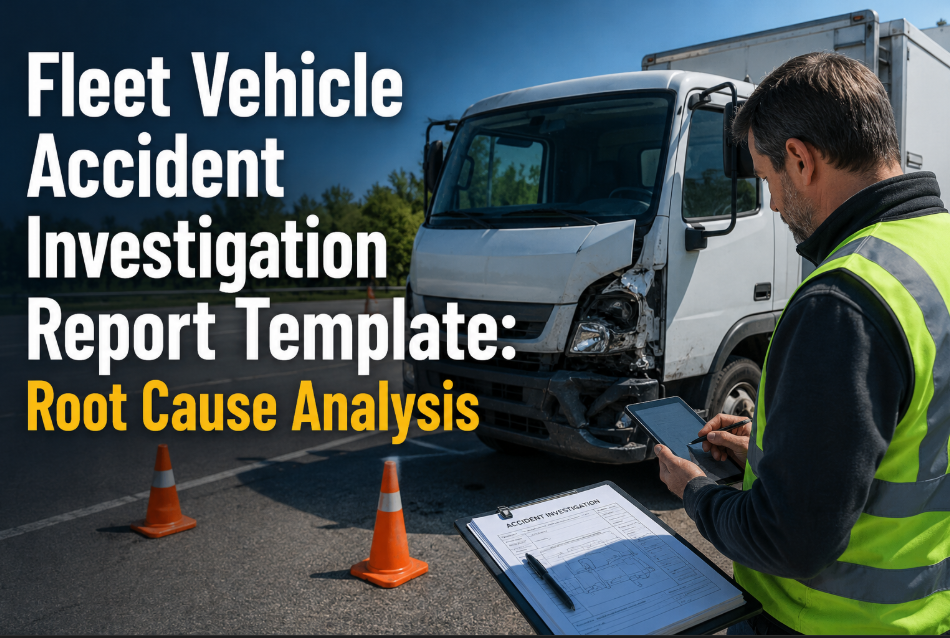
A fleet accident costs an average of $91,000 — but the real damage multiplies if the same root cause produces a second incident six months later. The first 10 minutes after a crash determine whether the evidence survives. The next 72 hours determine whether the investigation is complete. The corrective action determines whether it happens again. OxMaint links every incident to vehicle maintenance history, driver records, and OBD data — turning each accident into a structured data point that improves your fleet's safety record.
Fleet Accident Management: From Incident Response to Root Cause Prevention
Immediate response protocols, scene documentation, accident investigation methodology, root cause analysis, corrective action implementation, and CMMS-tracked safety improvement — the complete guide for fleet safety and risk directors.
Immediate Response: The First 24 Hours
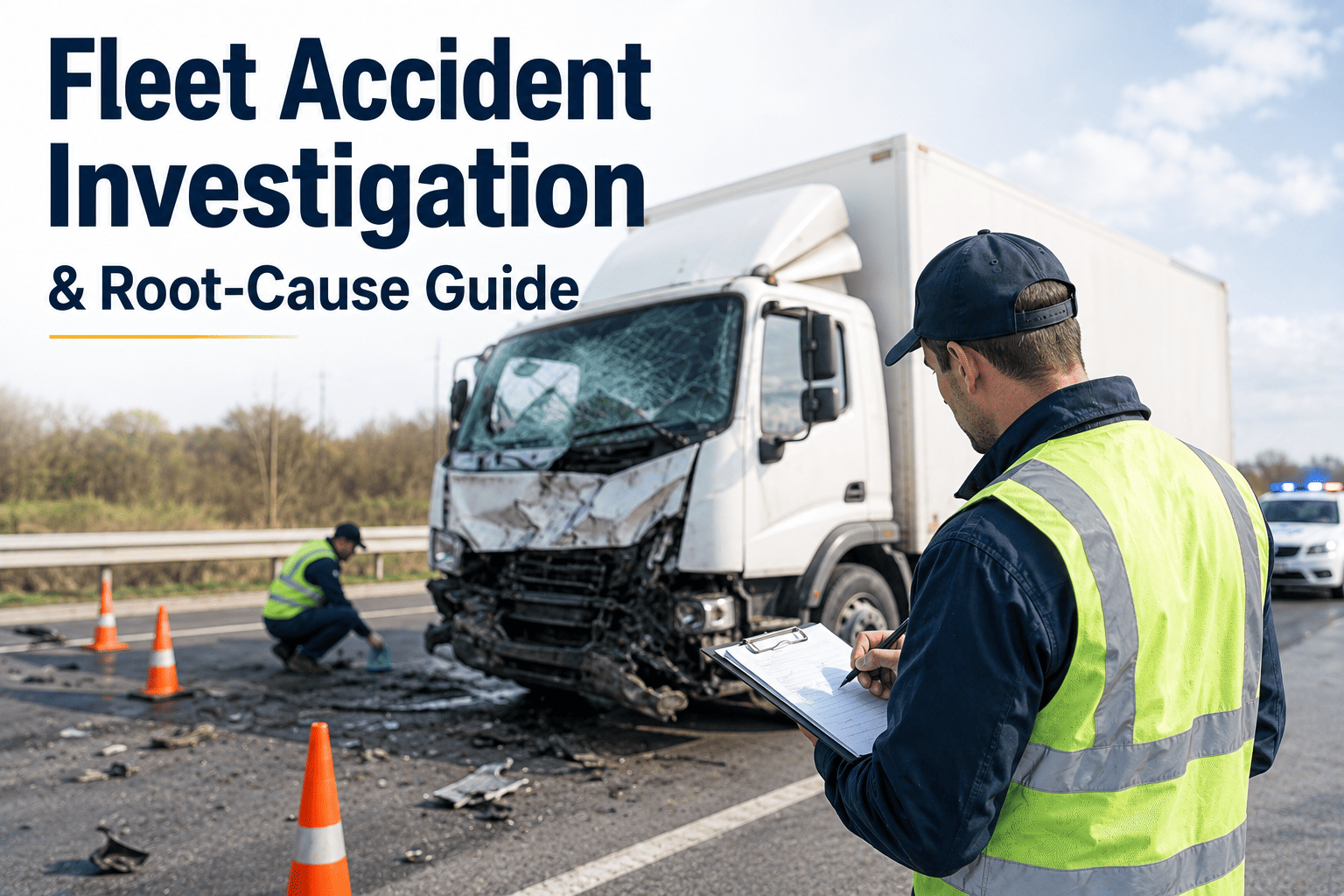
The actions taken in the first 24 hours after a fleet accident determine the quality of evidence available for investigation, insurance claims, and litigation. Vehicles left at the scene without documentation, witnesses allowed to leave without statements, and dashcam footage that is overwritten — these are irreversible evidence failures that happen because drivers and supervisors haven't been trained on a consistent response protocol. OxMaint's mobile incident report captures all required fields at scene, prompts drivers through a structured checklist, and automatically preserves telematics and OBD data for the incident vehicle before it can be lost.
Root Cause Analysis: The 6 Cause Categories
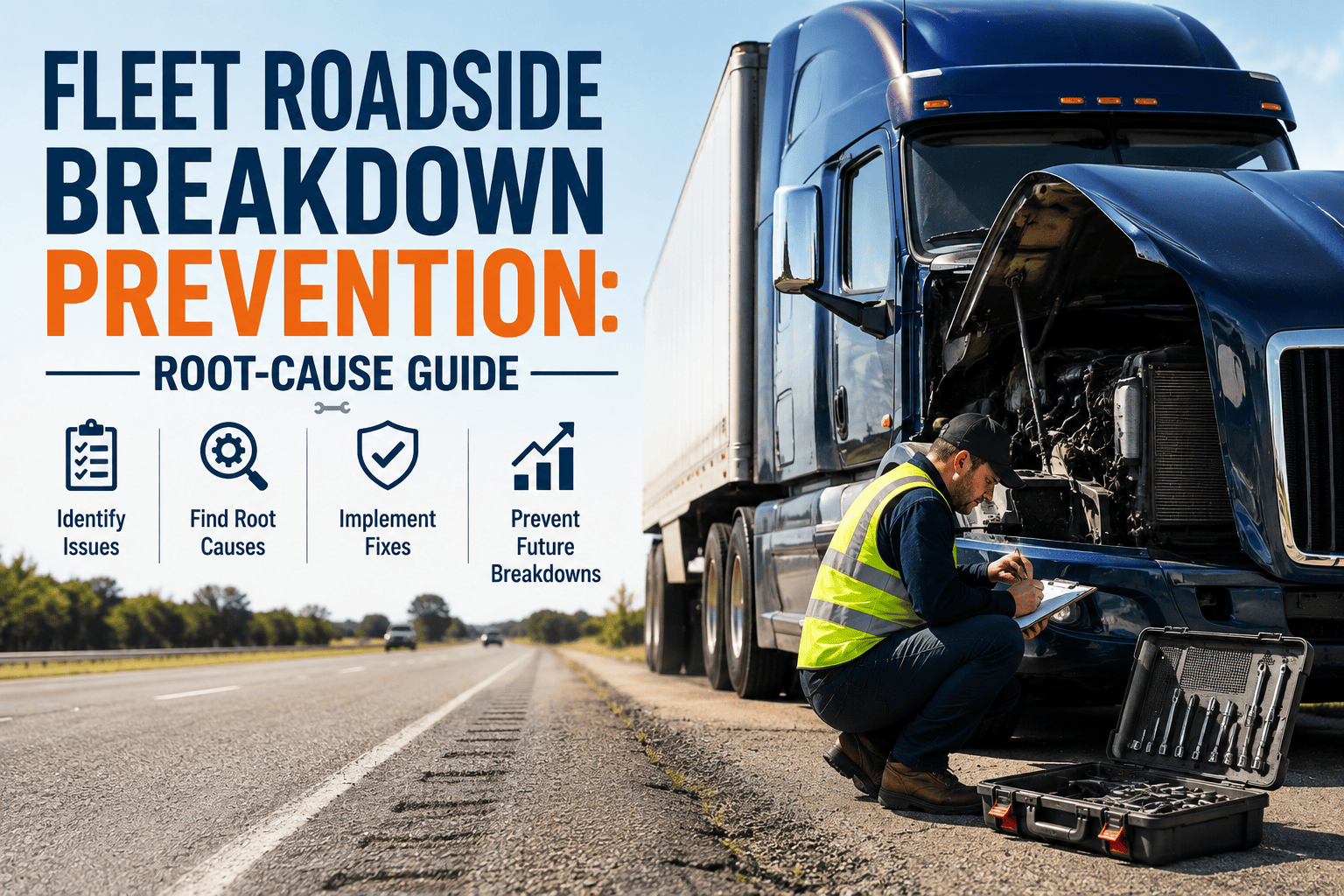
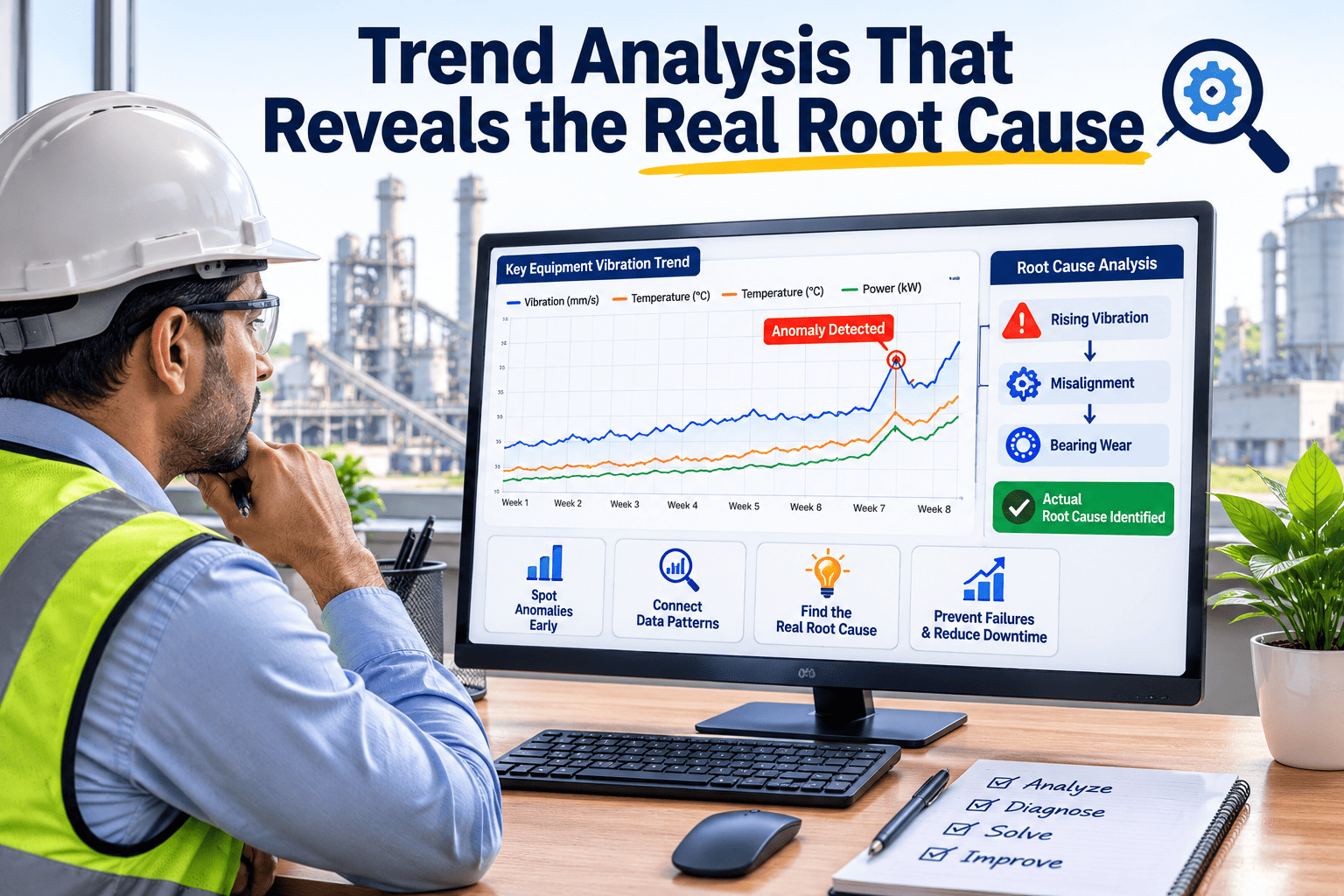
Accident investigations that conclude with "driver error" as the root cause are incomplete. Driver behaviour is a proximate cause — the conditions that enabled that behaviour are the root cause. Effective fleet accident investigation examines six categories, each of which generates distinct corrective actions. OxMaint's incident investigation module structures every accident investigation across all six categories, ensuring findings are complete before corrective actions are assigned. Cross-referencing accident data with vehicle maintenance history frequently reveals pre-existing brake, tyre, or lighting defects that contributed to the outcome.
Technology That Prevents Accidents and Speeds Investigation
Two technology streams work differently in fleet accident management. Pre-accident technologies prevent the incident from occurring — OBD harsh-event detection, AI vision cameras that flag unsafe behaviour, and digital twin models that identify fatigued or high-risk driving patterns before they produce crashes. Post-accident technologies speed investigation and preserve evidence — telematics speed and location logs, AI camera footage synced to the incident timestamp, and OBD data showing brake application, throttle position, and engine load at the moment of impact. OxMaint integrates all four technology streams into the incident record automatically — so when an accident is logged, the vehicle's OBD event data, telematics trace, and camera footage are already attached before the investigation begins. SAP integration posts the incident record to the enterprise risk management system simultaneously, with no manual re-entry required.
After our third backing accident in six months at the same depot, we used OxMaint to pull the incident records and cross-reference with AI camera footage. Every incident involved the same shift, same time window — not driver error, but a lighting failure in one loading bay that had been reported in DVIRs and never actioned. One corrective action eliminated the pattern entirely.
Every Accident Logged in OxMaint Becomes Data That Prevents the Next One.
Incident records linked to vehicle maintenance history, OBD data, and driver records — corrective actions tracked to completion. Free to start.
Corrective Action: Closing the Loop
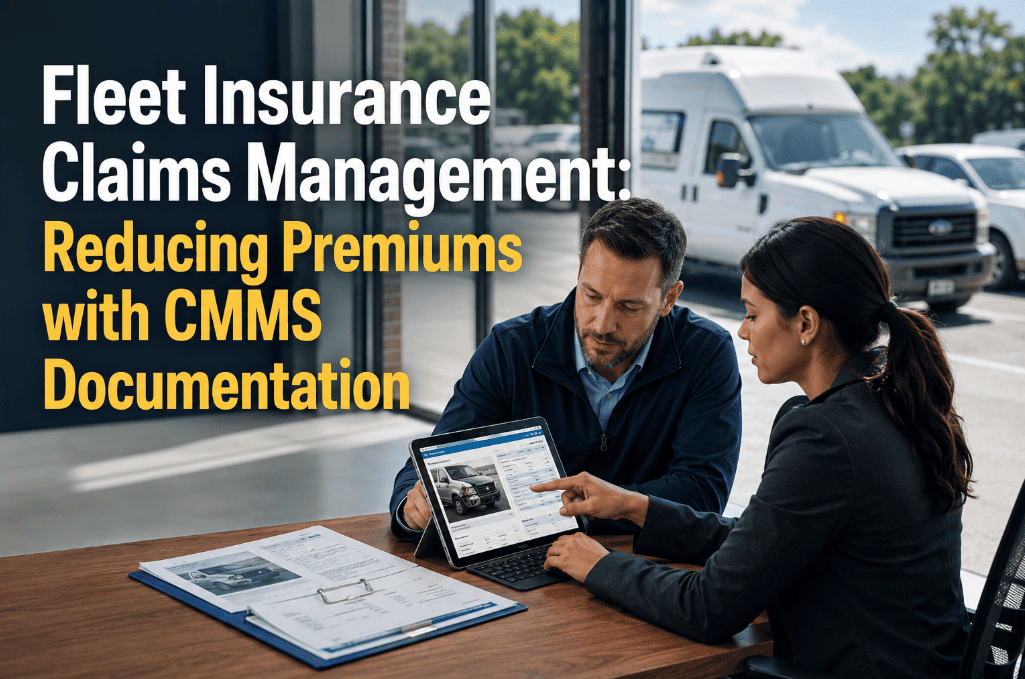
An investigation without a closed-loop corrective action is wasted effort. The most common failure mode in fleet accident management is not the investigation quality — it is the corrective action tracking. Actions are assigned verbally or in email, never formally closed, and not verified as effective. When the same root cause produces another accident six months later, the organisation cannot demonstrate what actions were taken after the first event. OxMaint's corrective action module assigns each finding to a responsible owner with a due date, sends escalation alerts if actions are overdue, and marks investigations as closed only when all corrective actions are verified complete.
Frequently Asked Questions
What DOT accidents must be recorded in the accident register?
Under 49 CFR 390.15, carriers must record any accident involving a CMV that results in a fatality, a bodily injury requiring immediate medical treatment away from the scene, or a vehicle tow-away. The register must be retained for 3 years and must include date, location, driver name, number of injuries and fatalities, and whether a hazmat spill occurred. OxMaint's accident register captures all required fields automatically.
When is a post-accident drug and alcohol test required?
A post-accident drug test is required when an accident results in a fatality, or when the driver receives a citation and there was a bodily injury or a vehicle tow-away. The test must be conducted as soon as practicable — alcohol within 2 hours (8 hours maximum), drug test within 32 hours. Missing these windows requires documentation explaining why testing was not conducted.
How does a CMMS reduce fleet accident frequency?
A CMMS reduces accidents through four mechanisms: structured PM eliminates vehicle condition root causes (35% of accidents); digital DVIR with mandatory defect correction removes pre-existing defects before dispatch; incident investigation data identifies repeat patterns that manual records miss; and corrective action tracking ensures root cause findings produce verified behavioural or operational changes. Book a demo to see OxMaint's safety incident module.
What evidence should be preserved at a fleet accident scene?
Photographs of vehicle positions before movement, all visible damage, skid marks, road surface and weather conditions, and any visible defects on the involved vehicles. Witness contact details and statements. Police report number. Dashcam/AI camera footage downloaded immediately — most systems overwrite within 24–72 hours. OBD data snapshot for the incident vehicle. ELD records for the driver. All must be preserved before the vehicle is repaired or returned to service.
Turn Every Accident into Prevention. OxMaint Closes the Loop.
Incident logging, investigation tracking, corrective actions, and vehicle history — all connected in one CMMS. Free to start.