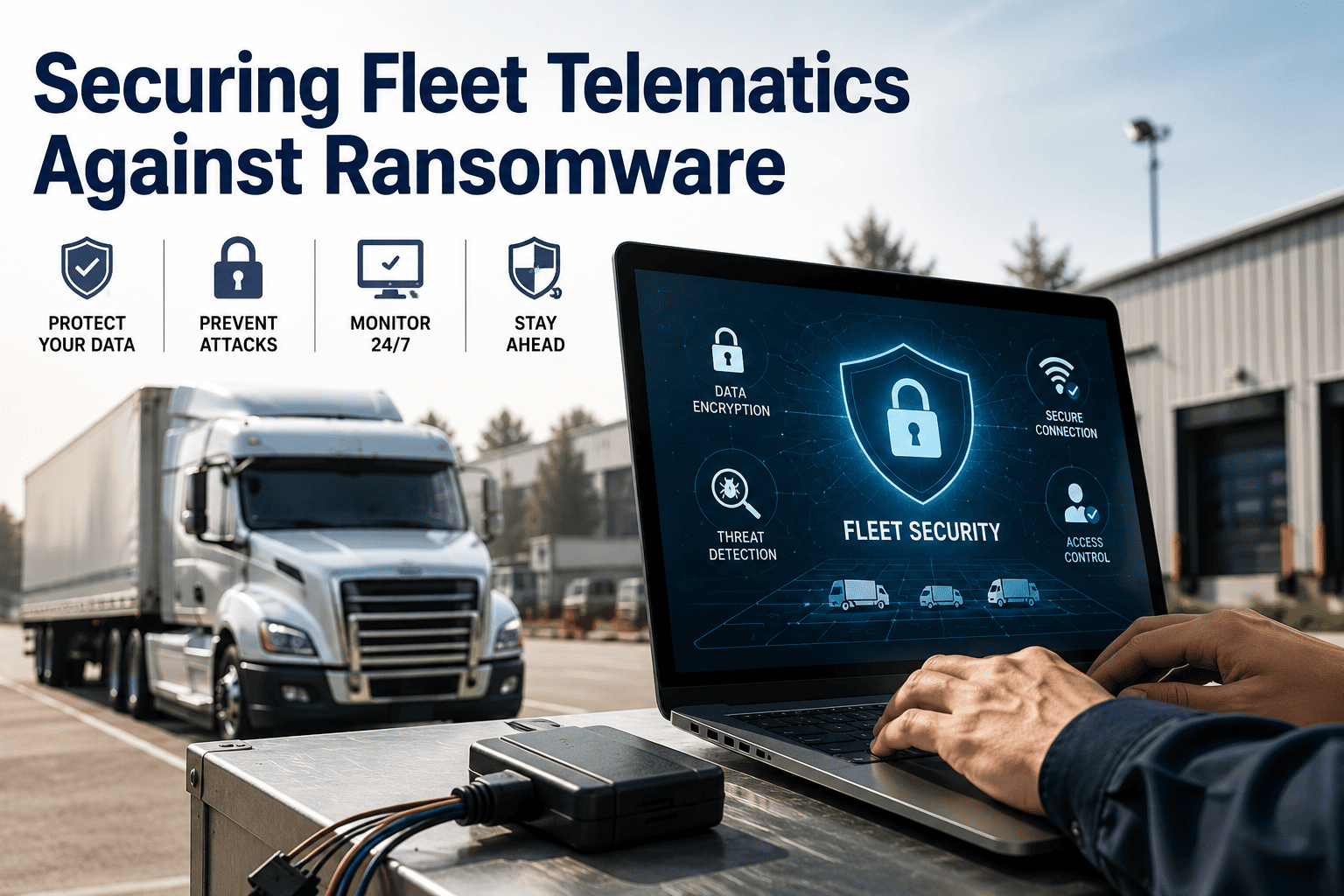
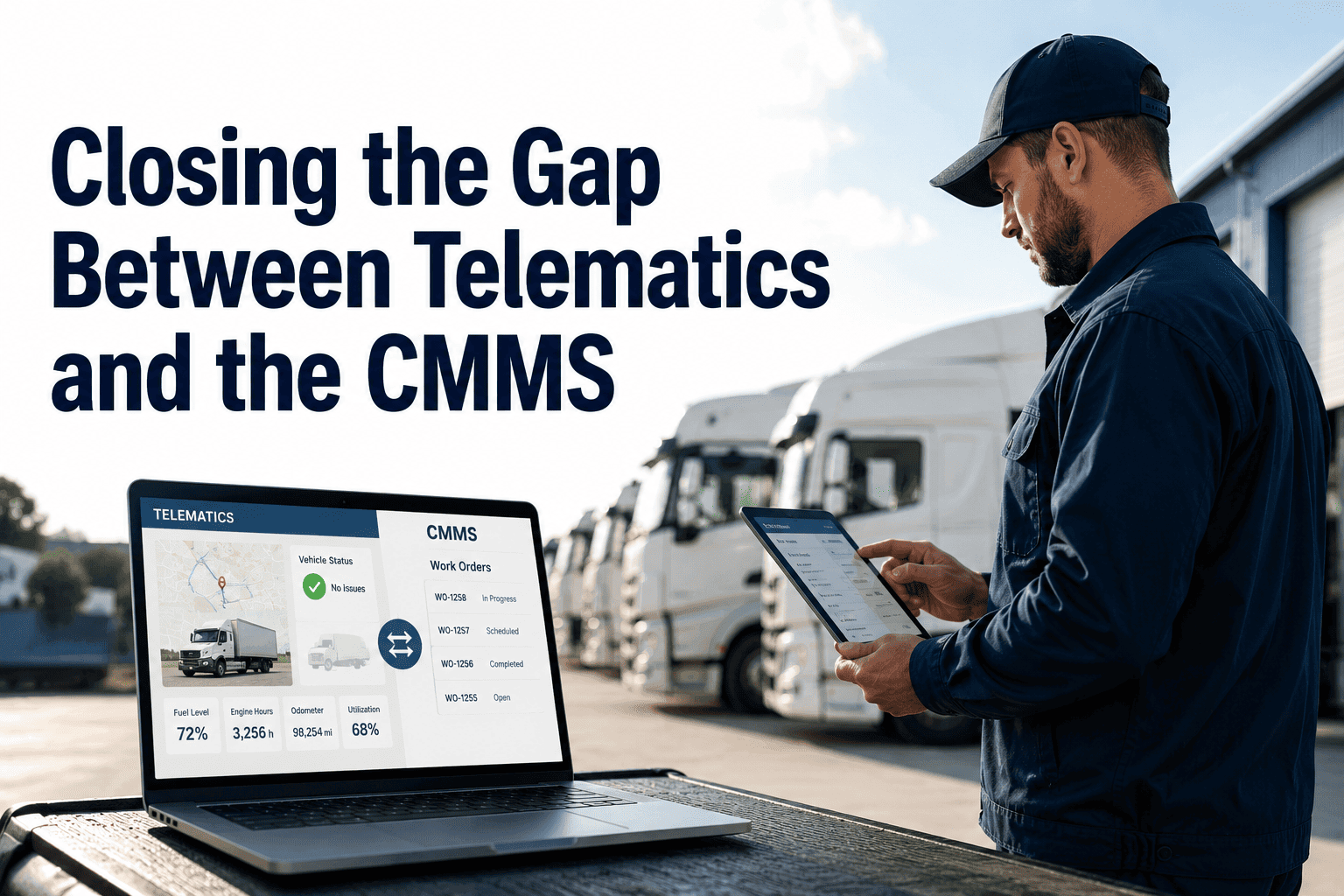
Every telematics unit, ELD, driver tablet, and remote diagnostics port on a modern fleet is a small computer talking to the internet, and in 2026 that means every vehicle is also a potential entry point for an attacker. Fleets that once worried only about theft and collision now have to think about ransomware locking a dispatch system, a spoofed GPS feed rerouting a truck, or a compromised ELD exposing driver and cargo data. Most fleet operators still manage this risk the way they manage everything else — reactively, after an incident forces the issue — because no one has a live inventory of every connected device on every vehicle. The fleets that stay ahead treat cybersecurity as an operational discipline with the same rigor as maintenance scheduling, not a one-time IT project. OxMaint helps fleet teams manage the device inventory, patching, and incident workflow that connected vehicle security depends on.
Connected Fleet Security
Know Every Connected Device on Every Vehicle — Before an Attacker Does
Device inventory, patch tracking, and incident workflow — all inside OxMaint
3.2x
Increase in reported connected-vehicle security incidents across commercial fleets since 2023
61%
Fleets that cannot produce a complete inventory of connected telematics devices on request
$1.2M
Average cost of a fleet-wide ransomware incident, including downtime and recovery
The 6 Attack Surfaces Every Connected Fleet Needs to Manage
A connected vehicle is not one device — it is a network of them, and every one is a potential way in. These six categories account for the overwhelming majority of reported fleet cybersecurity incidents.
1
Telematics and GPS Units
Highest incident volume — always-on cellular connection
Telematics devices transmit constantly and are rarely patched after installation. An unpatched unit with default credentials can be used to pull location history or inject false position data across an entire route.
2
Electronic Logging Devices
Regulatory data — high value target
ELDs hold hours-of-service records, driver identity, and vehicle diagnostics in one place, making them an attractive target for data theft and a single point of compliance failure if tampered with.
3
Driver Mobile Apps and Tablets
Personal and fleet networks overlap
Driver-facing apps often run on shared or personal devices, blurring the line between fleet network and personal network and creating a path for malware to move between the two.
4
Remote Diagnostic Ports
Direct access to vehicle control systems
OBD-II and remote diagnostic access points, if left unsecured, provide a direct path into engine, braking, and telemetry systems — the most severe category of connected vehicle risk.
5
Fleet Management Software
Central point of failure if compromised
A single compromised login to a fleet dashboard can expose maintenance records, driver data, and vehicle locations across the entire operation at once.
6
Third-Party Vendor Integrations
Risk inherited from outside the fleet
Fuel card systems, insurance telematics, and maintenance vendor integrations extend the attack surface beyond what the fleet directly controls, and are frequently overlooked in security reviews.
Device Visibility — OxMaint
One Inventory for Every Connected Device on Every Vehicle
Track firmware versions, patch status, and access history across your entire connected fleet in one place
From Detection to Resolution — The Fleet Incident Response Workflow
A security programme is only as good as what happens in the first hour after something looks wrong. This is the workflow that separates a contained incident from a fleet-wide shutdown.
Step 1
Anomaly Detected
Unusual device behaviour, failed login attempts, or an unexpected firmware change is flagged against the device inventory baseline
Step 2
Device Isolated
The affected unit or vehicle is flagged and isolated from the fleet network to prevent lateral movement to other assets
Step 3
Root Cause Reviewed
Access logs, patch history, and configuration records are pulled to determine how the anomaly occurred and what else it touched
Step 4
Patch and Restore
The device is patched, credentials rotated, and the vehicle returned to service with a documented resolution record
Step 5
Compliance Record Filed
The incident is logged with a full timeline for insurance, regulatory, and internal audit purposes, closing the loop
Connected Fleet Security Benchmarks for 2026
Industry data from fleet telematics and transportation cybersecurity reporting shows a wide gap between average fleets and the top-quartile operations that treat device security as routine maintenance.
Devices with current firmware
54%
96%
Above 95%
Time to detect anomalous access
11 days
Under 24 hours
Real-time alerting
Devices with unique credentials
48%
99%
100% target
Complete connected device inventory
39% of fleets
92% of fleets
Fully mapped
Documented incident response plan
44% of fleets
89% of fleets
Logged per incident
What a Connected Vehicle Incident Actually Costs
The cost of a cybersecurity incident rarely stops at the ransom or the repair. Downtime, compliance exposure, and insurance impact usually outweigh the direct technical cost.
Operational Downtime
Vehicles taken out of service
Average vehicles affected
18–40% of fleet
Average downtime
3–9 days
Revenue impact per day
$18,000–$65,000
Total exposure
Severe if unmanaged
Compliance Exposure
Regulatory and data risk
Driver data records at risk
Full ELD history
Reporting window required
Often 72 hours
Audit documentation needed
Full access timeline
Total exposure
High without records
Insurance and Trust
Long-term relationship cost
Premium impact after incident
15–30% increase
Customer trust recovery time
6–12 months
Contract renewal risk
Elevated for a year
Total exposure
Long-tail cost
Building a Fleet Cybersecurity Programme That Actually Holds
Start with a real device inventory
You cannot secure what you cannot see. A complete list of every telematics unit, ELD, and diagnostic port is the foundation every other control depends on.
Treat firmware patching like preventive maintenance
Firmware updates should be scheduled and tracked with the same discipline as an oil change, not left until a vendor sends a reminder email.
Remove default and shared credentials
Default logins left on telematics hardware after installation are one of the most common entry points found in fleet security incidents.
Write the incident response plan before you need it
A documented, rehearsed response plan is the difference between a contained event and a multi-day shutdown when an anomaly is finally detected.
We had no idea how many telematics units on our trucks were still running firmware from the year they were installed until we ran a full inventory. Getting that visibility in one place, along with a real incident checklist, changed how our whole team thinks about connected vehicle risk.
— Fleet Operations Manager, Regional Logistics Carrier
Frequently Asked Questions
What is the biggest cybersecurity risk for connected fleets in 2026?
Unpatched telematics devices with default credentials remain the most common entry point, followed by unsecured remote diagnostic ports and compromised fleet management logins.
How does OxMaint help fleets manage connected device security?
OxMaint maintains a device inventory with firmware and patch status, links access history to each vehicle, and supports a documented incident workflow.
See the device dashboard.
Do small and mid-size fleets need a formal cybersecurity programme?
Yes — smaller fleets are frequently targeted precisely because they are assumed to have weaker controls. A basic device inventory and patch schedule closes most of the common gaps.
How often should telematics firmware be updated?
Firmware should be checked on a recurring schedule, ideally monthly, and tracked the same way a maintenance interval is tracked, rather than waiting for a vendor notification.
What should be in a fleet incident response plan?
A usable plan covers detection, device isolation, root cause review, patching, and a compliance record for every incident.
Talk to the team about setting one up.
Connected Fleet Security — OxMaint
See Every Device. Close Every Gap. Respond With Confidence.
96%
firmware compliance achievable
24h
target detection window