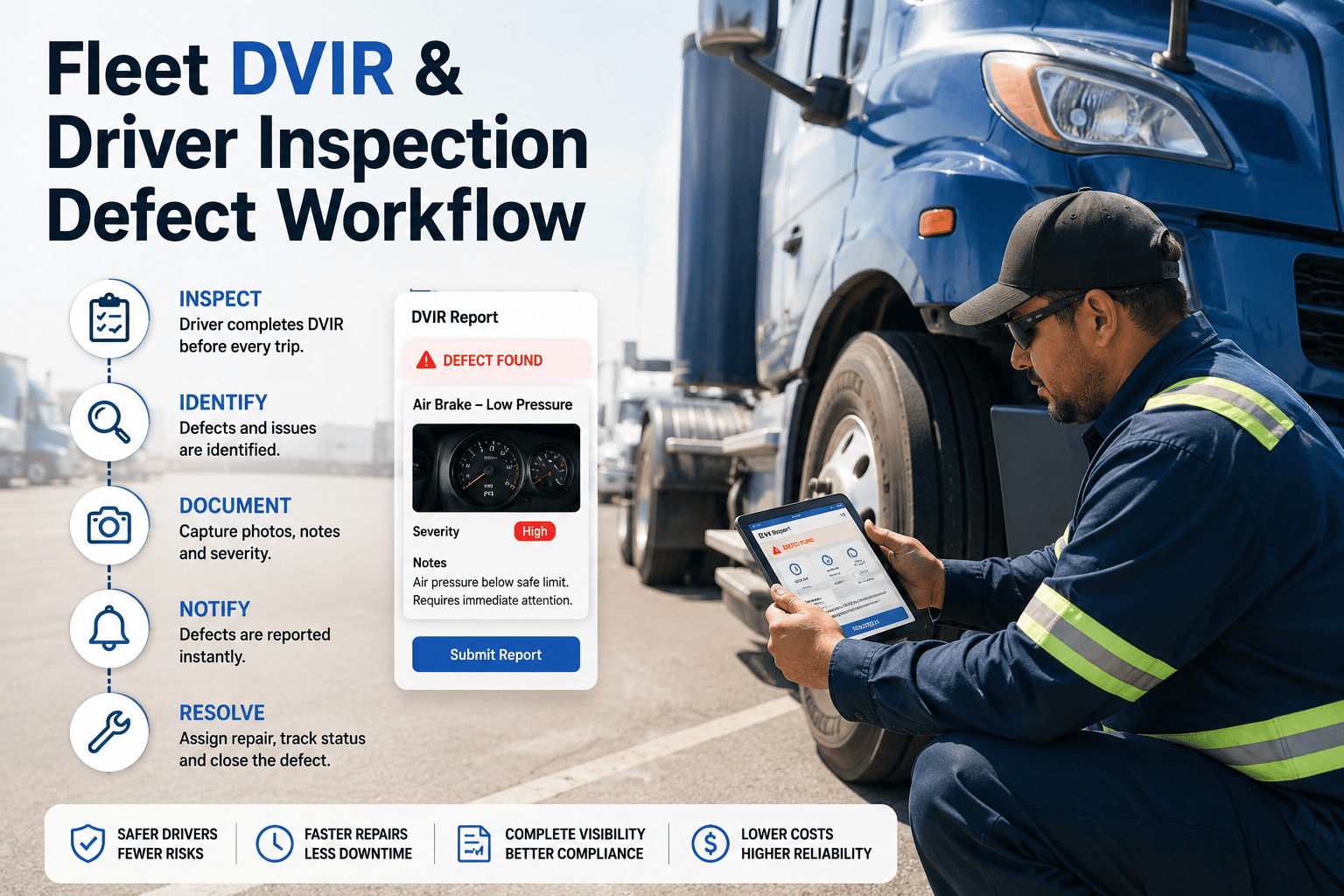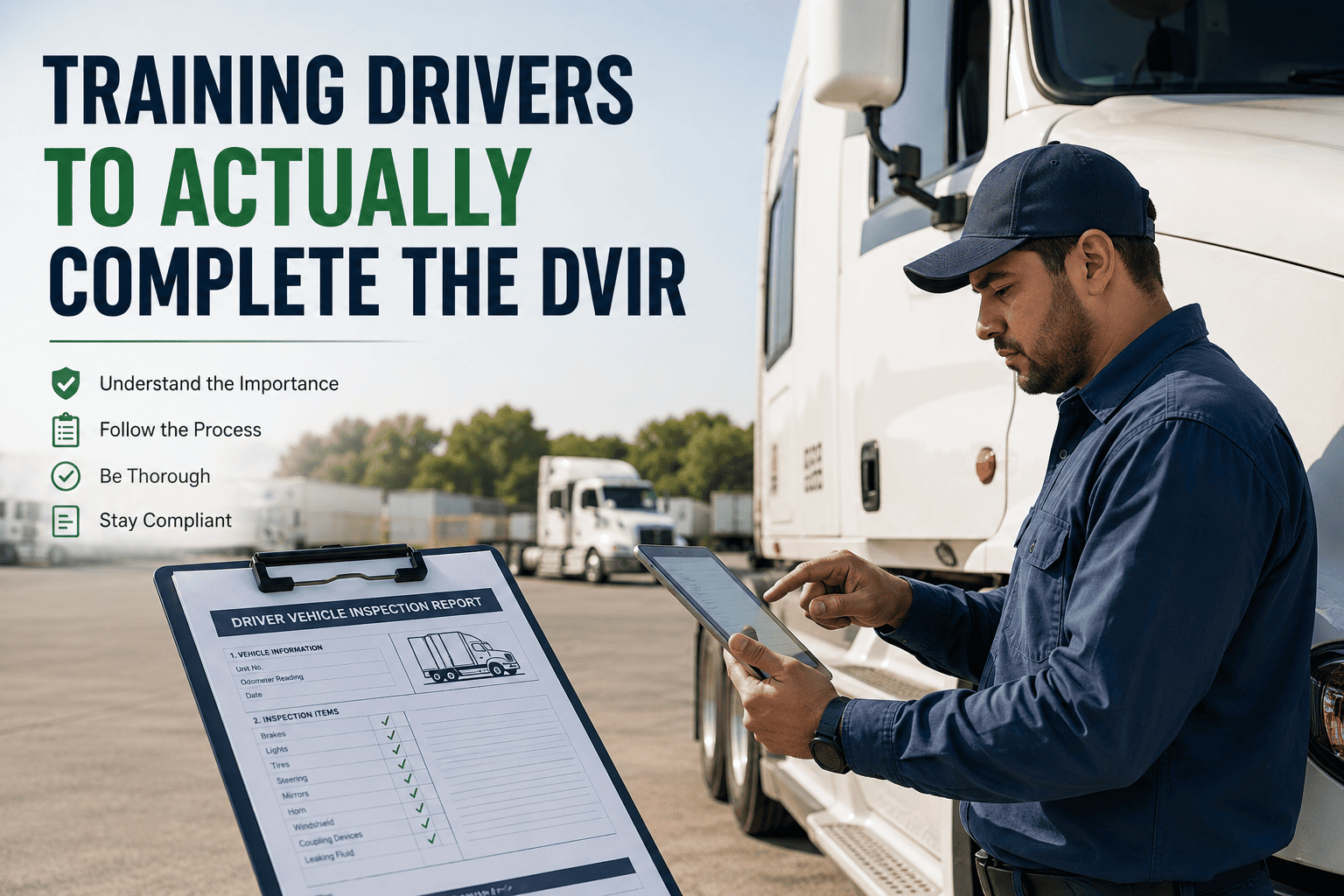
A 40-truck regional carrier switched from paper DVIRs to a mobile app and expected completion rates to jump overnight. They didn't. Drivers tapped through the checklist in under 90 seconds without leaving the cab, marking every item "satisfactory" out of habit — the same pencil-whipping that plagued the paper forms, just faster. Completion logs looked perfect at 99%, but defect reports nearly vanished, and a trailer with a slow air leak ran for six days before it failed a roadside check. The fix wasn't more software. It was five weeks of training that explained why each of the eleven checkpoints exists and what happens to a report after a driver hits submit — completion held at 99%, but defect reports tripled and the fleet passed its next DOT audit with zero violations. If your drivers treat the DVIR as a box to tick rather than a safety tool, see how Oxmaint builds the training into the workflow itself.
Training Drivers to Actually Complete the DVIR — Not Just Tap Through It
Completion rate improves dramatically the moment drivers understand why each inspection point matters, not just that the app requires an answer. Here is the research-backed training framework that turns a compliance checkbox into a real safety habit.
Turn Every Inspection Point Into a Lesson, Not Just a Checkbox
Oxmaint pairs guided, photo-verified DVIR checklists with in-app context on why each of the eleven FMCSA components matters — so drivers stop guessing and start actually inspecting.
Why Completion Rate Stays Low Even After Fleets Go Digital
Most fleets assume a low DVIR completion rate is a technology problem, so they buy an app and expect the number to fix itself. It rarely does. A driver who never understood why the slack adjuster check matters will tap "satisfactory" on a mobile screen just as fast as they skipped it on paper — the defect still goes unreported, the only difference is the record now looks compliant. Real completion rate improvement happens when training addresses the driver's understanding of each checkpoint, not just the tool they use to record it.
Three Reasons Drivers Skip the Inspection They Are Required to Do
Paper DVIR vs Untrained Digital DVIR vs Trained Digital DVIR
The comparison below shows why training is the missing variable most fleets overlook when they judge a DVIR program purely by whether it is digital or not.
| Metric | Paper DVIR | Digital, No Training | Digital + Driver Training |
|---|---|---|---|
| Completion rate | 55–65% typical | 85–92% — looks better, means less | 94–98% with genuine defect detail |
| Defect report quality | Vague, handwritten notes | Fast taps, minimal detail | Photo-verified, specific, actionable |
| Time to mechanic review | 24–36 hours average | Same day, low detail slows triage | Under 60 seconds, ready to action |
| DOT audit outcome | High violation risk | Moderate — records exist but thin | Consistently audit-ready |
| Driver trust in the process | Low — feels like paperwork | Low — still feels like a formality | High — drivers see the follow-through |
The Five-Step Framework That Raises Completion Rate and Keeps It There
See the Training Layer That Sits on Top of Your DVIR Checklist
Oxmaint shows drivers exactly why each checkpoint matters, confirms every submitted defect reaches a mechanic in seconds, and gives fleet managers a live view of completion rate by driver, shift, and location.
How Oxmaint Turns DVIR Training Into a Daily Habit
What Changes Once Training Is Layered Onto the DVIR Program
| Outcome | Before Training | After Training |
|---|---|---|
| Completion rate | 58% average across paper and rushed digital use | 94–98% within the first 30 days |
| Defect reports filed | Rare — drivers assume it is not worth the friction | Consistent, specific, and photo-backed |
| Time from report to repair action | 24–36 hours through a paper or unclear digital process | Under 60 seconds to mechanic notification |
| DOT audit readiness | Records exist but lack detail auditors expect | Consistently among the 7% with zero violations |
| Driver attitude toward the DVIR | Treated as a box to tick before clocking out | Treated as a safety tool that gets a response |
Why the Training Investment Pays for Itself Fast
A single missed brake defect that turns into a roadside out-of-service order can cost more than a full year of driver training across an entire fleet. Training is the cheapest line item in the DVIR program and consistently the one with the highest return, because it fixes the root cause instead of the symptom. Start a free trial to see the guided checklist your drivers would use from day one, or book a demo to walk through the training layer with your team.
Frequently Asked Questions
Why does completion rate stay low even after we go digital?+
How long does driver DVIR training take to show results?+
Do completion streaks and scorecards actually change driver behavior?+
What if a driver reports a defect and feels blamed for the delay?+
Can Oxmaint fit into a DVIR workflow we already have running?+
Guided component training, photo-verified inspections, real-time repair status, and driver scorecards that turn completion rate into a habit instead of a hope — built into the DVIR checklist your drivers already use.