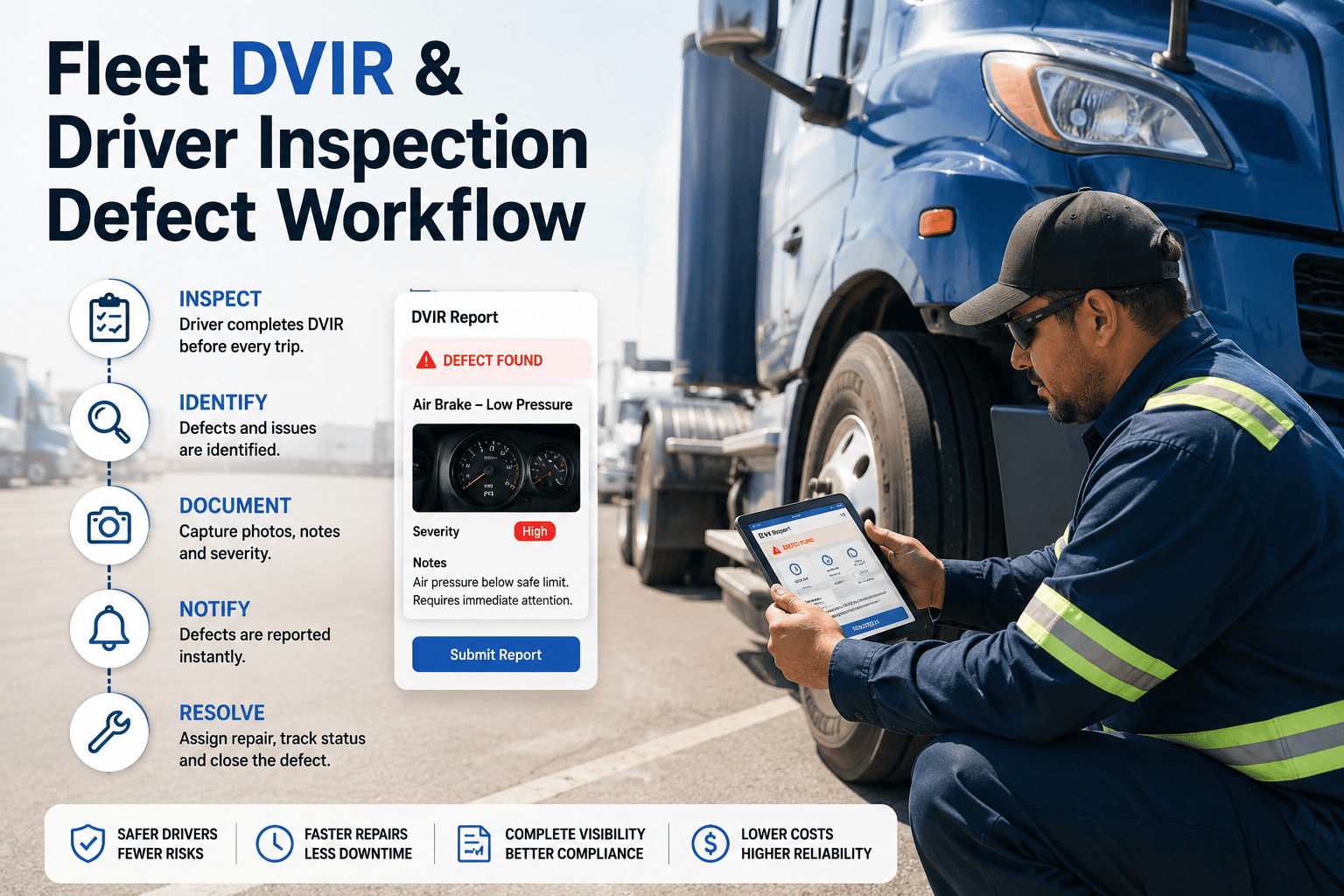
A 40-truck LTL carrier running slip-seat operations across three shifts had Driver A report a low air-pressure warning on a Thursday post-trip. The shop mechanic replaced the line Friday morning, signed the repair certification, then left the paper DVIR in a shop bin instead of the truck cab. Driver B was dispatched to that same tractor Saturday, never saw the certification, and drove 412 miles without signing the third acknowledgment. Six weeks later a DOT auditor pulled that exact report, found the chain broken at signature three, and issued a citation that pushed the carrier's Vehicle Maintenance BASIC into intervention range. If your trucks rotate through more than one driver a week, that same gap is probably sitting in your files right now — see how it gets closed by booking a demo with Oxmaint .
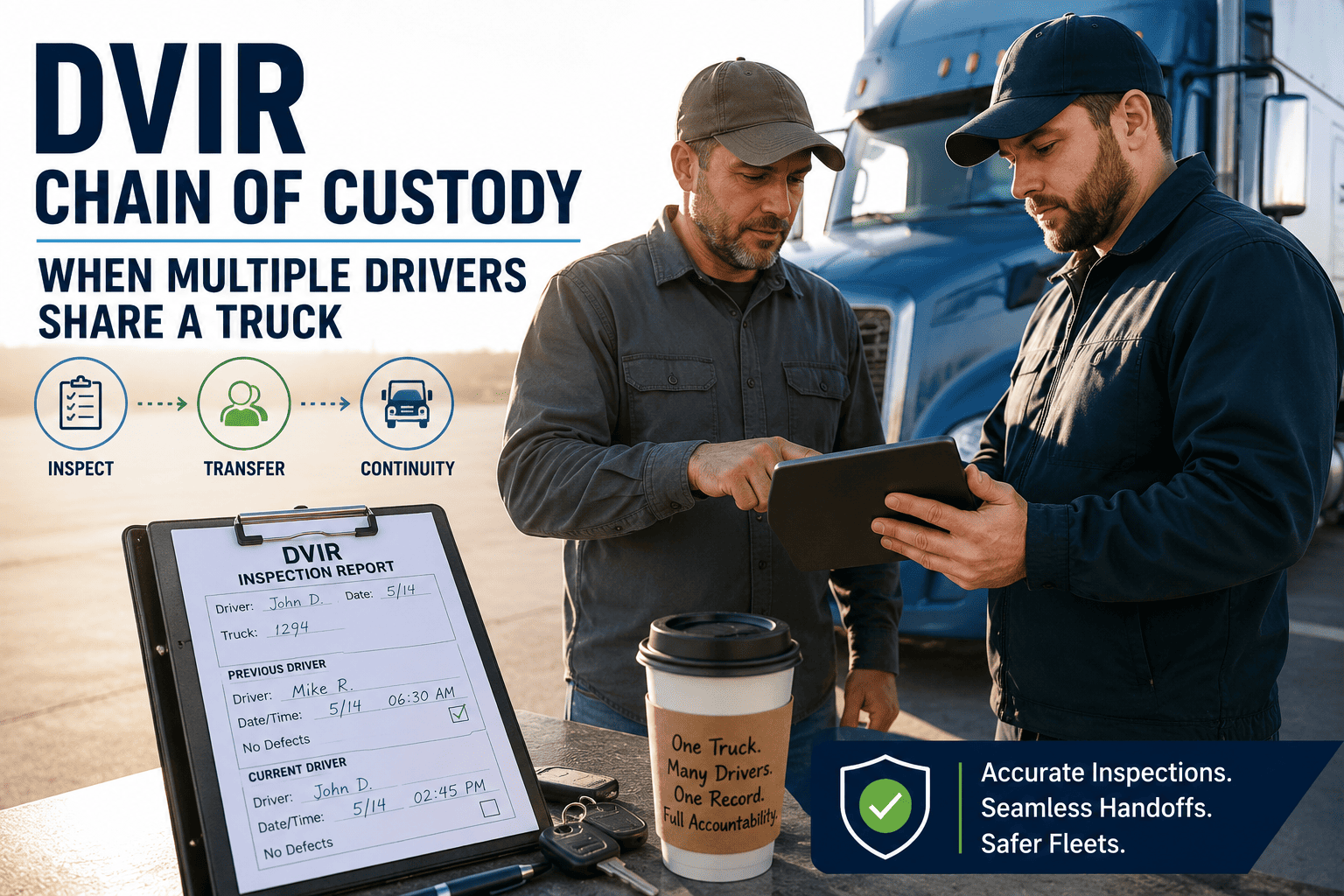
DVIR Chain of Custody When Multiple Drivers Share a Truck
When one tractor rotates through three drivers a week, a federally required document has to travel with it through every hand-off — the driver who found the defect, the mechanic who fixed it, and the next driver who has to trust it was fixed. This guide shows exactly where that chain breaks in slip-seat fleets and how to keep it unbroken.
Give Every Driver Rotation a Complete, Unbroken DVIR Trail
Oxmaint ties every inspection, repair certification, and acknowledgment to the vehicle itself — not just to whichever driver happens to be behind the wheel that day. A tractor that changes hands three times a week keeps one continuous record instead of three fragmented ones.
The Three-Signature Chain Behind Every DVIR
Federal rules 49 CFR 396.11 and 396.13 do not just ask for one signature — they build a chain of custody with three separate people responsible for three separate actions. In a fleet where one driver is permanently assigned to one truck, this cycle rarely breaks because the same person often files and later reviews the report. In a slip-seat fleet, three different people, on three different shifts, have to physically find, sign, and pass along a single document before the truck can legally move again.
Single-Driver Trucks vs. Multi-Driver Trucks: Where the Risk Sits
A truck assigned to one driver rarely loses its paperwork trail — the same person who filed the report is often the one who reviews it days later. Slip-seat and multi-terminal operations remove that built-in safety net entirely.
| Aspect | Single-Driver Assigned Truck | Multi-Driver / Slip-Seat Truck | Oxmaint Chain Tracking |
|---|---|---|---|
| Signature 3 completion | Usually same day, same person | Often delayed across shifts or missed entirely | Dispatch locked until signed |
| Defect visibility | Driver already knows what was wrong | Next driver has zero context on prior issues | Push alert to assigned driver |
| Repair hand-off point | Not applicable — one driver | Shop office, break room, cab visor, or lost | Digital record follows the VIN |
| Audit trail clarity | Straightforward, one name per truck | Fragmented across multiple shifts and drivers | One searchable record per vehicle |
| Violation risk | Comparatively low | Highest-cited gap in focused reviews | Chain enforced structurally |
Four Places the Chain Breaks in a Multi-Driver Fleet
Stop Guessing Which Driver Signed What, On Which Truck, On Which Shift
With electronic DVIRs now explicitly authorized under FMCSA's 2026 final rule, there is no longer a compliance reason to keep chasing paper between drivers who never overlap. Every signature can be captured, timestamped, and tied to the vehicle automatically.
How Oxmaint Tracks Custody Across Every Driver Rotation
Frequently Asked Questions
Does a multi-driver truck need a new DVIR every time it changes hands?+
Who is responsible if the third signature gets missed?+
Can electronic DVIRs handle drivers across different shifts?+
How long do multi-driver DVIR records need to be kept?+
What's the fastest way to see where our own chain is breaking today?+
One Truck. Three Drivers. One Unbroken Record.
Every report, every repair certification, and every acknowledgment tracked against the vehicle itself — so a shared truck never loses its chain of custody, no matter how many hands it passes through this week.