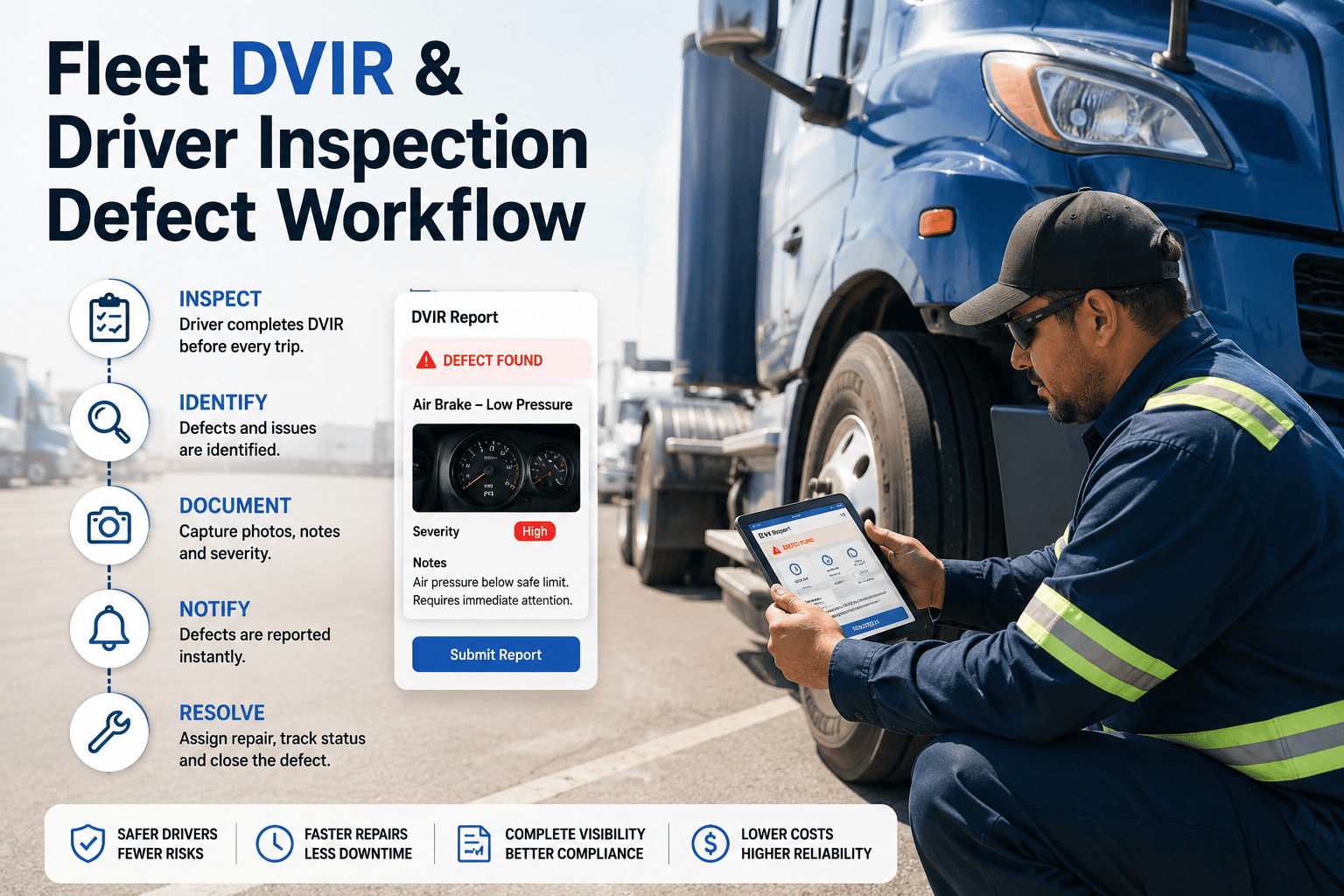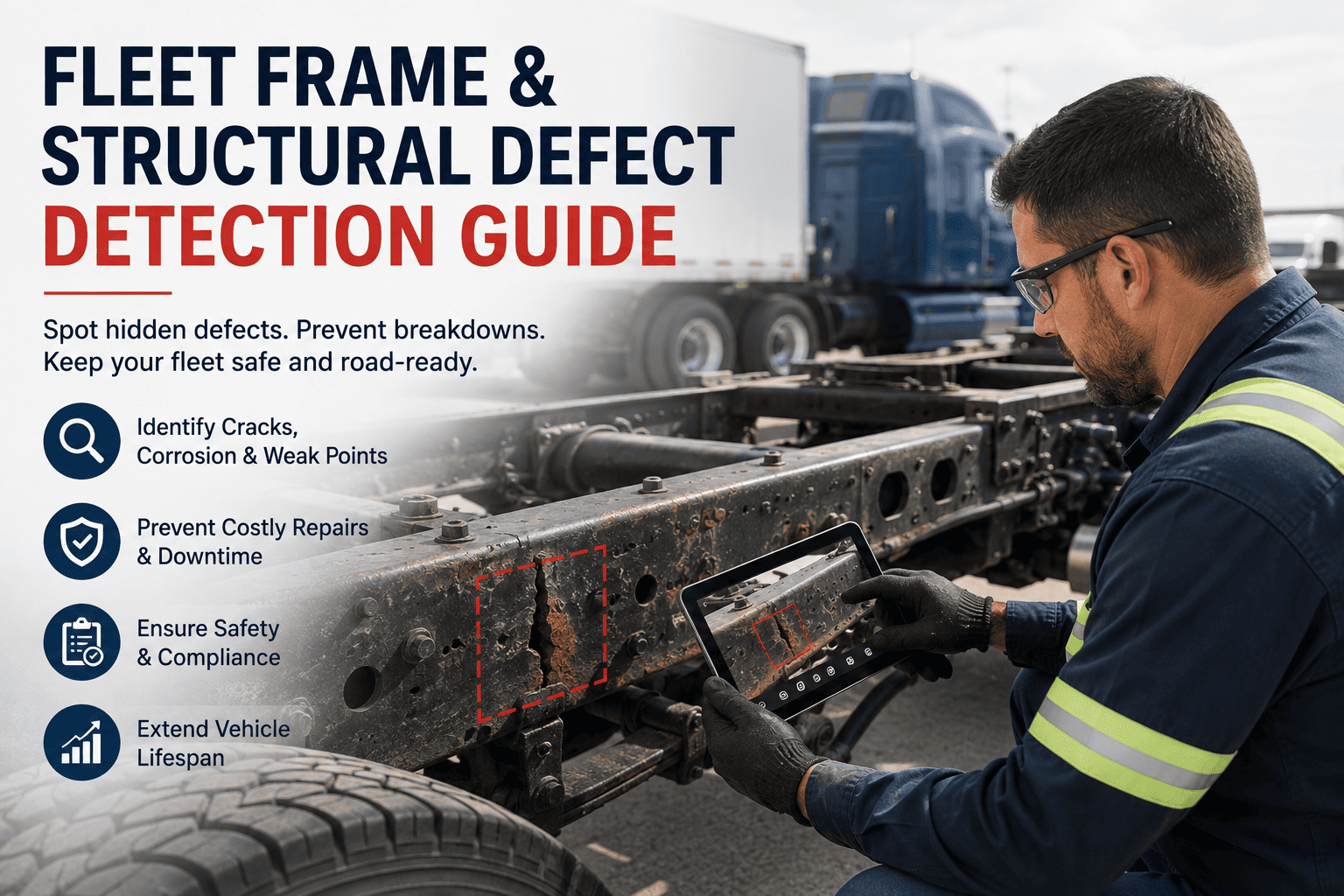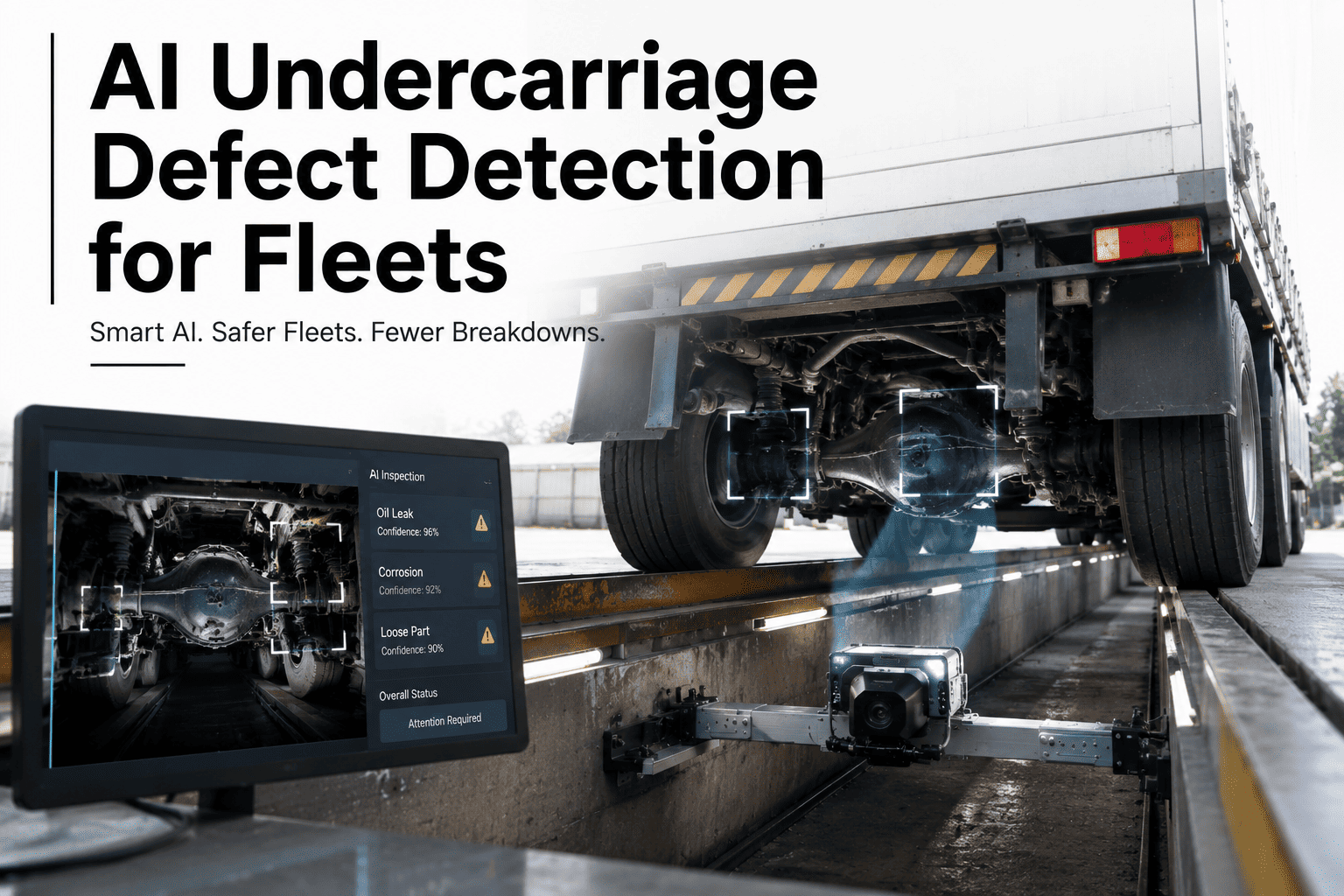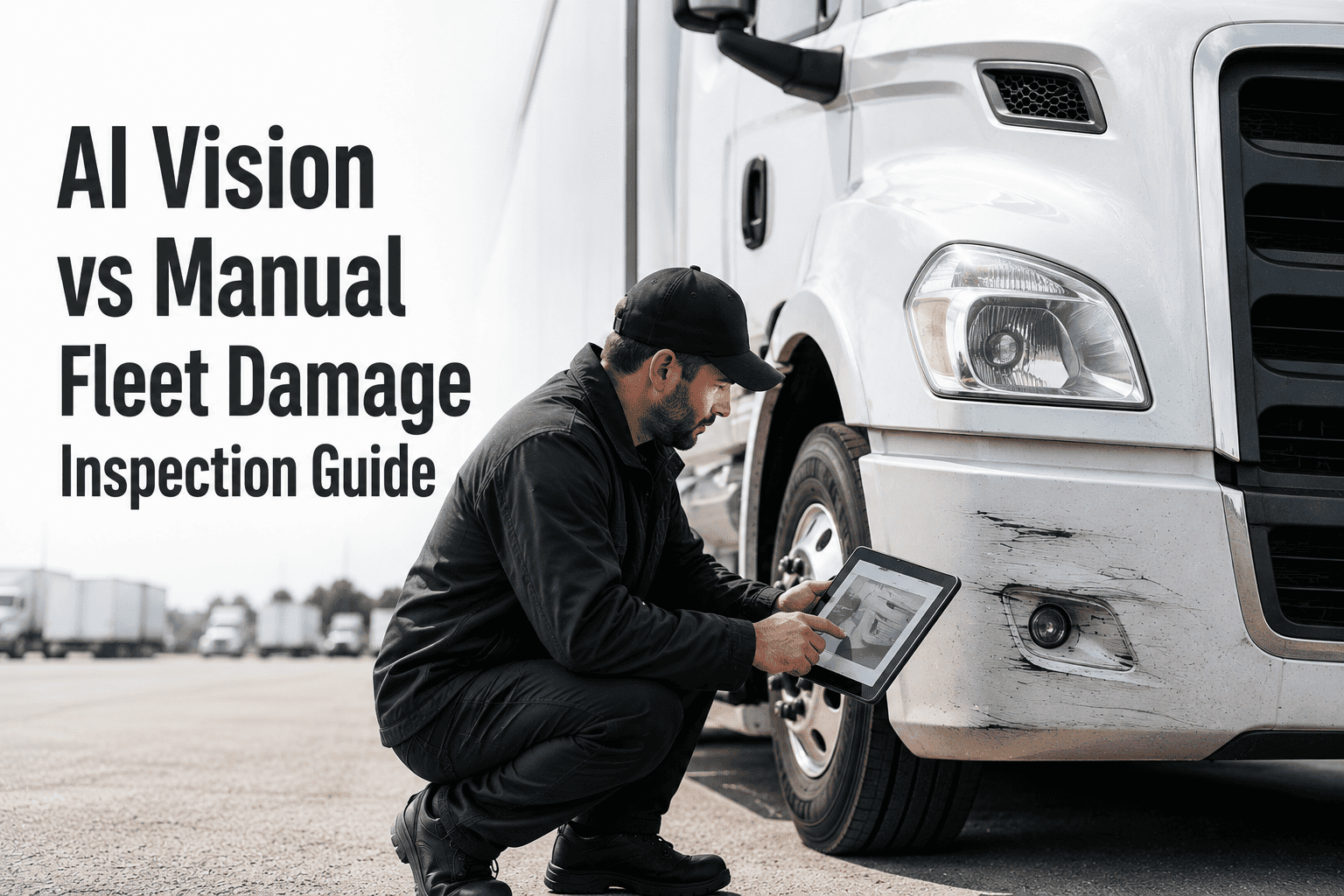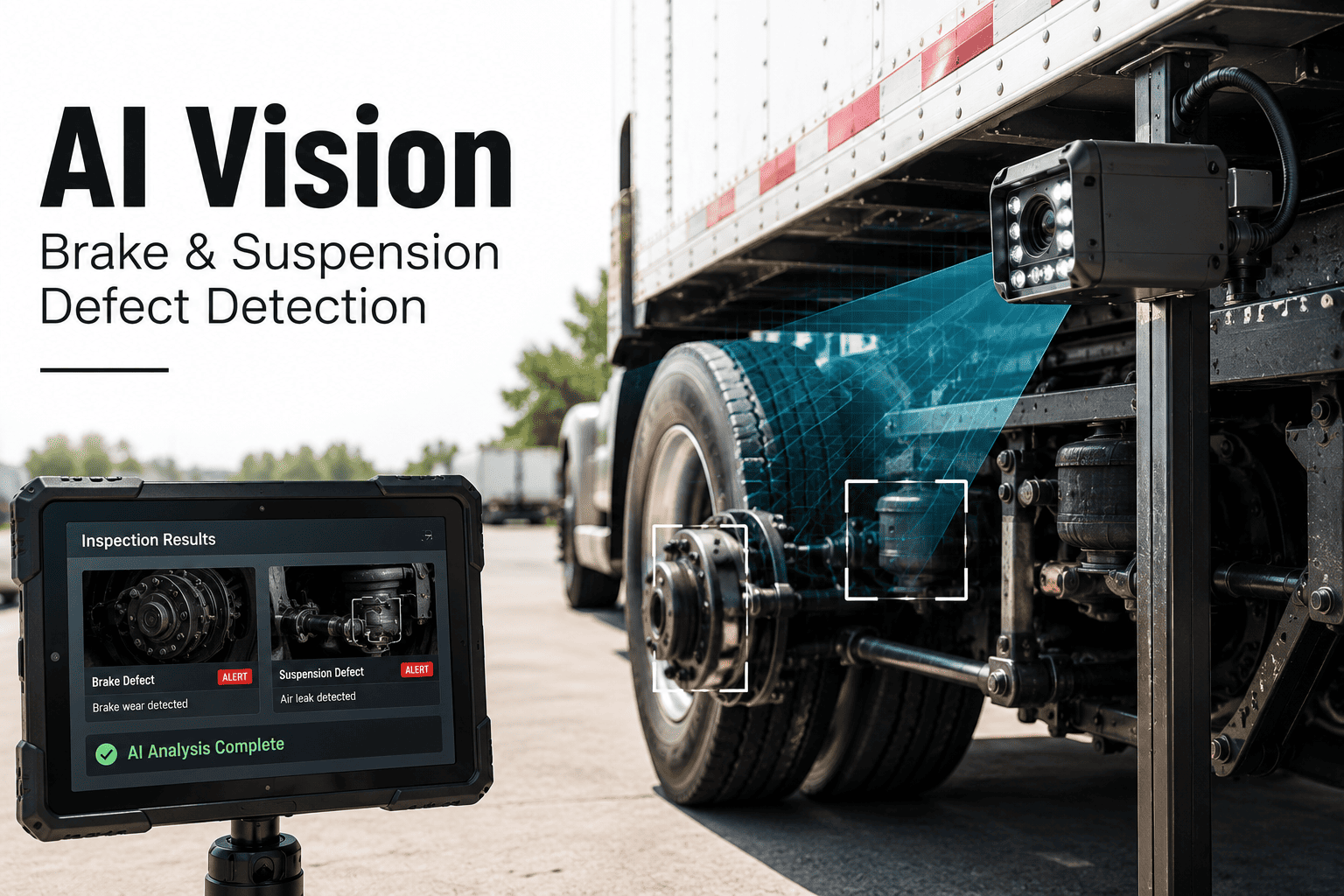
AI vision brake and suspension defect detection uses high-resolution cameras and machine-learning models to identify worn brake pads, leaking shocks, cracked springs and misaligned axles in seconds — without a technician crawling under every vehicle. For fleets of 50 or 500 units, manual undercarriage inspections miss up to 30% of early-stage brake and suspension defects, turning a $200 wear item into a $4,000 roadside failure, CSA violation or worse. OxMaint closes that gap by pairing AI brake and suspension inspection with an AI-powered CMMS that instantly classifies each defect, raises safety-critical alerts and generates a prioritised work order before the driver ever leaves the yard. Ready to see it on your assets? Start Free Trial or read on for the full breakdown.
AI VISION DEFECT DETECTION
Catch brake and suspension failures before they leave the yard — at inspection speed
OxMaint's AI vision brake and suspension inspection scans every incoming vehicle, classifies defects by severity and auto-generates a work order in under 8 seconds per unit. No clipboards. No missed wear limits. No out-of-service surprises.
THE COST OF MISSED DEFECTS
Why manual brake and suspension inspections can't keep up
A typical 150-truck fleet runs DOT-level brake and suspension checks every 30–90 days. Between inspections, wear compounds silently — and the average out-of-service brake violation costs $1,200 in fines plus 8 hours of lost revenue per unit.
REAL-WORLD SCENARIO
A 180-vehicle regional haul fleet spending $42K/yr on manual undercarriage inspections and absorbing 22 roadside brake/suspension events switched to AI vision detection with OxMaint. In the first 12 months the fleet caught 310 defects early, cut unplanned downtime 38% and saved $87K in fines, tows and lost revenue — payback in under 4 months.
AI INSPECTION CHECKLIST
What AI vision brake and suspension inspection actually scans for
OxMaint's computer-vision models are trained on millions of undercarriage images. Here's what the system detects, classifies and escalates — automatically — during every drive-through scan.
- Pad thickness below 4 mm (FMCSA minimum)
- Rotor scoring, heat cracking and surface glazing
- Air-line chafing, leaks and cracked gladhands
- Slack adjuster stroke overtravel
- Drum wear beyond manufacturer tolerance
- ABS sensor and tone-ring damage
- Air-spring bag abrasion, bulging and leakage
- Leaf-spring cracking, center-bolt shear and sag
- Shock-absorber oil seepage and bushing failure
- U-bolt loosening and axle-alignment drift
- Torque-arm and radius-rod bushing wear
- Ride-height valve malfunction and imbalance
- Frame-rail cracks, corrosion and cross-member loss
- Hanger-bracket and spring-seat weld integrity
- Tire wear patterns indicating alignment / suspension stress
- Loose, missing or corroded fasteners in critical joints
MANUAL vs AI VISION
How AI brake and suspension detection compares to shop-floor inspection
The gap between a clipboard walk-around and an automated vision scan is measurable — in minutes, in defect-catch rate and in dollars per inspection cycle.
| Inspection dimension | Manual walk-around | AI vision + OxMaint CMMS |
|---|---|---|
| Time per vehicle | 18–25 minutes | 6–8 seconds (drive-through) |
| Early-stage defect catch rate | ~70% (visual only) | 94% (trained on millions of images) |
| Consistency across technicians | Variable — depends on skill and fatigue | Identical on every scan, every shift |
| Work-order generation | Manual entry, 24–48 hr lag | Instant — auto-created and prioritised |
| Audit trail for FMCSA / DOT | Paper or photo, hard to retrieve | Time-stamped image + defect report stored in CMMS |
| Cost per inspection (150-unit fleet) | $11–14 per vehicle | $3–5 per vehicle (amortised) |
FROM SCAN TO WORK ORDER
How OxMaint turns AI brake and suspension detection into action
Detection without workflow is just a picture. OxMaint's AI-powered CMMS connects every scan to your asset register, spare-parts inventory and technician schedule — so a defect found at 06:15 is repaired, documented and closed by the same shift.
Drive-through capture
0–8 seconds
Vehicle rolls over an in-floor or bay-mounted camera array. OxMaint's vision engine captures 360-degree undercarriage images and tags them to the asset ID via RFID or plate recognition — no manual login.
AI defect classification
8–10 seconds
Models classify each finding (e.g., "brake pad L3 — 3.2 mm — critical"), assign a severity tier (green / amber / red) and flag anything crossing an FMCSA out-of-service threshold within the same second.
Safety-critical alerting & work-order auto-creation
10–15 seconds
Red-tier findings trigger an instant alert to the shop supervisor and auto-generate a prioritised OxMaint work order — with asset history, parts availability and estimated repair time pre-filled.
CMMS queue, repair & compliance closure
Same shift
The work order sits at the top of the priority queue until completed. Post-repair scans confirm the fix, and the full record — image, defect, parts, labour — is locked in the asset's maintenance history for audit.
ROI & PAYBACK
What AI brake defect detection costs — and what it saves a fleet
Most mid-size fleets see full payback within one quarter. Here's the math behind a typical 150-unit deployment.
ANNUAL SAVINGS FORMULA
(Roadside events avoided × $3,800) + (Fines avoided × $1,200) + (Downtime hours saved × $185) − Annual system cost
HOW OXMAINT HELPS
OxMaint: the CMMS built for AI-driven maintenance
OxMaint doesn't stop at detection. It's the maintenance backbone that ensures every AI-flagged brake or suspension defect is prioritised, parts-ready, repaired and documented — with measurable outcomes.
Auto-generated, prioritised work orders
Every AI-detected defect creates a work order instantly, ranked by safety severity and asset criticality. No re-keying, no paper, no missed handoffs. Outcome: cut unplanned downtime 30–50%.
Predictive maintenance analytics
OxMaint tracks wear-rate trends across every scan and predicts when a brake pad or air bag will hit failure threshold — scheduling preventive work before the defect ever appears. Outcome: 25–40% fewer emergency repairs.
Spare-parts inventory sync
When a suspension defect is flagged, OxMaint checks shelf stock for the exact part, reserves it and triggers a reorder if below min. Outcome: eliminate 95% of parts-related repair delays.
FMCSA-ready audit trail
Every scan, defect image, work order and repair sign-off is time-stamped and locked to the asset record. Generate a compliance report in two clicks. Outcome: pass DOT audits with zero document gaps.
See OxMaint on your assets — book a 30-min demo
Watch AI vision detect brake and suspension defects in real time, then auto-generate prioritised work orders inside the OxMaint CMMS. Bring your fleet numbers and we'll show you the payback math live.
FAQ
AI vision brake and suspension defect detection — your questions answered
How does AI vision detect brake and suspension defects?
AI vision systems use high-resolution cameras mounted in a drive-through bay or pit to capture the undercarriage as the vehicle passes over. Machine-learning models trained on millions of annotated images identify wear patterns — pad thickness, shock leakage, spring cracks, alignment drift — and classify each by severity in under 10 seconds. OxMaint then routes that finding into a prioritised CMMS work order automatically.
Can AI brake inspection replace a DOT manual inspection?
AI vision detection is a powerful screening and monitoring layer that catches defects manual checks miss, but under current FMCSA regulations a qualified inspector must still sign off on annual and periodic inspections. OxMaint stores both the AI scan and the inspector's digital sign-off in one asset record, giving you a faster, more thorough and fully compliant audit trail. You can Book a Demo to see the dual workflow in action.
How accurate is AI suspension defect detection in real fleet conditions?
Production-grade models achieve 90–96% classification accuracy on common suspension failures (air-spring leaks, shock seepage, leaf-spring cracks, bushing wear) under typical bay lighting and vehicle speeds of 3–5 mph. Accuracy improves over time as the system retrains on your specific fleet's images, and any low-confidence finding is automatically routed to a human technician for verification.
What does it cost to deploy AI brake and suspension inspection?
For a 150-unit fleet, camera hardware and installation typically run $15K–$30K, with OxMaint software (CMMS + AI analytics) at $3–$8 per asset per month. Most fleets reach full payback in 3–6 months through avoided roadside events, CSA fines and downtime — the scenario above shows $109K gross annual savings against $22K total system cost.
How quickly can a fleet switch from spreadsheets to OxMaint?
Most fleets are live on OxMaint within 2–4 weeks. The platform imports existing asset lists, maintenance history and PM schedules from spreadsheets or legacy CMMS, then layers in AI vision data as soon as cameras are installed. OxMaint onboarding includes data migration, technician training and workflow configuration — there's no need to pause operations. Get started with a Start Free Trial today.
Stop missing brake and suspension defects that cost you thousands
Deploy AI vision inspection on top of an AI-powered CMMS that catches failures early, auto-generates work orders and keeps your fleet audit-ready. See OxMaint on your assets in 30 minutes.
Free 14-day trial · No credit card