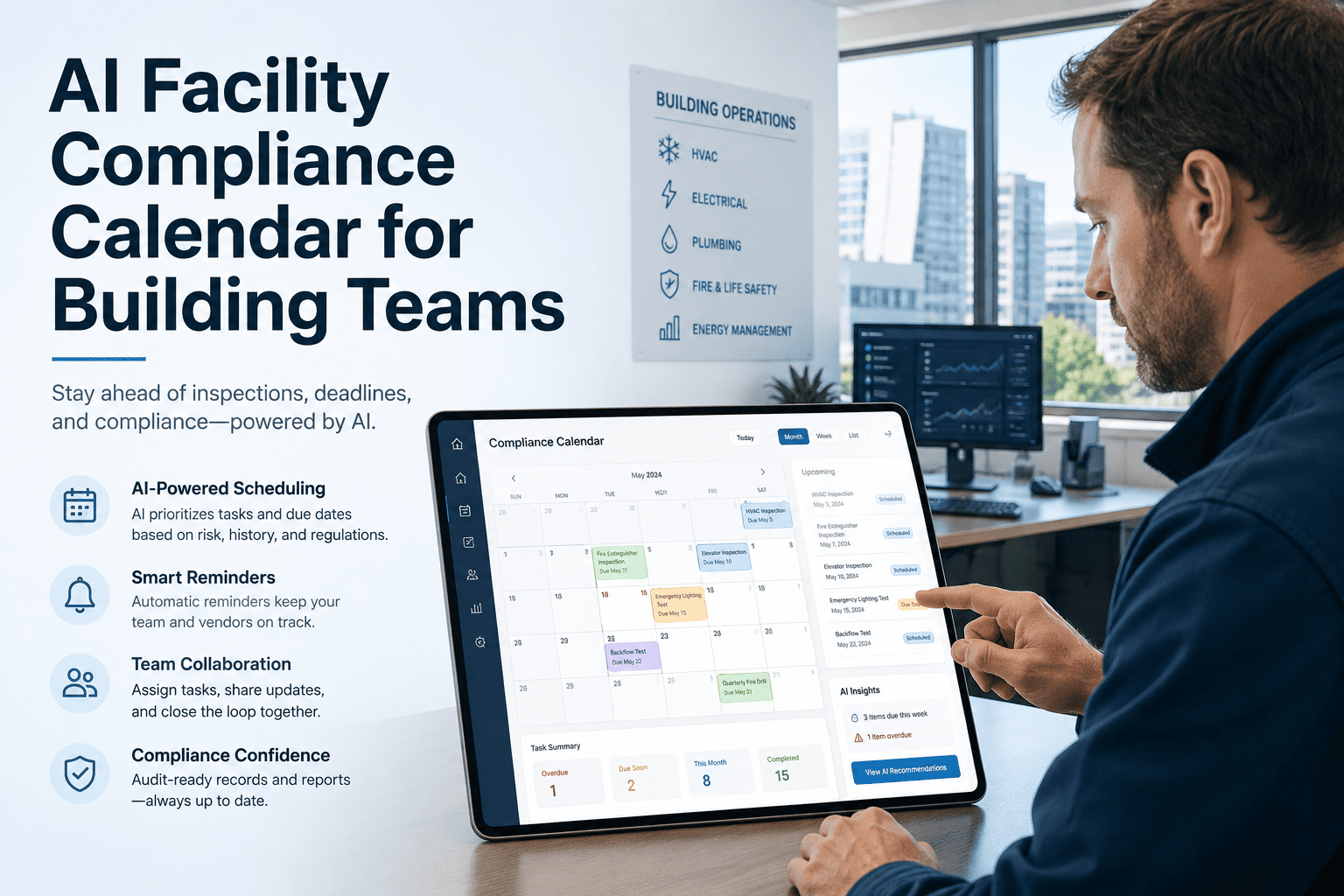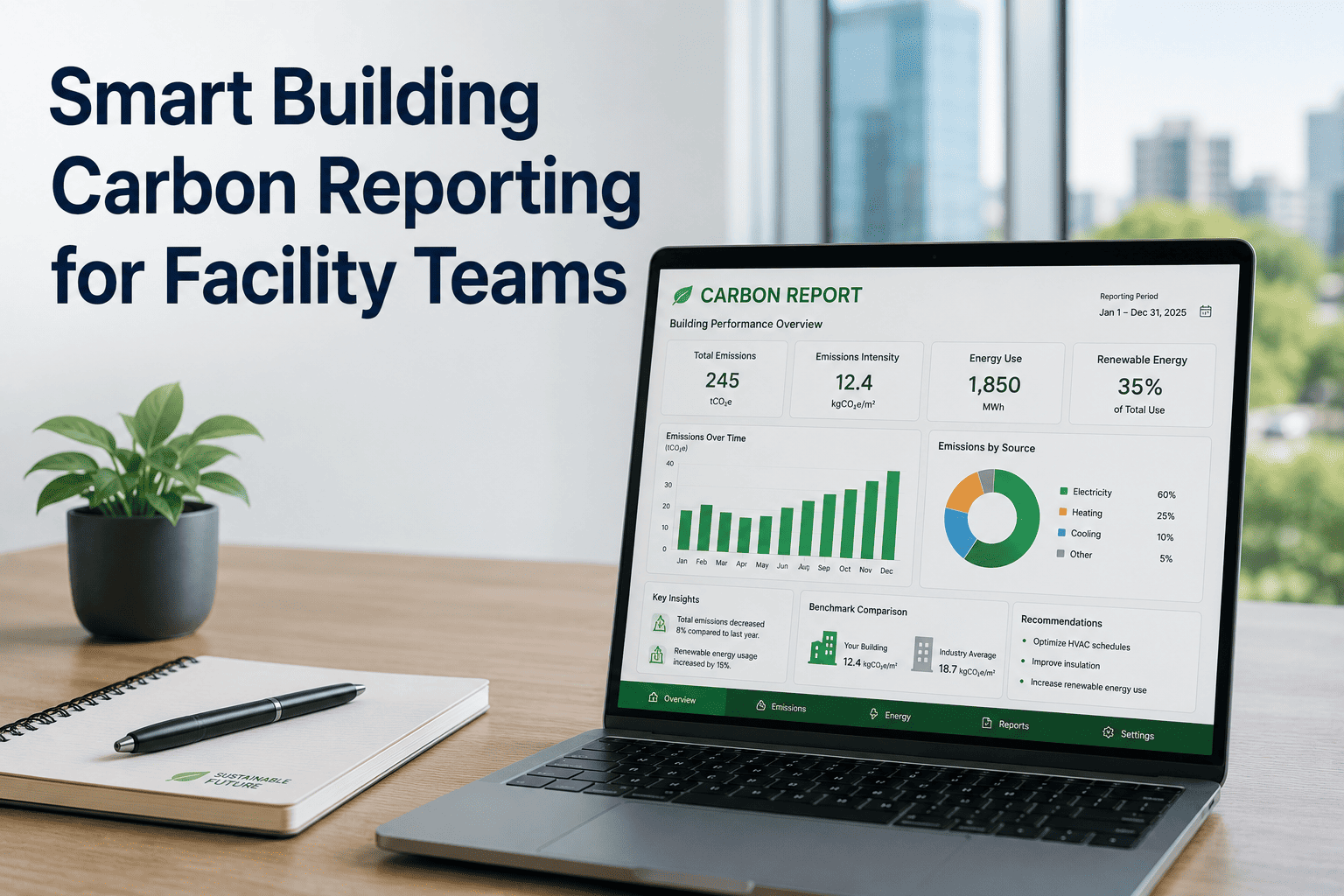
NYC Local Law 97 compliance places hard emissions caps on buildings over 25,000 sq ft, with penalties reaching $268 per ton of CO2e over the limit starting in 2024. For facility teams, the challenge is not just measuring energy use but translating it into documented, audit-ready performance data and a capital roadmap that stays under the cap through 2030 and beyond. OxMaint gives maintenance and reliability teams the work-order, preventive maintenance and analytics backbone to track equipment performance, plan retrofits and prove compliance — start by exploring a Start Free Trial or booking a personalized walkthrough.
NYC LL97 Facility Compliance
Can your building document its emissions performance before the next LL97 reporting deadline?
Local Law 97 penalties are live — $268 per ton of CO2e over the cap. Facility teams that wait for the 2025 benchmarking window will be retrofitting under duress. OxMaint turns maintenance data into the compliance evidence and capital plan that keeps NYC buildings under the emissions cap.
The Compliance Math
How the Local Law 97 emissions cap actually works
LL97 assigns each building a CO2e emissions limit based on occupancy group and square footage. The 2024–2029 cap is forgiving for many property types; the 2030 cap tightens by roughly 40–60 percent for most classes — the point where retrofits become mandatory, not optional.
A 500,000 sq ft mixed-use building in Manhattan with a 2024 limit of 2,080 tCO2e currently emits 2,350 tCO2e. The 270-ton overshoot triggers a $72,360 annual penalty. A boiler tune-up, VFD installation on two supply fans and LED retrofit — tracked and documented through OxMaint work orders — cuts 310 tCO2e, bringing the building under cap and generating $83K in avoided fines in year one alone.
Compliance Horizon
LL97 compliance deadlines facility teams must hit
The compliance horizon has two critical windows. Missing either creates compounding exposure — penalties accrue monthly and the 2030 step-down rewards teams that start capital planning in 2025, not 2029.
Initial Emissions Report Due
Buildings must file their 2024 calendar-year emissions report through the NYC BEAM portal. Late or inaccurate filings trigger penalties — facility teams need 12 months of validated energy and fuel data ready by Q1.
Interim Cap Period
The first compliance interval. Buildings over 25,000 sq ft must stay under their initial emissions limit or purchase offsets/renewable energy credits (RECs) for the excess. This is the window to execute staged retrofits.
Stricter Cap Takes Effect
Emissions limits tighten dramatically — most occupancy groups drop 40–60%. Buildings that barely pass in 2024 will face six-figure penalties without deep efficiency retrofits, electrification or on-site renewables.
Net-Zero Target
NYC's stated goal is carbon neutrality by 2050. Cap factors will continue tightening in 5-year intervals. Facility teams need a living capital plan — not a one-time retrofit — to track and phase interventions across decades.
Penalty & Retrofit Math
What Local Law 97 fines cost — and what closes the gap
Penalties scale with the severity and duration of non-compliance. The table below maps the fine structure against the retrofit categories that most NYC buildings need to close the emissions gap before 2030.
| Compliance Gap | Penalty Mechanism | Estimated Annual Cost | Primary Retrofit Lever |
|---|---|---|---|
| 1–10% over emissions cap | $268 per excess ton CO2e | $5K – $50K | BAS optimization, LED retrofit |
| 10–25% over cap | $268/ton + offset purchase obligation | $50K – $150K | VFDs, boiler tune-ups, envelope sealing |
| 25%+ over cap (2030 step-down) | $268/ton + possible DOB enforcement | $150K – $500K+ | Heat pump electrification, district steam exit |
| Failed / late emissions report | $0.50 per sq ft (capped) | $12.5K – $100K | Automated energy data aggregation |
| No documented good-faith effort | Additional penalties; denial of offsets | Variable | Work-order trail of PM and upgrades |
How OxMaint Helps
LL97 compliance facility management — powered by OxMaint
OxMaint turns your CMMS into the compliance engine: every work order, PM trigger and asset reading feeds the evidence trail inspectors and the BEAM portal demand. No more spreadsheet archaeology in April.
Audit-Ready Work Orders
Every PM, repair and retrofit task is timestamped, assignable and photo-documented. When the DOB requests proof of good-faith effort, export a filtered work-order history in seconds — not weeks.
Energy & Asset Analytics
Track runtime hours, fuel consumption and equipment efficiency trends against emissions targets. Dashboards flag drift before it becomes a penalty — the predictive layer catches bearing wear or coil fouling early.
Retrofit Project Tracking
Phase capital projects — VFD installs, boiler replacements, LED rollouts — as structured work-order streams with budgets, milestones and vendor coordination. See exactly which intervention closes how many tons of CO2e.
Automated PM Scheduling
Preventive maintenance is the cheapest emissions reduction available. OxMaint auto-generates filter changes, coil cleanings and combustion tune-ups on condition or calendar — keeping equipment at nameplate efficiency year-round.
Operational Roadmap
The 12-month LL97 retrofit planning checklist for facility teams
Buildings that stay compliant treat LL97 as an operational discipline, not a once-a-year filing. This checklist maps the monthly cadence that keeps NYC buildings under the emissions cap.
Q1 — Baseline & Audit
- Pull 24 months of utility data (Con Ed, National Grid, steam)
- Calculate building emissions vs. LL97 limit factor
- Audit top 10 energy-consuming assets via OxMaint registry
- Identify the gap to the 2030 cap (not just 2024)
Q2 — Quick-Win PM
- Schedule combustion tune-ups on all boilers
- Reset BAS schedules to actual occupancy patterns
- Complete LED retrofit in common areas and garages
- Calibrate sensors and actuators on AHUs
Q3 — Capital Planning
- Scope VFD retrofits on supply/return fans and pumps
- Evaluate heat pump feasibility for domestic hot water
- Model tCO2e reduction and payback for each project
- Secure board approval using OxMaint analytics dashboards
Q4 — Execute & Report
- Execute approved retrofits as tracked work-order streams
- Re-measure emissions post-intervention
- Compile documentation package for BEAM filing
- Set 2025 PM schedule to lock in efficiency gains
See OxMaint on Your Assets
Stop scrambling for LL97 documentation every spring
Book a 30-minute demo and we'll show you how OxMaint work orders, PM scheduling and analytics turn your maintenance data into a compliance engine — and your 2030 retrofit plan into a tracked capital project.
Frequently Asked Questions
Local Law 97 compliance — what facility teams ask most
What is the Local Law 97 penalty per ton of CO2e?
The LL97 fine is $268 per metric ton of CO2e emitted above a building's annual emissions cap. A building 100 tons over its limit faces a $26,800 annual penalty, and the excess compounds each year the building remains non-compliant. Additional fines apply for late or inaccurate emissions reports.
When is the next NYC LL97 compliance deadline?
The initial emissions report covering calendar year 2024 is due May 1, 2025, filed through the NYC BEAM portal. After that, the current emissions cap runs through 2029, and a much stricter cap takes effect January 1, 2030 — the deadline that drives most major retrofit decisions today.
How do facility teams document LL97 good-faith compliance efforts?
Buildings must show measurable steps taken to reduce emissions: PM records, retrofit project documentation, energy audits and BAS optimization logs. OxMaint captures this automatically — every work order, PM completion and asset reading becomes timestamped evidence exportable for DOB review. Book a demo to see the compliance report builder in action.
Which buildings must comply with NYC Local Law 97?
LL97 applies to buildings over 25,000 gross square feet, two or more buildings on the same tax lot that together exceed 50,000 sq ft, and two or more buildings owned by a condo association that together exceed 50,000 sq ft. Residential buildings with 35% or more rent-regulated units follow a different reporting pathway until 2030.
Can preventive maintenance actually reduce building emissions?
Yes — poorly maintained equipment routinely wastes 5–15% of the energy it consumes. Dirty coils, scaled boilers, stuck dampers and worn bearings force systems to run longer and harder. A disciplined PM program managed in OxMaint recovers that lost efficiency, often closing a meaningful share of the emissions gap at a fraction of the cost of a capital retrofit.
Get Compliant Before the Cap Tightens
Build your LL97 compliance engine with OxMaint
Work orders, preventive maintenance, asset tracking and analytics in one AI-powered platform — designed for maintenance and reliability teams who can't afford to miss an emissions cap.
Free 14-day trial · No credit card