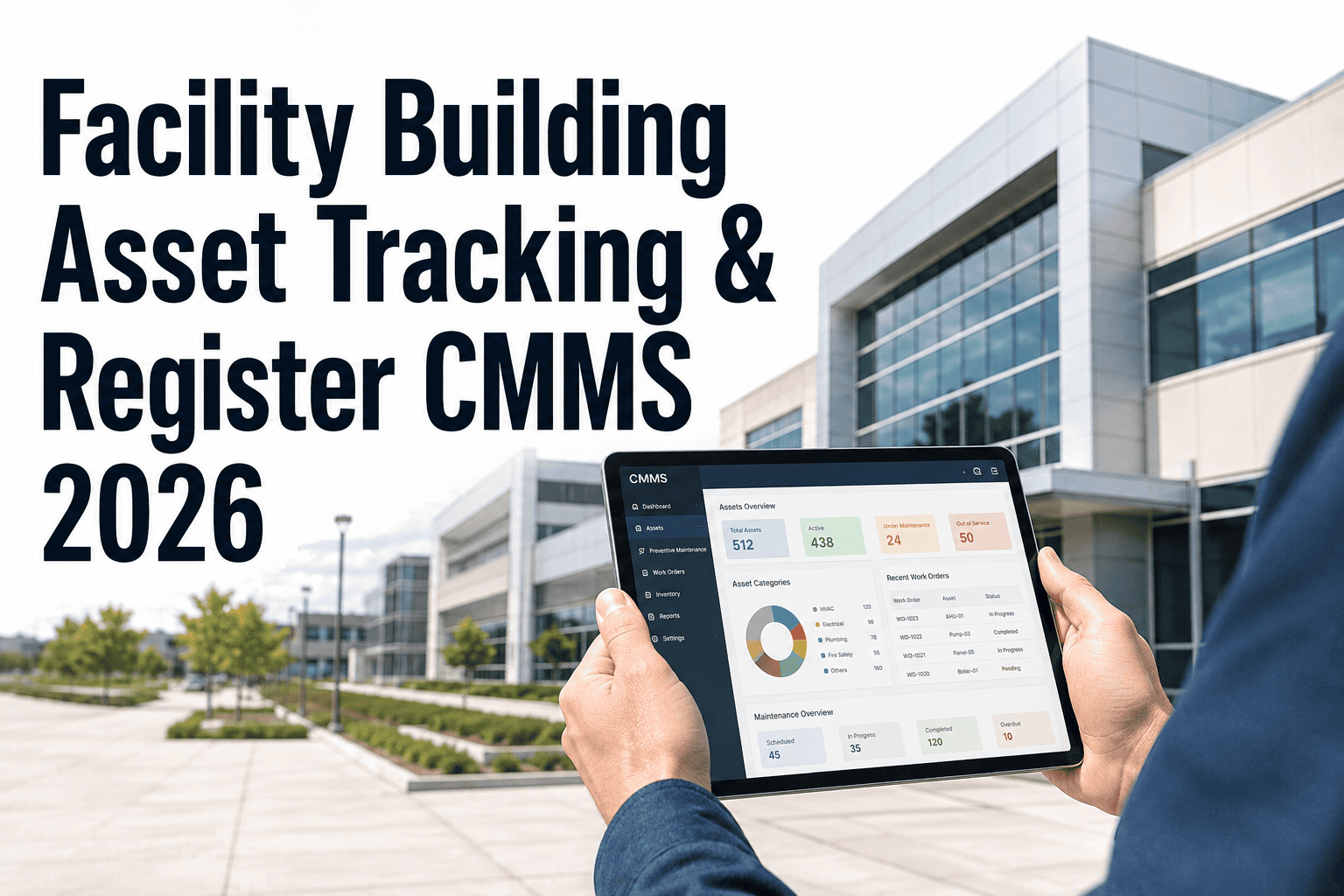
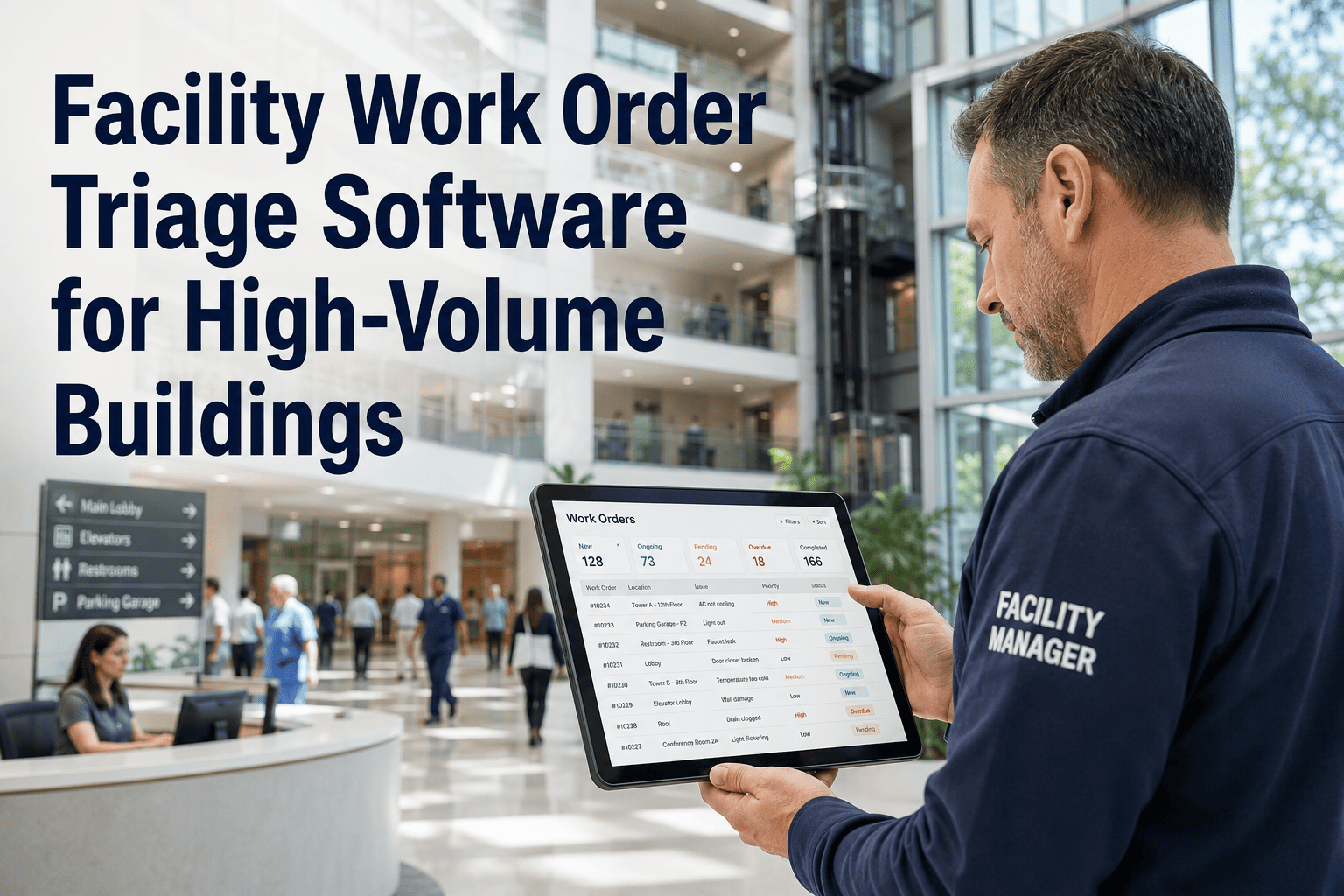
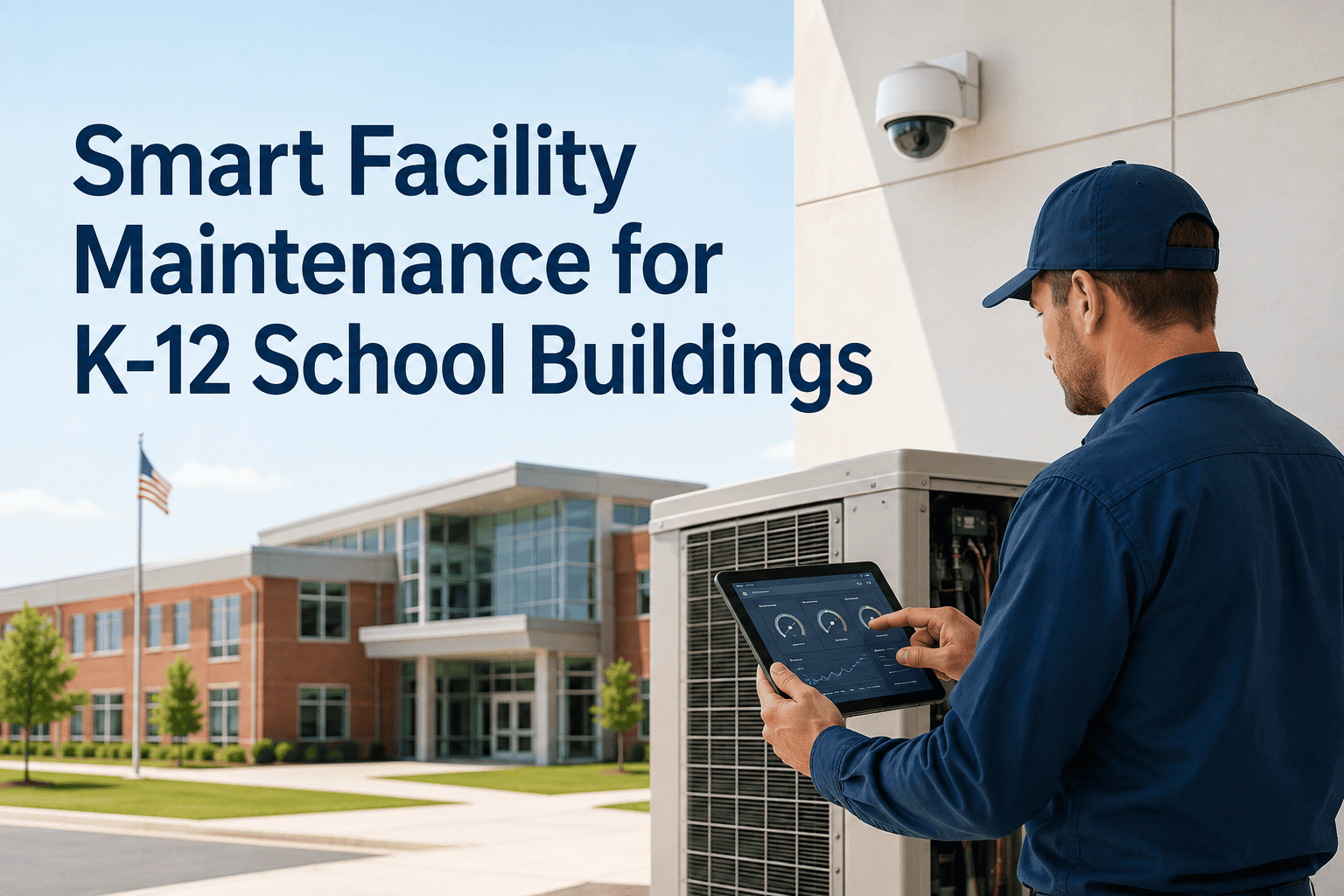
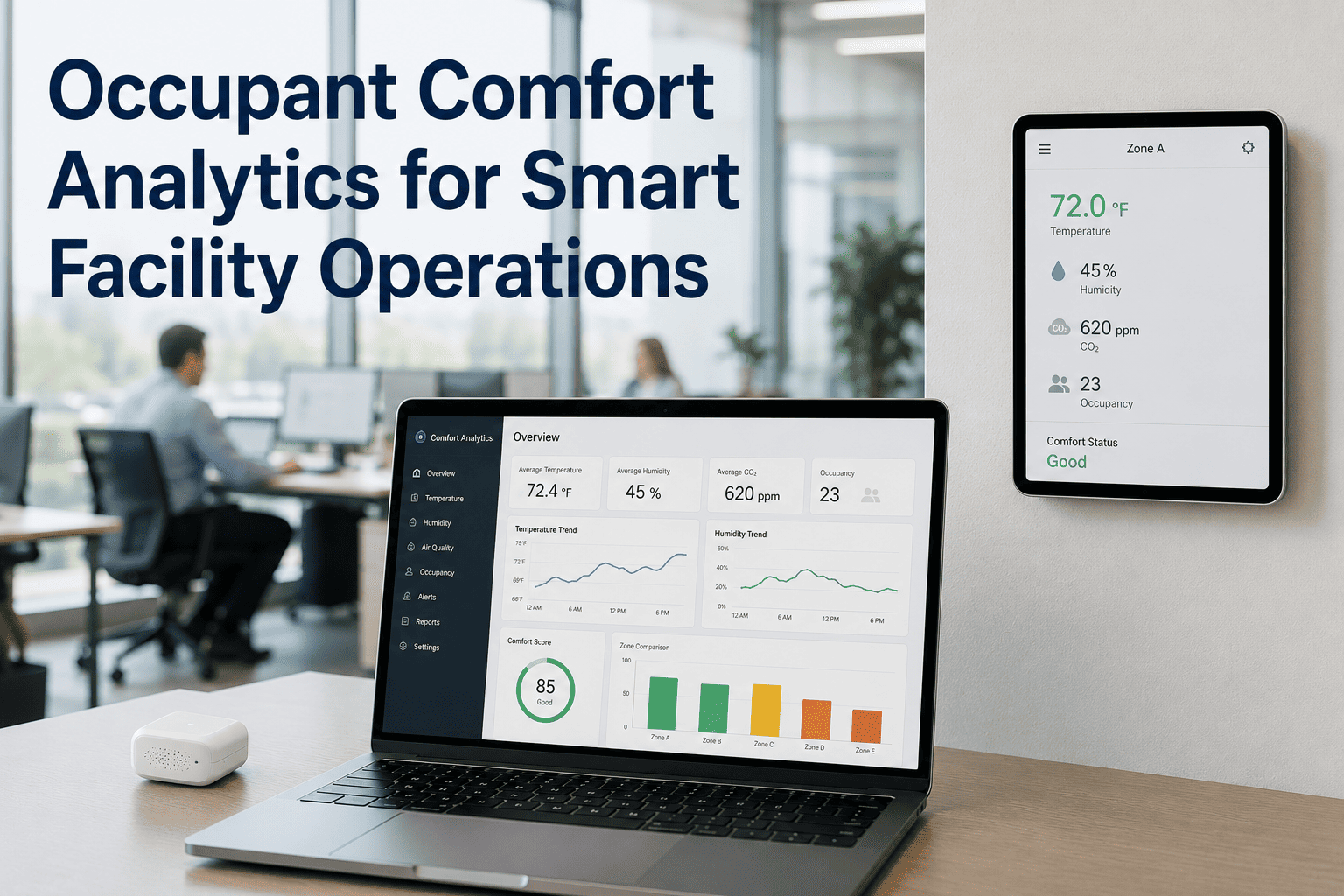
Medical office buildings carry a maintenance burden that standard commercial facilities never face. Every exam room, imaging suite, waiting area, and procedure zone demands precise temperature control, verified air quality, documented inspections, and a service request trail that must survive a compliance audit — all while patients are actively in the building. A single HVAC failure that spikes humidity above 60% in a sterile compounding area is not just a discomfort issue; it is a patient safety event that triggers regulatory review. A missed filter replacement logged nowhere becomes a gap in the compliance record that surfaces during a Joint Commission survey. The cost of reactive maintenance in a medical office building is not measured in repair invoices alone — it shows up in lease terminations, citation penalties, and the silent erosion of tenant trust that makes the next renewal conversation harder than it should be. Oxmaint AI gives facility managers the CMMS workflows — work order management, preventive maintenance schedules, patient comfort tracking, compliance documentation, and asset lifecycle records — purpose-built for the realities of MOB operations. Start your free trial and bring your medical office building maintenance program into one platform today.
92.7%
MOB occupancy rate — record high, meaning tenant expectations and compliance scrutiny have never been higher
77%
Of hospital Joint Commission surveys cite HVAC-related infection prevention deficiencies
40–50%
Lower total maintenance costs at facilities running 80%+ planned vs reactive maintenance ratios
30%
Of all provider revenue now comes from ambulatory outpatient settings — MOBs are the growth engine
Why MOB Maintenance Is Different From Every Other Commercial Building
A standard office building needs clean air and comfortable temperatures. A medical office building needs documented, parameterized, inspected, and audit-traceable air — room by room, shift by shift. The difference is not complexity for its own sake. It is the regulatory and clinical reality of treating patients with compromised immune systems in spaces that share walls with administrative offices and waiting areas full of healthy visitors.
Standard Commercial Building
HVAC maintained for comfort
Work orders logged when tenants complain
Annual inspections sufficient
No pressure differential requirements
Paper logs acceptable for most audits
Generic CMMS handles the job
Medical Office Building
HVAC maintained for patient safety and infection control
Work orders must be timestamped, assigned, and closed with sign-off
Daily and weekly inspections required in clinical zones
Negative pressure rooms, isolation zones, and clean rooms need monitoring
Digital compliance trail required for Joint Commission and OSHA
Condition-based CMMS workflows tied to clinical thresholds
The Five Maintenance Failure Modes That Hurt MOBs Most
01
HVAC Parameter Drift
Exam rooms, procedure suites, waiting areas, corridors
Temperature outside the 68–75°F band and humidity above 60% in clinical areas creates conditions for microbial growth and puts sterile compounding at risk. Without continuous logged monitoring tied to automated work orders, parameter drift is invisible until a tenant complaint or inspection citation makes it visible.
Trigger: Temperature deviation beyond set range OR humidity reading above 60% — auto-generates inspection work order
02
Filter and Air Handler Neglect
AHU units, HEPA zones, return air plenum spaces
ASHRAE 170 requires specific air change rates per room type. A clogged filter reduces ACH below minimum thresholds without triggering any visible alarm in buildings without CMMS-monitored differential pressure gauges. Missing a single scheduled filter change in an airborne infection isolation room creates a compliance gap that cannot be retroactively documented.
Trigger: Calendar-based PM + differential pressure reading deviation flags filter replacement before ACH drops
03
Untracked Service Requests
Multi-tenant floors, shared corridors, reception areas
Multi-specialty MOBs receive service requests from multiple tenants across multiple specialties. Requests logged by phone, email, or verbal handoff create no accountability chain. A pediatric tenant reports a light flicker on Monday; the orthopedic suite reports the same circuit issue on Wednesday. Without a unified work order system, these are treated as two separate events instead of one escalating electrical fault.
Trigger: Centralized service request portal with tenant access — every request becomes a tracked, assigned work order
04
Asset Lifecycle Blindness
Medical gas systems, elevators, backup generators, plumbing
MOBs carry assets — medical gas outlets, emergency power systems, patient lifts — with manufacturer-mandated inspection intervals and regulatory oversight that goes far beyond a standard commercial building. Without asset-level lifecycle records in a CMMS, facility managers discover overdue inspections during audits rather than during maintenance planning.
Trigger: Asset registry with inspection due dates, warranty expiry, and compliance interval alerts per asset class
05
Compliance Documentation Gaps
Across the entire facility — inspection records, PM logs, work orders
Joint Commission surveys, OSHA inspections, and insurance reviews require a continuous, dated, signed record of maintenance activity. Paper binders and email threads do not produce audit-ready packages on demand. A single gap in a filter change log or a missing signature on an HVAC inspection form is enough to trigger a citation even when the physical maintenance was performed correctly.
Trigger: Every work order closed with technician sign-off and timestamp — audit export available in minutes, not days
Built for Medical Office Buildings
Five Failure Modes. One Platform to Prevent Them.
Oxmaint configures CMMS workflows for HVAC parameter monitoring, service request management, asset lifecycle tracking, and compliance documentation — purpose-built for MOB operations and audit-ready from day one.
HVAC Compliance Standards Every MOB Facility Manager Must Track
ASHRAE 170
Ventilation for Healthcare Facilities
Sets minimum air change rates by room type. Operating rooms: 20 ACH minimum. Exam rooms: 6 ACH. Airborne infection isolation rooms: 12 ACH with negative pressure. Every room classification in the MOB must map to an ASHRAE 170 zone with documented ACH verification.
Joint Commission
EC.02.05.01 — Utility Management
Requires written maintenance programs for all utility systems including HVAC. Inspection frequencies, acceptable performance ranges, and procedures for failures must all be documented. Facilities without CMMS-backed records consistently generate citations in this category.
OSHA
Indoor Air Quality and Hazard Communication
Requires hazard documentation, maintenance records for exhaust systems handling medical waste gases, and evidence of proactive air quality management. Facilities relying on reactive maintenance have no evidence trail when OSHA asks for the history of a ventilation complaint.
CMS
Conditions of Participation
Medicare and Medicaid reimbursement eligibility requires compliance with physical environment standards including HVAC maintenance records. A compliance failure in the facility maintenance program can directly affect a tenant's billing eligibility — making the facility manager's documentation quality a revenue concern for every clinical tenant in the building.
What a Complete MOB Preventive Maintenance Schedule Looks Like
| Asset / System |
PM Frequency |
Primary Risk if Missed |
CMMS Trigger Type |
Compliance Standard |
| AHU Filter Replacement |
Monthly (clinical zones) / Quarterly (admin) |
ACH drops below minimum, infection risk |
Calendar + Differential pressure |
ASHRAE 170 |
| Pressure Differential Verification |
Daily (isolation rooms) |
Negative pressure failure, cross-contamination |
Calendar + Sensor reading |
Joint Commission |
| Temperature and Humidity Log |
Continuous (logged weekly minimum) |
Microbial growth, medication stability, patient discomfort |
Sensor threshold alert |
CMS / ASHRAE |
| Cooling Tower Treatment |
Monthly water chemistry test |
Legionella risk — patient and staff exposure |
Calendar + Water quality |
ASHRAE 188 / CDC |
| Emergency Generator |
Monthly load test, annual full inspection |
Power loss during patient procedures |
Calendar |
NFPA 110 / Joint Commission |
| Medical Gas Outlets |
Annual inspection per NFPA 99 |
Oxygen or suction failure during clinical use |
Calendar + Asset registry |
NFPA 99 |
| Elevator / Patient Lift |
State-mandated interval (typically annual) |
Mobility impairment, safety incident, state citation |
Calendar + Compliance date |
State elevator code |
| Fire Suppression and Alarms |
Quarterly inspection |
Life safety failure, CMS decertification risk |
Calendar |
NFPA 25 / Joint Commission |
| Plumbing and Hot Water Temp |
Monthly flush schedule (low-use fixtures) |
Legionella colonization in stagnant water |
Calendar + Water management plan |
ASHRAE 188 |
Work Order Management Built Around How MOBs Actually Operate
1
Tenant Submits Service Request
Every tenant — whether a primary care group, imaging center, or specialty clinic — submits service requests through a single portal. No phone calls lost in voicemail, no emails buried in an inbox. Every request enters the system with a timestamp, tenant name, location, and priority level attached automatically.
2
Work Order Auto-Generated and Assigned
The CMMS creates a work order, routes it to the correct technician based on trade type and zone, and sets a response time based on priority classification. A temperature complaint in an exam room routes differently than a bulb replacement in the parking structure — and both are tracked to resolution.
3
Technician Closes with Sign-Off
Every closed work order carries the technician's sign-off, completion timestamp, parts used, and notes. If the issue requires a follow-up or escalation, that chain is attached to the original work order — not scattered across text messages and email threads.
4
Tenant Receives Confirmation
The requesting tenant gets a completion notification. The facility manager has a closed loop. The compliance record is updated automatically. This is the difference between a maintenance program that builds tenant trust and one that generates renewal risk at every lease expiry.
5
Audit Record Available Instantly
Every work order, PM completion, inspection log, and compliance event is stored with timestamps and accessible for export in minutes. When a Joint Commission surveyor asks for the HVAC maintenance history for isolation room 204, the answer is a search query — not a filing cabinet.
Patient Comfort Analytics: The Metric MOB Tenants Actually Care About
68–75°F
Target temperature band for most clinical areas
Patient-facing spaces with temperature outside this range generate service requests 3x more often than any other complaint category in MOBs. Tracking temperature by zone over time reveals patterns — recurring afternoon overheating in south-facing exam rooms, for example — that calendar-only PM schedules never surface.
20–60%
Acceptable relative humidity range in most spaces
Humidity above 60% promotes microbial growth and triggers compliance flags. Below 20%, static electricity and viral transmission risk increases. Neither failure mode announces itself at the clinical level until the damage is already done — which is why continuous logging tied to automated alerts is not optional in a well-run MOB.
20 ACH
Minimum air changes per hour for operating rooms
Air change rate deficiencies are the single most commonly cited HVAC violation in healthcare facility surveys. A CMMS that tracks filter change history, differential pressure readings, and AHU performance trends can flag a declining ACH trajectory weeks before it drops below the minimum threshold and becomes a compliance event.
Work Order Management for Healthcare Facilities
Every Request Tracked. Every Inspection Documented. Every Audit Covered.
Oxmaint gives MOB facility managers a complete work order and preventive maintenance platform — with patient comfort tracking, compliance record generation, and multi-tenant service request management in one place.
CMMS Configuration for Medical Office Buildings: What Each Module Must Do
01
Asset Registry by Zone and Compliance Class
Every asset — AHU, VAV box, medical gas outlet, elevator, generator, fire suppression component — registered with zone classification, compliance standard, inspection interval, and warranty expiry. Clinical zone assets carry different PM schedules than administrative zone assets and the CMMS enforces that distinction automatically.
02
Multi-Tenant Work Order Portal
Tenants across all specialties submit requests through a shared portal. Each request auto-classifies by trade, priority, and zone. The facility manager sees the full building queue; each tenant sees only their own requests. Response time targets are set per priority level and tracked automatically.
03
Condition-Based HVAC PM Triggers
PM work orders fire on differential pressure readings, temperature excursions, and humidity alerts — not only on calendar dates. A filter change in a HEPA-filtered exam room is triggered by performance, not just schedule. This is the difference between maintaining ASHRAE compliance and discovering non-compliance during a survey.
04
Inspection Workflow and Sign-Off
Daily pressure differential verifications, weekly temperature logs, monthly water chemistry tests, and quarterly fire system checks all run as structured inspection workflows — not free-text field notes. Each inspection closes with a required sign-off, creating an unbroken compliance record with no retroactive gaps.
05
Parts and Vendor Management
Replacement filters, belts, bearing kits, and compliance consumables tracked with minimum stock levels tied to PM schedules. When a condition-based trigger fires a work order, required parts are reserved and reorder happens before the technician reaches the equipment. Vendor contact records and service contracts stored with each asset.
06
Compliance Export and Audit Records
Every inspection, work order, PM completion, and calibration event stored with technician identity and timestamp. Audit packages for Joint Commission, OSHA, CMS, or insurance reviews are exported on demand — complete, dated, and signed. No binder assembly, no missing pages, no retroactive documentation.
Frequently Asked Questions
What are the most common compliance failures in medical office building maintenance?
HVAC-related inspection gaps top the list — specifically, undocumented filter changes, missing pressure differential logs for isolation rooms, and incomplete air change rate verification records. Joint Commission surveys cite these in the vast majority of healthcare facility inspections. Oxmaint structures these inspections as closed-loop workflows so every required record exists before the auditor arrives.
See how Oxmaint handles compliance documentation.
How should a medical office building handle service requests across multiple tenants?
Every tenant request should enter a centralized work order system with automatic assignment, priority classification, and completion tracking. Phone and email-based request handling creates no accountability trail and allows related issues from different tenants to appear as separate problems instead of a single root cause.
Book a demo to see Oxmaint's multi-tenant work order portal.
Does HVAC maintenance in a medical office building differ from a regular commercial building?
Significantly. MOB HVAC must meet ASHRAE 170 air change requirements by room type, maintain documented pressure differentials in isolation and procedure rooms, and log temperature and humidity within clinical parameter bands continuously. A standard commercial building CMMS with calendar-only PM schedules cannot manage these requirements. Clinical-zone assets need condition-based triggers, not just annual service reminders.
What records does a Joint Commission survey require from a facility manager?
Surveyors typically request HVAC inspection and filter change history, pressure differential verification logs for controlled rooms, emergency generator test records, fire suppression inspection reports, and medical gas outlet inspection documentation. All records must be dated and signed. Oxmaint stores every record with technician sign-off and exports complete audit packages on demand.
Start building your audit-ready maintenance record today.
How does preventive maintenance reduce costs in a medical office building?
Facilities running 80% or more planned maintenance versus reactive see 40–50% lower total maintenance costs. In MOBs, unplanned failures carry additional cost beyond repair — tenant disruption during clinical hours, potential compliance citations, and the operational credibility damage that affects lease renewals. Structured PM scheduling in a CMMS pays back in avoided emergency calls within the first operating year.
Oxmaint AI — Healthcare Facility Operations
Your Medical Office Building Deserves More Than a Generic CMMS
Work orders, HVAC compliance, patient comfort analytics, asset lifecycle records, and audit-ready documentation — all configured for MOB operations inside one platform. Live in your facility in six weeks.