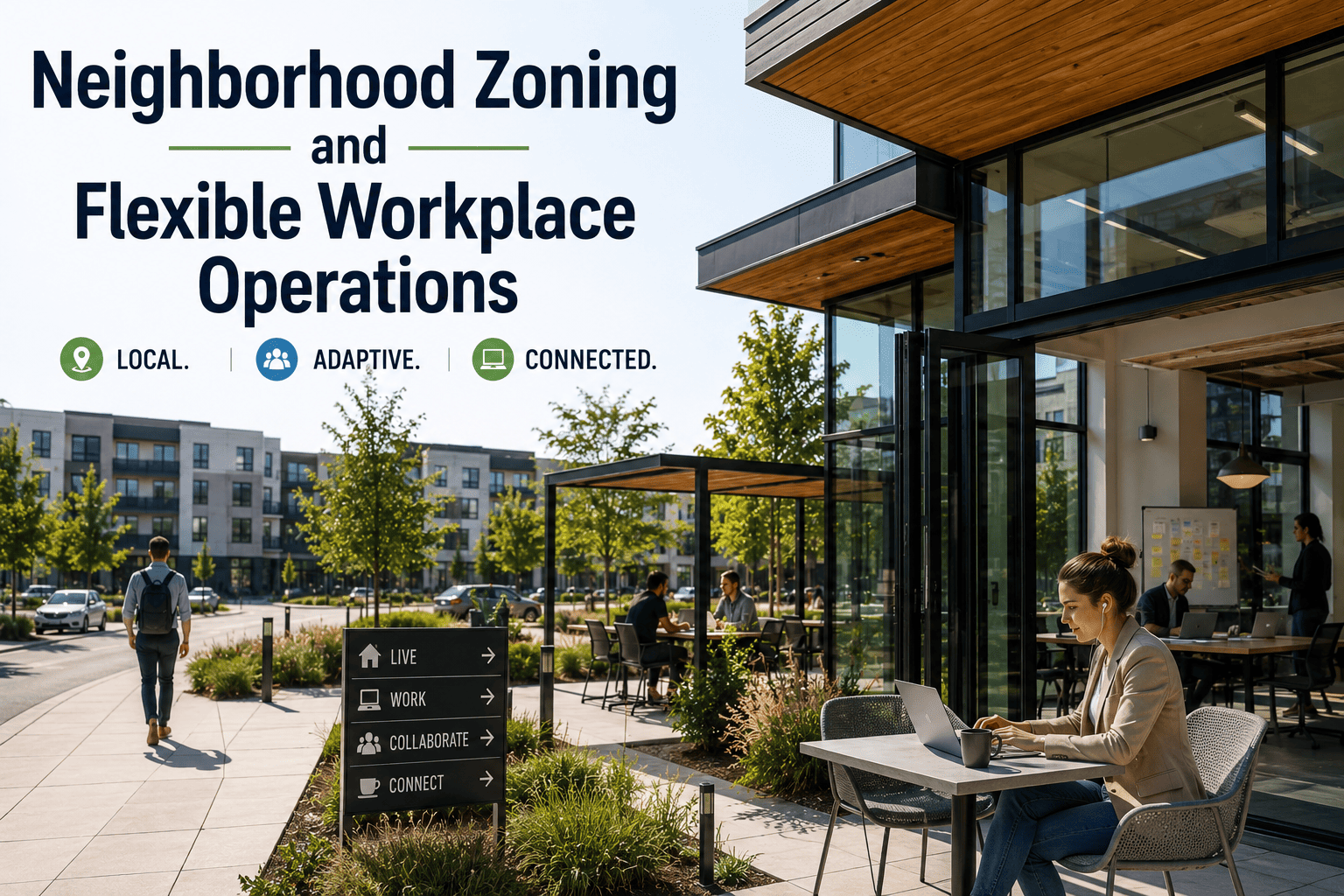
Workplace neighborhood zoning replaces fixed desk assignments with shared, activity-based zones—collaboration hubs, quiet focus areas, and project rooms—so that facilities teams can match space, service, and energy consumption to the actual number of people in the building on any given day. Flexible workplace operations demand a shift from static floor-plan management to dynamic, data-driven facility management, where cleaning routes, HVAC scheduling, and maintenance work orders are triggered by real-time occupancy rather than a fixed calendar. For FM teams still relying on spreadsheets and clipboards, this transition exposes major gaps in reactive maintenance and cost control—gaps that an AI-powered CMMS like OxMaint closes by automating work orders, tracking asset conditions, and predicting service needs. Ready to modernize your maintenance operations? Start Free Trial and see the difference.
Is your FM operation still tuned to a 5-day-a-week floor plan that no longer exists?
Hybrid attendance fluctuates 30–60% weekly. Static service schedules waste labor and energy on empty zones while high-traffic neighborhoods go under-serviced. Align maintenance, cleaning, and asset management to real-time demand.
Workplace neighborhood zoning: moving from seats to service zones
The office neighborhood model splits the floor plate into distinct zones—anchor neighborhoods for departments, shared collaboration hubs, and reservable focus zones. But flexible workplace facility management fails when HVAC, janitorial, and asset maintenance remain on static 5-day schedules. Data from leading CRE portfolios shows that aligning service frequency to actual zone occupancy reduces energy waste by 18–25% and cuts reactive maintenance tickets by 22%.
Department-owned zones with shared benches. Maintenance teams service these zones based on booked utilization rather than a fixed daily route.
High-traffic areas requiring dynamic cleaning and frequent asset checks. AV equipment and shared screens generate 40% more work orders here.
Underutilized zones where maintenance can be deferred or bi-weekly. Static servicing of these areas is pure waste—OxMaint's asset history flags true service need.
How activity based working FM reshapes daily maintenance operations
In an activity-based workplace, FM operations shift from fixed preventive maintenance (PM) checklists to dynamic service triggers. Instead of inspecting 50 identical conference rooms daily, the maintenance team inspects only the 12 rooms booked that day. Workplaces using dynamic, reservation-triggered PM report a 28% reduction in maintenance labor hours.
| FM Operation | Static Floor Plan | Zoned Workplace Operations | Impact |
|---|---|---|---|
| HVAC & Energy | Runs full schedule regardless of occupancy | Zone-level setpoints driven by booking data | -25% Energy |
| Jitorial & Cleaning | Full floor wipe-down nightly | Priority routing to high-traffic hubs | -30% Labor |
| AV / IT Asset Checks | Scheduled PM on all rooms weekly | Inspection triggered by check-in | -22% Tickets |
| Spare Parts Inventory | Bulk-stocked across all zones | Parts allocated to active neighborhoods | +40% Turnover |
Dynamic space management: a 6-week implementation timeline
Transitioning to a zoned workplace operations model is not just moving furniture—it requires a systemic update to how maintenance data is collected and acted upon. A structured 6-week rollout ensures the flexible workspace operations are supported by the right CMMS infrastructure from day one.
Tag every asset (HVAC units, AV gear, lighting circuits) to its neighborhood. OxMaint's asset registry creates a digital twin of the zoned floor plan.
Connect booking systems and IoT sensors to the CMMS to trigger dynamic work orders based on actual zone utilization.
Replace static daily checklists with condition-based triggers. Low-traffic zones shift to bi-weekly maintenance cycles automatically.
Move critical spares to high-utilization neighborhoods. Set auto-reorder points in OxMaint to prevent stockouts in collaboration hubs.
Deploy the OxMaint mobile app so technicians receive zone-specific work orders, update statuses, and log parts in real-time on the floor.
Run the first maintenance analytics dashboard. Identify top 10 failure-prone assets and adjust PM frequencies to eliminate reactive firefighting.
The cost of static servicing in a flexible office: ROI breakdown
Consider a 180,000 sq ft corporate campus supporting 1,200 employees in a hybrid model. Under static FM operations, the maintenance team runs full daily PMs on all 60 conference rooms, 12 HVAC zones, and 40 shared printers—regardless of whether 600 or 1,100 people show up. The financial waste is measurable.
How OxMaint powers neighborhood zoning and flexible workplace operations
OxMaint brings AI-driven maintenance and asset management to the flexible office environment. Instead of reacting to broken AV equipment or overheating collaboration hubs, FM teams use OxMaint to predict failures, automate work orders, and allocate resources to the neighborhoods that actually need them.
Trigger maintenance tickets automatically from booking systems or IoT occupancy sensors. Ensure collaboration hubs get serviced before high-traffic days—cutting unplanned downtime by 30–50%.
AI analyzes asset history and usage patterns to predict when AV gear, HVAC units, or lighting in a specific zone will fail—eliminating reactive firefighting and reducing asset replacement costs.
Map spare parts inventory to specific neighborhoods. Auto-reorder critical components for high-traffic zones and avoid tying up capital in parts for low-utilization quiet areas—boosting turnover 40%.
Technicians receive zone-specific work orders on their mobile devices, update statuses in real-time, and log parts instantly. Eliminate paper work orders and reduce average response time by 45%.
Stop servicing empty desks. Start maintaining active neighborhoods.
See how OxMaint's AI-powered CMMS aligns your maintenance operations with real-time workplace demand. Book a 30-minute demo and we'll map your zoning strategy live.
Flexible workplace operations & neighborhood zoning: your questions answered
Workplace neighborhood zoning is an office design and FM strategy that divides the floor plan into activity-based zones—such as collaboration hubs, quiet focus areas, and anchor neighborhoods—instead of assigning fixed desks. For facility management, this means service delivery, cleaning, and maintenance must be dynamically scheduled based on zone utilization rather than a static 5-day calendar, which is best managed through a CMMS like OxMaint.
Activity based working FM reduces costs by shifting from preventative maintenance on all assets to condition-based or occupancy-triggered maintenance. By servicing only the zones and equipment actually in use, organizations cut labor hours by 20–30%, reduce energy waste by up to 25%, and eliminate unnecessary parts consumption. You can see this impact live by scheduling a demo at Book a Demo.
Yes, a modern CMMS like OxMaint is essential for flexible office operations. It maps assets to specific neighborhoods, integrates with booking and IoT systems to trigger work orders dynamically, and tracks spare parts by zone. This prevents over-servicing empty areas and ensures high-traffic collaboration hubs receive priority maintenance attention.
A typical workplace zoning strategy rollout for facility management takes 4 to 6 weeks. This includes auditing and tagging assets by zone, integrating occupancy data, setting up dynamic preventive maintenance schedules, reallocating spare parts, and deploying mobile CMMS access to technicians on the floor.
The biggest challenges are data fragmentation—booking systems, maintenance logs, and energy controls often operate in silos—and the inability to trigger service dynamically. Without an integrated CMMS, FM teams default to static servicing, wasting 20–37% of their labor budget on empty zones while active neighborhoods experience higher reactive maintenance rates. Start your OxMaint trial at Start Free Trial to overcome these gaps.
Transform your zoned workplace operations with OxMaint
Join facilities teams using AI-powered maintenance to cut waste, predict failures, and deliver flawless service across every neighborhood. See it on your assets today.
Free 14-day trial · No credit card