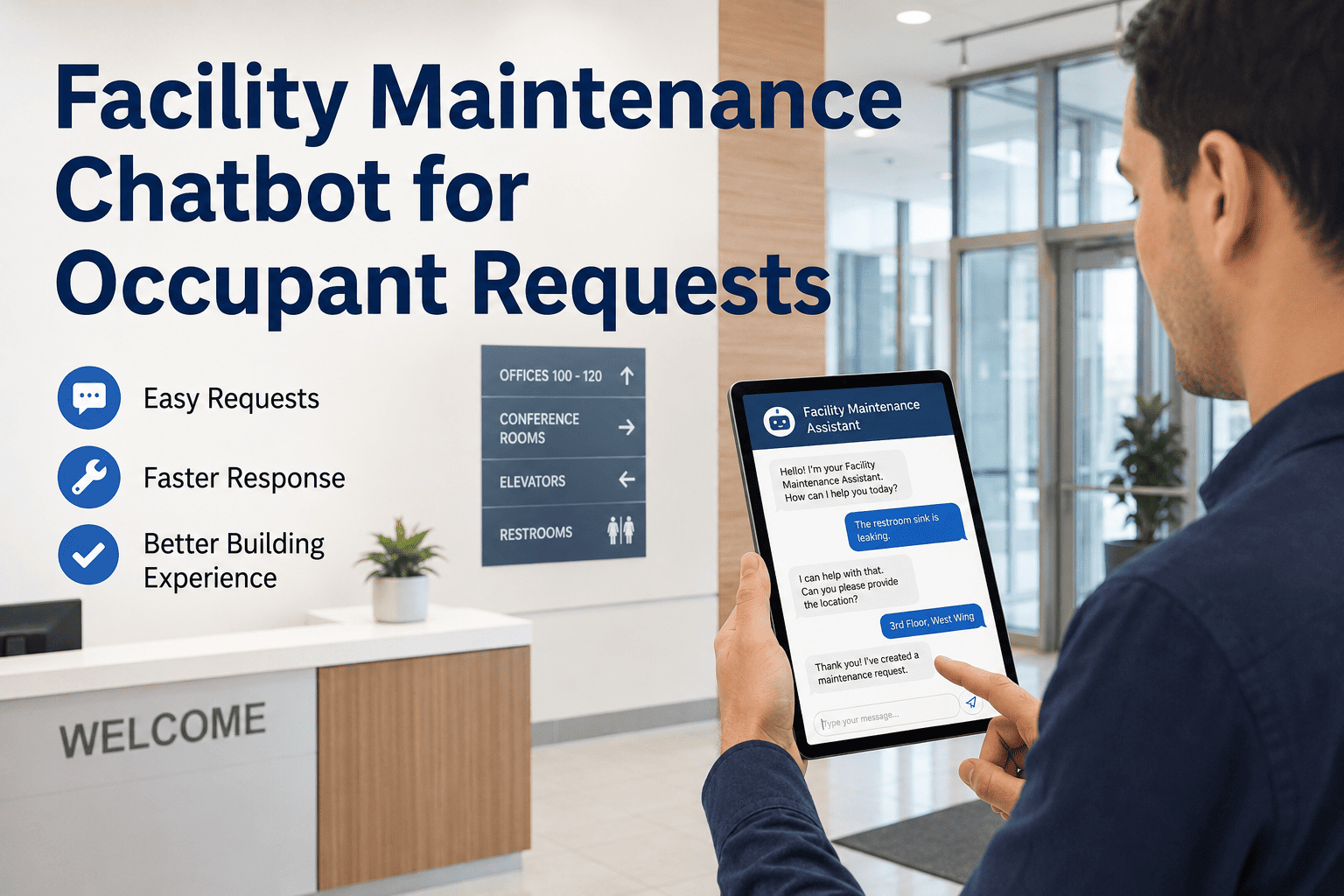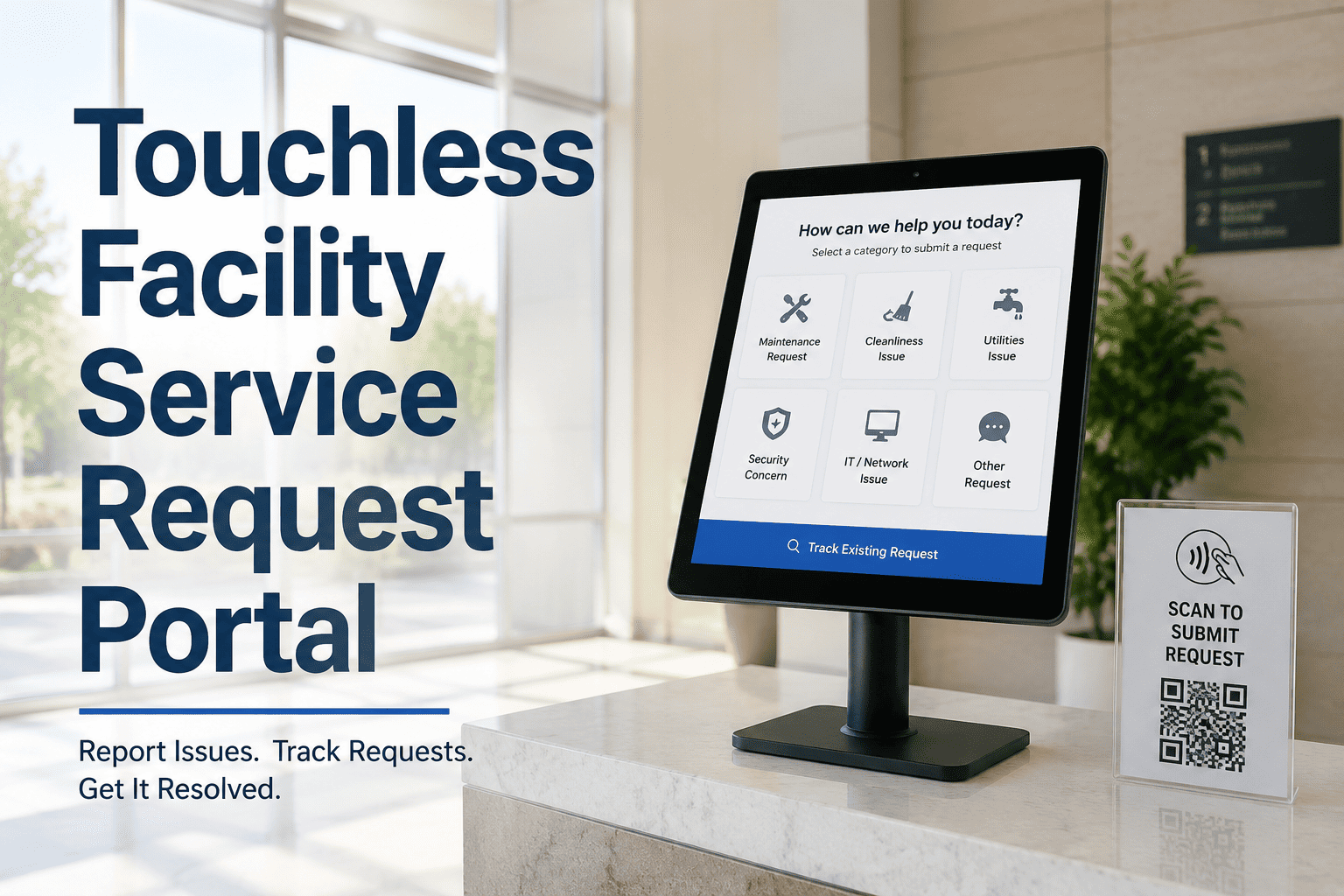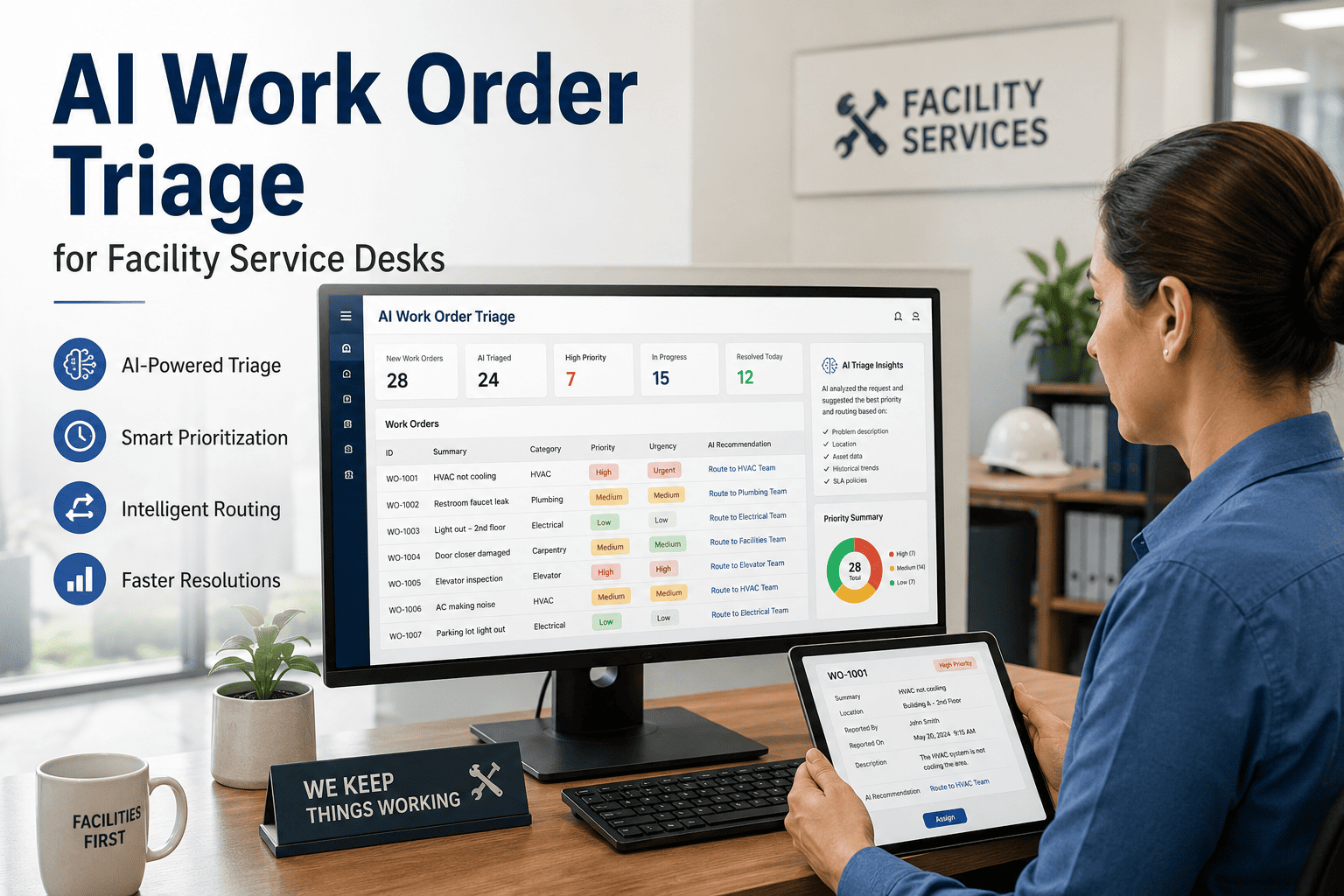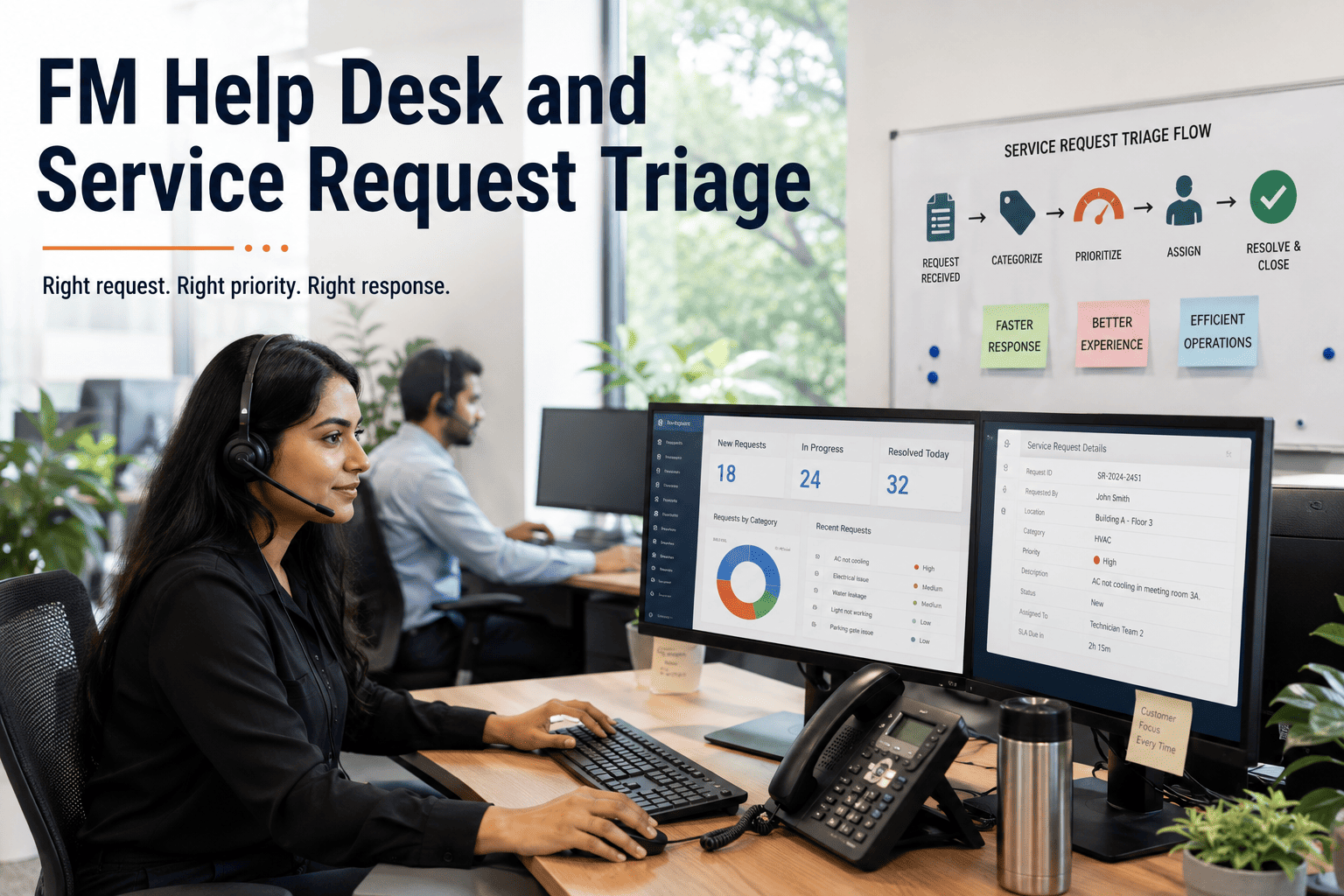
An FM help desk that merely logs tickets is not a service — it is a bottleneck. The difference between a facility help desk that closes 90% of service requests on first contact and one that drowns in reopen rates comes down to one discipline: triage. Facility service request triage is the workflow that sorts every incoming request by priority, category, and required skill set the moment it arrives, then routes it automatically to the right technician with the right parts information attached. When facility help desk triage is done well, mean time to respond drops by 40–60%, SLA breaches become rare, and occupants stop escalating to leadership. This guide breaks down the intake channels, triage workflow, routing rules, and operating model that make FM help desk management scalable — and shows how OxMaint automates the entire process so your team can stop chasing tickets and start closing them. Ready to see it on your assets? Start Free Trial.
Is your facility help desk actually triaging — or just logging and forgetting?
Most facility service desks lose 30–45% of their capacity to misrouted tickets, duplicate requests, and manual status updates. OxMaint replaces the inbox-and-spreadsheet chaos with AI-driven FM service request management that triages, routes, and closes — with full accountability.
misrouted on first pass
in organizations without
automated triage
Why most facility help desk operations fail before triage even begins
A typical mid-sized facility portfolio receives 2,000–8,000 service requests per year across HVAC, electrical, plumbing, custodial, and general repairs. Without a structured FM service desk, those requests land in email inboxes, phone voicemails, hallway conversations, and disconnected spreadsheets — making triage impossible.
A 180-asset corporate campus spending $42K annually on reactive maintenance labor can lose another $18–25K in hidden costs — duplicate work orders, idle technician time waiting for clarification, and occupant productivity loss from unresolved issues. The FM help desk is where that leak starts, and it is where OxMaint seals it.
How to build FM service request intake channels that feed clean triage
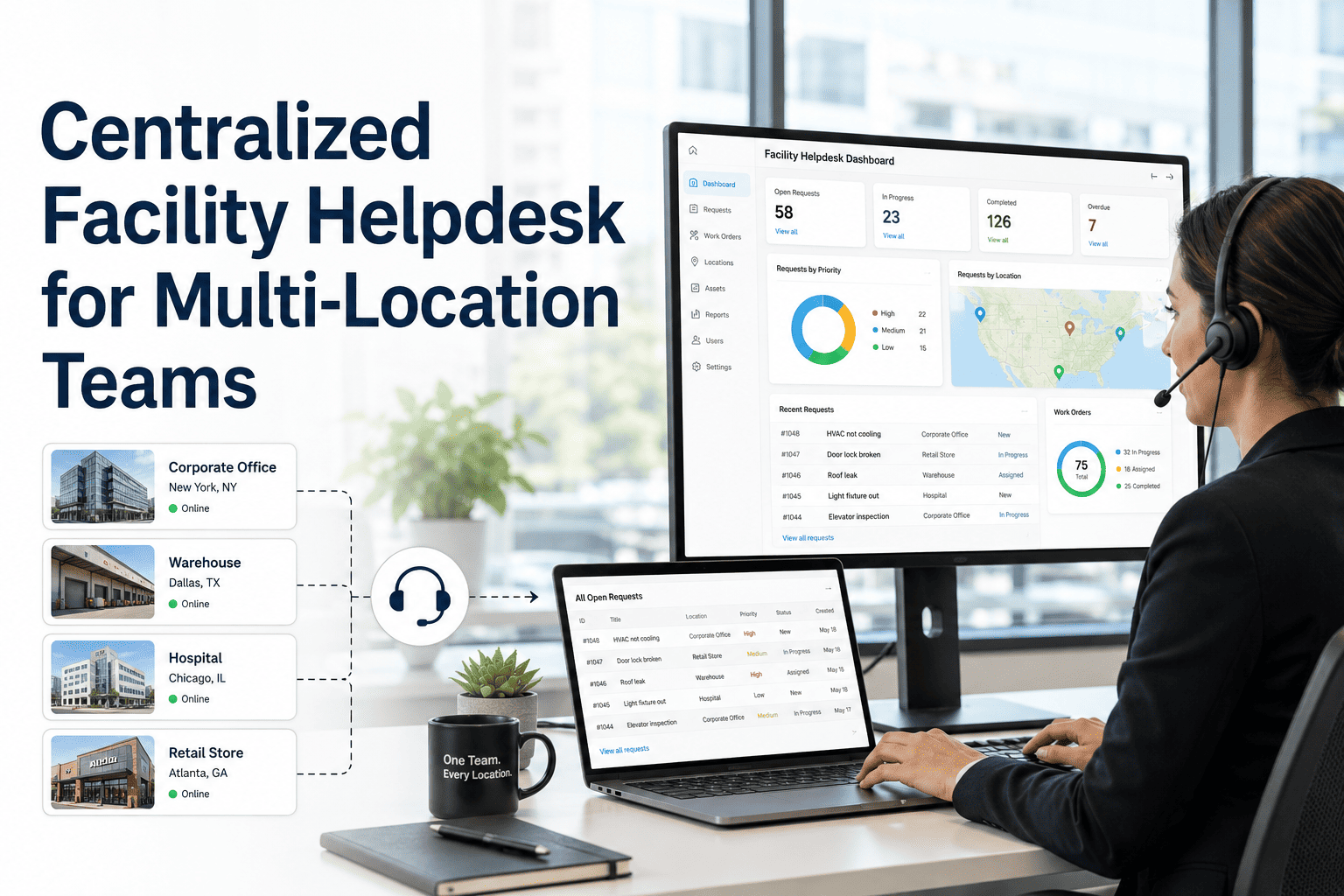
Triage fails when intake is fragmented. Every channel — email, phone, portal, mobile app, QR code on equipment, IoT sensor alert — must funnel into a single queue with standardized data fields. Here is what a best-practice facility service desk intake model looks like.
Email, web portal, mobile app, QR codes on assets, and IoT alerts all feed one queue. No request lives outside the system. OxMaint auto-creates a work order from every channel with timestamp, requester, location, and asset pre-populated.
Each request type — HVAC, plumbing, electrical, custodial, safety — has its own form with mandatory fields: asset ID, location, urgency, description, and photo. This eliminates the back-and-forth that delays triage by 4–6 hours on average.
AI matches incoming requests against open tickets for the same asset or location within seconds. If someone already reported the broken HVAC unit on Floor 3, the system merges — instead of dispatching two technicians to the same problem.
Every request gets an SLA clock the instant it enters the queue — based on priority, contract terms, and regulatory requirements. The help desk sees a countdown, not just a created date. Breaches become visible before they happen, not after.
The FM ticket triage workflow that turns chaos into first-touch resolution
Facility help desk triage is not a single step — it is a four-stage pipeline. Each stage filters, prioritizes, and enriches the request so that by the time it reaches a technician, it is actionable. Facilities that formalize this pipeline see first-touch resolution rates jump from 35% to over 60%.
Classify
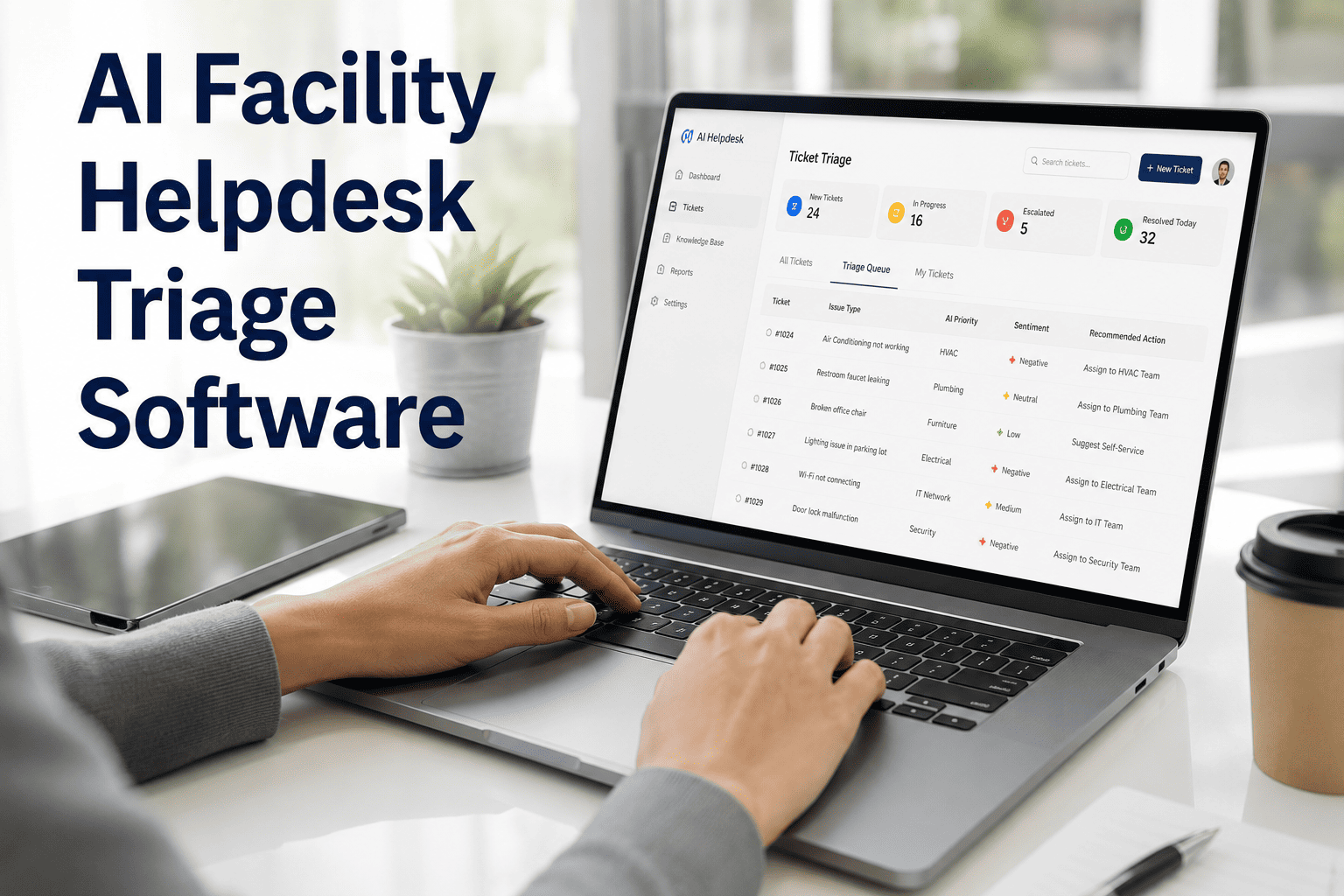
The system reads the request text and attached photos, identifies the category (HVAC, electrical, plumbing, general), tags the affected asset or space, and assigns a preliminary priority level based on keywords, location criticality, and occupant impact.
Prioritize
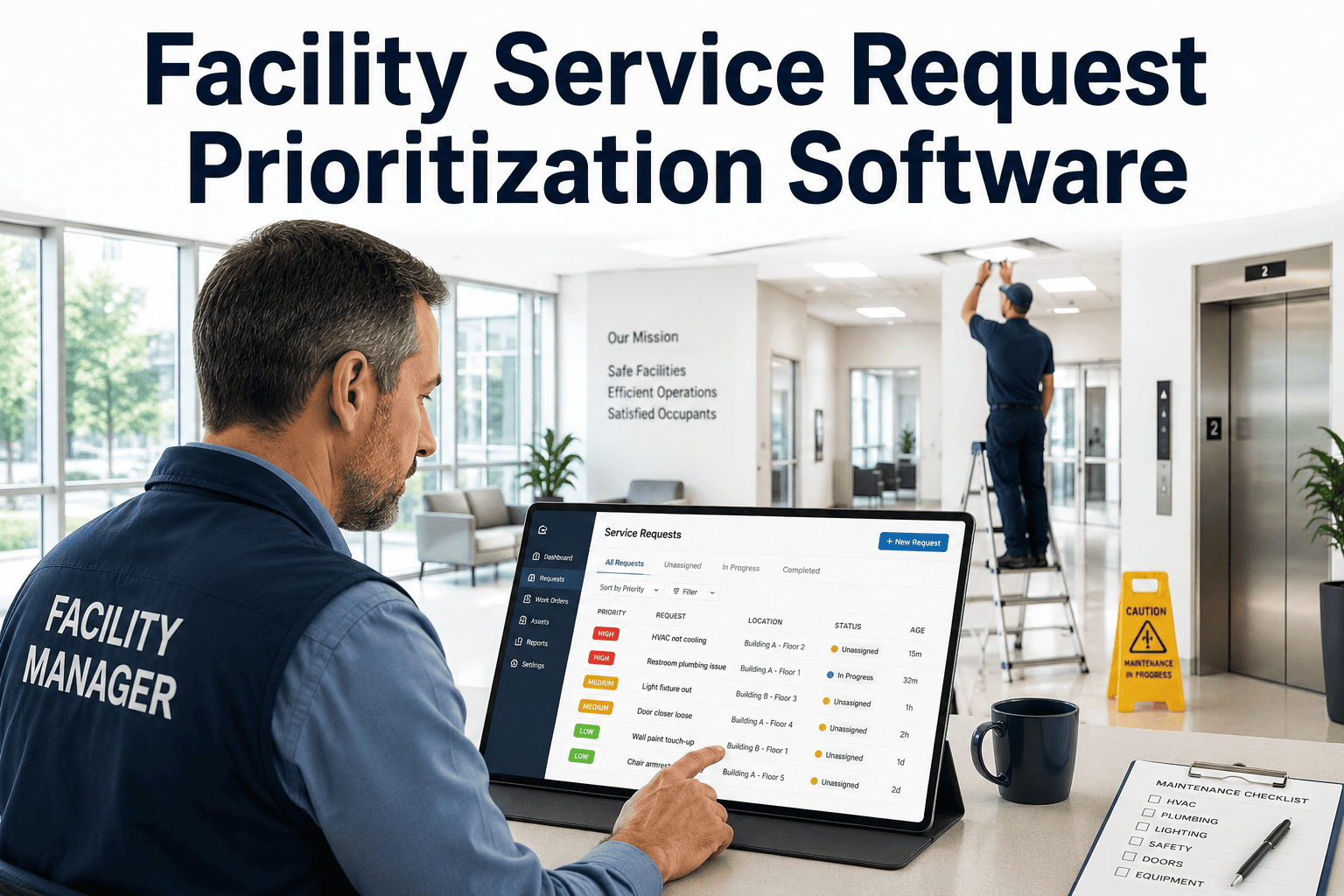
A matrix of safety risk, operational impact, SLA terms, and current workload calculates the true priority. A gas leak in a lab overrides a flickering light in a storage room — automatically. OxMaint applies your priority rules without dispatcher intervention.
Route
The request is assigned to the technician with the right trade certification, proximity to the asset, and current capacity. OxMaint checks the spare-parts inventory for the likely required parts and flags stockouts before dispatch — so the technician arrives prepared.
Track and Close
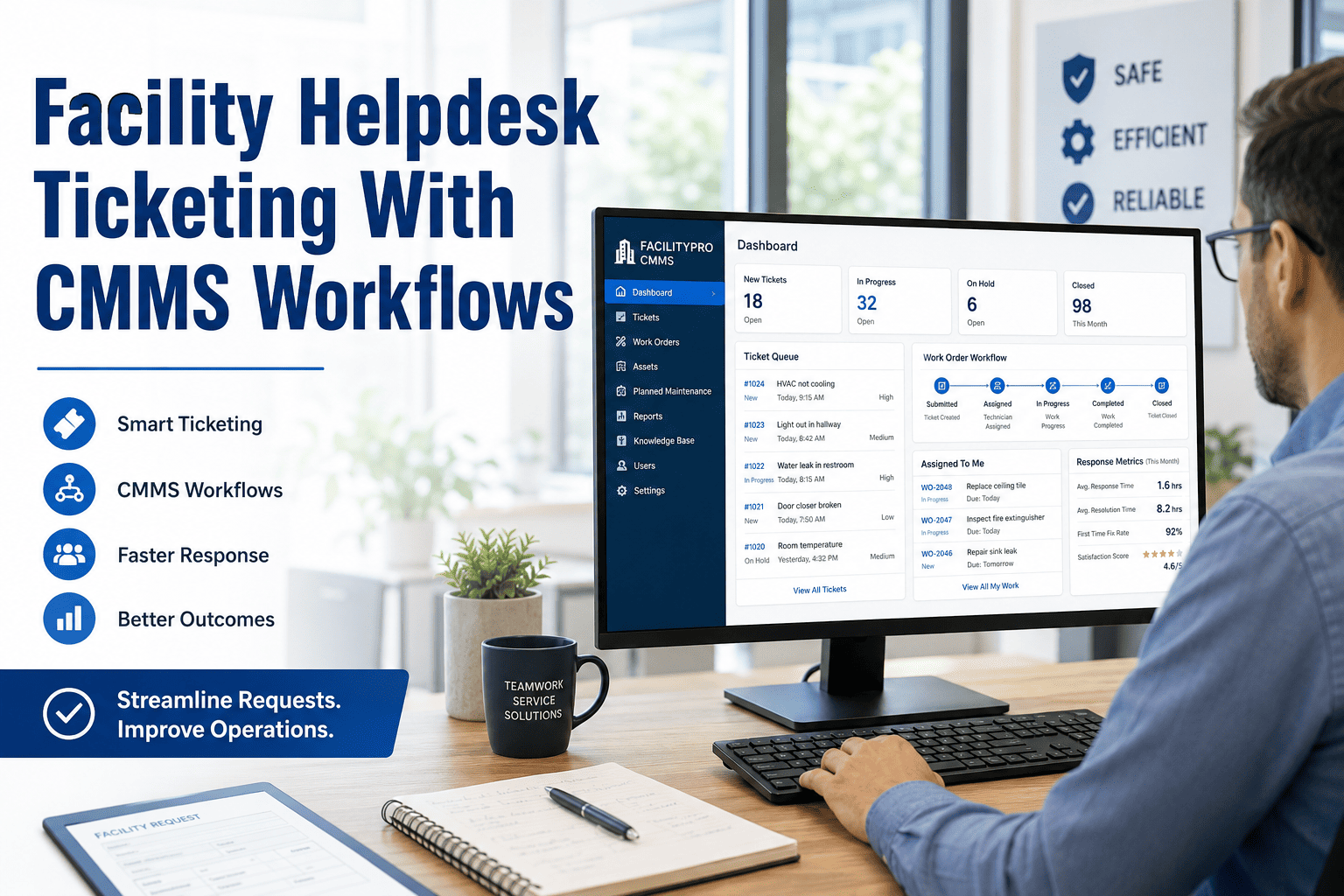
The requester gets real-time status updates. The technician logs labor, parts, and resolution notes on mobile. On closure, OxMaint triggers a satisfaction survey and — if the asset has a recurring failure pattern — auto-generates a preventive maintenance work order to prevent the next breakdown.
Facility service request routing rules that eliminate dispatcher bottlenecks
Routing is where most FM help desks stall. A human dispatcher reviewing every ticket caps throughput at roughly 40–50 requests per day. Rule-based and AI-assisted routing in OxMaint handles 500+ requests per day with the same team — because the dispatcher only intervenes on exceptions.
| Routing Dimension | Manual Dispatch (Legacy) | OxMaint Rule-Based Routing | Impact |
|---|---|---|---|
| Trade Match | Dispatcher guesses or calls around | Auto-matches request category to certified technician skills profile | 50% fewer reassignments |
| Proximity | Technician dispatched across campus; 20-min travel | GPS + indoor positioning finds nearest qualified tech | 35% less travel time |
| Workload Balance | Same 2 technicians overloaded while others are idle | Real-time capacity check distributes work evenly | 22% more jobs per tech/day |
| Parts Availability | Technician arrives, finds part out of stock, job delayed | Inventory checked at dispatch; stockout flagged before assignment | 60% fewer return trips |
| Priority Override | Critical issues wait in queue behind routine requests | Safety/regulatory tags auto-bump to front of queue with notification | 90% faster critical response |
| SLA Escalation | Breach discovered after the fact in weekly reports | Countdown triggers auto-escalation to supervisor at 75% SLA consumed | 70% fewer SLA breaches |
OxMaint turns your FM help desk into a closed-loop service engine
OxMaint is an AI-powered CMMS and EAM platform built for maintenance and reliability teams who cannot afford misrouted tickets, lost work orders, or reactive firefighting. Here is how its capabilities map directly to the FM service request management problem.
AI-Powered Auto-Triage
Natural-language processing reads every incoming request, classifies it, assigns priority, and routes it — in under 60 seconds. No dispatcher review needed for standard requests. Your team handles 3x the volume with the same headcount.
SLA Engine with Live Countdown
Every service request carries an SLA clock visible to the help desk, technician, and requester. Automated escalation triggers at configurable thresholds — 50%, 75%, 90% of SLA consumed — so breaches are prevented, not just reported.
Mobile-First Work Order Closure
Technicians receive fully-contextualized work orders on their phone — asset history, required parts, safety procedures, and photos from the requester. They close tickets on-site with labor hours, parts consumed, and resolution notes, eliminating paper and data entry lag.
Recurring-Failure Detection
When the same asset generates repeated service requests, OxMaint's analytics engine flags the pattern and auto-generates a preventive or predictive maintenance plan. You stop fixing the same chiller pump every six weeks and start preventing the failure altogether.
From 3.2 days to 8 hours: a real FM help desk transformation
Before OxMaint
- Requests logged via email and phone; no central queue
- Average resolution: 3.2 days across 2,400 requests/year
- 27% duplicate ticket rate; technicians dispatched to same issue twice
- SLA breach rate: 22% — occupants escalated to leadership weekly
- Annual reactive maintenance labor spend: $42K + $21K hidden rework cost
- Zero visibility into recurring failures; same assets broke repeatedly
After OxMaint (90 days)
- All channels unified into one AI-triaged queue
- Average resolution: 8 hours — a 90% improvement
- Duplicate rate dropped to under 3% with auto-merging
- SLA breach rate: 5% — escalations to leadership eliminated
- Annual labor spend reduced to $31K; rework cost cut to $4K
- 12 recurring-failure patterns identified; PM plans auto-created
See OxMaint triage your service requests in real time
Book a 30-minute demo and we will show you exactly how OxMaint's AI-powered FM help desk would handle your top 5 request types — live, on your assets, with your SLA rules.
FM help desk and service request triage: what teams ask most
What is FM help desk triage and why does it matter?
FM help desk triage is the process of classifying, prioritizing, and routing every incoming facility service request within the first few minutes of receipt. It matters because without structured triage, requests pile up in inboxes, get misrouted to the wrong technician, and consume 30–45% more labor hours than necessary. A triaged help desk resolves issues 60–90% faster and gives facility managers real visibility into workload, SLA performance, and recurring problems.
How does OxMaint automate facility service request routing?
OxMaint uses AI natural-language processing to read each request, identify the category and affected asset, calculate priority based on your custom rules, and auto-assign it to the nearest qualified technician with available capacity and the right parts in stock. Dispatchers only intervene on exceptions — overriding, say, when a VIP space needs priority handling. You can see the full routing engine in action by booking a demo at calendly.com/oxmaintapp/30min.
How long does it take to switch from spreadsheets and email to an FM service desk platform?
Most teams are fully operational on OxMaint within 2–4 weeks. The fastest migrations come from facilities that already have a basic asset list and SLA definitions — OxMaint imports those via CSV, configures routing rules based on your trades and locations, and rolls out the mobile app to technicians. Intake channels (portal, email integration, QR codes) go live in the first week. Full preventive maintenance plan migration typically completes in week 3.
What SLA metrics should a facility help desk track?
The five core SLA metrics are: first-response time (target under 15 minutes for urgent requests), mean time to dispatch (under 30 minutes), mean time to resolve (varies by category — 4 hours for urgent, 48 hours for routine), first-touch resolution rate (target 50–65%), and SLA breach rate (target under 5%). OxMaint tracks all five automatically and displays them on a live dashboard with escalation alerts before any threshold is crossed.
Can OxMaint handle both planned preventive maintenance and reactive service requests in one system?
Yes — OxMaint is a full CMMS and EAM platform, so preventive maintenance schedules, predictive maintenance triggers, and reactive service requests all live in the same queue. When a technician is dispatched to a reactive ticket, OxMaint shows any overdue PM tasks for the same asset so they can be completed in a single visit. You can start a free trial at app.oxmaint.ai to test both workflows on your own assets.
Stop logging tickets. Start closing them.
Join the facility teams using OxMaint to triage, route, and resolve service requests 60–90% faster — with full SLA accountability, zero paper work orders, and AI that prevents the next breakdown before it happens.
Free 14-day trial · No credit card