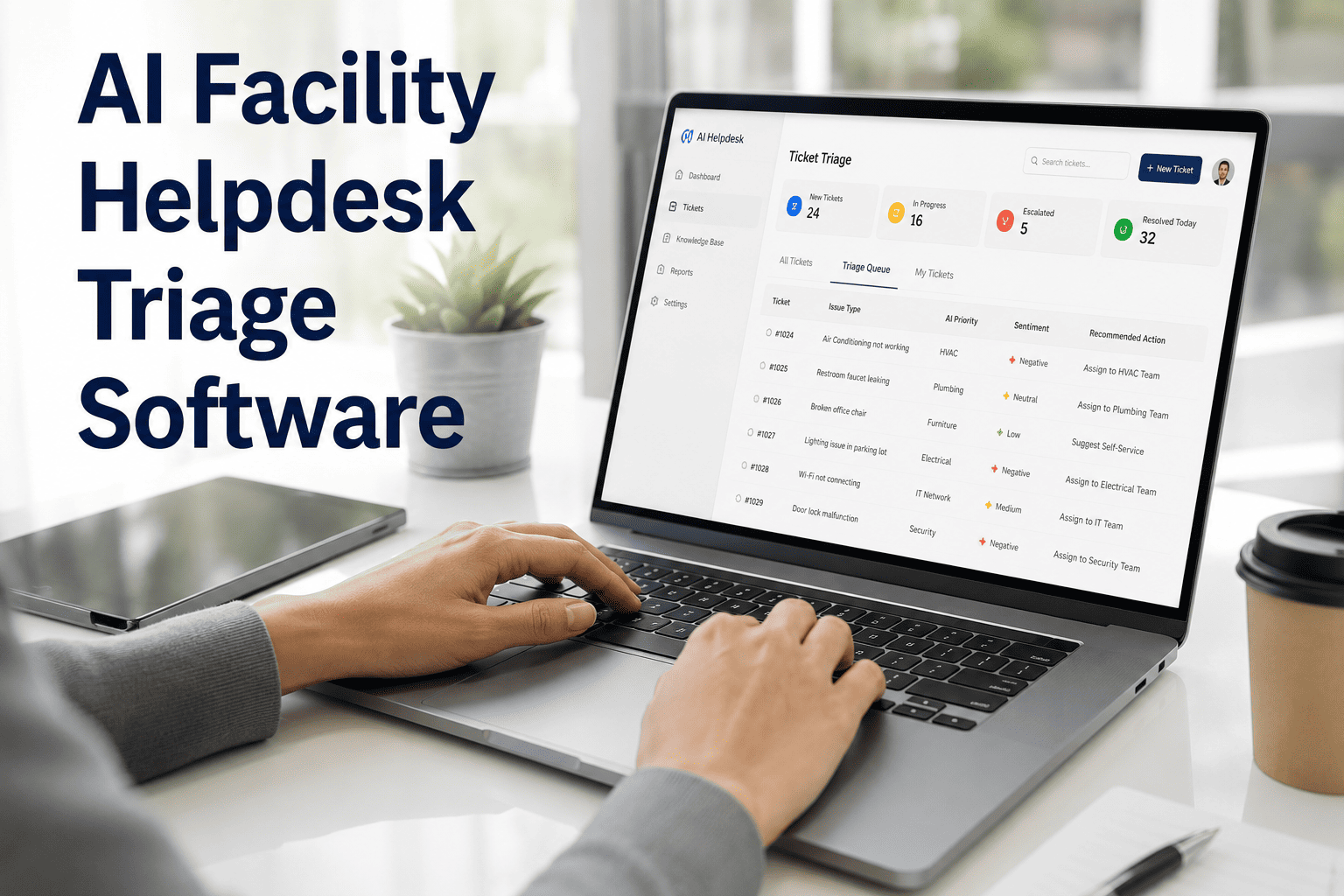
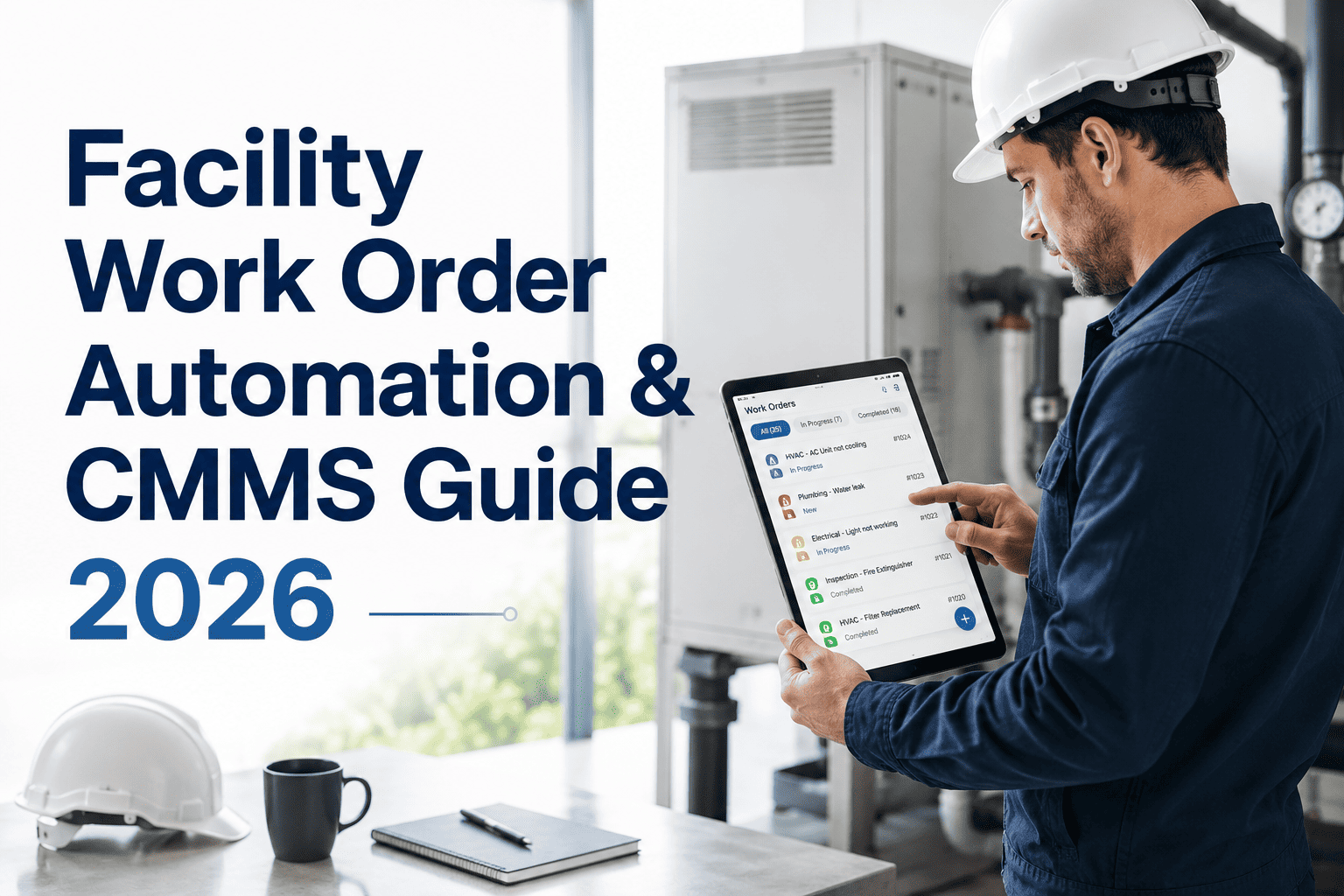
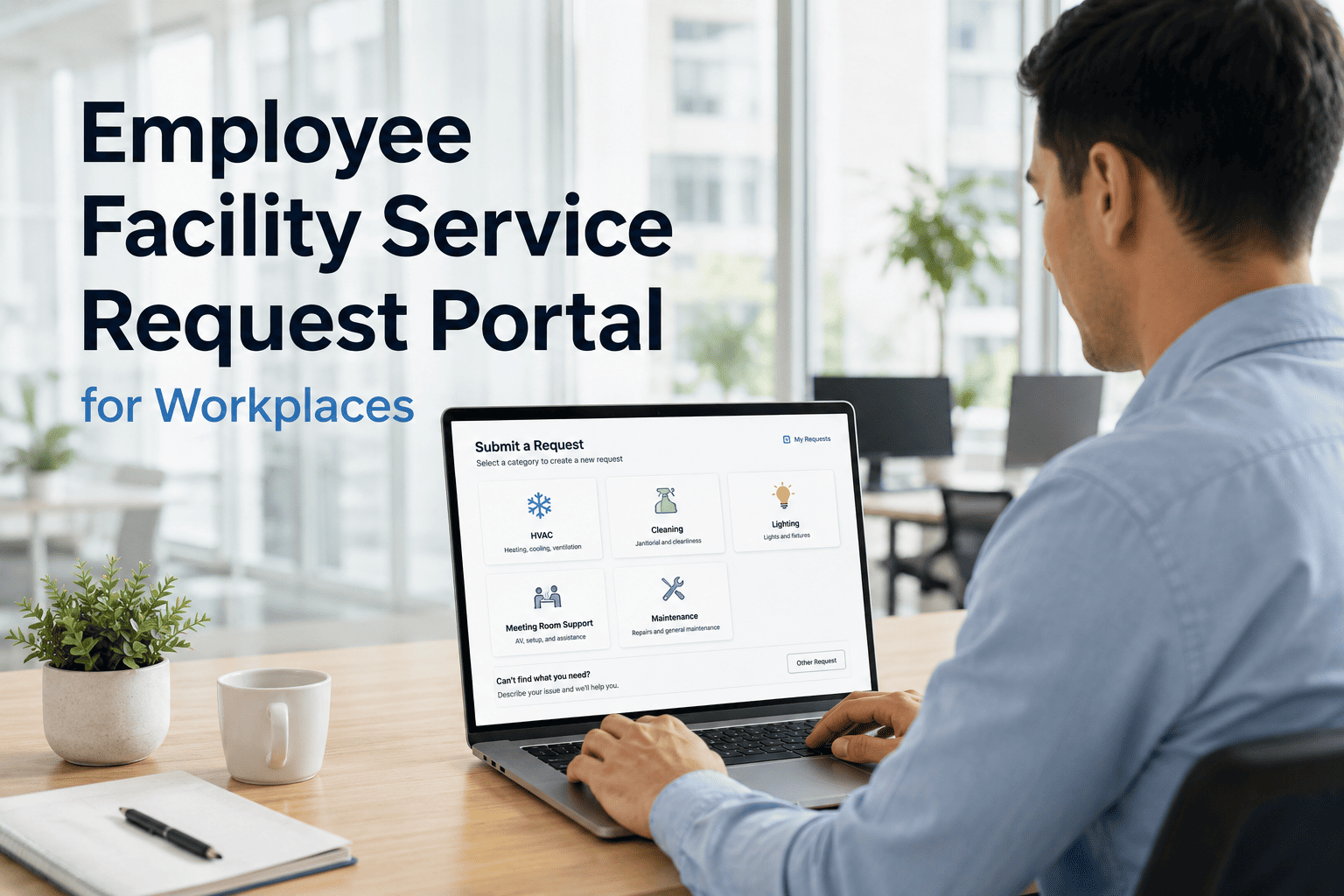
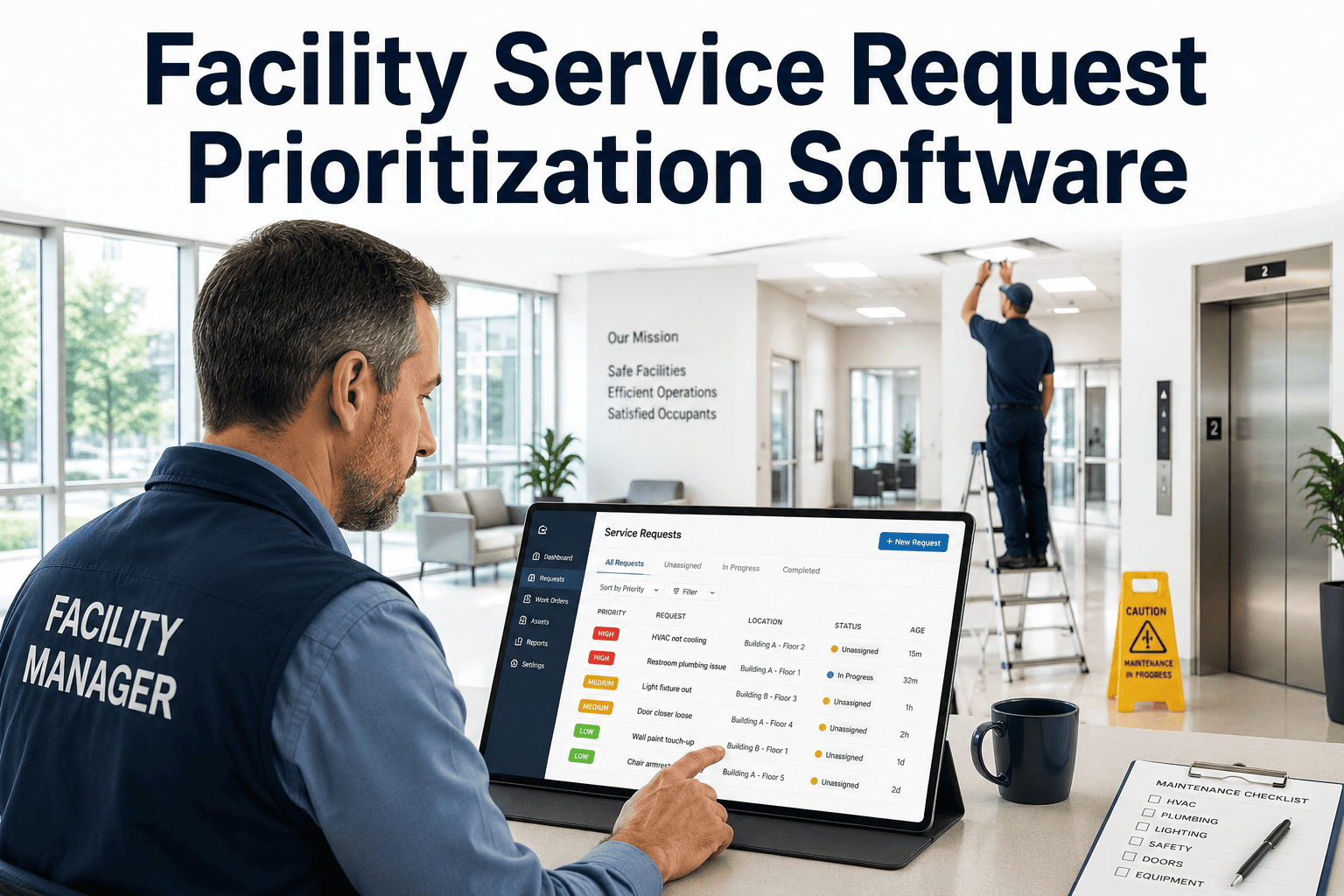
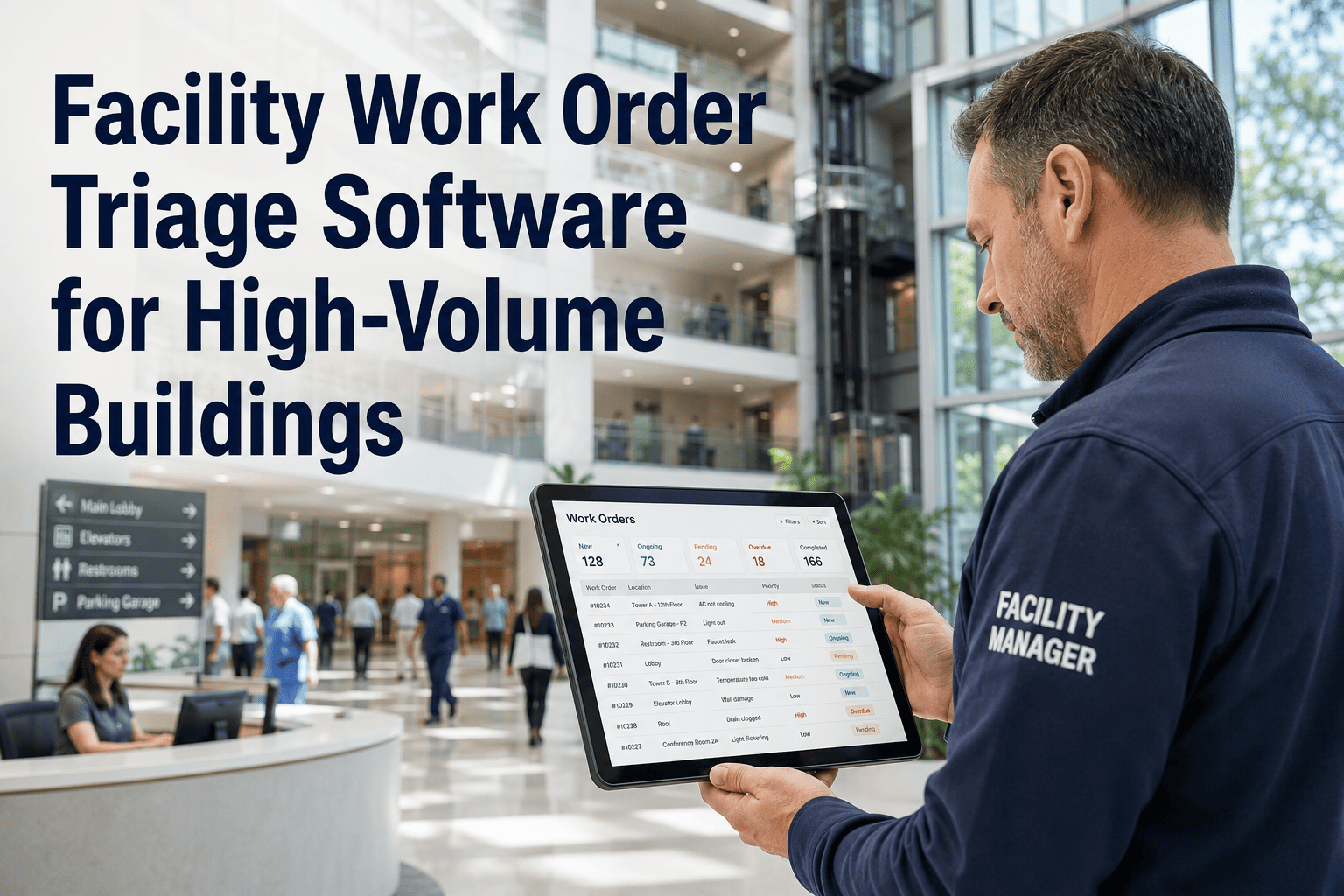
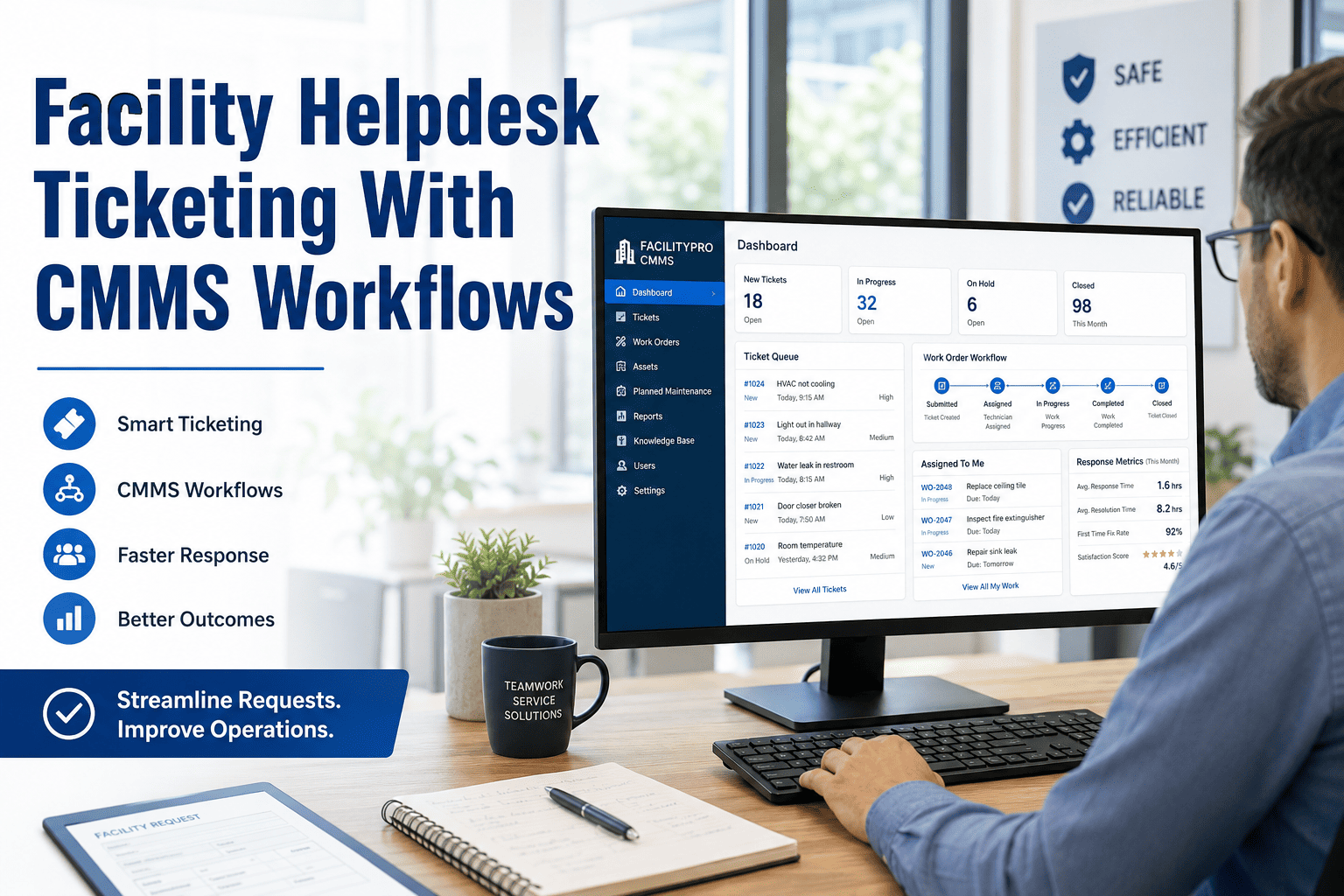
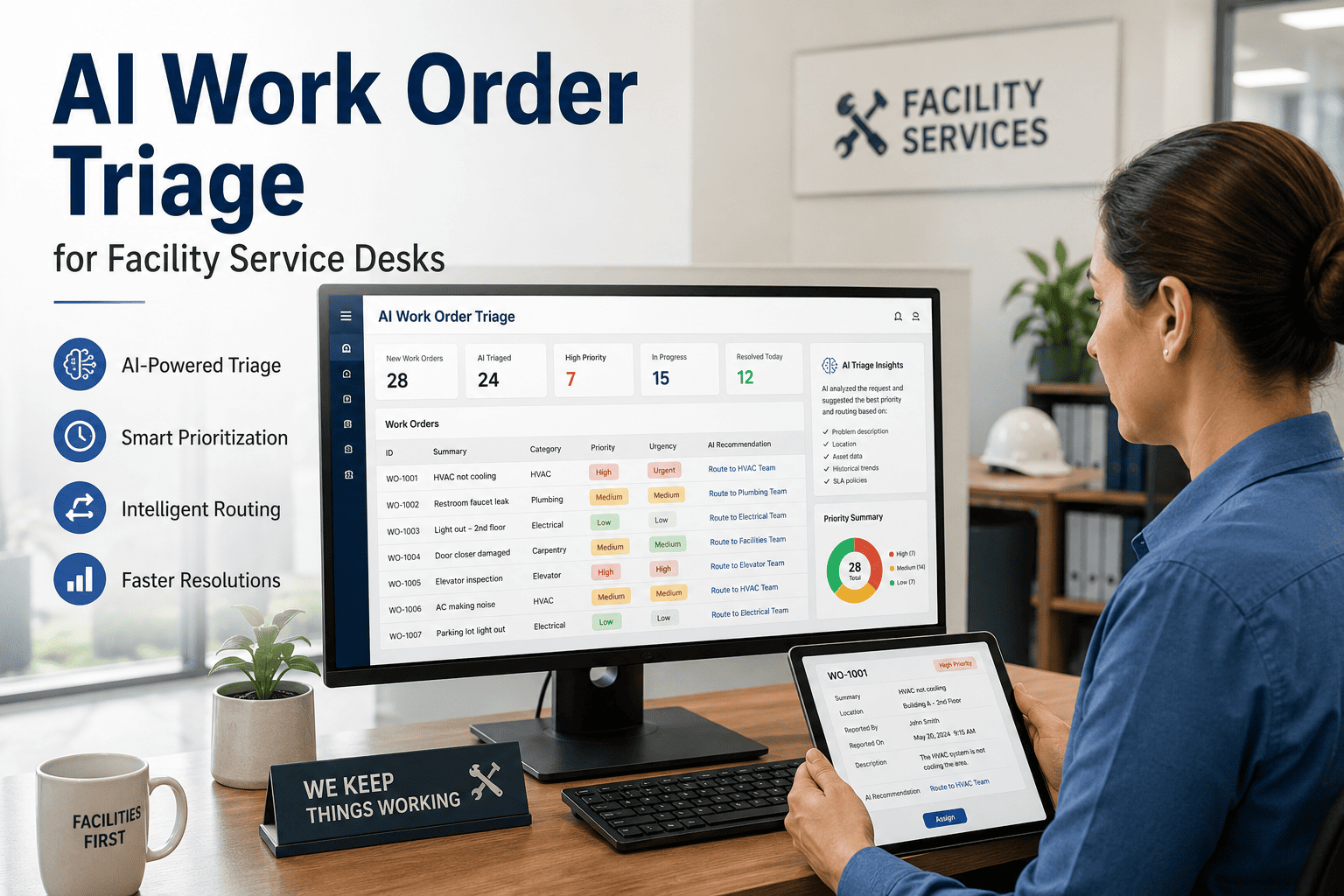
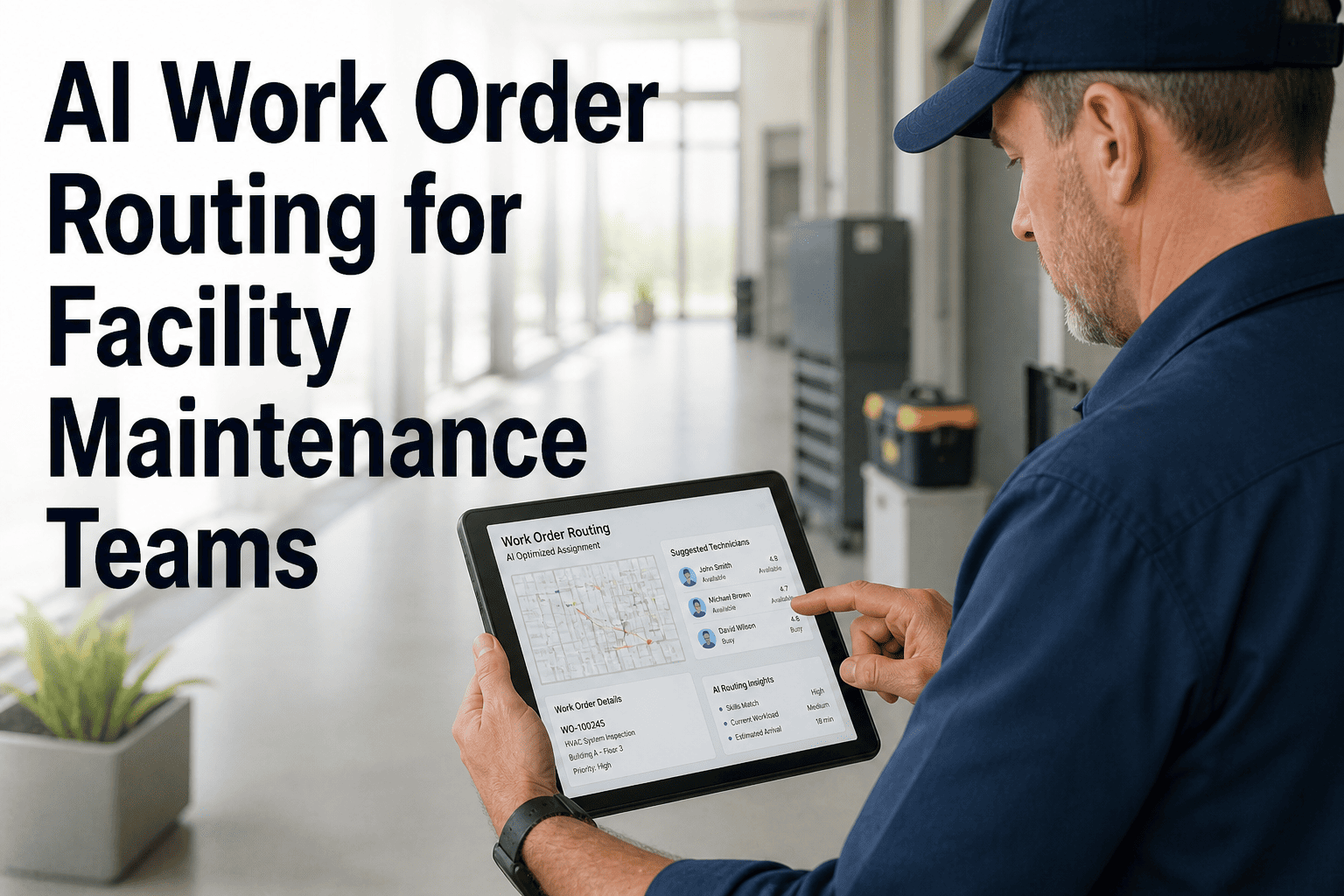
Facility helpdesks lose hours every week to a problem that has nothing to do with fixing anything — sorting incoming requests by hand, figuring out which ones are duplicates, and guessing which ticket is actually urgent versus which one just sounds urgent. By the time a request gets manually triaged and routed to the right technician, a genuinely critical issue may have sat in the same queue as a routine request for far too long. OxMaint's AI work order automation classifies, deduplicates, and scores every incoming request the moment it arrives, routing it straight into the correct work order queue without a human triage step. This page covers exactly what that classification engine does, how it compares to manual and rule-based triage, and what facilities typically see once triage time drops from minutes to seconds. Book a live demo to watch a real request get triaged in seconds, end to end.
AI Work Order Automation · Request Portal
AI Facility Helpdesk Triage Software
Classify requests, catch duplicates, score urgency, and route to the right work order queue — automatically, the moment a ticket lands.
Incoming Request
"AC not cooling in conference room 4B, getting warm fast"
90%
reduction in time from request submission to technician assignment
1 in 5
facility tickets are unflagged duplicates of an existing request
Seconds
not minutes — typical time for AI classification and routing per ticket
Core Capabilities
What the AI Triage Engine Actually Does
01
Auto-Classification
Plain-language requests are sorted into the correct trade and category — HVAC, electrical, plumbing, general — without a dropdown menu the requester has to fill out.
02
Duplicate Detection
New tickets are checked against open requests for the same asset or zone, merging duplicates instead of dispatching multiple technicians to the same problem.
03
Urgency Scoring
Language and asset criticality are weighed together, so a vague but critical issue doesn't get buried behind a clearly worded but minor one.
04
Smart Routing
Classified requests are routed to the technician with the right skill, zone assignment, and current workload — not just whoever is next in line.
Live Triage Demo
Submit a Real Request and Watch It Get Triaged
We'll type a sample request live during the demo and walk through classification, duplicate check, and routing in real time.
Request Lifecycle
From Submission to Routed Work Order in Five Stages
1Request Submitted
2AI Classifies Category
3Duplicate Check Run
4Urgency Scored
5Routed to Technician
Triage Comparison
Manual Triage vs. Rule-Based vs. AI Triage
| Capability | Manual Triage | Rule-Based Automation | OxMaint AI Triage |
|---|
| Classify by category | Staff judgment | Keyword rules | Automatic |
| Detect duplicate tickets | Rarely caught | Exact match only | Zone and asset aware |
| Score urgency | Subjective | Fixed keyword flags | Context-weighted |
| Route by skill and workload | Manual assignment | Static rules | Dynamic, real-time |
| Time to route a ticket | Minutes to hours | Under a minute | Seconds |
Expert Review
Why Triage Is the Most Underrated Bottleneck in Facility Helpdesks
Everyone focuses on dispatch speed and technician efficiency, but the slowest part of most facility helpdesk workflows is the few minutes before a ticket even reaches a queue — someone reading it, deciding what it is, checking if it's already been reported, and guessing how urgent it really is. That's exactly the kind of judgment call AI handles consistently and instantly, freeing staff to focus on actual resolution instead of sorting. The facilities that see the biggest improvement aren't the ones with the most technicians — they're the ones that stopped losing time at the triage step.
Facility Helpdesk Operations Advisor
Advises multi-site facility teams on request portal design and helpdesk workflow optimization
Common Questions
Frequently Asked Questions
How accurate is AI classification for plain-language requests?
Classification accuracy improves with use, since the model learns from your facility's specific request patterns and corrections, typically reaching high accuracy within the first few weeks of live use.
Test classification on real requests in a free trial.
What happens if the AI misclassifies a request?
Staff can recategorize any ticket manually, and that correction feeds back into the classification model so similar future requests are handled more accurately.
See the correction workflow in a live demo.
How does duplicate detection avoid merging two genuinely separate issues?
Duplicate detection weighs asset, zone, and request language together, flagging likely duplicates for human confirmation rather than auto-merging tickets without review.
Try duplicate detection with sample tickets in a free trial.
Can urgency scoring be adjusted for our facility's specific priorities?
Urgency weighting can be tuned to reflect which assets or zones are mission-critical for your operation, so scoring reflects your actual risk priorities rather than a generic default.
Discuss urgency tuning in a demo.
Does AI triage require integration with our existing request portal?
OxMaint's request portal includes AI triage built in, and existing request channels like QR codes or email intake can be connected so all incoming requests pass through the same triage engine.
Start a free trial to connect your intake channels.
AI Work Order Automation · OxMaint
Stop Triaging Tickets by Hand
Classification, duplicate detection, urgency scoring, and routing — all handled the moment a request lands.