FM emergency response and facility business continuity planning determine whether a disruption becomes a brief, managed incident or a weeks-long operational shutdown. Research from the Federal Emergency Management Agency shows that 40% of small businesses never reopen after a major disaster, and the gap almost always traces back to untested continuity plans and fragmented asset data. Facility managers who embed resilience into daily maintenance operations—through preventive scheduling, real-time asset tracking, and documented response protocols—recover faster and limit financial loss. OxMaint gives maintenance teams the AI-powered CMMS framework to build that readiness into routine work, so you can Start Free Trial and operationalize your plan today.
Is your facility ready for the 3 AM call that tests everything?
When a pipe bursts, the power fails, or a critical chiller goes down at peak load, the speed of your FM emergency response depends entirely on the systems you put in place before the crisis. Resilience is engineered during normal operations—not improvised during the emergency.
Why facility emergency preparedness fails without a CMMS
Most facilities don't lack an emergency plan—they lack an executable one. A binder on a shelf cannot route work orders, flag missing spares, or tell you which backup generator failed its last load test. When FM emergency planning lives in spreadsheets and tribal knowledge, the first casualty of a crisis is information.
Consider a 180-asset commercial facility relying on a spreadsheet-based maintenance log. When a major electrical fault trips the main distribution board at 2:14 AM, the on-call technician arrives to find no documented lockout/tagout procedure for that panel, no record of the last preventive inspection, and the critical spare breaker buried in an unmarked storeroom. What should have been a 90-minute fix becomes a 9-hour outage—because the facility's continuity plan was never wired into daily maintenance execution. FM business continuity planning only works when it is operationalized through the same system that schedules, tracks, and verifies every work order.
The FM emergency response and business continuity framework
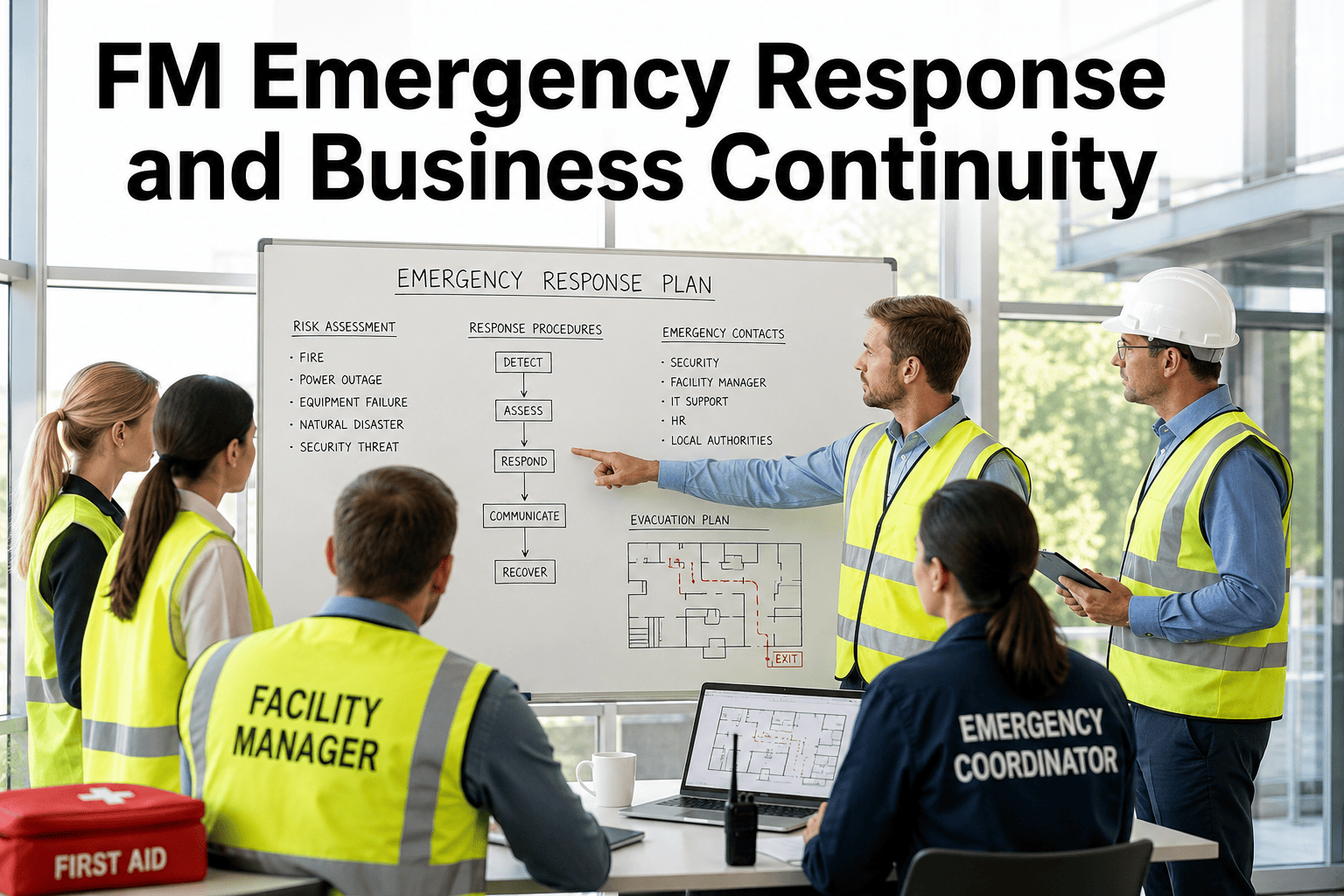
Effective facility emergency management follows a continuous four-phase cycle. Each phase maps directly to maintenance operations you can automate and track inside a CMMS, turning abstract resilience planning into executable, auditable workflows.
Facility business continuity plan checklist: what must be in place before disruption
A facility continuity plan is only as strong as its weakest checklist item. Use this scannable matrix to evaluate whether your FM continuity planning covers the critical operational, asset, and recovery dimensions that keep doors open and services running.
| Continuity Dimension | What It Covers | Without a CMMS | With OxMaint |
|---|---|---|---|
| Critical Asset Register | Ranked inventory of life-safety and production-critical equipment with failure impact ratings | Scattered across spreadsheets, often outdated within 30 days | Live asset hierarchy with real-time status, warranty, and maintenance history |
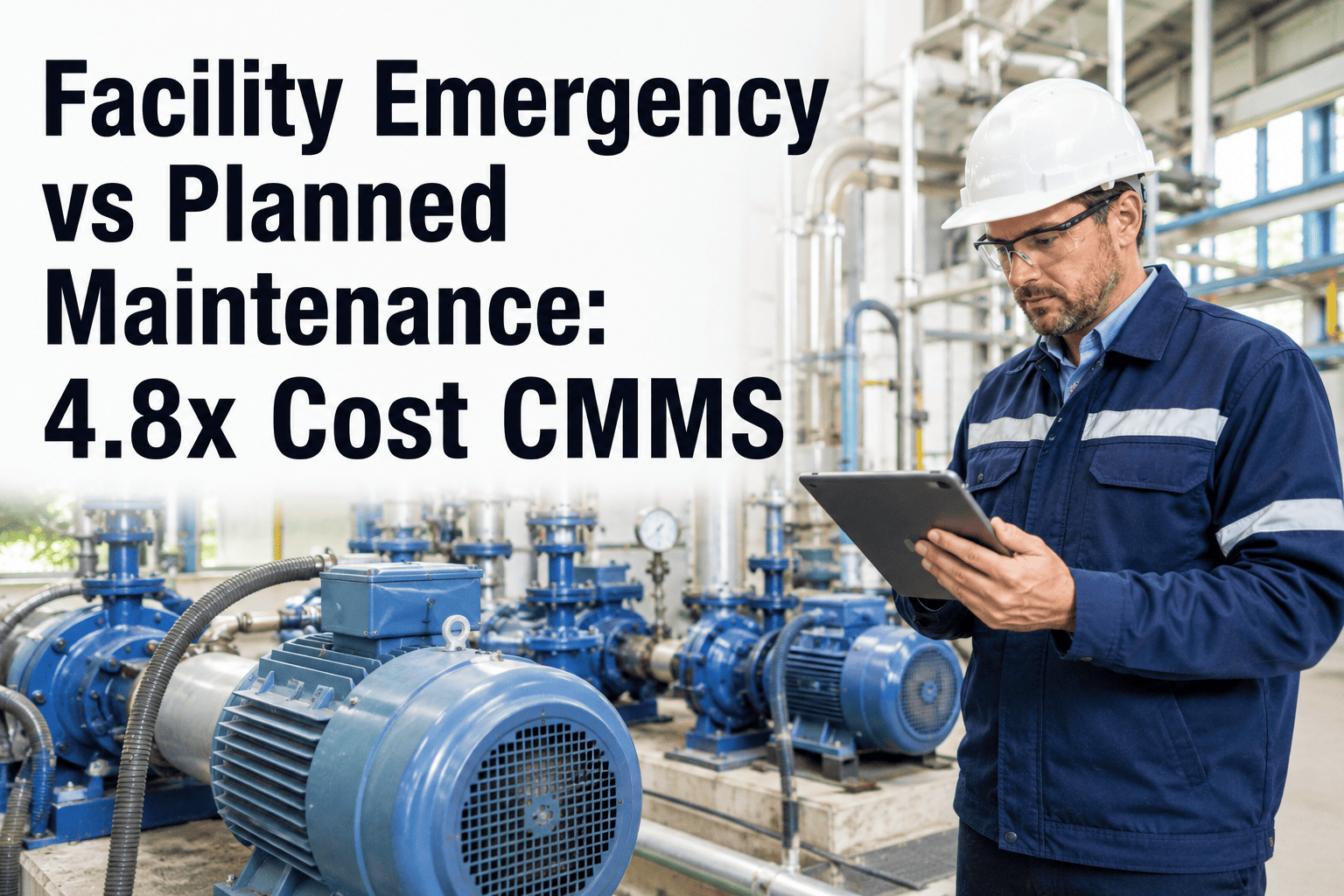
| Spare Parts Readiness | Minimum stock levels for emergency spares—breakers, belts, bearings, filters, pump seals | Manual counts, frequent stockouts, 3.5x premium on emergency procurement | Auto-reorder triggers and multi-site inventory visibility eliminate stockouts |
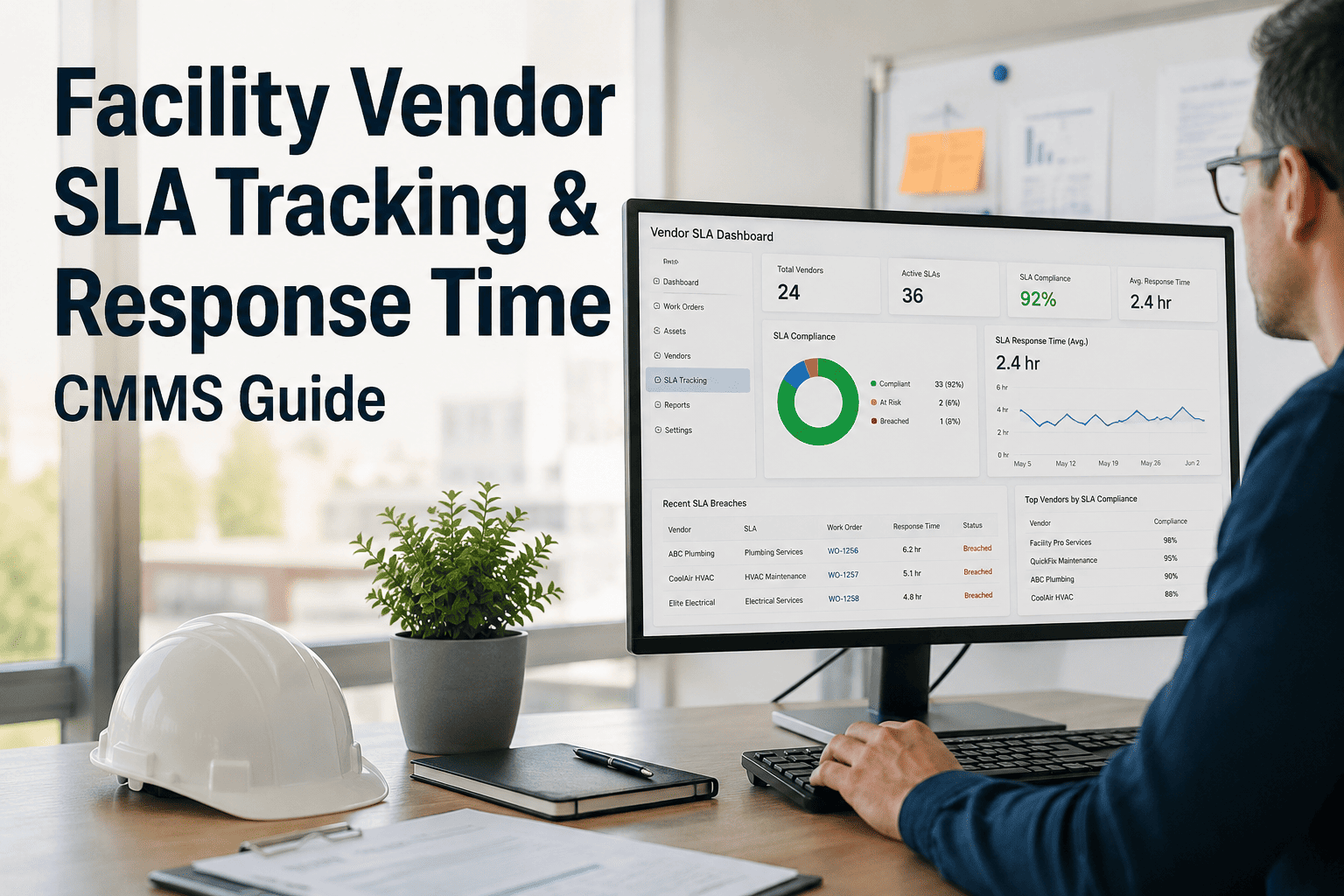
| Vendor & Contractor SLAs | On-call rosters, response-time guarantees, escalation chains for critical systems | Business cards in a drawer, no audit trail of response performance | Vendor records linked to assets with tracked response times and SLA compliance |
| Emergency Procedures (SOPs) | Step-by-step response, LOTO, shutdown, and restart protocols per asset class | Binders that are outdated within one equipment change-out cycle | Digital SOPs attached to asset records, version-controlled, mobile-accessible |
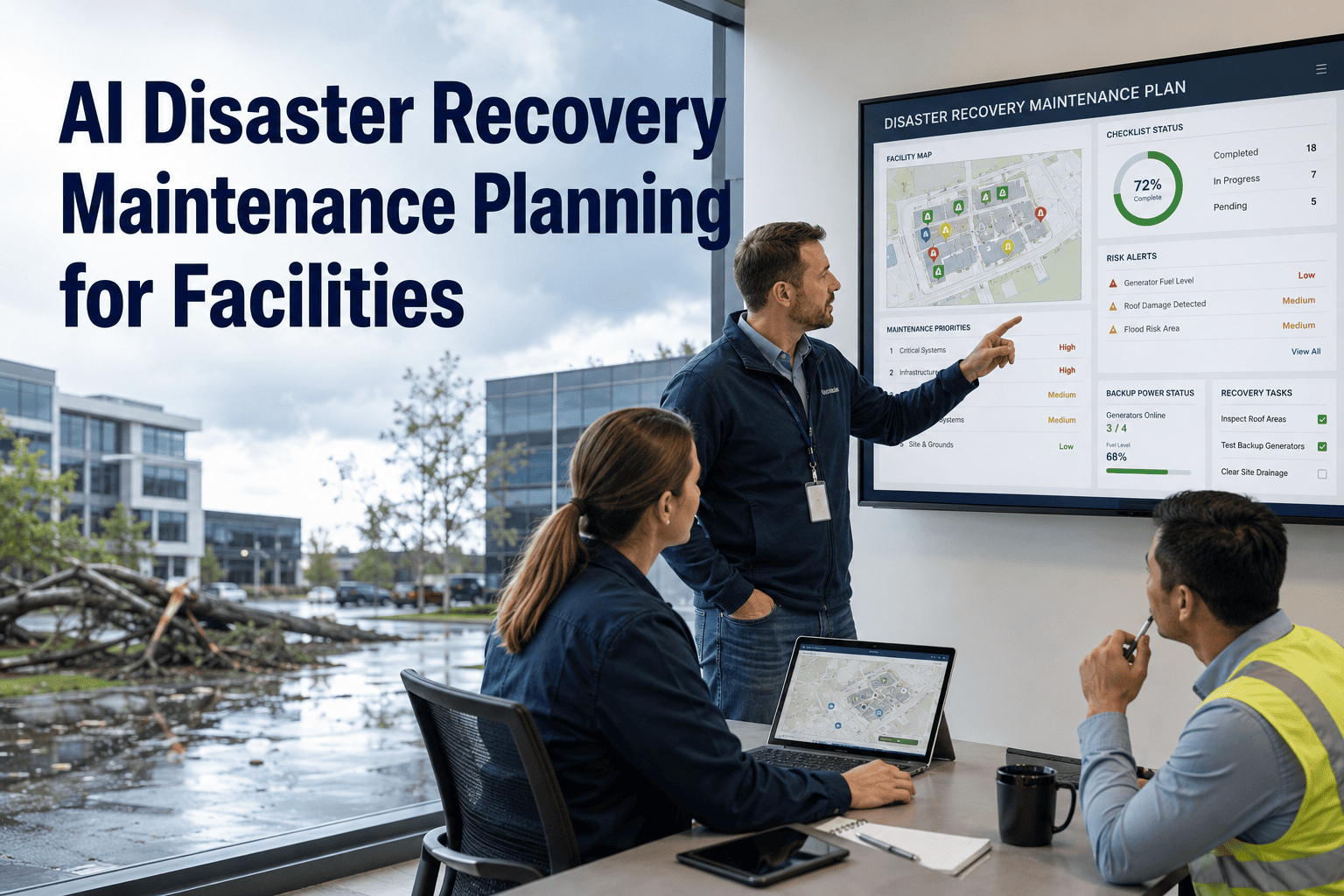
| Recovery Time Objectives | Documented RTO and RPO per system, with pre-staged recovery task sequences | Best-guess timeframes with no historical basis or tracking | Data-driven RTOs based on actual maintenance duration analytics |
| Plan Testing & Drills | Scheduled tabletop exercises and functional drills with documented corrective actions | Annual drill at best, corrective actions lost in meeting notes | Drills logged as recurring work orders with corrective actions tracked to completion |
How OxMaint strengthens FM crisis response and business resilience
OxMaint closes the gap between a continuity plan on paper and a continuity plan that actually runs. By embedding emergency readiness into the same AI-powered CMMS your team uses every day, resilience becomes a byproduct of good maintenance—not a separate, forgotten initiative.
Instant Emergency Work Orders
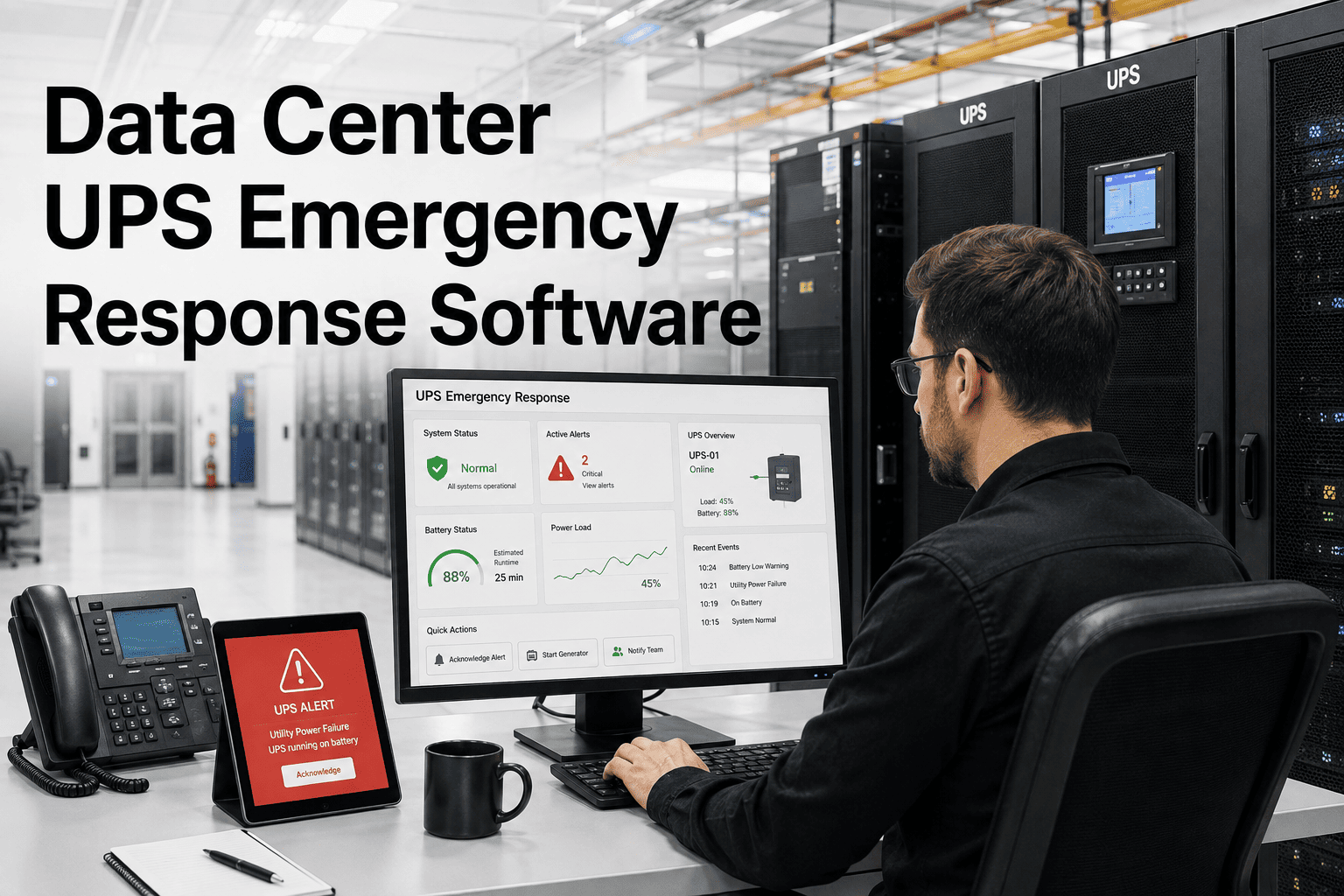
Trigger priority work orders from any mobile device. OxMaint instantly routes the task to on-call technicians with full asset context—location, history, LOTO steps, and required spares—cutting mobilization time by up to 70%.
Predictive Failure Alerts
AI-driven vibration, thermal, and runtime analytics detect degradation on critical assets weeks before catastrophic failure—giving you the lead time to repair during normal hours instead of responding at 3 AM.
Live Spare Parts Visibility
Multi-site inventory tracking with automated reorder points ensures the breaker, belt, or seal you need during an emergency is in stock and locatable in seconds—not hours of searching.
Audit-Ready Compliance Logs
Every preventive task, emergency response, drill, and corrective action is time-stamped and attributable. Walk into any ISO 22301, NFPA, or insurance audit with a complete, exportable digital trail.
A real-world FM disaster response: what changes with OxMaint
- HVAC chiller fails at a 220,000 sq ft facility during a regional heatwave
- Technician spends 45 minutes finding the asset manual and service history in a filing cabinet
- Critical spare compressor is listed as "in stock" but was consumed 3 months ago and never reordered
- Emergency procurement expedited at 2.8x normal cost; part arrives in 18 hours
- Total downtime: 26 hours, $87,000 in lost production, plus $14,000 in rush procurement
- Predictive analytics flagged rising bearing temperatures on the chiller 12 days prior
- Auto-generated work order scheduled the inspection and spare bearing was pre-staged
- Repair completed during planned downtime window before catastrophic failure occurred
- Zero emergency procurement premium, zero unplanned downtime
- Total cost: $2,300 in scheduled maintenance — saving $98,700 in avoided losses
See OxMaint run on your assets—book a 30-minute demo
Walk through a live emergency response workflow, from triggered work order to recovery analytics. Discover how fast your team can move when every asset, spare, and procedure is one tap away.
FM emergency response and business continuity FAQs
What is the difference between FM emergency response and facility business continuity?
FM emergency response covers the immediate, tactical actions taken during an incident—mobilizing technicians, isolating hazards, and stabilizing critical systems. Facility business continuity is the broader, strategic framework that ensures the organization can continue essential operations throughout and after the disruption, including recovery time objectives, alternate site plans, and vendor mobilization. The two are tightly linked: effective continuity depends on the speed and discipline of the emergency response.
How often should a facility emergency response plan be tested?
Life-safety systems such as fire pumps, emergency generators, and suppression systems require monthly or weekly functional tests per NFPA standards. Full tabletop and functional emergency response drills should run at least twice annually, with corrective actions tracked to completion. OxMaint automates these as recurring work orders, ensuring drills are scheduled, documented, and audit-ready—see how by scheduling a demo at Calendly.
How does a CMMS support FM business continuity planning?
A CMMS centralizes the four pillars of continuity: critical asset registers, preventive maintenance schedules, spare parts inventory, and documented emergency procedures. By linking SOPs and vendor contacts directly to asset records, a CMMS ensures that during a crisis, responders have instant access to the right information on a mobile device—reducing response time and eliminating the information gaps that cause plans to fail.
What are recovery time objectives (RTO) in facility management?
RTO is the maximum acceptable duration between a disruption and the restoration of a critical system or service. For life-safety systems, RTO may be measured in minutes; for non-critical HVAC, it could be 24–48 hours. OxMaint tracks actual restoration times against your documented RTOs, giving you real data to refine your continuity plan and justify maintenance investment to leadership.
How long does it take to implement OxMaint for emergency preparedness?
Most facilities are live on OxMaint within 2–4 weeks, depending on asset count and data readiness. The platform supports CSV import of existing asset registers, and our team assists with configuring emergency work order templates, preventive schedules, and spare parts reorder points. You can start building your resilience framework immediately with a free trial at OxMaint.
Build resilience before the crisis, not during it
Every work order you log, every preventive task you complete, and every spare you track today is a down payment on how fast your facility recovers tomorrow. Start operationalizing your FM emergency response plan with OxMaint.
Free 14-day trial · No credit card