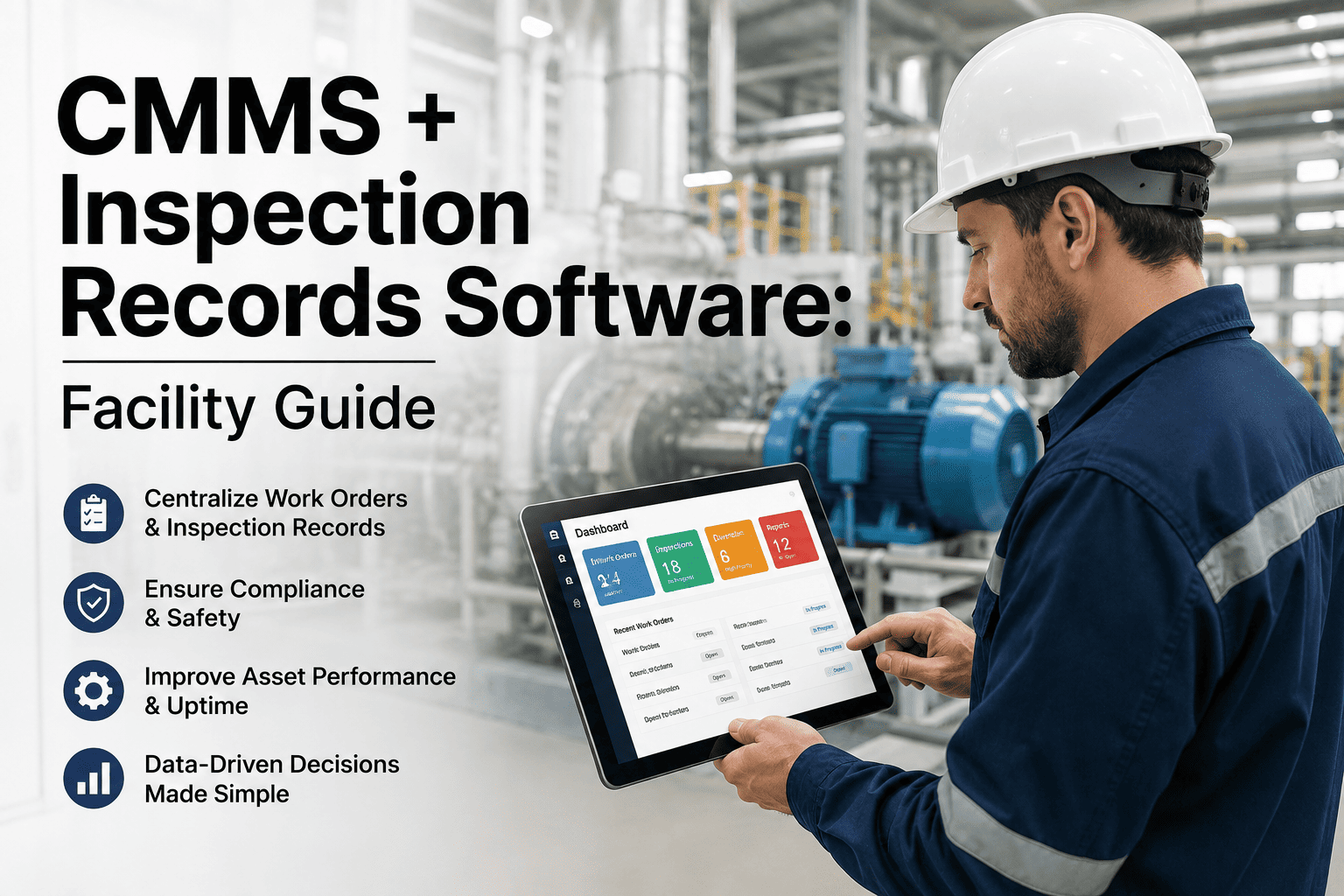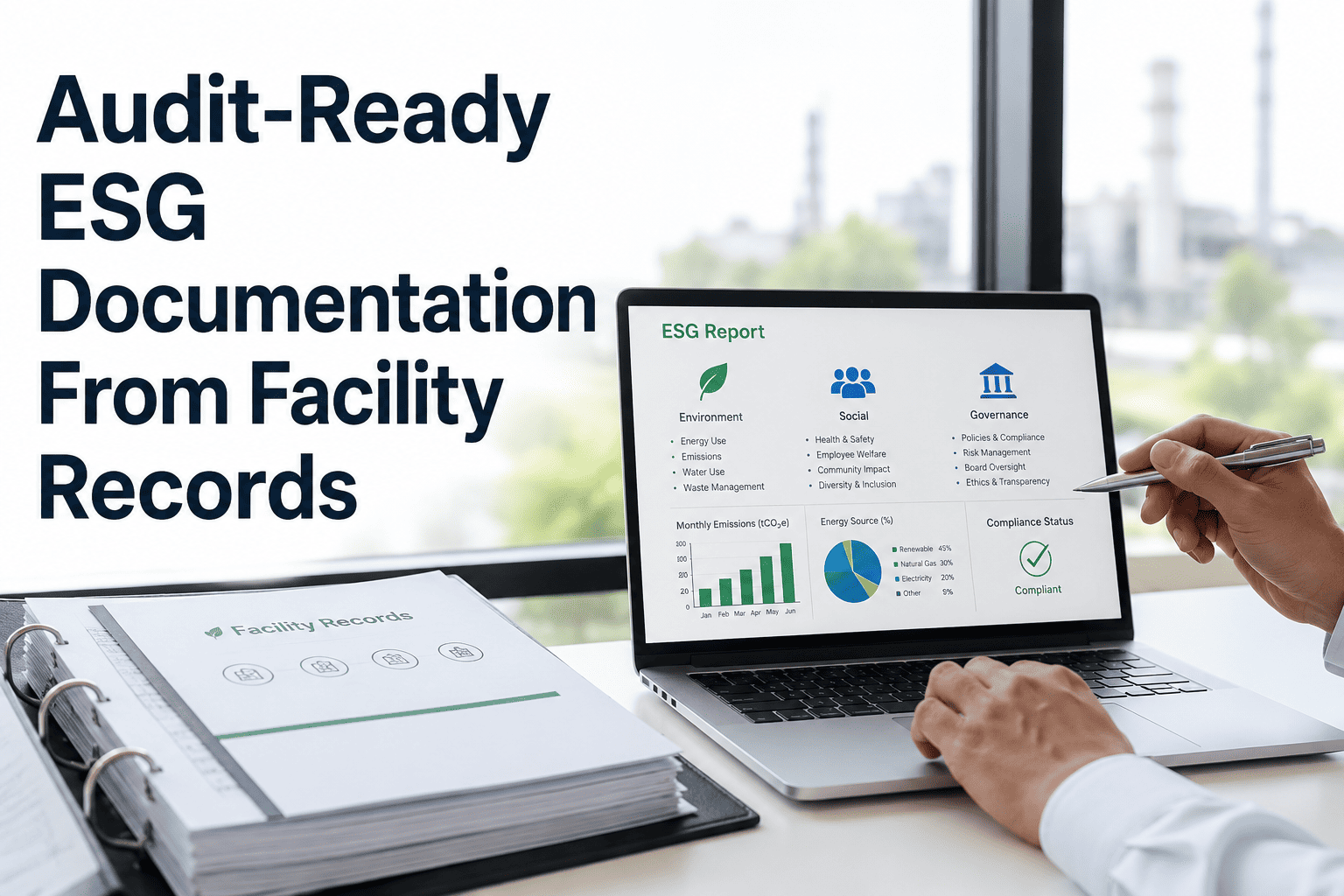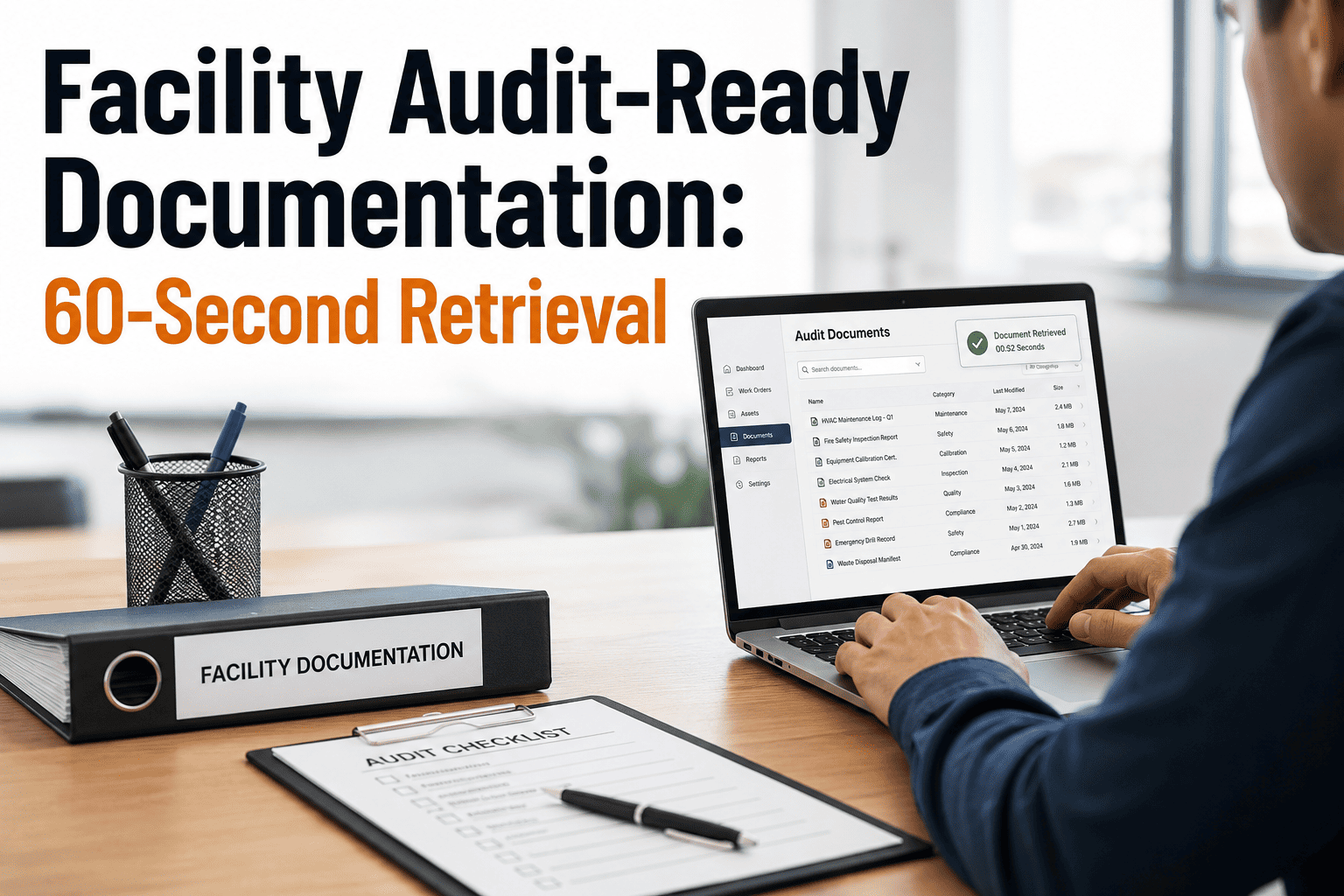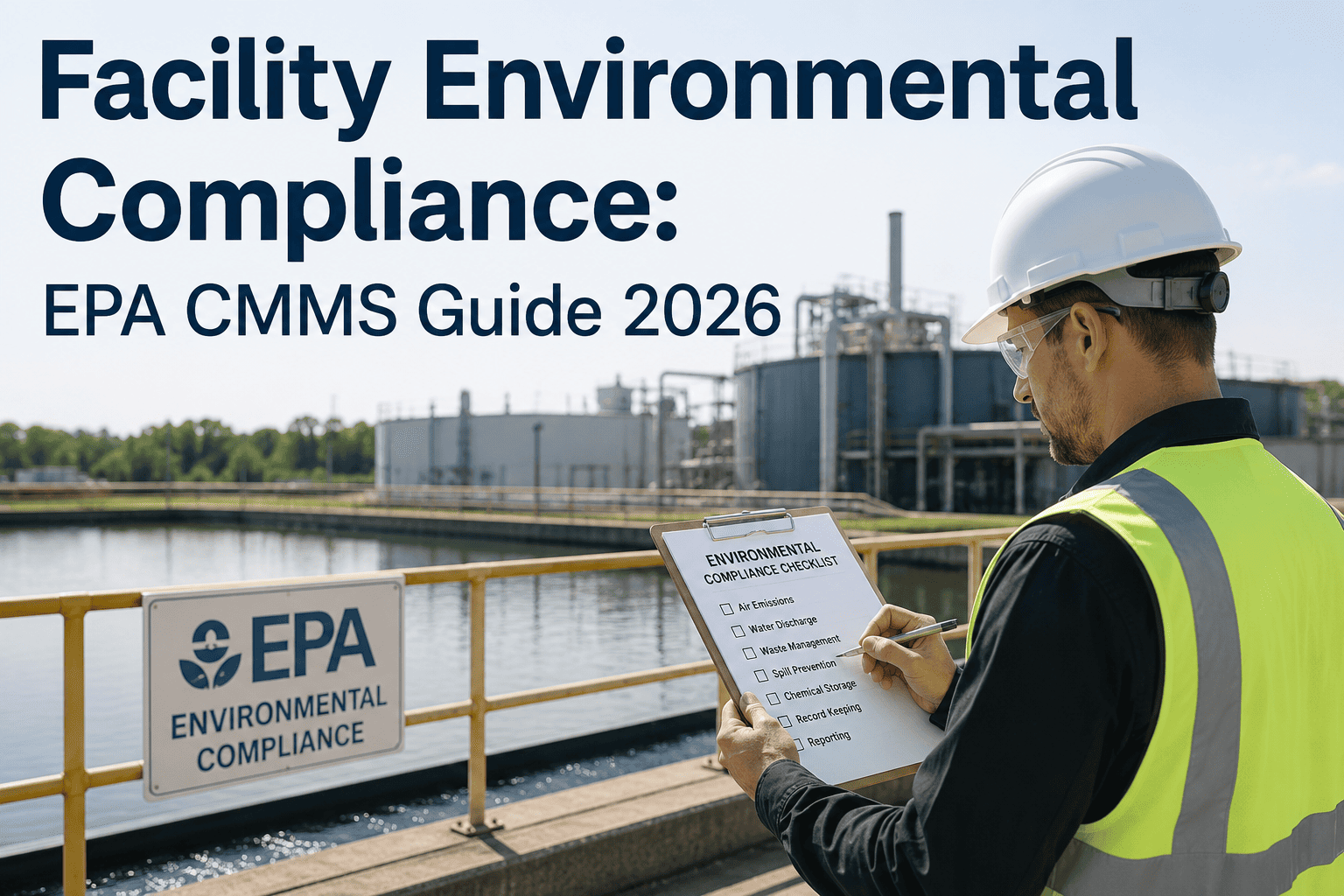
An OSHA compliance officer walks into a manufacturing plant and asks for the periodic inspection record on one air handler — dated March 14th, technician-attributed, energy sources verified. The maintenance team locked the equipment out correctly that day. The procedure sat laminated on the machine wall. The physical work satisfied 1910.147 in every measurable way. But the record proving it happened lives on a clipboard nobody can find, and OSHA does not accept "we did it, we just cannot show you" as compliance. Facility maintenance operations rarely fail OSHA audits because the safety work was not performed — they fail because the paper trail cannot be produced within the hour the inspector waits, which is where OxMaint facility maintenance CMMS closes the gap.
OSHA Compliance · Facility Maintenance Records · OxMaint
The OSHA Auditor Does Not Ask If The Work Was Done. The Auditor Asks If You Can Prove It — Right Now, Timestamped, Attributed, And Filed Correctly.
Every LOTO event, hazard communication update, electrical inspection, and confined space entry becomes a searchable, auditable record — captured as a natural output of the work order, not a paperwork task after the fact.
2,177
LOTO citations issued under 29 CFR 1910.147 in FY 2025 — the fourth most-cited OSHA standard
$165,514
2026 maximum OSHA penalty per willful or repeat violation; serious violations reach $16,550 each
5 years
Minimum retention on OSHA 300 injury logs; exposure and medical records extend to 30 years
Under 60 sec
Time to produce a single-asset OSHA record from OxMaint versus hours of manual file searching
The Documentation Truth
Compliance Is A Documentation Sport. The Work Is The Warm-Up.
In twelve years of OSHA field audits, the facility that receives the highest penalty is almost never the one with the worst physical conditions. It is the one that cannot open a laptop and produce the LOTO periodic inspection for equipment number 47, dated within the last twelve months, signed by an authorized employee who was not the one performing the daily procedure. The safety programme exists in the walk-through. Whether OSHA accepts it exists only in the file.
What Auditors See When Records Live On Paper
Inspection performed correctly · form damp, torn, or filed at the wrong station · date field partially completed · no way to prove the corrective action closed the finding · citation issued for the record, not the work.
What Auditors See With OxMaint
Work order completion auto-generates the OSHA record · technician identity, timestamp, digital signature, photo evidence, and finding captured in one action · retrieval by asset, date, or standard reference in under a minute.
Five OSHA Standards That Define Facility Maintenance Documentation
Every facility maintenance operation runs under these five 29 CFR 1910 subparts simultaneously. Each demands a specific record — and each is a citation waiting to happen when the paper trail is missing.
01
1910.147
Control Of Hazardous Energy (LOTO)
Written energy control procedure per machine · annual periodic inspection with authorized employee who is not the routine user · training records for authorized, affected, and other employees · certification retained for one year minimum or until a new certification supersedes it.
Ranked #4 most-cited OSHA standard, FY 2025
02
1910.1200
Hazard Communication
Written HazCom program · complete chemical inventory · SDS on demand for every product in use · employee training records tied to the actual substances they handle. HazCom violations climb the top-ten list every year because chemical inventories change faster than binders can be updated.
SDS retrieval expected in minutes
03
1910.303
Electrical Safety, Arc Flash, GFCI
Arc flash risk assessments current within five years · panel labelling for every breaker · GFCI test logs · qualified-worker verification for anyone performing electrical maintenance. The record must prove the technician was qualified, not merely that qualified technicians exist somewhere on staff.
Qualified-worker record must attach to the work
04
1910.146
Permit-Required Confined Space Entry
Permit completed and signed before entry — not after · atmospheric testing captured · attendant identified · rescue plan confirmed · debrief logged on exit. A confined space entered without a completed permit is a citation even when no incident occurred and every worker walked out safely.
Permit precedes entry — no exceptions
05
1910.36 & 1910.37
Means Of Egress Maintenance
Exits kept unobstructed, illuminated, and marked · emergency lighting tested monthly with recorded results · exit routes maintained free of storage, debris, or locked doors on the egress side · documentation of every deficiency and its corrective action.
A single blocked exit is a citable finding
06
Part 1904
Injury & Illness Recording
OSHA 300 log maintained year-round · 300A summary posted February 1 through April 30 · Form 301 incident detail per recordable injury · electronic submission by March 2 for establishments meeting the size threshold. Retention of five years, and every entry must reconcile to a work order or medical record.
Site-Specific Targeting draws from these submissions
OxMaint · Facility OSHA Compliance
Every Work Order Is A Compliance Event. OxMaint Records It That Way — Automatically.
LOTO procedures attach to the asset. HazCom SDS links to the chemical. Confined space permits generate before the technician can accept the job. The record exists before the auditor asks for it.
Retention Clock By Record Type — What OSHA Expects You Still To Have
OSHA does not run a single retention rule. Different records survive different clocks, and destroying a document a day too early converts a compliance record into a citation. OxMaint runs each clock automatically per record category.
LOTO Periodic Inspection Certification
1 year minimum
Retain until superseded by the following year's certification for the same procedure and machine.
Equipment Inspection & Maintenance Records
1 to 3 years
Duration varies by standard and by state addenda; the safer floor for facility PM logs is three years fleet-wide.
OSHA 300 Log & 301 Incident Reports
5 years
Retention runs five years past the calendar year the record covered — not from the date of the entry itself.
Training Records — LOTO, Confined Space, HazCom
Employment plus 3 years
Retention tied to the employee, not the calendar; staff turnover restarts the clock and the record must survive HR system changes.
Exposure Monitoring & Medical Surveillance
30 years
Applies under 1910.1020 for asbestos, lead, silica, noise, and every regulated substance the facility monitors — records must survive three decades of IT migrations.
Paper Compliance Versus OxMaint — Where The Gap Actually Lives
Compliance Pressure Point
Paper Or Spreadsheet Programme
With OxMaint
LOTO periodic inspection annually
Calendar reminder — often missed on rotating shifts
Auto-generated work order per procedure, per year
Written energy control per machine
Generic policy applied to every asset — a citation trigger
Machine-specific procedure linked to the asset record
Confined space permit before entry
Permit completed after the fact when remembered
Permit checklist blocks work order acceptance
HazCom SDS on demand
Binder that lags chemical inventory by months
SDS attached to the chemical, retrievable in seconds
Corrective action closure proof
Defect noted, follow-up untraceable
Defect ties to a work order that ties to a signed close-out
Retention clock per record class
One folder rule — records destroyed early or hoarded forever
Auto-tracked per category with pre-purge alerts
Audit-day retrieval on one asset
Hours of file room searching, sometimes days
Single export in under one minute
Anatomy Of An OSHA Documentation Request — And What Happens On OxMaint
Step 01
Inspector Selects One Asset At Random
During a Site-Specific Targeting or unannounced Warehousing NEP inspection, the officer picks equipment — often the highest-hazard machine visible from the shop floor entry — and requests its full compliance history.
Step 02
Request Names Multiple Standards At Once
The single equipment request typically pulls in LOTO under 1910.147, electrical qualification under 1910.303, training records, and any recorded incidents on Form 301 — four separate paper systems the paper programme keeps in four separate places.
Step 03
OxMaint Assembles The Asset Compliance View
One asset record surfaces every LOTO event, every PM work order, every arc flash calculation, every training certificate for personnel who touched the machine, and every incident logged — pre-linked and pre-timestamped.
Step 04
Export Produces One Audit File
A single PDF or CSV export delivers the complete asset compliance dossier for the inspector — with digital signatures, photo evidence, and timestamps intact — inside the window the officer is still standing at your desk.
Step 05
Inspection Closes On Documentation, Not On Findings
When the record exists, the citation does not. The physical work satisfied 1910.147 either way — but only OxMaint let you prove it in the sixty seconds the auditor was waiting to make that determination.
How OxMaint Enforces OSHA Documentation At The Work Order Level
Procedure Attaches To The Asset, Not The Binder
The written 1910.147 energy control procedure lives on the equipment record. Any work order raised against the machine surfaces the correct procedure to the technician before the job can be accepted — no wrong template, no missing document, no generic policy applied to a specific machine.
Permit-Required Entries Block Dispatch Until Complete
Confined space, hot work, and elevated work orders require permit fields completed before the technician can start. Atmospheric readings, attendant identity, rescue plan confirmation — captured in one flow, retained as a permanent 1910.146-compliant permit.
Every Completion Auto-Generates The OSHA Record
Work order close-out captures technician identity, timestamp, digital signature, findings, and photo evidence in one action. The record OSHA would request is a natural output of the work — not a separate documentation task performed after the fact.
Training Certifications Gate Work Assignment
A technician without current LOTO, confined space, or qualified electrical worker certification cannot accept the corresponding work order. Expiration alerts fire in advance so retraining is scheduled before the certificate lapses, not after a compliance officer flags it.
Retention Clocks Run Per Record Class
OSHA 300 logs run five years, LOTO certifications one year, training records to employment plus three, exposure records thirty. OxMaint tracks each clock independently and flags records approaching purge — nothing destroyed prematurely, nothing hoarded past its legal life.
One-Click Audit Export By Standard Or By Asset
Filter by 1910.147, by equipment number, by date window, by technician. The compliance history the inspector requested exports as one file — with the signatures, timestamps, and photo evidence that convert a maintenance record into an OSHA-defensible artefact.
The OSHA-Ready Operation
What Facilities Running OxMaint Look Like When The Inspector Walks In
Zero
Missed LOTO periodic inspections when the review work order is generated automatically each year per procedure
100%
Permit completion rate on confined space and hot work when the checklist blocks the technician from starting
Under 60s
Single-asset compliance history export — LOTO, electrical, training, and incidents in one file
14 days
From free trial to a live compliance calendar with OSHA, NFPA, and ADA intervals loaded as automated work orders
Frequently Asked Questions
Yes for any equipment where the eight-element exception under 1910.147(c)(4)(i) does not fully apply, which covers most facility equipment. OxMaint stores machine-specific procedures against the asset record so the correct document surfaces on every relevant work order. Start a free trial to see procedure-per-asset in action.
LOTO periodic inspection certifications retain one year minimum or until the following year's certification supersedes them; OSHA 300 logs and 301 forms retain five years past the calendar year the record covered. OxMaint runs each clock independently per record class.
Yes. A single export delivers the asset's LOTO events, PM history, electrical assessments, training certificates for technicians who worked the machine, and any recorded incidents — with timestamps, signatures, and photo evidence — in under a minute.
Registered confined spaces trigger a permit checklist on any related work order — atmospheric testing, attendant identity, rescue plan — and the technician cannot accept the job until every required field is captured. The paper permit that never gets filled becomes structurally impossible.
OSHA requires training records survive the duration of employment plus three years for most standards. OxMaint preserves the record on the employee history with a permanent audit trail so departures, HR system migrations, and supervisor changes do not destroy the compliance record. Book a demo to see the training register.
Live In 14 Days · No Implementation Fees · OSHA Records From Day One
The Inspector Will Ask For Documentation. OxMaint Makes Sure You Already Have It.
LOTO procedures per asset · confined space permits that block dispatch · training certificates that gate work orders · retention clocks per record class · one-click audit export.