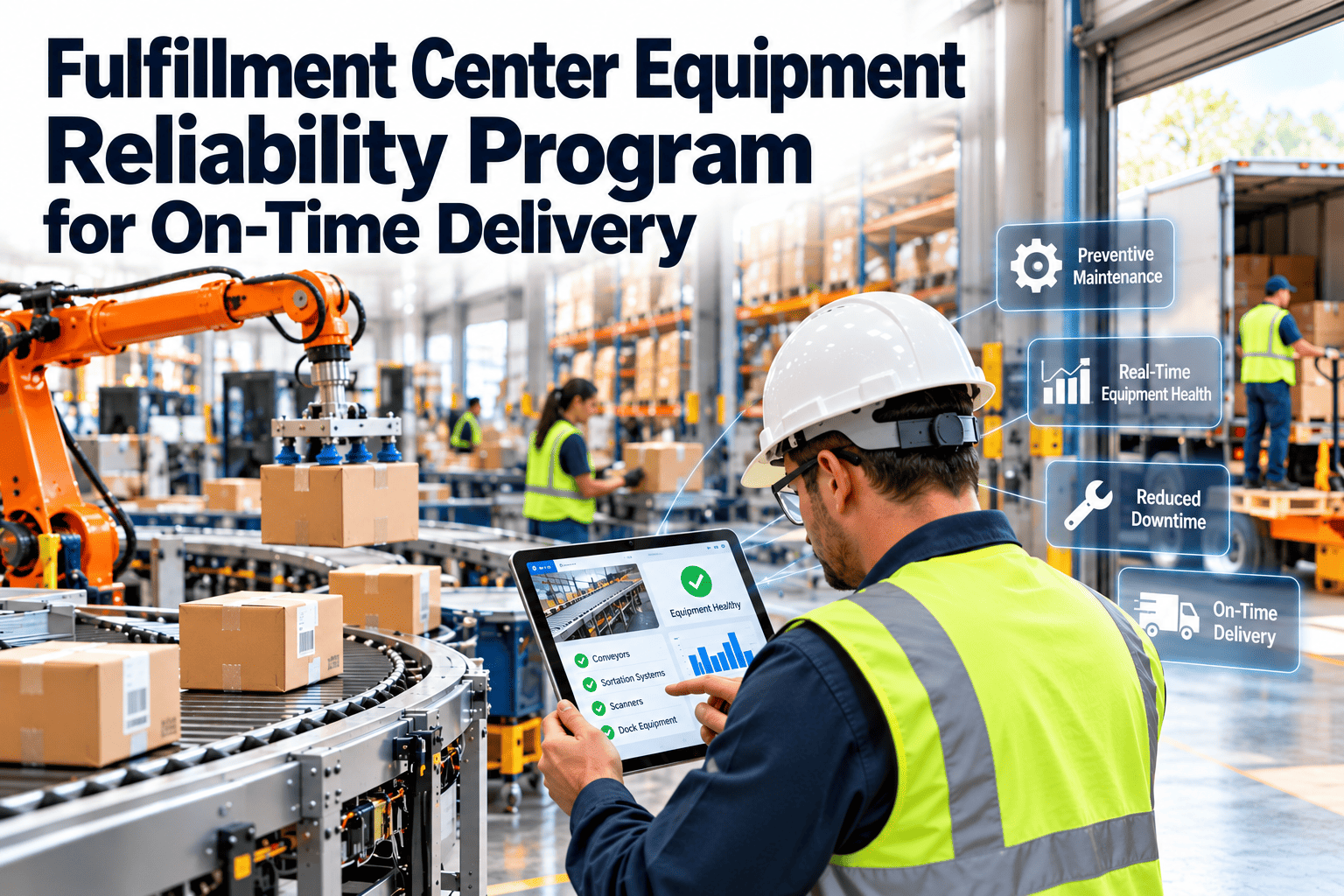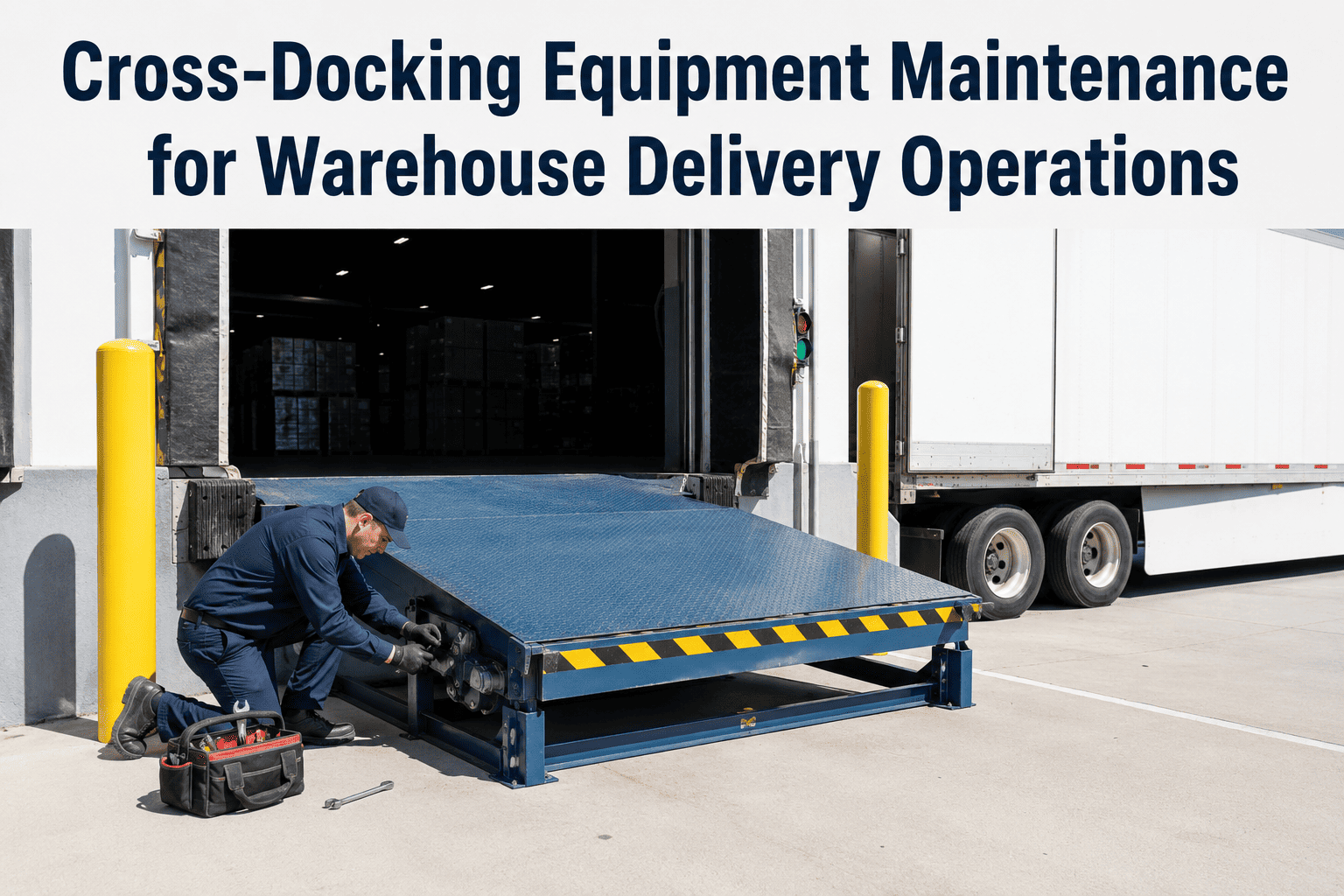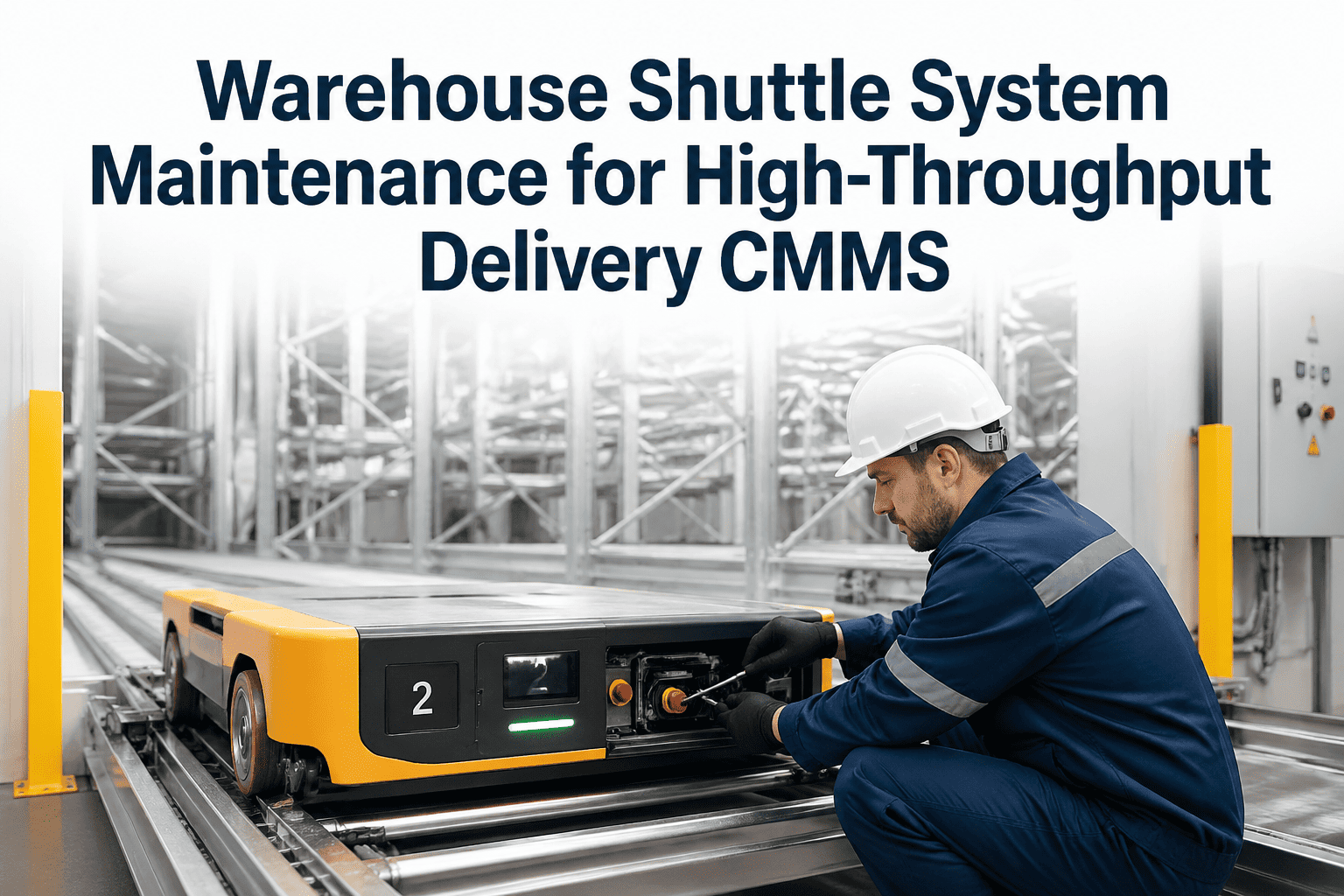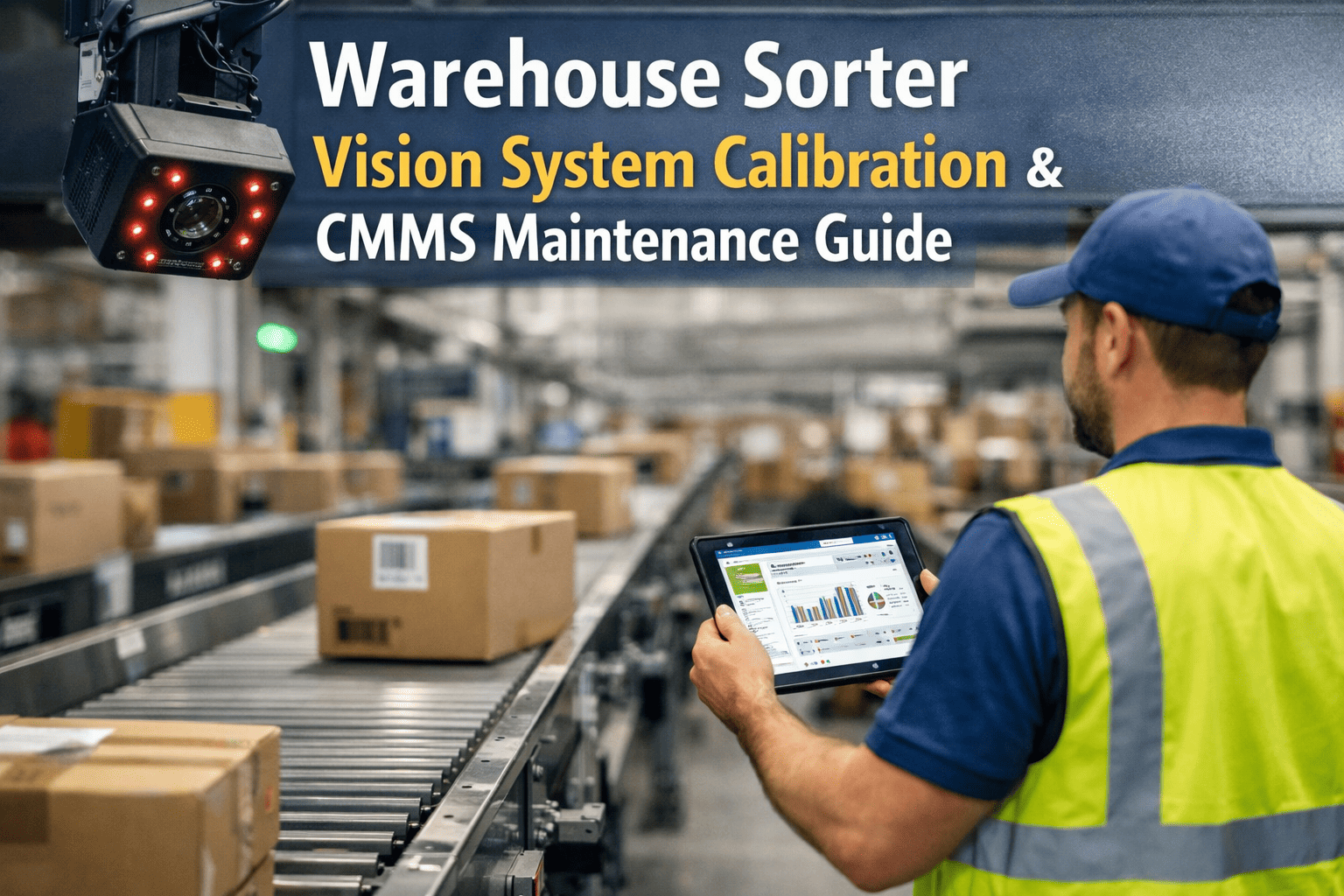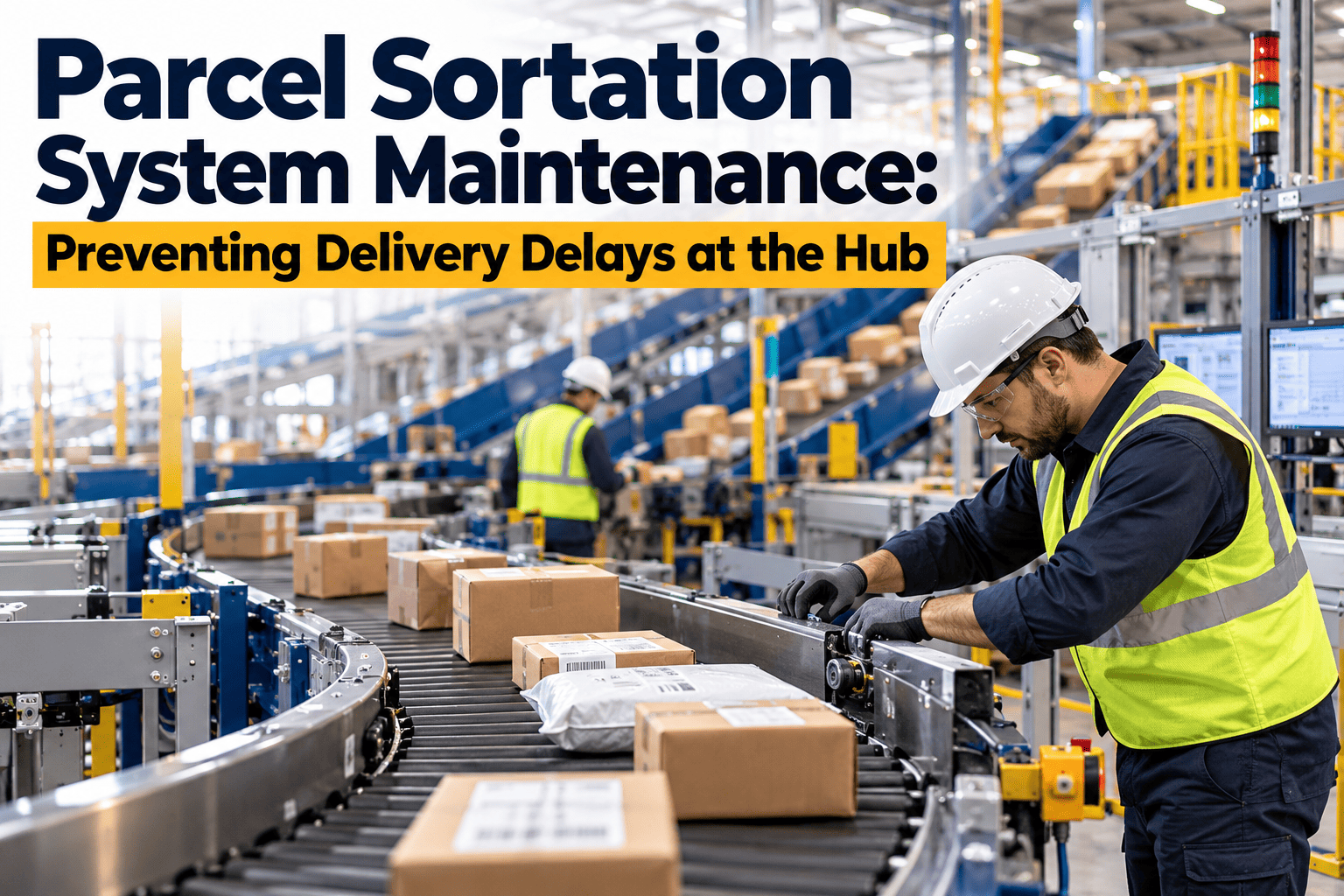
The sortation system is where a fulfillment center's throughput is won or lost. Every package passes through induction, scanning, and diverting at high speed, so a single worn divert, a dirty photo-eye, or a failing encoder can back up the entire building within minutes. Unlike a storage rack or a stand-alone truck, a sorter has no easy workaround when it stops. This guide explains how to maintain high-speed sortation systems, from divert mechanisms to controls, and how a structured plan in maintenance management software keeps the hub reliable through peak volume.
Parcel Sortation System Maintenance: Preventing Delivery Delays at the Hub
A sortation failure jams the heart of a fulfillment center. Maintain the full chain from induction to chute so packages keep moving and delivery commitments hold.
Induct
Scan
Sort
Divert
Chute
One failing stage stops every stage behind it.
Why Sorter Downtime Spreads So Fast
A sorter is a tightly coupled system, so a local fault becomes a building-wide problem. Understanding the chain reaction explains why prevention pays.
1
Fault at one divert or sensor
2
Packages recirculate or reject to a no-read lane
3
Induction slows to avoid overflow
4
Upstream conveyors accumulate and pack stations stall
5
Trailers leave late and delivery windows slip
Stage-by-Stage Failure Map
| Stage | What typically goes wrong | Early signal | Maintenance response |
|---|---|---|---|
| Induction | Belt wear, misaligned feeders, gap errors, jams | Rising jam count, uneven spacing | Belt and roller inspection, alignment, speed checks |
| Scanning | Dirty windows, misaligned scanners, no-reads | Increase in no-read rate | Cleaning routine, aiming checks, calibration records |
| Tracking | Encoder drift, photo-eye faults, belt slippage | Missed diverts, packages in wrong lane | Encoder verification, sensor tests, tension checks |
| Divert | Worn shoes, pushers, wheels, pneumatic or drive faults | Slow or partial diverts, noise, vibration | Wear measurement, lubrication, actuator service |
| Chutes and takeaway | Overflow sensors, jams, damaged surfaces | Full-chute alarms without full chutes | Sensor tests, surface repair, clearance checks |
| Controls and power | Drive faults, overheating cabinets, network drops | Intermittent stops, nuisance alarms | Cabinet cleaning, thermal checks, backup of programs |
Divert Mechanisms: Service Focus by Sorter Type
Always follow the OEM manual for intervals and torque values. The focus areas below help planners decide what to build into task lists.
Shoe and slat sorters
Shoe and pin wear
Slat and track alignment
Lubrication of guides
Cross-belt sorters
Carrier belt condition
Motor and drive health
Power and data rails
Tilt-tray sorters
Tilt mechanism and latches
Tray structure checks
Chain and drive tension
Pop-up wheel and roller diverters
Wheel wear and surface
Pneumatic leaks
Solenoid response time
Controls and Sensors: The Quiet Source of Nuisance Stops
Many sorter stoppages are not mechanical. They come from dirty or drifting sensing devices, so test them on a schedule.
Clean photo-eyes and reflectors, then confirm detection with a test package
Check scanner windows, focus, and aiming after any vibration or impact
Verify encoder counts against measured belt travel
Test emergency stops, light curtains, and guard interlocks
Inspect control cabinet filters, fans, and cable terminations
Back up controller programs and record changes made by technicians
A Planned Maintenance Rhythm for High-Speed Sortation
Each shift
Operator walkthrough, listen for abnormal noise, clear debris, review fault log.
Daily or nightly
Quick sensor and scanner cleaning, check high-wear points, reset chronic nuisance alarms.
Weekly
Lubrication, belt tracking, pneumatic leak checks, chute and takeaway inspection.
Monthly and quarterly
Wear measurement, drive and gearbox review, cabinet inspection, spare parts audit.
Scheduled shutdown
Larger replacements, structure checks, and OEM-recommended major service.
Work during planned windows only works if parts, tools, and labor are ready before the shutdown begins, which is why task lists and kitting matter.
Turn Sorter Maintenance Into a Scheduled Routine
Oxmaint helps maintenance teams schedule preventive tasks by asset, record inspections, and track every corrective repair on the sortation line.
The Five-Step Fault Response
When the sorter stops, minutes matter. A consistent response sequence shortens recovery and builds better failure history.
Detect
Alarm or operator report logged immediately with zone and time.
Isolate
Lock out the affected section and keep unaffected zones running if safe.
Diagnose
Review fault codes and prior work orders for that asset.
Repair
Replace or adjust with the correct part from stock.
Verify
Test with packages, record cause, and close the work order.
Sortation Reliability Metrics
| Metric | Use |
|---|---|
| Sorter availability during operating hours | Primary measure of reliability |
| Number and duration of stoppages | Separate frequent short stops from rare long outages |
| No-read and mis-sort rate | Indicates scanner and tracking health |
| Mean time to repair | Shows diagnosis, parts, and response gaps |
| Preventive task completion | Leading indicator for fewer faults |
| Top recurring fault causes | Directs root cause work |
Supporting the Sortation Team With Oxmaint
The software does not replace OEM service or controls expertise. It keeps the information those people need organized.
- Asset records for each divert, drive, scanner, and conveyor section, with manuals and service history.
- Preventive maintenance tasks tied to runtime, calendar, or shutdown windows.
- Mobile work orders with notes and photos from the line.
- Spare parts inventory for wear items such as shoes, belts, and sensors.
- Reports on recurring faults, repair times, and cost by asset.
Induction Line Preventive Maintenance
Induction sets the pace for the entire sorter. Poor spacing, jams, or belt problems at this stage reduce throughput before a single package reaches a divert.
- Inspect induction belts for wear, cracking, glazing, and edge damage, and confirm tracking stays centered under load.
- Check gap-control and speed-matching devices so packages enter the sorter with consistent spacing.
- Verify that motors, gearboxes, and drives run at normal temperature and without unusual noise or vibration.
- Clean and test the photo-eyes that detect package presence and length, since measurement errors affect scanning and diverting.
- Inspect side guides, transfer points, and rollers for damage that can snag polybags, flats, or small parcels.
- Test emergency stops, pull cords, and guards at each induction station on a documented schedule.
- Review jam reports by station to separate operator technique problems from equipment problems.
Technicians should compare induction performance across stations. A station that jams more often than its neighbors usually has a mechanical or sensing issue worth finding.
Common Mechanical Wear Points
| Component | Sign of wear | Action |
|---|---|---|
| Divert shoes, pushers, or paddles | Chipped edges, slow diverts, packages clipped or spun | Measure against OEM limits and replace as a set where required |
| Guide wheels and rollers | Flat spots, noise, rough movement | Replace worn items before they damage tracks |
| Drive chains, belts, and sprockets | Stretch, hooked teeth, slack, debris buildup | Adjust tension, clean, and replace at defined limits |
| Pneumatic cylinders and valves | Air leaks, slow response, inconsistent stroke | Leak test, replace seals or valves, check air quality |
| Gearboxes and bearings | Heat, oil leaks, vibration | Check lubrication, review trends, schedule replacement |
| Chute surfaces and flaps | Scuffing, gaps, cracks that catch packages | Repair or replace to prevent jams and damaged parcels |
Peak Season Readiness for the Sortation Hub
Peak volume exposes every weak point at once. The work that protects the hub happens well before the first surge.
Months before peak
Review last season's stoppages and fault logs, rank the recurring causes, and order long-lead parts and any outside contractor support.
Weeks before peak
Complete deferred preventive work, replace parts near the end of their life, and clean and test every scanner, photo-eye, and encoder.
Final week
Run the sorter at planned peak rates with test volume, watch for heat and noise, and confirm spare parts are staged near the line.
During peak
Assign technicians to each shift, hold short handovers, keep a log of nuisance stops, and limit non-urgent shutdowns.
After peak
Review what failed, repair items that were patched temporarily, and update schedules using the season's real data.
Spare Parts Strategy for Sortation Equipment
Sorter parts are often specialized and slow to ship, so a poor stocking plan turns a small failure into a long outage.
Wear items
Shoes, pushers, wheels, belts
Replace on schedule
Stock to usage rate
Electronics
Sensors, scanners, encoders
Keep tested spares
Record firmware versions
Drives and power
Motors, drives, contactors
Stock for single points of failure
Document settings
Long-lead items
Gearboxes, controllers, carriers
Agree vendor lead times
Consider consignment
Recording Fault Data for Root Cause Work
The same stoppage described differently by every shift cannot be analyzed. Standardize what gets recorded so patterns appear.
Zone or section where the stop occurred, using a consistent naming scheme
Start time, end time, and whether the entire sorter or only a section stopped
Fault code or alarm text exactly as displayed by the controls
Cause category such as mechanical, sensor, controls, jam, or operator
Parts used and technician notes describing what was actually fixed
Whether the same fault occurred earlier in the shift or week
Roles on the Sortation Maintenance Team
- Mechanical technicians handle divert mechanisms, belts, chains, gearboxes, and structure, and perform most lubrication and wear measurement.
- Electrical and controls technicians own sensors, scanners, drives, and programs, and manage backups of controller code and configuration changes.
- Operators and line leads perform walkthroughs, clear jams safely, and report abnormal behavior early.
- Maintenance planners prepare task lists, order parts, and schedule work into shutdown windows.
- The OEM or integrator supports major repairs, upgrades, and complex diagnostics, and its service history belongs in the same records as in-house work.
Cross-training between mechanical and controls staff shortens diagnosis, because many faults appear mechanical but originate in sensing, and the reverse.
Controls and Network Health
Modern sorters depend on controllers, networks, and software as much as on motors and belts. A failing switch or an unrecorded program change can stop a line that looks mechanically perfect.
- Keep a current backup of every controller program, drive parameter set, and scanner configuration, stored outside the sorter cabinet.
- Record every change to logic, timing, or settings with the person, date, and reason, so a new problem can be traced to a recent change.
- Monitor network switches, cabling, and connectors for errors, and replace damaged cables rather than patching them.
- Inspect cabinets for heat, dust, loose terminals, and failed cooling fans, which are common causes of intermittent faults.
- Test power quality and grounding where electronics fail without clear cause.
- Maintain spare network and communication components, and document how each device is addressed and configured.
Safety During Sorter Maintenance
Sorters combine moving carriers, stored energy, pneumatics, and automated starts. Safe procedures protect people and prevent damage.
- Apply lockout and tagout to electrical, pneumatic, and gravity hazards before reaching into any part of the line.
- Verify zero energy, including pressure stored in air lines and any suspended or spring-loaded components.
- Use designated access points and keep walkways, platforms, and guard doors in good condition.
- Confirm that guards, light curtains, and emergency stops are restored and tested before the sorter restarts.
- Communicate over radios or visual signals when several technicians work in different zones.
- Record near misses and unsafe conditions, and treat them as maintenance findings that require action.
Training Technicians and Operators
Sorter knowledge often sits with a few experienced people. Capture it so reliability does not depend on who is on shift.
- Write short task procedures with photos for common jobs, such as replacing a shoe, aligning a scanner, or testing an encoder.
- Teach operators to recognize early warning signs, including unusual noise, repeated jams in one zone, and rising no-read counts.
- Cross-train mechanical and controls staff on the basics of each other's work to speed diagnosis.
- Use post-failure reviews as training material, walking the team through what happened and how it was solved.
- Keep OEM manuals and drawings organized by asset so technicians find the right version quickly.
Sortation Maintenance FAQs
What causes most sorter stoppages?
Many come from sensors, scanners, and jams rather than major mechanical failures. Track fault codes to find your own pattern.
How often should divert mechanisms be inspected?
Follow the OEM schedule as a baseline and tighten it where wear data shows faster decay.
Which spares should we keep on site?
Stock wear items and long-lead parts for single points of failure. Set minimum levels by asset.
Can we maintain the sorter without full shutdowns?
Some tasks can be done in short windows, but major work needs planned stops. Book a demo to see window planning.
How do we prepare for peak?
Complete overdue service weeks ahead, test sensors, and stage critical spares near the line.
Keep the Hub Moving at Peak Speed
Give your team a clear plan for every divert, scanner, and drive. Start tracking sortation maintenance in one place.