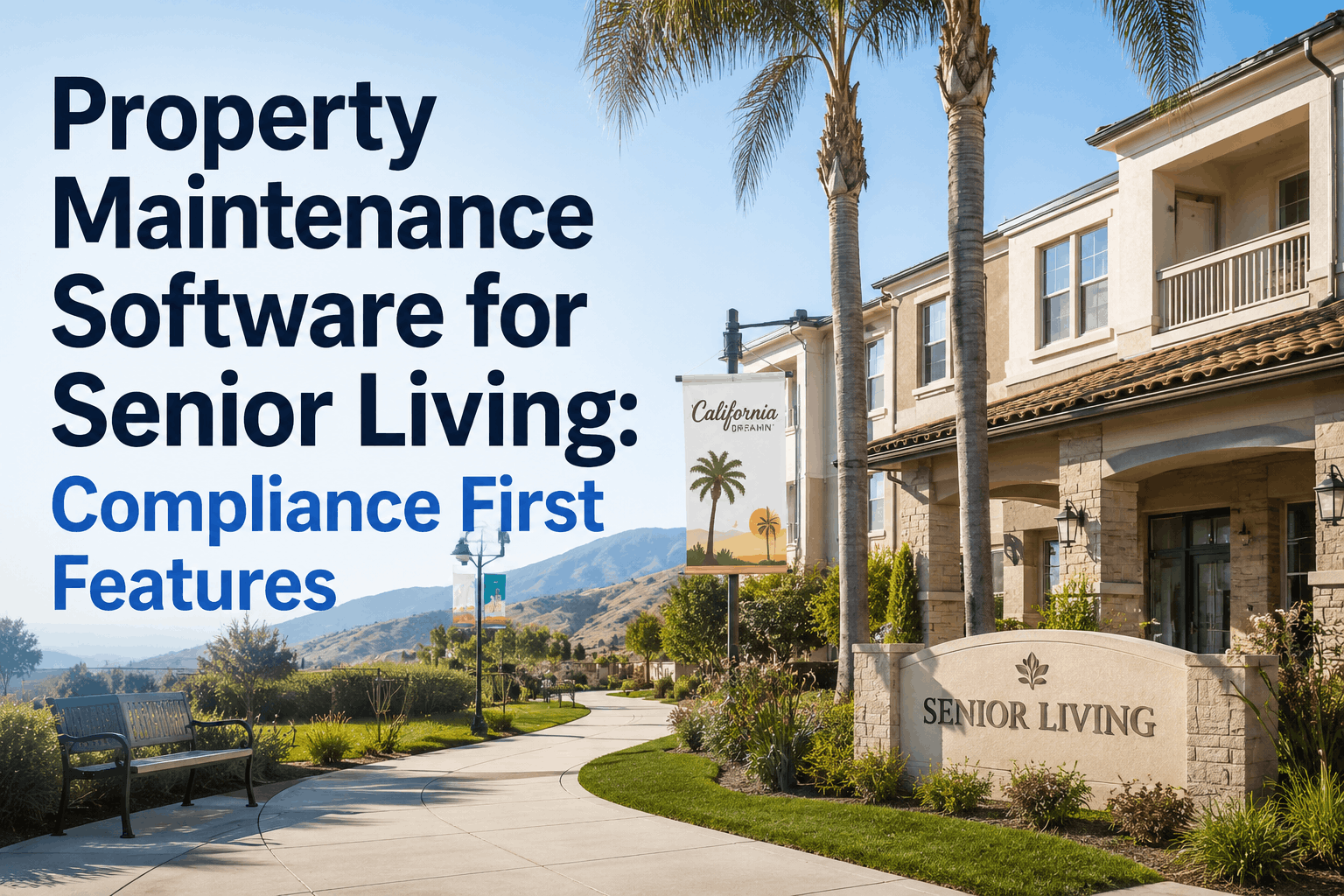
A 180-bed assisted living community in the Pacific Northwest faced one of the most demanding regulatory environments in facilities management. Fire safety certifications, elevator inspections, medication room audits, HVAC servicing windows, dietary equipment checks — each carried its own deadline, its own documentation requirement, and its own consequences for failure. The facility's seven-person maintenance team was spending more time hunting for compliance records than performing the work those records were meant to document. Inspection failures were recurring. Audit preparation consumed entire workweeks. The operations director knew something had to change. Within one year of implementing a purpose-built CMMS, the community achieved 100% compliance, reduced compliance-related labor by 78%, and eliminated license risk from the board agenda. Start your free trial or schedule a compliance consultation to see how your senior living facility can achieve the same results.
Senior Living Compliance Success — 2026
From Paper Chaos to Audit-Ready Operations — What One 180-Bed Community Achieved in 12 Months
100%
Compliance score achieved
Up from 67% baseline before CMMS deployment, with zero failed inspections in subsequent survey cycles
78%
Compliance labor reduction
Maintenance staff redirected from paperwork to resident care; administrative coordinator redeployed to resident services
180
Resident bed capacity
Mid-size community operating in Pacific Northwest region managing 40+ life safety systems and 150+ preventive maintenance task streams
14 days
Advanced deadline alerts
System automatically alerts supervisors 14 days before compliance deadline, eliminating missed inspection windows
The Challenge: Life Safety Compliance at Scale Without Digital Infrastructure
Senior living communities operate under some of the most heavily regulated frameworks in facilities management. A single 180-bed facility manages dozens of critical systems, each with independent compliance schedules. Fire alarm panels require weekly visual inspections, monthly signal tests, and annual certifications. Sprinkler systems demand annual inspections and 5-year internal seismic bracing tests. Elevators must be inspected quarterly with annual full-load tests. Emergency generators need monthly visual checks, monthly exercise runs, and annual full-load tests under load. Medication refrigerators require temperature monitoring three times daily. Hand-washing stations must pass monthly water quality tests. Medical gas manifolds demand quarterly pressure checks and annual certification tests. For a facility with seven maintenance staff members and no centralized scheduling system, tracking 40+ life safety systems across 150+ independent task streams is not a management problem — it is an operational impossibility waiting to happen. Before deploying Oxmaint, the community relied on paper checklists maintained by individual facility managers, spreadsheets updated irregularly, and tribal knowledge embedded in the minds of long-tenured staff members. When state surveyors arrived with little notice, maintenance managers scrambled to locate physical records, prove repairs were made on time, and assemble the documentation that regulators demanded. The facility had already received deficiency findings in two consecutive surveys, triggering corrective action plans and creating risk of license suspension. The operations director understood that adding more staff would not solve the problem — the bottleneck was not labor, it was visibility. The organization had no real-time view of which systems were due for inspection, which inspections had been completed, and which records were missing. Every audit cycle became a crisis response rather than a routine documentation exercise.
01
Manual Scheduling Across Dozens of Independent PM Streams
Each life safety system carries multiple independent recurrence schedules. A fire alarm panel simultaneously requires weekly visual work orders, monthly signal test work orders, and annual certification work orders. When managed by paper or isolated spreadsheets, the second monthly inspection gets forgotten because staff are focused on the annual certification deadline. The system lacks inherent discipline because the scheduling lives in someone's memory, not in a mechanism that enforces compliance dates.
02
Documentation Gaps During Regulatory Surveys
CMS surveyors have evolved in sophistication. A binder of paper logs with entries filled in is no longer sufficient. Surveyors today check dates for consistency, cross-reference filter change records against HVAC service logs, compare generator test records against actual weather events, and specifically ask for corrective action records when deficiencies are identified. Paper systems cannot produce this level of integrated evidence, and retrieving records from disparate files takes hours of administrative labor.
03
Staff Turnover Creating Compliance Blindness
Institutional knowledge about which inspections are due and which contractors are certified is dangerous. When a key facility manager retires or transitions to another role, the knowledge walks out the door with them. Critical inspection schedules get missed. Contractor certifications expire without renewal. Compliance gaps appear not because maintenance failed, but because nobody remembered that a particular system required annual testing.
04
Reactive Audit Preparation Instead of Continuous Compliance
Without a centralized, audit-ready system, facilities managers spend 20+ hours per week in the week before a survey assembling records, printing checklists, and organizing documentation. The survey is treated as a crisis event rather than a routine validation of operations that have been compliant throughout the year. This reactive posture means every survey is stressful, every audit carries uncertainty, and the organization is always one missed deadline away from a deficiency finding.
The Five Pillars of Senior Living CMMS Implementation: How Oxmaint Organizes Compliance
A CMMS designed specifically for senior living must address the operational realities that make this sector unique. Generic maintenance software built for commercial buildings misses critical life safety requirements. Oxmaint's approach consolidates compliance across five operational pillars that map directly to CMS survey standards and Joint Commission requirements for senior care environments.
01
Multi-Frequency Life Safety Task Independence
Each safety task carries its own recurrence schedule
Fire alarm panel generates a weekly visual work order, a monthly signal test work order, and an annual certification work order — each recurs independently from its own last completion date. Staff turnover does not create gaps because the schedule lives in the system, not in someone's memory. Supervisors receive automated escalation alerts 14 days before any deadline is missed, preventing compliance lapses before they occur.
02
Contractor Credential Tracking & Certification Verification
Digital record of who is certified to perform which tests
Oxmaint stores contractor credentials — license numbers, certifications, insurance details, expiration dates — linked directly to work orders. When a state surveyor asks "who performed this elevator test and were they licensed?", the answer is one click away: name, license number, photograph of certificate, and date of test completion. This creates the audit trail that CMS surveys demand and eliminates the risk of work performed by unqualified contractors.
03
Real-Time Compliance Dashboard & Escalation Rules
Live view of all life safety system status and due dates
Every senior living facility manager can see on a single screen which systems are due for inspection in the next 14 days, which inspections are overdue, which work orders were completed and documented, and which facilities in the network have compliance gaps. Automatic escalation rules notify supervisors and operations directors when a deadline approaches, eliminating the need for manual oversight and creating accountability across teams.
04
CMS-Compliant Work Order Documentation
Audit-ready records captured automatically in every work order
Every work order captures technician identity, timestamp, asset inspected, task completed, findings noted, parts replaced, and digital signature. The moment a technician completes work on a mobile device, the record is time-stamped, digitally signed, and added to the facility's compliance archive. No transcription errors. No lost paperwork. No gaps in the documentation chain.
05
One-Click Audit Response & Survey Documentation Packaging
Compliance records export in the format regulators expect
When a state surveyor requests documentation of all fire alarm tests performed in the past 12 months, the facility manager exports a complete report in minutes: test dates, technician credentials, findings, and corrective actions. Before CMMS, this process took days of manual record assembly. After deployment, compliance documentation is current, organized, and retrievable by system, date, or technician on demand.
100% Compliance Starts With the Right System
Stop Managing Compliance Through Crisis. Start Operating Continuously Compliant Operations.
Oxmaint's life safety compliance engine is built specifically for senior living environments. Multi-frequency task independence, contractor credential tracking, automated escalation alerts, and one-click audit response — all configured to your facility's specific regulatory requirements and organizational structure.
The Compliance Transformation: Before and After Metrics
| Operational metric | Before CMMS (paper + spreadsheet) | After CMMS (6 months) | Impact |
| Compliance score in state survey |
67% (deficiency findings) |
100% (zero findings) |
Eliminated license risk and remediation costs |
| Time spent on compliance work per week (per FTE) |
20+ hours (paper assembly, record hunting) |
Under 5 hours (exception management only) |
Freed maintenance staff to focus on resident care and proactive asset management |
| Missed PM deadlines per month |
4–7 inspections overdue at any given time |
Zero — automatic alerts 14 days before deadline |
Zero compliance gaps; 100% on-time PM completion |
| Time to prepare audit documentation |
40+ hours of staff time in week before survey |
Under 2 hours — one-click export of all records |
Removed audit crisis from operational calendar; freed staff for other duties |
| Contractor credential verification during survey |
Manual file search; 30+ minutes per question |
Instant — credentials linked to every work order |
Survey encounters become data validation instead of document hunting exercises |
| Cost of emergency compliance remediation |
$12,000–18,000 per deficiency citation |
$0 — proactive compliance prevents citations |
Annual savings of $25,000–40,000 from eliminated deficiency remediation |
| Knowledge continuity after staff turnover |
Critical — institutional knowledge loss on departure |
System-based — schedules and history transfer to new staff |
New facility managers productive within days; no compliance gaps from transitions |
Customer Testimonial: Operations Director, Pacific Northwest Senior Community
"Before Oxmaint, we were reactive. We'd get a notice that the elevator inspection was due, scramble to find the contractor, get the work done, then hunt through filing cabinets to prove we'd done it when the state surveyor asked. We'd spend entire weeks before each survey assembling documentation. We had deficiencies two surveys in a row. The board was discussing license risk. That stress is completely gone now. Our maintenance team focuses on residents. Inspections happen on schedule automatically. When the surveyor arrives, the documentation is current and organized. We achieved 100% compliance and haven't looked back. This was the best operational investment we've made."
Operations Director, 180-Bed Assisted Living Community, Pacific Northwest USA
Senior Living CMMS Features: Purpose-Built for Compliance
01
Pre-Configured Life Safety Task Library
Fire alarm testing, sprinkler inspections, elevator maintenance, emergency generator testing, medical gas manifold checks, medication refrigerator monitoring — 40+ life safety tasks pre-loaded with correct recurrence schedules, testing protocols, and documentation requirements specific to senior living regulations and CMS survey standards.
Deploy compliance automation in your first week
02
Automated Deadline Alert & Escalation Workflow
System automatically alerts supervisors 14 days before an inspection deadline. If the deadline passes without completion, escalation rule automatically notifies the operations director. No manual tracking needed. Compliance deadlines never slip because the system enforces them automatically.
Zero missed compliance deadlines, guaranteed accountability
03
Contractor Credential Database & Verification Linking
Store contractor licenses, certifications, insurance details, and expiration dates in a centralized database. Link credentials directly to work orders so auditors can verify that only qualified contractors performed critical life safety work. Automatic alerts when contractor certifications are approaching expiration so you can schedule renewal before the deadline.
Complete audit trail of qualified labor performing critical work
04
Mobile Work Order Capture with Digital Signatures
Maintenance technicians complete inspections on mobile devices. System captures technician identity, timestamp, asset details, findings, photos, parts used, and digital signature. The moment work is complete, the record is archived and available for audit. No paper forms. No transcription delays.
Real-time audit-ready documentation from the field
05
One-Click Compliance Report Export
When a state surveyor requests documentation of all fire alarm tests completed in the past 12 months, one button export generates a complete compliance report: test dates, technician credentials, findings, corrective actions, and all supporting documentation. Reports can be filtered by system, date, technician, or contractor for customized audit response.
Audit preparation changes from days of work to minutes of export
06
Multi-Facility Compliance Dashboard
For senior living organizations operating multiple communities, a single dashboard provides real-time view of compliance status across all facilities. Compare on-time PM completion rates across communities. Identify facilities with compliance gaps. Allocate resources to the communities that need them most. Senior management has visibility without requiring manual status reports.
Network-wide compliance visibility from a single screen
Frequently Asked Questions: Senior Living CMMS Compliance
How quickly can we implement Oxmaint without disrupting daily operations?+
Single-facility deployment typically completes in 2–3 weeks: asset registry creation, staff training, compliance task configuration, and go-live. The system operates alongside paper processes during transition, so zero operational disruption. Most facilities see compliance improvements within the first two weeks of active use.
Will we lose access to our historical compliance records?+
No. Oxmaint imports existing maintenance history from spreadsheets, facility logs, and contractor records so you maintain continuity. Historical documentation is scanned and archived in the system if needed for audits. Future records are created natively in Oxmaint with full audit trail capability.
Does Oxmaint handle multiple senior living facility types — assisted living, memory care, skilled nursing?+
Yes. Oxmaint's task library includes pre-configured compliance requirements specific to each facility type. Assisted living, memory care, skilled nursing facilities, and continuing care retirement communities all have different regulatory requirements. The system is configurable for each type without requiring new training.
What happens if a contractor becomes unavailable or non-compliant?+
Oxmaint's contractor management system allows you to immediately flag a contractor as inactive or non-compliant, preventing future work orders from being assigned to them. The system automatically suggests alternative contractors with equivalent credentials for upcoming work. Your credential database ensures compliance transparency throughout transitions.
How does Oxmaint handle unannounced state surveys and sudden audit requests?+
Oxmaint is built for unannounced surveys. Every record is current, searchable, and exportable on demand. When a surveyor arrives with no notice, you access audit-ready documentation in minutes instead of spending days assembling records. This is the core operational advantage — you are always audit-ready because compliance is operationalized into daily workflows, not treated as a pre-survey sprint.
Can Oxmaint integrate with our existing EHR or resident management system?+
Oxmaint integrates with major senior living management platforms via API. Work order data syncs with your resident management system for context on facility-wide activities. Maintenance teams see whether a request relates to a resident's room or a common area without switching between applications. Integration setup typically takes 1–2 weeks with our implementation team.
What if we have staff who are uncomfortable with technology or mobile devices?+
Oxmaint's mobile app is designed for technicians and maintenance staff with minimal tech experience. The interface is simple: take photos, note findings, sign digitally. For facilities with paper-preference staff, paper work order creation is supported with scanning and OCR so teams can transition at their own pace. Training takes under 30 minutes.
Senior Living Compliance — Oxmaint
From Deficiencies to 100% Compliance. One Community's Transformation.
Multi-frequency life safety task scheduling, contractor credential verification, automated deadline escalation, and one-click audit documentation — all integrated into the daily maintenance workflow. This 180-bed community achieved perfect compliance scores, eliminated license risk, and freed maintenance staff to focus on resident care and facility excellence. Your community can achieve the same results.
100%
Compliance achievement in year one
78%
Compliance labor reduction
Zero
Missed compliance deadlines
2–3 wk
Deployment timeline