OSHA inspectors arriving at a US power plant in 2026 carry one fundamentally new tool — the agency's electronic recordkeeping system, which makes injury logs and inspection patterns publicly searchable and explicitly targets employers based on anomalies. Combine that with 2026 penalty maximums of $16,550 per serious violation, $165,514 for willful or repeated violations, and OSHA's instance-by-instance citation policy (where a single confined-space failure produced over $600,000 in combined penalties at Wayne Transports), and the math is clear: documentation gaps are now the most expensive operational risk a plant manager can carry. The six citation categories below are where power plants get hit hardest — and the ones a properly configured CMMS can prevent before the inspector knocks. To see how OxMaint enforces LOTO sequence, confined-space permits, and arc flash work practices through digital workflows, you can start a free trial or book a 30-minute safety compliance walkthrough with a power plant specialist.
Top 6 Citation Risks · Power Plants · OSHA 2026
The 6 OSHA Citation Risks Every Power Plant Should Eliminate in 2026
Arc flash protection, LOTO drift, confined space, hot work, PSM mechanical integrity, and combustible dust — these are the six citation categories driving 2026 power plant penalties. Here is what triggers each one and how to close the gap before it costs you.
$165K
Willful or repeated violation max (per instance)
$16.5K
Serious violation max + failure-to-abate per day
$600K+
Combined confined-space penalties under instance-by-instance policy
10+
CFR standards typically cited together in a single power plant inspection
2026 Citation Risk Heatmap — Power Plant Edition
The matrix below ranks the six citation categories by inspector frequency, financial severity, and prevention difficulty without a structured CMMS. The redder the cell, the bigger your exposure today.
LOTO Drift (1910.147)
Very High
High
Very High
Arc Flash & 1910.269 Gaps
High
Very High
High
Confined Space (1910.146)
High
Very High
High
Hot Work / 1910.252
Medium
High
Medium
PSM Mechanical Integrity (1910.119)
Medium
Very High
Very High
Combustible Dust Housekeeping
Medium
High
High
Medium
High
Very High
The 6 Citation Risks — In Detail
Each card below pairs the OSHA standard with the specific failure pattern inspectors look for, the citation history, and the digital workflow that prevents it. Read top to bottom for the full prevention map.
01
29 CFR 1910.147
LOTO Drift & Hazardous Energy Control
What Triggers a Citation
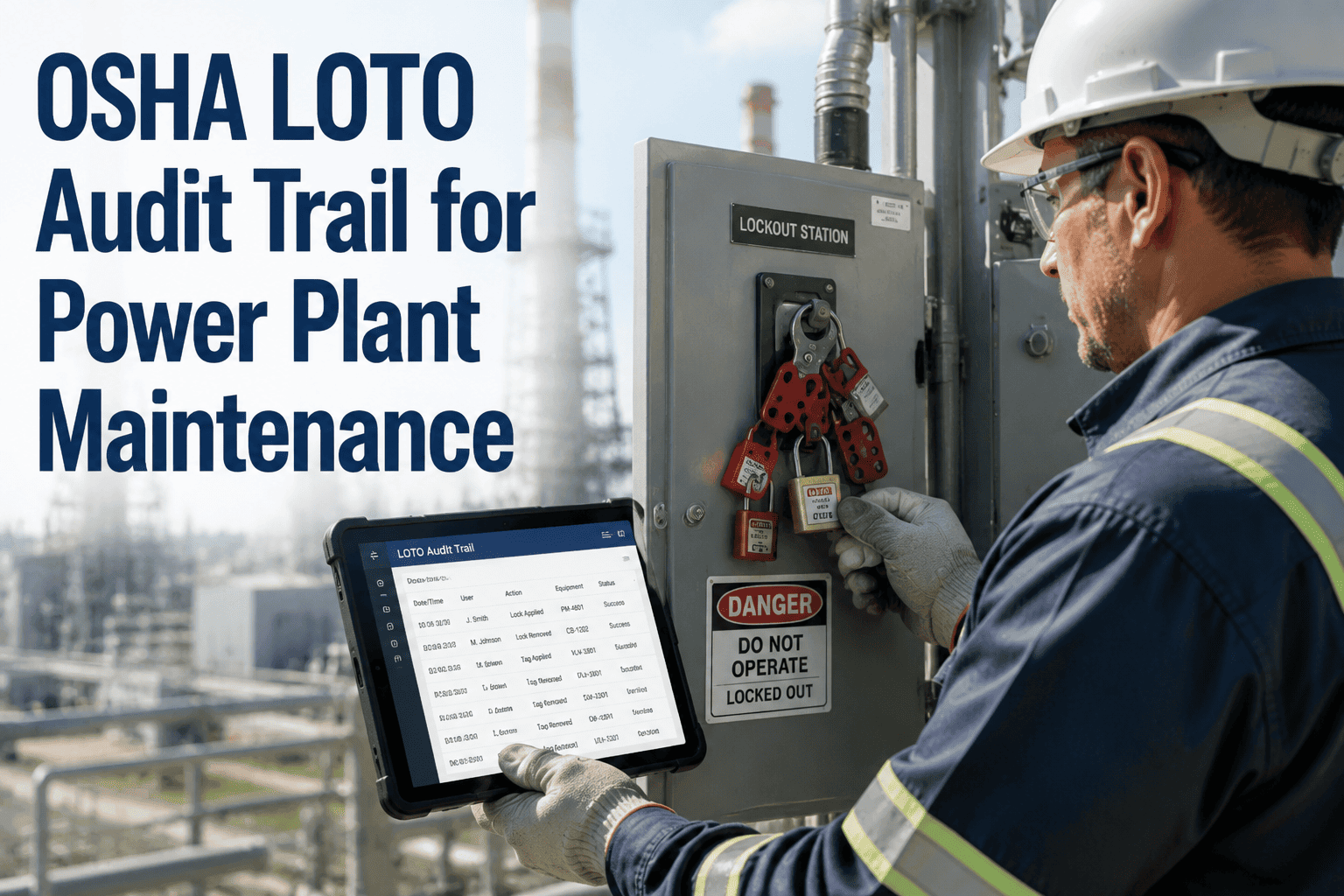
Procedures written but never followed. Group lockouts conducted without individual energy isolation verification. Annual periodic inspections missing or undocumented. Authorized-employee training records lost. Lockout devices applied out of sequence under time pressure during outages.
CMMS Prevention
Sequential checklist enforcement — technicians cannot mark step 4 complete until step 3 has a signed sign-off. Each step captures authenticated identity, timestamp, and photo. Annual periodic inspection auto-scheduled as recurring PM. Authorized-employee training matrix tied to asset access permissions.
02
29 CFR 1910.269
Arc Flash & Electric Power Generation
What Triggers a Citation
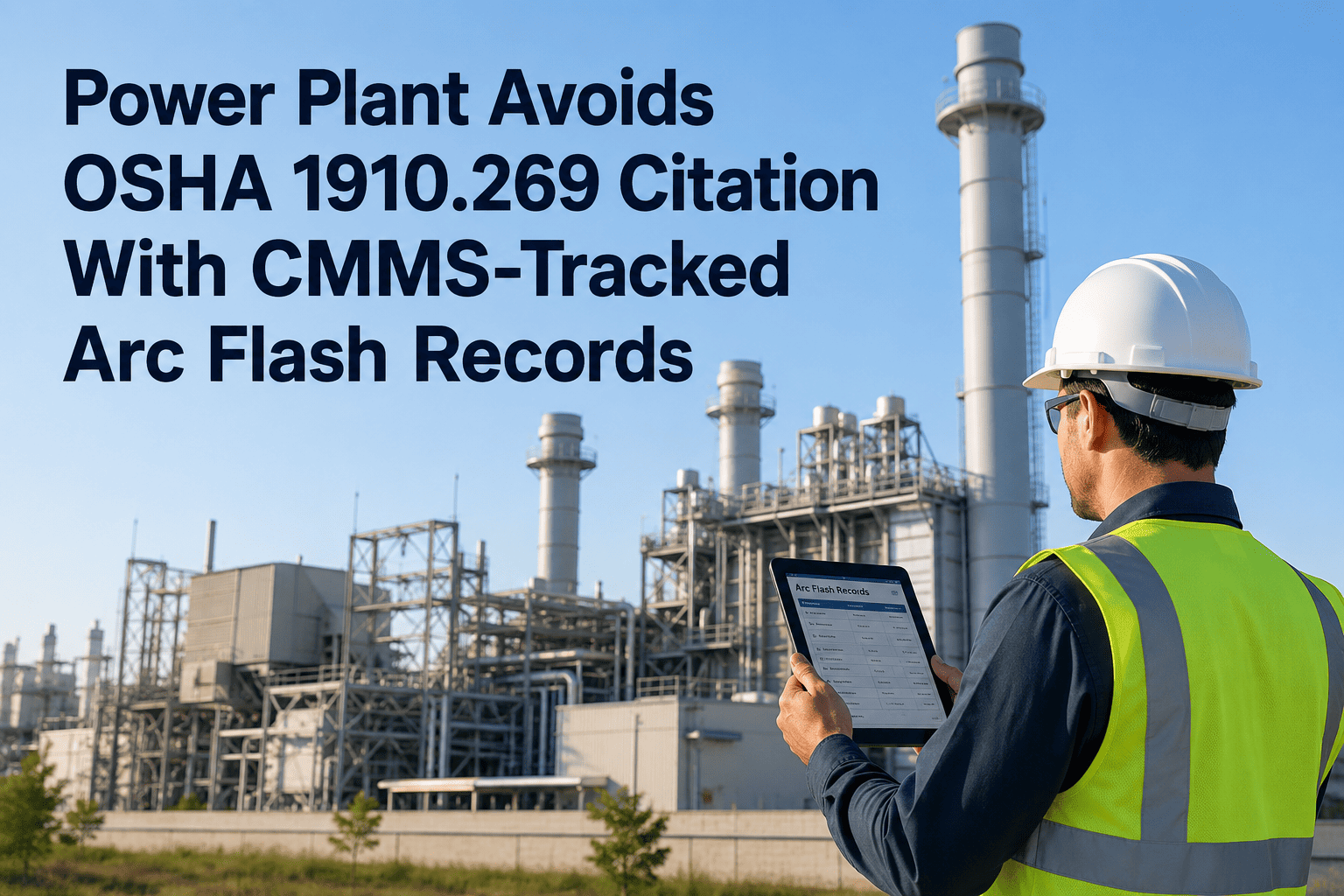
Minimum approach distance violations for 72.6+ kV work. Flame-resistant and arc-rated clothing requirements not enforced or documented. Incident energy analysis outdated. Job briefings completed verbally with no record. Qualified electrical worker status assumed rather than evidenced.
CMMS Prevention
Pre-job briefings captured as required checklist with PPE confirmation, incident energy reference, and approach distance acknowledgment. Qualified-worker registry linked to specific equipment access. NFPA 70E re-training schedules auto-triggered. Photo evidence of arc-rated PPE worn during the task.
03
29 CFR 1910.146
Permit-Required Confined Space
What Triggers a Citation
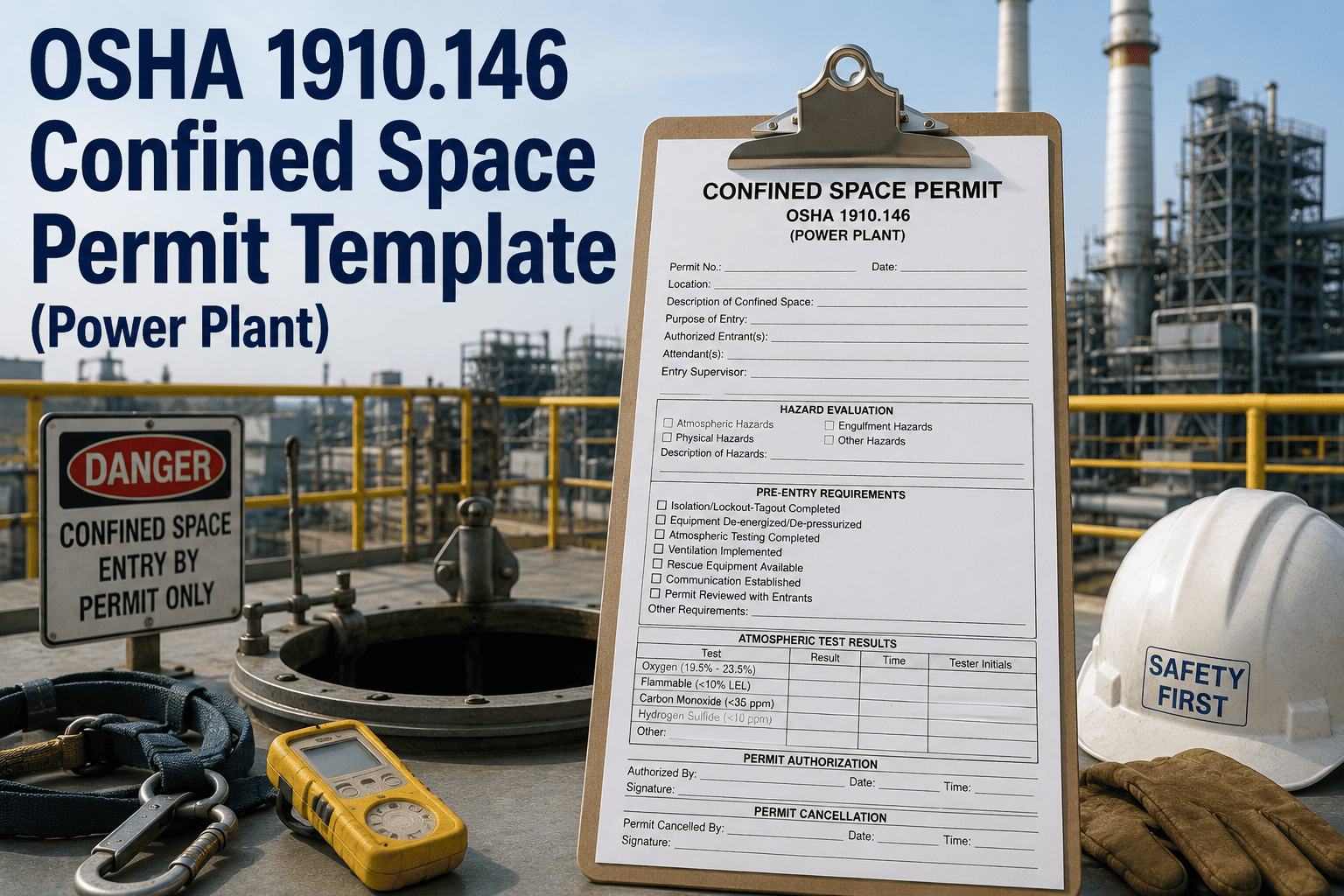
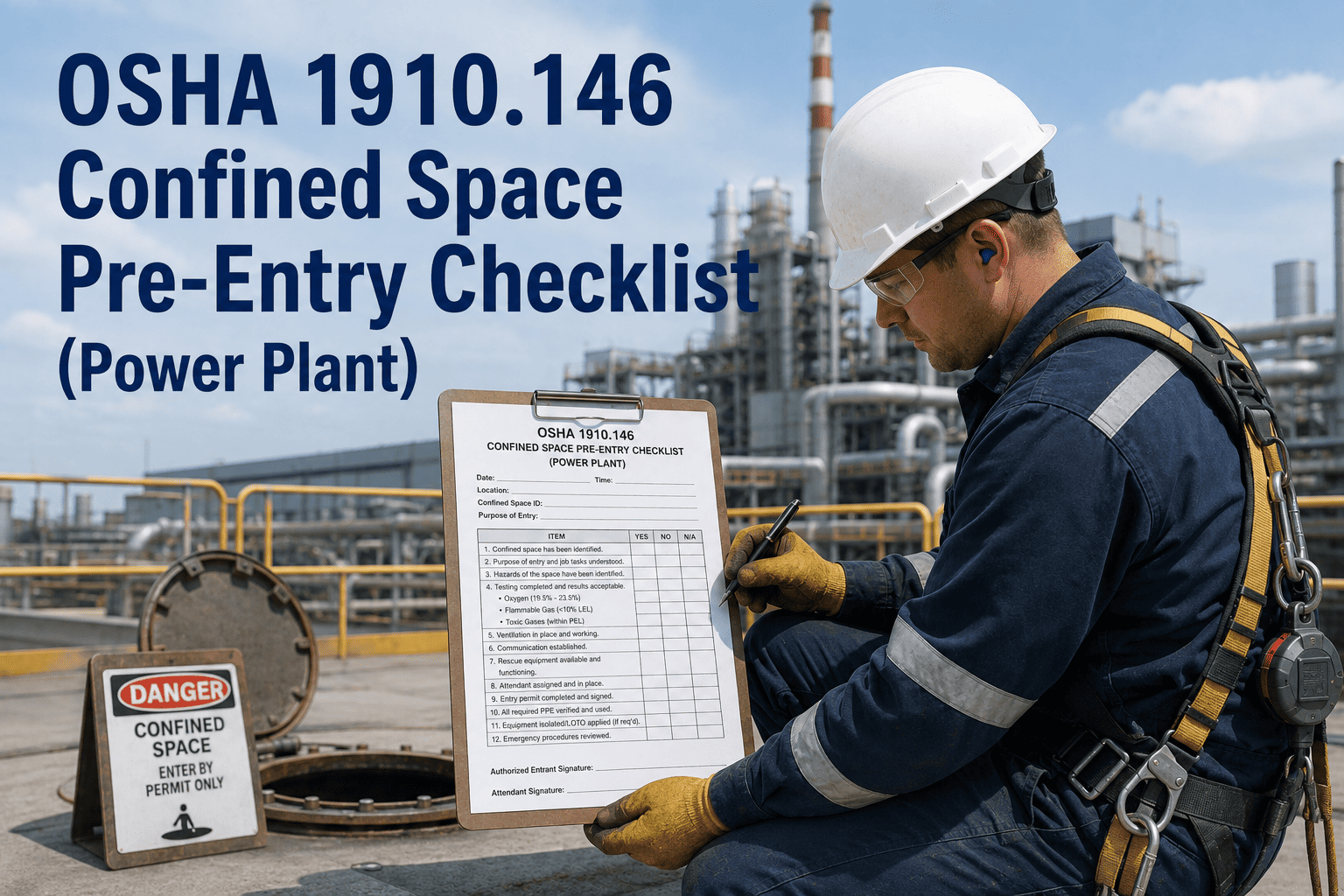
Entry without continuous atmospheric monitoring. Oxygen levels not verified (below 19.5% or above 23.5%). LFL not held below 10%. Attendant absent or rotating duties. Permits not retained for the required one-year minimum. Rescue plan unverified before entry.
CMMS Prevention
Entry permit workflow with required atmospheric readings, oxygen and LFL fields enforced before entry signoff. Attendant assignment captured per shift. One-year permit retention is automatic. Rescue plan acknowledgment built into the permit issue step.
04
29 CFR 1910.252
Hot Work & NFPA 51B Compliance
What Triggers a Citation
Hot work permits issued verbally. Fire watch not posted or removed early. Combustible material clearance not verified before ignition. Permit not closed out at task completion. Spark-producing work performed in areas not de-flammablized.
CMMS Prevention
Hot work permit workflow with fire watch assignment, 35-foot clearance verification, post-work monitoring time (30+ minutes), and required permit closeout step. Permits are auto-archived and exportable for OSHA review or insurance audits.
05
29 CFR 1910.119
PSM & Mechanical Integrity
What Triggers a Citation
Mechanical integrity is the most cited PSM element per CSB investigation history — BP Texas City, Imperial Sugar, Tesoro Anacortes all traced back to this. Missing inspection records on relief valves, pressure vessels, instrumentation. MOC discipline lapses. Pre-startup checks skipped. Training refreshers overdue beyond the 3-year limit.
CMMS Prevention
Mechanical integrity register with inspection intervals per asset, MOC workflow with sign-off gates, pre-startup safety review templates, training refresher reminders tied to authorized-employee permissions. Every PSM element has a documented evidence trail.
06
1910.22(a)(1) + GDC
Combustible Dust Housekeeping
What Triggers a Citation
Coal dust accumulation in turbine halls, conveyors, and electrical rooms. Class II location designation ignored. Housekeeping schedules informal or unrecorded. OSHA's Combustible Dust NEP authorizes citations under General Duty Clause when accumulations exceed safe thresholds. PSM-covered facilities face stacked 1910.119 citations.
CMMS Prevention
Recurring housekeeping PM tasks zoned by area with photo evidence on completion. Dust accumulation thresholds tied to inspection checklists. Class II electrical equipment maintenance scheduled with verification of bonded covers, sealed enclosures, and ignition-source controls.
Close All 6 Citation Risks With One Digital Workflow Platform
LOTO sequence enforcement, confined-space permits, hot work workflows, arc flash briefings, mechanical integrity registers, and zoned housekeeping PMs — all native to OxMaint, all configured for power plant OSHA standards.
The Citation Cascade — How a Single Finding Compounds
OSHA's instance-by-instance citation policy means one root cause often produces many simultaneous citations. Here is the typical escalation pattern in a power plant inspection.
Step 1
Single Finding
Inspector observes a contractor performing maintenance without visible lockout devices on a 480V breaker.
Initial: 1 citation
Step 2
Records Review
Inspector requests LOTO procedure, authorized-employee training records, and annual periodic inspection — finds gaps.
Compounds: +3 citations
Step 3
Pattern Expansion
Inspector reviews other recent work orders for same gaps. Instance-by-instance citations applied per affected employee or asset.
Stacks: +5–10 citations
Step 4
Final Citation Package
Combined penalties cross six figures. Willful classification possible if gaps were known and uncorrected.
Result: $100K–$600K+
Where Each Citation Risk Lives in a Power Plant
Citations are not evenly distributed across a facility. The zone map below shows which OSHA standards typically get cited in which plant area — and where to focus first.
Turbine Hall
1910.147LOTO during turbine maintenance
1910.146Confined-space entry into condensers
1910.252Hot work on steam piping
Switchyard & Electrical Rooms
1910.269Minimum approach & arc flash work
1910.147Breaker & transformer LOTO
1910.132PPE hazard assessments
Fuel Handling & Coal Yard
1910.22Combustible dust accumulation
1910.119PSM if threshold HHCs present
1910.146Silo & bunker confined-space entry
Boiler & Pressure Systems
1910.119Mechanical integrity & relief valves
1910.146Boiler internal inspection entries
1910.252Tube repair hot work
OxMaint Prevention Map — One Capability Per Citation Risk
Direct mapping of citation risk to the specific OxMaint workflow that prevents it. Each capability ships ready to deploy.
| Citation Risk |
OSHA Standard |
OxMaint Prevention Workflow |
| 01 LOTO Drift |
1910.147 |
Sequential step enforcement with authenticated sign-off and timestamped evidence |
| 02 Arc Flash & 1910.269 |
1910.269 |
Pre-job briefing checklist, qualified-worker registry, PPE photo capture |
| 03 Confined Space |
1910.146 |
Entry permit workflow with O₂ & LFL fields enforced, 1-year auto-retention |
| 04 Hot Work |
1910.252 |
Hot work permits with fire watch assignment, clearance check, post-work monitoring |
| 05 PSM Mechanical Integrity |
1910.119 |
MI register, MOC workflow, pre-startup safety review, refresher reminders |
| 06 Combustible Dust |
1910.22 + GDC |
Zoned housekeeping PMs with photo evidence and threshold checklists |
Every workflow above produces audit-ready records OSHA inspectors can verify in minutes. Start a free trial to configure your safety workflows in days.
Frequently Asked Questions
Which OSHA citations are most common at power plants?
LOTO (1910.147) is the single most cited standard across general industry and especially common at power plants where group lockouts and outage time pressure drive procedure shortcuts. After LOTO, the most frequent power plant citations come from 1910.269 arc flash and minimum approach distance gaps, 1910.146 confined space permit and atmospheric monitoring failures, 1910.252 hot work permit lapses, 1910.119 PSM mechanical integrity issues, and 1910.22 combustible dust housekeeping. A single inspection often cites 10+ standards together.
Start a free OxMaint trial to see how all six are handled in one workflow.
What is OSHA's instance-by-instance citation policy and how does it affect penalty math?
Under instance-by-instance citation, OSHA can cite each affected employee, each instance of a violation, or each piece of affected equipment separately rather than rolling them into a single citation. This is what produced the Wayne Transports case where multiple confined-space violations combined to exceed $600,000. For power plants, a single LOTO procedural gap discovered during inspection often produces 5–10 simultaneous citations once the inspector reviews recent work orders for the same pattern.
How does a CMMS actually prevent LOTO drift?
A CMMS prevents drift by enforcing the procedure inside the work order — not just storing it. In OxMaint, each LOTO step must be completed in sequence, with an authenticated technician sign-off per step. A technician cannot mark step 4 complete until step 3 has a signed sign-off; the system blocks out-of-order completion. Photos can be required at any step, annual periodic inspections auto-schedule as recurring PMs, and authorized-employee training records are tied to which assets a worker is permitted to lock out.
Why is PSM mechanical integrity such a recurring power plant problem?
CSB investigations into BP Texas City, Imperial Sugar, and Tesoro Anacortes all traced root causes back to mechanical integrity failures within PSM-covered processes — overdue relief valve testing, MOC discipline lapses, undetected damage mechanisms. The pattern is consistent: spreadsheets and tribal knowledge cannot enforce the inspection cadence PSM requires. A CMMS converts each MI element into a recurring, owner-assigned, evidence-capturing work order with auditable history.
How long do confined-space permits need to be retained?
OSHA requires confined-space entry permits to be retained for at least one year to facilitate the program review required by 1910.146(d)(14). In practice, OxMaint auto-retains permits indefinitely as part of the immutable audit trail — making the one-year minimum a floor rather than a ceiling, and supporting incident investigations or trend analysis that might require older data. Atmospheric readings, attendant assignments, and rescue plan acknowledgments are all captured in the digital permit.
Can OxMaint be configured for our specific OSHA programs without a long implementation project?
Yes. OxMaint ships with pre-configured templates for LOTO, confined space, hot work, PSM mechanical integrity, and combustible dust housekeeping that can be customized to your specific plant procedures. Most single-site power plants are fully operational in 1–3 days. Free data migration support means you do not manually re-enter procedures from existing documents.
Book a walkthrough to see your specific procedures mapped to OxMaint workflows.
Turn Safety Compliance From Paperwork Into a Digital Workflow
The six citation risks above account for the overwhelming majority of power plant OSHA penalties in 2026 — and every one of them traces back to the same root cause: procedures that exist on paper but get bypassed under real-world time pressure. OxMaint enforces those procedures inside the work order itself, with sequential sign-off, photo evidence, and immutable audit trails. The inspector who arrives at your plant should find every LOTO step signed, every confined-space permit current, every hot work clearance verified, and every PSM record one click away.