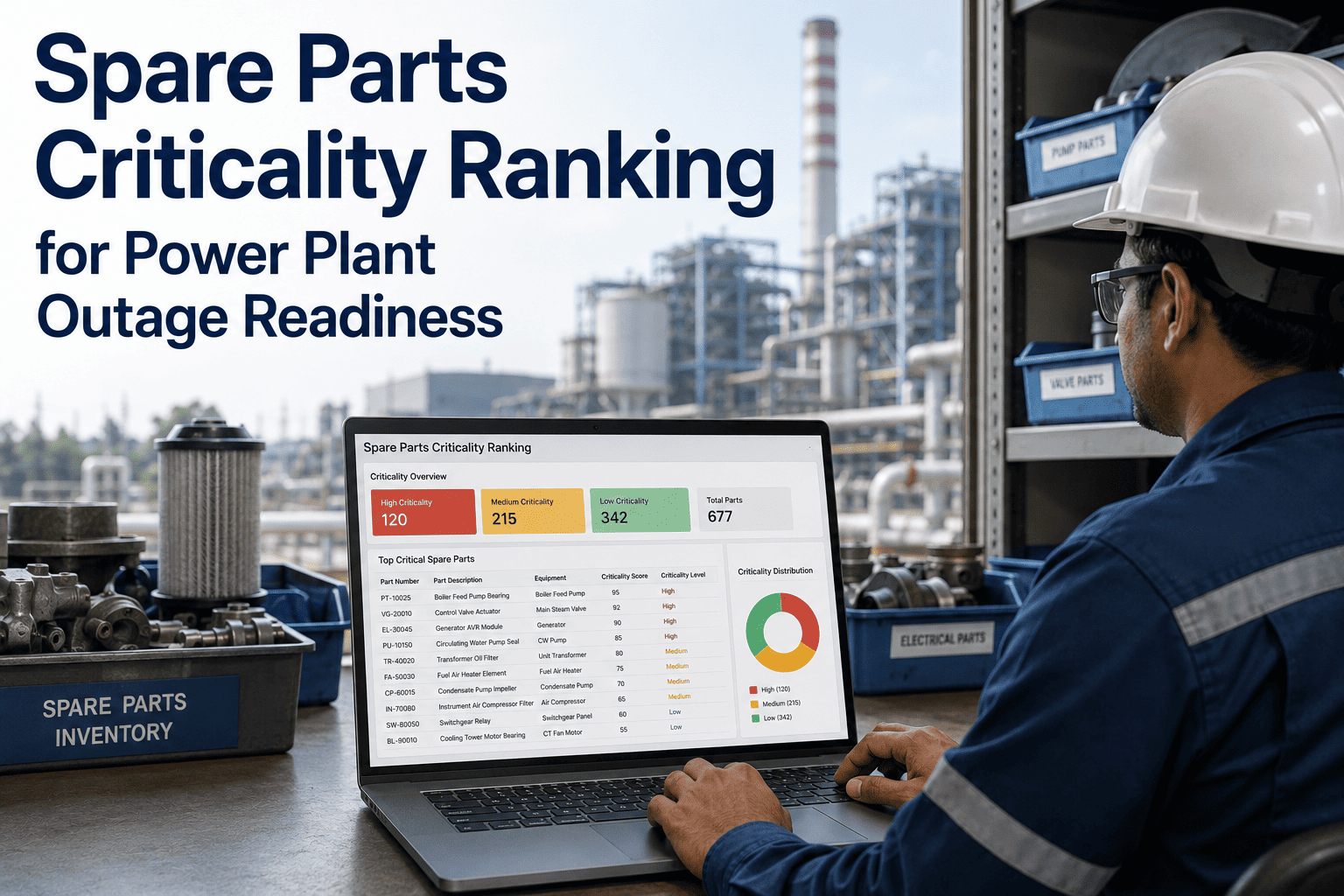
The most dangerous spare part in a power plant is not one that is missing from the storeroom — it is one the team believes is there but does not actually fit the current equipment, or one classified as non-critical until the day it fails and takes the unit offline for six weeks waiting on a 14-week lead time delivery. Spare parts criticality ranking is the systematic process of assigning every item in your storeroom a priority classification based on operational consequence, not purchase price — so that the right parts are stocked, the right quantities are maintained, and the reorder system triggers before a shutdown, not during one. Industry benchmarks show that plants without structured criticality programs routinely carry 20–30% obsolete or over-stocked inventory alongside genuine critical gaps. OxMaint's inventory management module automates ABC-VED criticality classification, links every spare to its parent assets and PM work orders, and surfaces stockout risk before it becomes an outage risk.
$84M
Average annual unplanned downtime cost — mid-size power facility
50%+
Spare part orders with delivery delays exceeding 30% of expected lead time
3x
Premium cost of emergency vs. planned procurement for critical parts
75%
Reduction in parts-related outages achieved with CMMS-driven criticality programs
Classification Framework
The ABC-VED Matrix: Criticality Meets Cost
Effective spare parts management requires two lenses simultaneously: the financial value of the part (ABC analysis) and the operational impact of running out of it (VED analysis). Combining both dimensions tells you what to stock, how much to hold, and how tightly to monitor it.
A
High-Value, Low Volume
Top 10–15% of SKUs by annual consumption value — typically 70–80% of total inventory spend. Requires tightest control, cycle counting, and individual purchase approval. Examples: turbine blades, large pump impellers, transformer bushings.
Control Level: Daily monitoring — individual approval for PO
B
Medium-Value, Moderate Volume
Middle 20–25% of SKUs — approximately 15–20% of total spend. Moderate control required. Semi-automated reorder with periodic review. Examples: valve seats, gasket sets, bearing kits, coupling hubs.
Control Level: Weekly review — semi-automated reorder
C
Low-Value, High Volume
Bottom 60–70% of SKUs — only 5–10% of total spend. Managed on autopilot with min-max or kanban replenishment. Examples: O-rings, filter elements, light bulbs, hardware fasteners.
Control Level: Automated — kanban or min/max reorder
V
Vital — Unit Cannot Run Without It
Absence causes immediate unit trip or prevents startup. Must be stocked to zero-stockout standard regardless of cost. Often long lead time. Examples: turbine trip valve actuators, boiler safety valve internals, transformer main bushings.
Stock Policy: Minimum 1 unit always held — no stockout acceptable
E
Essential — Outage Within Days if Missing
Failure causes degraded operation or forces a maintenance outage within 72 hours. Stock to service-level target. Can tolerate brief lead time if supplier is reliable. Examples: feed pump mechanical seals, combustion air fan bearings, relay modules.
Stock Policy: 95%+ service level — reorder at 2× lead time
D
Desirable — Managed Delay Acceptable
Absence inconvenient but can be managed with workarounds or by ordering on demand. Low stock levels justified. Examples: auxiliary pump impellers, non-critical valve packing, instrumentation accessories.
Stock Policy: Order on demand or min quantity — planned delivery acceptable
Criticality Ranking Checklist
Step-by-Step: How to Rank Every Part in Your Storeroom
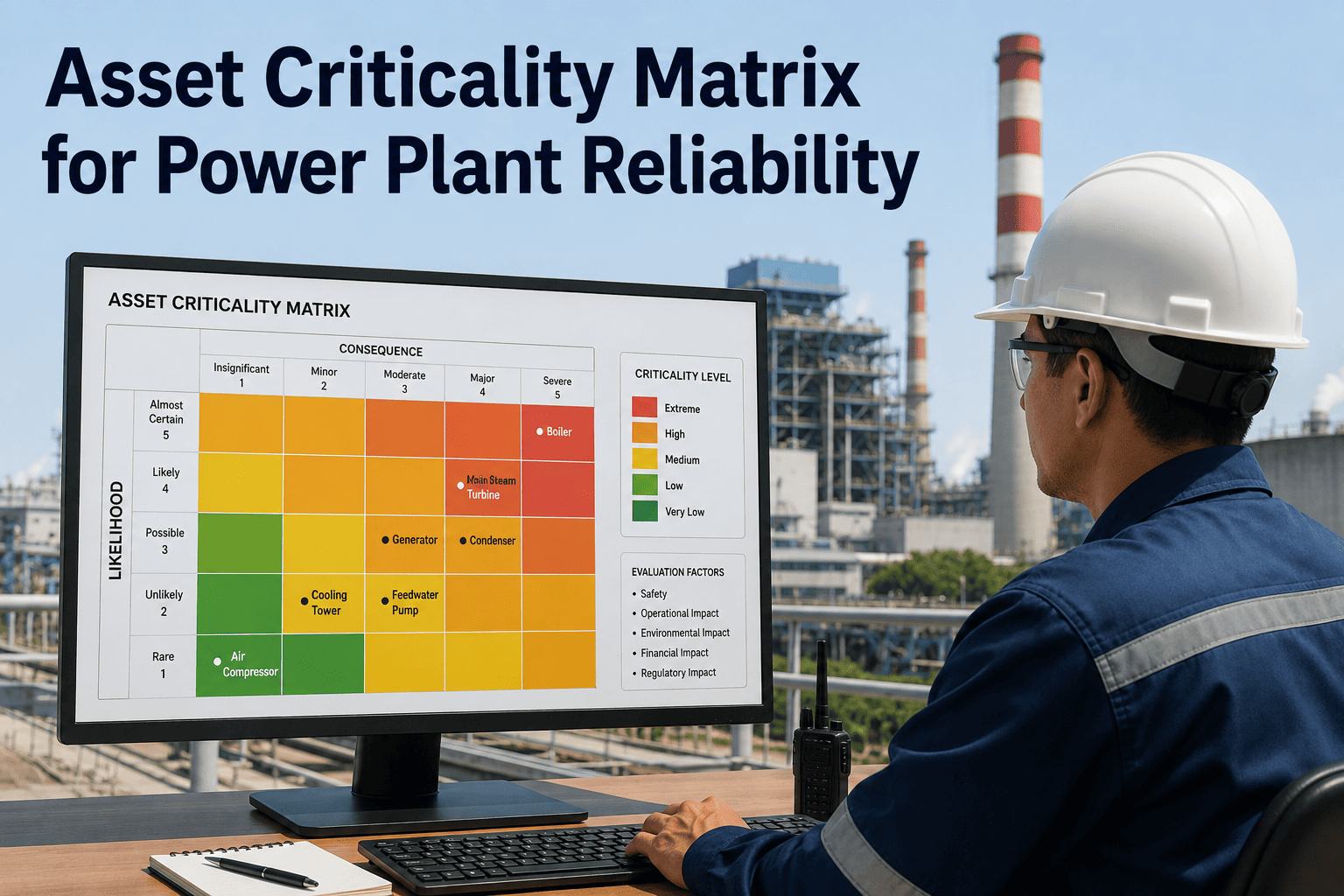
Before ranking parts, rank your assets. A single-train boiler feed pump is vital; a parallel auxiliary cooling water pump may be essential but not vital. Parts inherit criticality from their parent asset — a seal kit for the vital pump is automatically at least Essential regardless of its cost class.
Map every major asset to a criticality tier: Unit-Critical, Production-Affecting, or Non-Critical
Identify single-train assets with no installed redundancy — these drive Vital classifications for linked spares
Review protection and trip logic — any component whose failure prevents safe shutdown is Unit-Critical
Criticality without lead time data produces wrong stocking decisions. A $500 seal with a 2-week lead time and a $500 seal with a 26-week lead time require fundamentally different holding strategies. The insurance spare decision — hold one in stock versus risk ordering after failure — must be made on lead time, not price.
Record confirmed vendor lead time for every Vital and Essential part — not catalog estimate, confirmed order-to-receipt time
Flag every item with lead time exceeding 6 months as a mandatory insurance spare candidate
Identify OEM-only parts with single-source risk — document alternative source investigation status
ABC classification requires actual consumption data — not catalog value. A part that costs $50,000 but has never been consumed in five years is not an A-class item from a spend perspective. CMMS work order history is the source: pull annual consumed quantity multiplied by unit cost for every active storeroom SKU.
Pull 24–36 months of consumption from work order history — use actuals, not forecasts
Sort all SKUs by annual value consumed — top 15% by value = Class A
Flag zero-consumption items older than 24 months for obsolescence review — these tie up capital and create false security
An AV part (High-Value + Vital) demands a different policy than a CV part (Low-Value + Vital). The matrix intersection drives stock level minimums, reorder point calculation, and review frequency. Do not set one policy for all critical spares — the matrix exists precisely to prevent this.
AV and BV parts: minimum 1 unit on hand, reorder triggers 2× supplier lead time in advance
CV parts: even low-value vital items must meet zero-stockout standard — hold minimum stock, automate reorder
AD and BD parts: order on demand unless failure history justifies stocking — review annually
Static criticality rankings become outdated within 18 months without active maintenance. Parts must be linked to their parent assets in CMMS so that criticality adjusts when equipment is modified, retired, or upgraded. PM work orders that specify required parts create automatic demand signals that drive reorder decisions.
Link every Vital and Essential spare to its parent asset record in CMMS — not just storeroom catalog
Attach required spare parts to recurring PM work order templates — system reserves parts before scheduled outages
Set automatic criticality re-review trigger when a linked asset is retired, replaced, or significantly modified
OxMaint Inventory Management
Stop Guessing What to Stock. Let Failure History Decide.
OxMaint's ABC-VED engine classifies your entire storeroom automatically from work order consumption history, links every part to its parent assets, and triggers reorders before stockout risk hits your outage window.
Outage Readiness
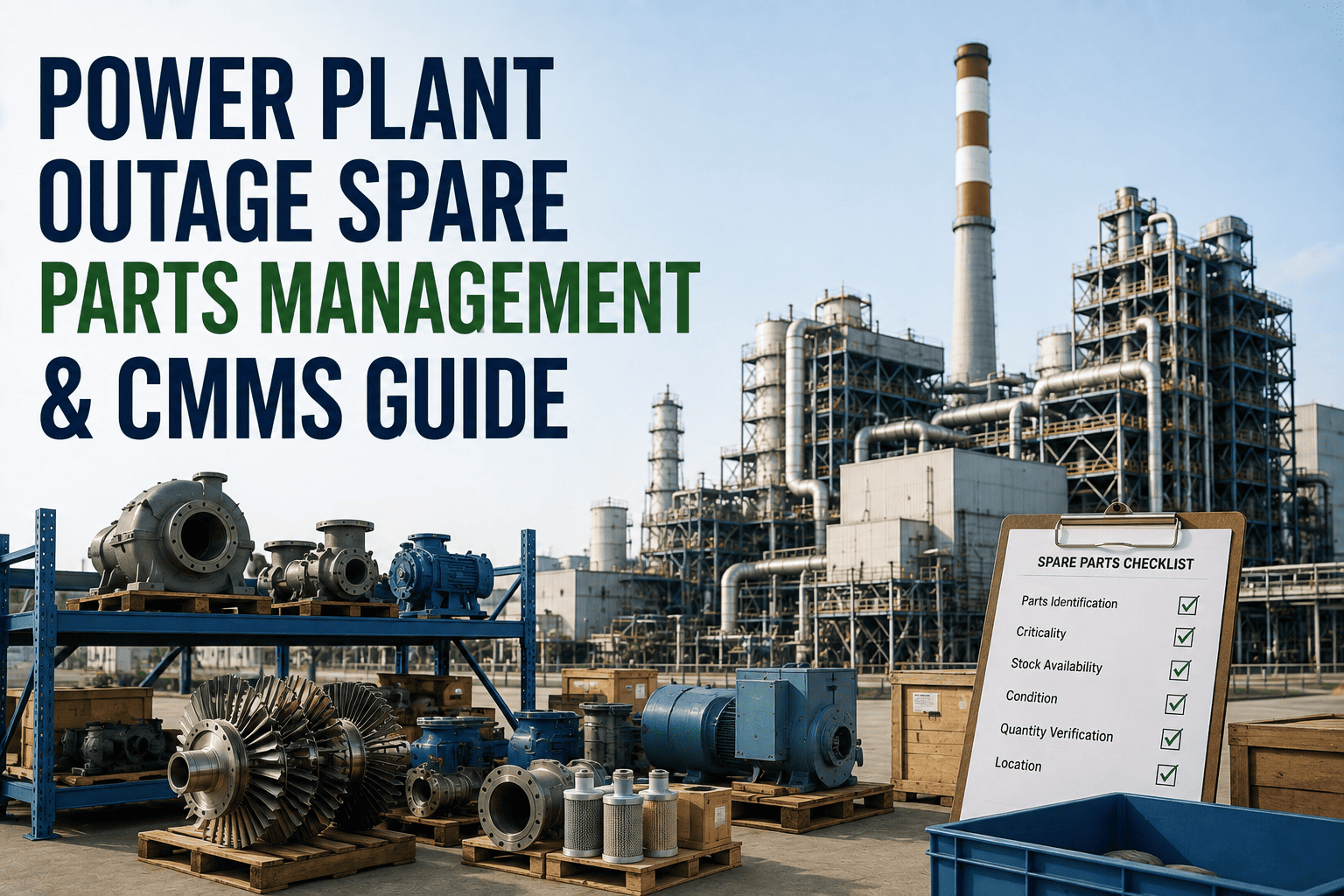
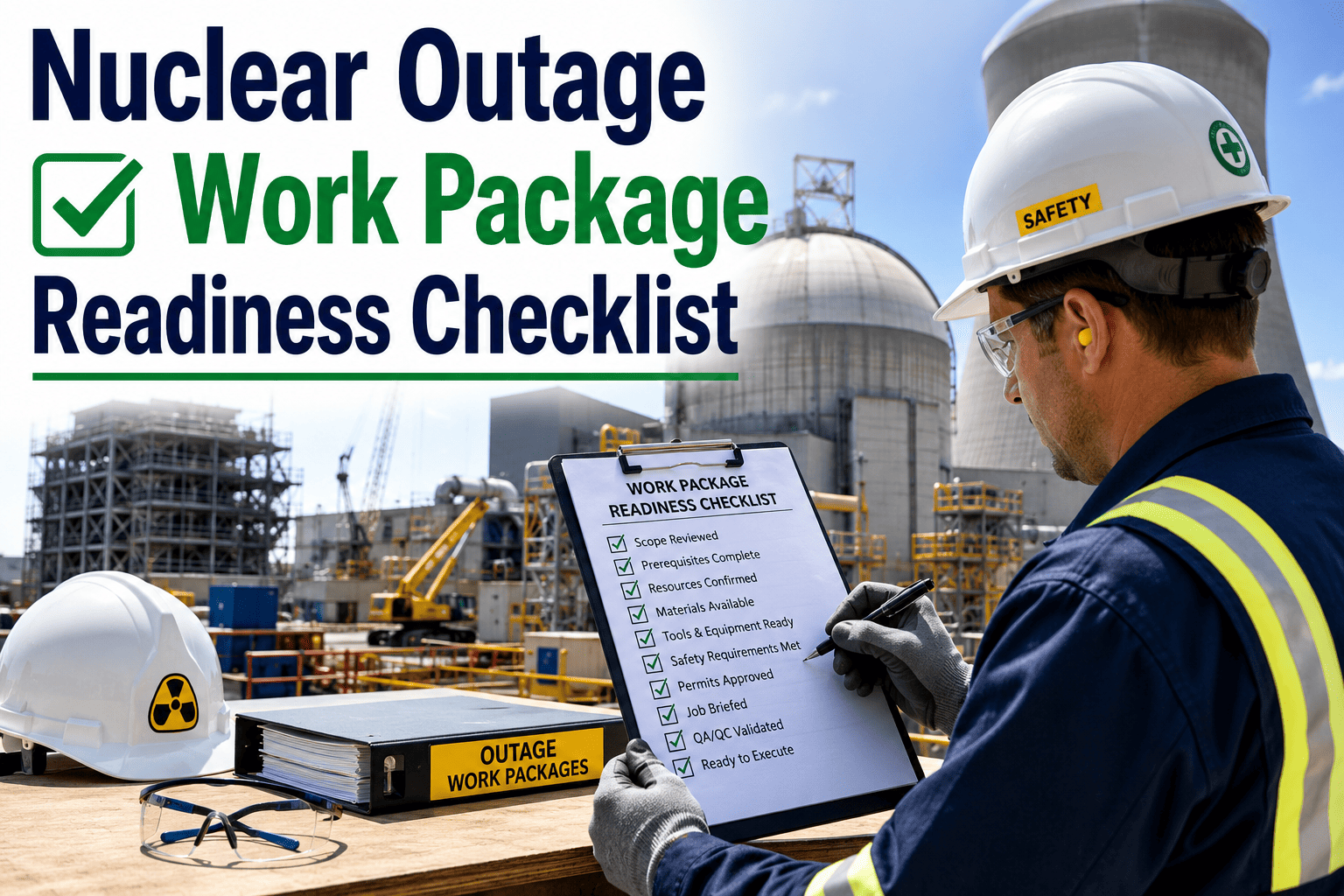
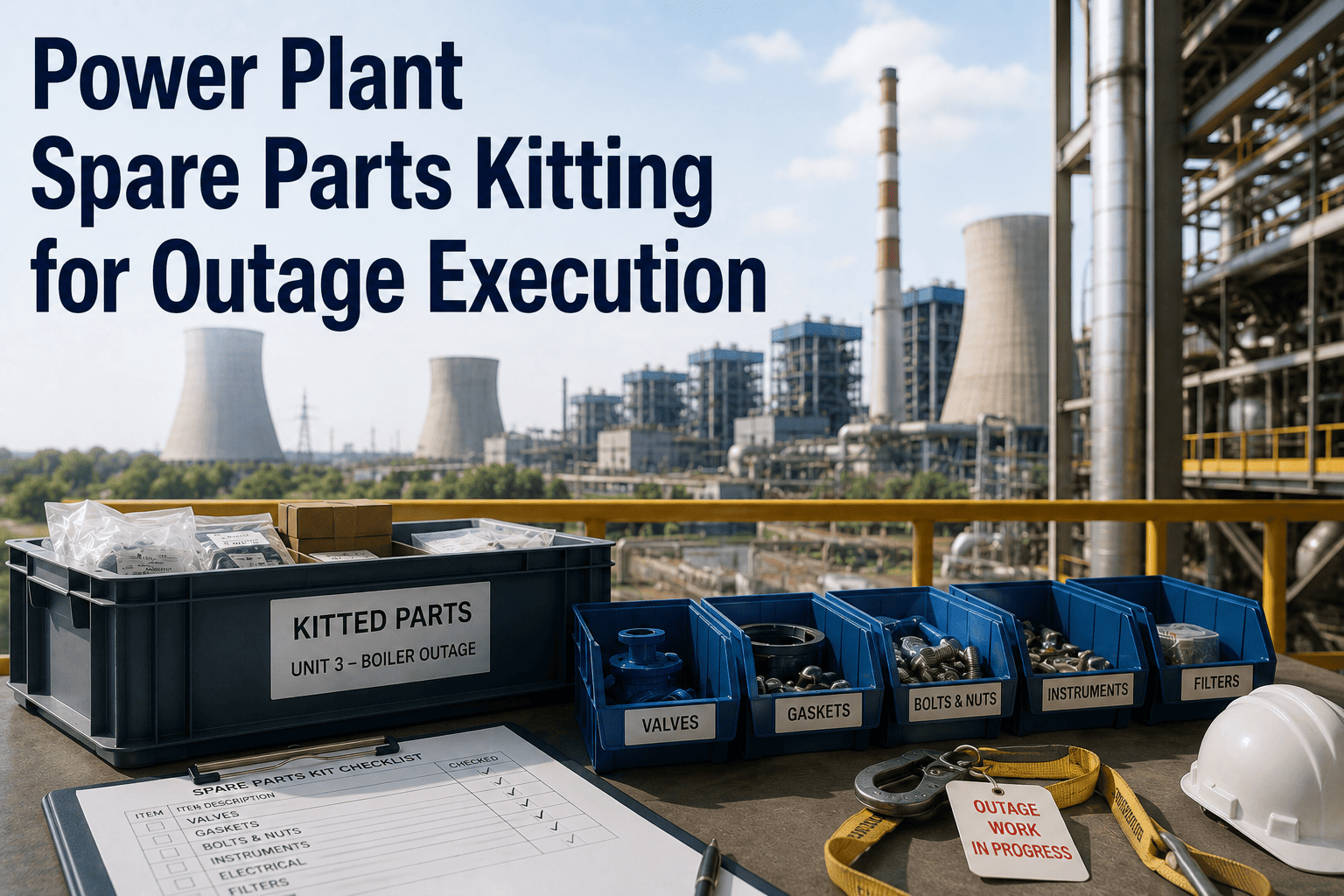
Spare Parts Readiness Check — Before Every Planned Outage
Unplanned discoveries during outage execution are the leading cause of schedule overruns. A structured pre-outage parts review prevents last-minute emergency procurement at 3× cost.
| Timing |
Action |
Owner |
CMMS Action in OxMaint |
| 12 Weeks Before |
Pull bill of materials for all planned work orders — verify every required part is in stock or on order |
Outage Planner + Stores |
Parts availability report by outage work order package |
| 8 Weeks Before |
Confirm long-lead items on order with delivery confirmation — escalate any items at risk of late arrival |
Procurement + Maintenance |
Purchase order tracking linked to outage work order |
| 4 Weeks Before |
Physical inventory verification of all Vital and Essential parts for outage scope — verify condition and shelf life |
Stores Controller |
Cycle count work order generated against outage BOM |
| 1 Week Before |
Stage all parts by work order at job staging area — confirm serial/lot numbers match equipment specifications |
Stores + Technicians |
Parts issued to outage work orders — staged status recorded |
| During Outage |
As-found parts condition recorded on work order — consumptions posted in real time as parts are used |
Technicians |
Parts consumption auto-updates stock levels and triggers reorder if below minimum |
| Post-Outage |
Return unused parts to stores — update consumption history, flag any unplanned usage as demand signal |
Stores Controller |
Returned parts receipt closes material reservation — unplanned usage flags criticality review |
Insurance Spares
The Long-Lead Problem: When to Hold a Part You Hope to Never Use
Lead Time > 6 Months
Automatic insurance spare candidate for any Vital-class equipment. The break-even holding cost versus one day of outage cost almost always justifies stocking a single unit.
Single-Source OEM Parts
If only the OEM can supply the part and the OEM has a history of production delays, hold regardless of cost. Document alternative source investigation status in the spare record.
No Redundancy in Equipment Train
Single-train equipment with no operational standby makes every wear part on that asset at least Essential. Failure with a 12-week lead time on the repair part is an extended unit outage.
Failure Causes Safety Risk
Protection system components, safety valve internals, and trip logic hardware with long lead times must be held as insurance spares. There is no cost justification threshold for a part whose absence compromises personnel safety.
FAQs
What Maintenance Managers Ask About Spare Parts Criticality
How do we decide which parts are truly Vital vs Essential in a power plant context?
Vital parts are those whose absence immediately prevents unit operation or creates an unacceptable safety condition. Essential parts cause a forced outage within 72 hours if unavailable. The test is simple: if the unit cannot reach rated load or cannot be safely operated without this part within 72 hours of a failure, it is Vital or Essential. If a workaround or load de-rating is possible while awaiting delivery, Essential applies.
OxMaint's criticality templates pre-populate VED classifications by equipment type for power generation assets.
How often should the criticality classification be reviewed and updated?
Criticality classifications should be reviewed annually at minimum and triggered immediately by any equipment retirement, replacement, major modification, or change in plant operating mode. A part classified Essential for a gas turbine may become obsolete if that turbine is retired — but it will remain in the storeroom at full insurance value unless the CMMS asset link triggers an automated review.
Book a demo to see how OxMaint triggers automatic stock reviews on asset retirement events.
What is the correct way to handle zero-consumption spare parts that are still classified as Vital?
Zero consumption does not mean the part is not critical — it means it has not failed in the period of record. Vital parts that have never been consumed still require a minimum stocking quantity if the consequence of unavailability justifies it. The stocking decision must be based on MTBF data, lead time, and daily outage cost — not on whether the part has been used before. Review shelf life and storage condition annually; some insurance spares degrade before they are ever needed.
Can OxMaint link spare parts to specific PM schedules to pre-reserve inventory before planned outages?
Yes — OxMaint allows bill-of-materials attachments to PM work order templates. When a PM is scheduled, the associated parts are soft-reserved against available stock, flagging any shortfalls weeks before the outage date rather than during it. This demand signal also feeds the reorder point calculation, so seasonal PM cycles drive proactive procurement automatically rather than relying on planners to remember.
How does CMMS help avoid both overstocking and understocking at the same time?
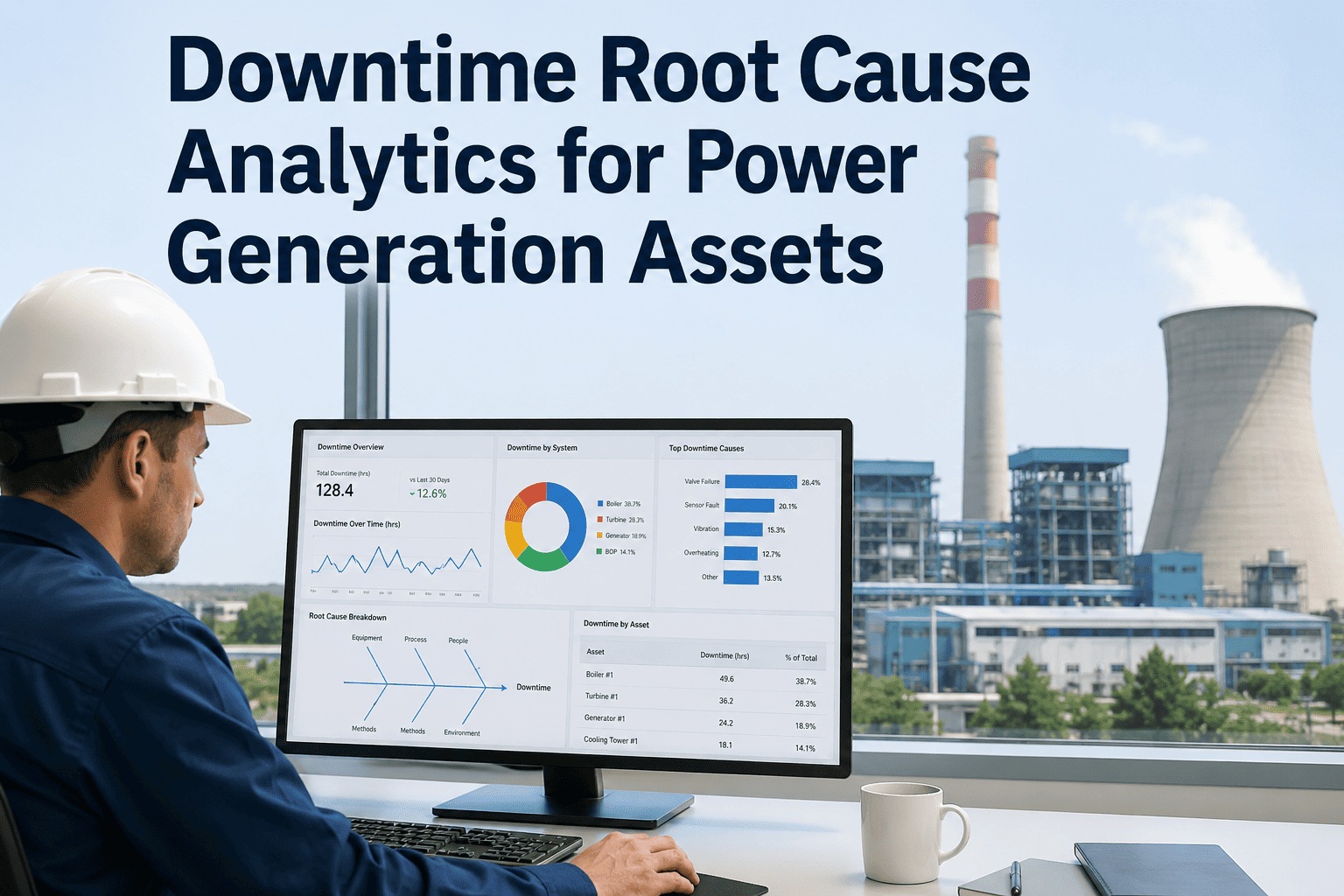
The root cause of both problems is managing inventory without connecting it to actual equipment failure history and maintenance schedules. CMMS solves this by linking every storeroom item to asset failure data, work order consumption history, and forward-looking PM demand.
Start free with OxMaint to connect your storeroom data to the maintenance schedule and asset failure history that should be driving your stock levels.
Your Next Outage Readiness Starts in the Storeroom
Rank, Stock, and Auto-Reorder with Criticality-Driven Intelligence
OxMaint classifies every spare by ABC-VED, links it to parent assets and PM schedules, and triggers reorders before stockouts threaten your outage window — not after.