Power plant outages cost generators an average of $10,000–$50,000 per megawatt in lost revenue and contractor labor every day, making outage contractor package management the single highest-leverage process in a turnaround. An outage contractor power plant strategy coordinates hundreds of skilled trades, work package issuance, permit-to-work compliance, daily progress tracking, and scope addition management under extreme time pressure. OxMaint's AI-powered CMMS and EAM platform digitizes contractor management, work package tracking, and permit integration so reliability teams eliminate paper bottlenecks, prevent scope creep, and shorten critical path duration. You can Start Free Trial today or book a 30-minute demo to see it on your assets.
Outage Contractor Management
Control Every Contractor Work Package, Permit & Scope Addition During Your Next Power Plant Outage
OxMaint digitizes work package issuance, tracks contractor progress in real time, and flags scope creep before it extends your critical path — so you finish the outage on budget and on schedule.
Outage Work Package Lifecycle
How Outage Work Packages Flow Through a Contractor-Managed Turnaround
A typical 500 MW coal or combined-cycle plant outage involves 80–200 discrete contractor work packages, each passing through six high-risk stages. Mismanage any single stage and the critical path slips by hours or days. Here is how the lifecycle works — and where an outage CMMS contractor workflow prevents delays.
Package Preparation & Scope Definition
Engineering defines outage scope, materials, labor hours, and safety requirements for each contractor package. Plants using spreadsheets spend 3–5 days per package; a CMMS contractor outage system cuts that to hours by cloning templates from historical turnarounds.
Permit-to-Work & Safety Clearance
Before a contractor touches equipment, permits, LOTO (lockout/tagout), and confined-space clearances must be issued. A contractor permit power integration inside your CMMS eliminates paperwork bottlenecks and ensures no work begins without active permits.
Work Package Issuance to Contractor
Approved packages are released to contractor crews with drawings, procedures, parts lists, and QA sign-off checkpoints. Digital work package CMMS issuance ensures contractors never work from outdated revisions.
Daily Progress Tracking & Reporting
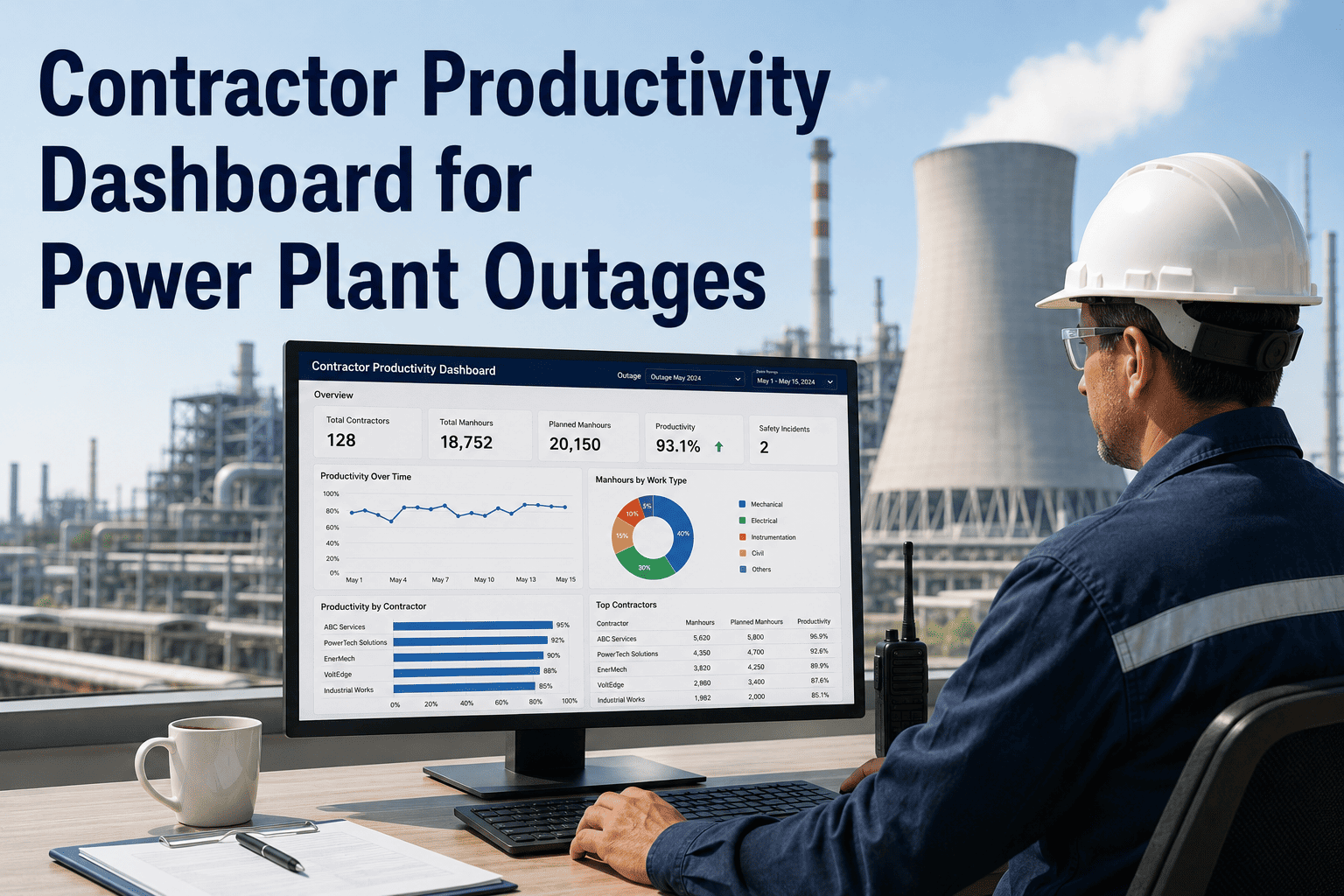
Contractor foremen report percent-complete, labor hours consumed, and delays against the schedule. Real-time contractor tracking power dashboards let the outage manager see which packages are slipping before they become critical-path threats.
Scope Addition & Change Management
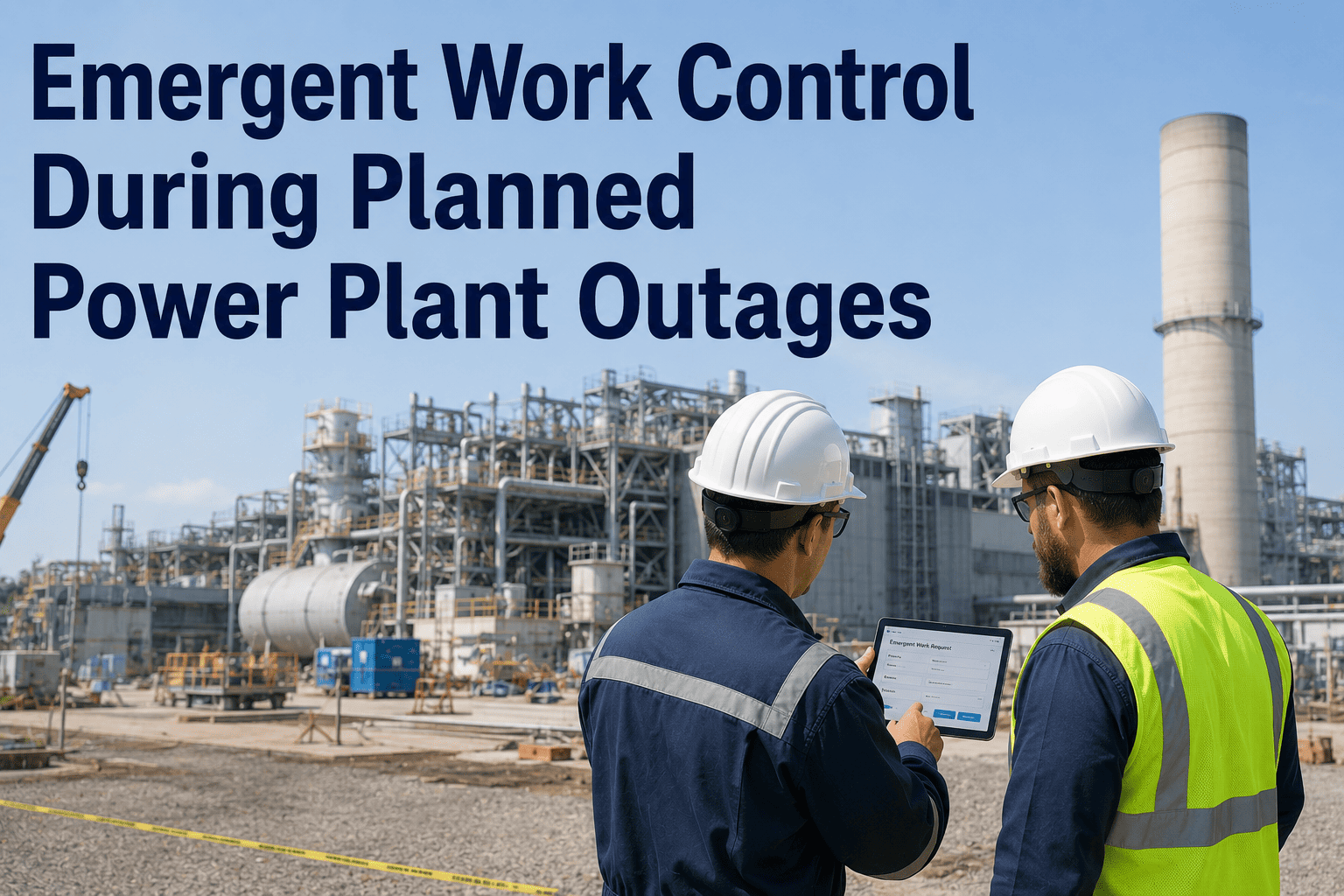
When inspections uncover hidden defects (tube leaks, rotor damage), outage scope contractor change requests must be evaluated, costed, approved, and sequenced. Unmanaged scope additions are the #1 cause of multi-day outage overruns.
QA/QC Closeout & Package Sign-Off
Final inspection, QA documentation, permit closure, and return-to-service sign-off complete the package. A work package CMMS enforces that no package closes without all required QC hold points verified.
Contractor Performance Metrics
Contractor Performance Tracking Metrics That Power Plants Actually Use
You cannot manage what you do not measure. A 2023 industry benchmark found that plants tracking these five contractor performance power metrics during outages finished 22% closer to planned duration than those relying on daily paper reports.
| Metric | What It Measures | Industry Benchmark | OxMaint Tracking |
|---|---|---|---|
| Schedule Adherence (%) | Planned vs. actual package completion date | >90% on-critical-path packages | Real-time Gantt & daily % complete feed |
| Labor Hour Variance | Estimated contractor hours vs. actual hours charged | Within ±10% of estimate | Auto-captured from mobile work order timesheets |
| Permit Cycle Time | Hours from permit request to issued/approved | <4 hours for standard permits | Digital permit workflow with timestamp audit trail |
| Scope Change Ratio | Approved scope additions as % of original package count | <15% of total packages | Change-request log with cost & schedule impact |
| First-Time QC Pass Rate | Packages passing QA hold points without rework | >85% | Mandatory digital QC checkpoint sign-off before close |
Cost of Inaction
What Unmanaged Outage Scope Additions Really Cost a Power Plant
Outage Overrun Cost Formula
Overrun Cost = (Extra Days × Daily Lost Revenue) + (Added Contractor Labor) + (Extended Equipment Rental) + (Extended Auxiliary Power)
Worked Example — 500 MW Combined-Cycle Plant
A 500 MW unit with a market heat rate of $35/MWh generates ~$420,000 in gross revenue per day. During a planned 21-day turbine outage, a contractor discovers rotor blade erosion requiring a 2-day scope addition. Without an outage scope contractor management tool, the change request sits in email for 36 hours, procurement scrambles for parts, and the permit re-issuance is delayed. The 2-day addition becomes a 4-day overrun.
A CMMS contractor outage platform like OxMaint would have flagged the scope addition instantly, auto-routed the change request for approval, and re-sequenced the critical path — compressing the overrun from 4 days to 1 day and saving over $1.4M. That is why contractor management power plant software pays for itself in a single outage.
How OxMaint Helps
How OxMaint Manages Outage Contractor Packages From Issuance to Closeout
OxMaint was built for the realities of power plant turnarounds — where hundreds of contractor crews, permits, and scope changes must be coordinated against a hard critical-path deadline. Here is how four core capabilities map directly to outage contractor package management.
Digital Work Package Issuance
Create, clone, and issue outage work packages to contractors with drawings, procedures, and parts lists attached. Version control ensures every crew works from the latest revision — eliminating the #1 source of rework during outages.
Outcome: 60% faster package issuance, zero outdated-revision incidents
Permit-to-Work Integration
Link every contractor work order to required permits, LOTO clearances, and confined-space authorizations. No work order can be opened without an active permit — and permits auto-close when the package is signed off.
Outcome: 40% faster permit cycle time, 100% audit-ready compliance trail
Real-Time Progress & Scope Tracking
Contractor foremen update % complete and labor hours from mobile devices. Scope additions trigger automated change requests with cost and schedule impact, routed to the outage manager for instant approval or rejection.
Outcome: 25% less scope creep, 2-day average critical-path savings
Daily Outage Dashboard & Analytics
A single live dashboard shows every contractor package by status, schedule variance, and critical-path impact. AI-driven alerts flag packages trending late before they slip, so you can reallocate labor the same day — not the next morning.
Outcome: 30–50% reduction in unplanned schedule extensions
See OxMaint Manage Your Next Outage — Book a 30-Minute Demo
Watch a full outage contractor package flow from issuance to closeout, including permit integration and scope-change tracking, on equipment like yours.
Frequently Asked Questions
Power Plant Outage Contractor Management — Your Questions Answered
What is outage contractor package management in a power plant?
Outage contractor package management is the process of defining, issuing, tracking, and closing discrete work packages assigned to contractor crews during a planned power plant outage. It includes scope definition, permit-to-work clearance, daily progress reporting, scope-addition change control, and QA sign-off. A CMMS like OxMaint digitizes this entire lifecycle so nothing falls through the cracks on the critical path.
How does a CMMS handle permit-to-work for outage contractors?
A contractor management CMMS links each work order to required permits — LOTO, confined space, hot work, radiography — and blocks the work order from opening until the permit is active. When the contractor package is closed, the permit auto-releases the clearance. You can Start Free Trial to test the full permit workflow, or Book a Demo to see it mapped to your plant's clearance procedures.
How do you track contractor performance during a power plant outage?
Track schedule adherence (% of packages completed on planned date), labor hour variance (estimated vs. actual), permit cycle time, scope change ratio, and first-time QC pass rate. OxMaint captures these metrics automatically from mobile work order updates and displays them on a live outage dashboard, so you can intervene before a slipping package becomes a critical-path delay.
How does OxMaint manage outage scope additions and change requests?
When a contractor or inspector identifies work beyond the original package scope, OxMaint generates a digital change request that captures the description, added labor and material cost, and schedule impact. The request auto-routes to the outage manager for approval. Once approved, the system re-sequences dependent packages and updates the critical-path dashboard — typically compressing scope-addition delays from 2–3 days to under 4 hours.
Can OxMaint import our existing outage work package templates?
Yes. OxMaint supports bulk import of work package templates from Excel, SharePoint, or legacy CMMS exports, including standard job plans, parts lists, and safety procedures. Most power plants are fully migrated and ready to run their first digital outage within 2–4 weeks of onboarding, with our team assisting template setup and permit workflow configuration.
Run Your Next Outage Without Paper Packages, Email Approvals, or Scope Creep
Join the maintenance and reliability teams using OxMaint to digitize contractor work packages, permits, and progress tracking — and finish turnarounds on schedule and under budget.
Free 14-day trial · No credit card