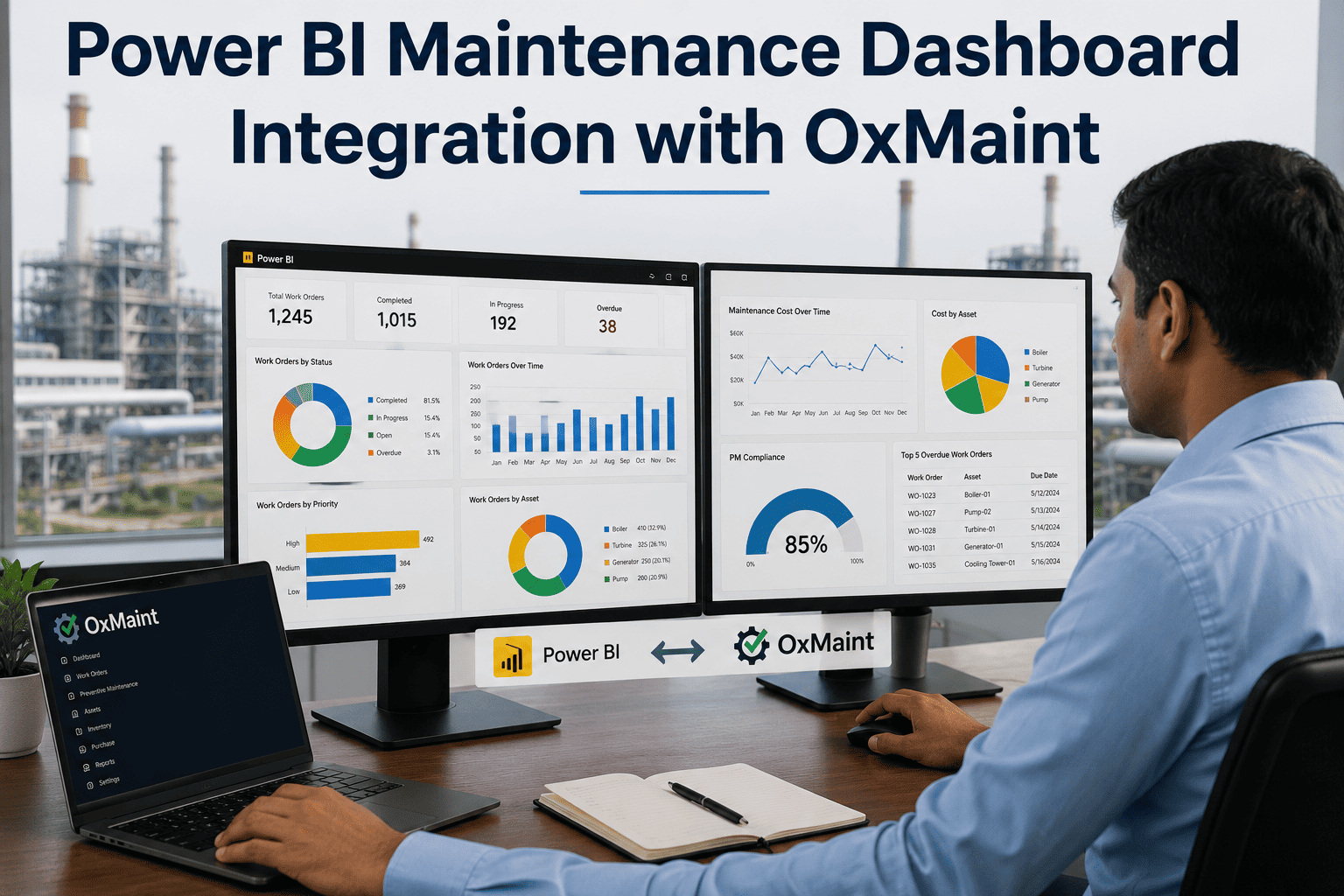
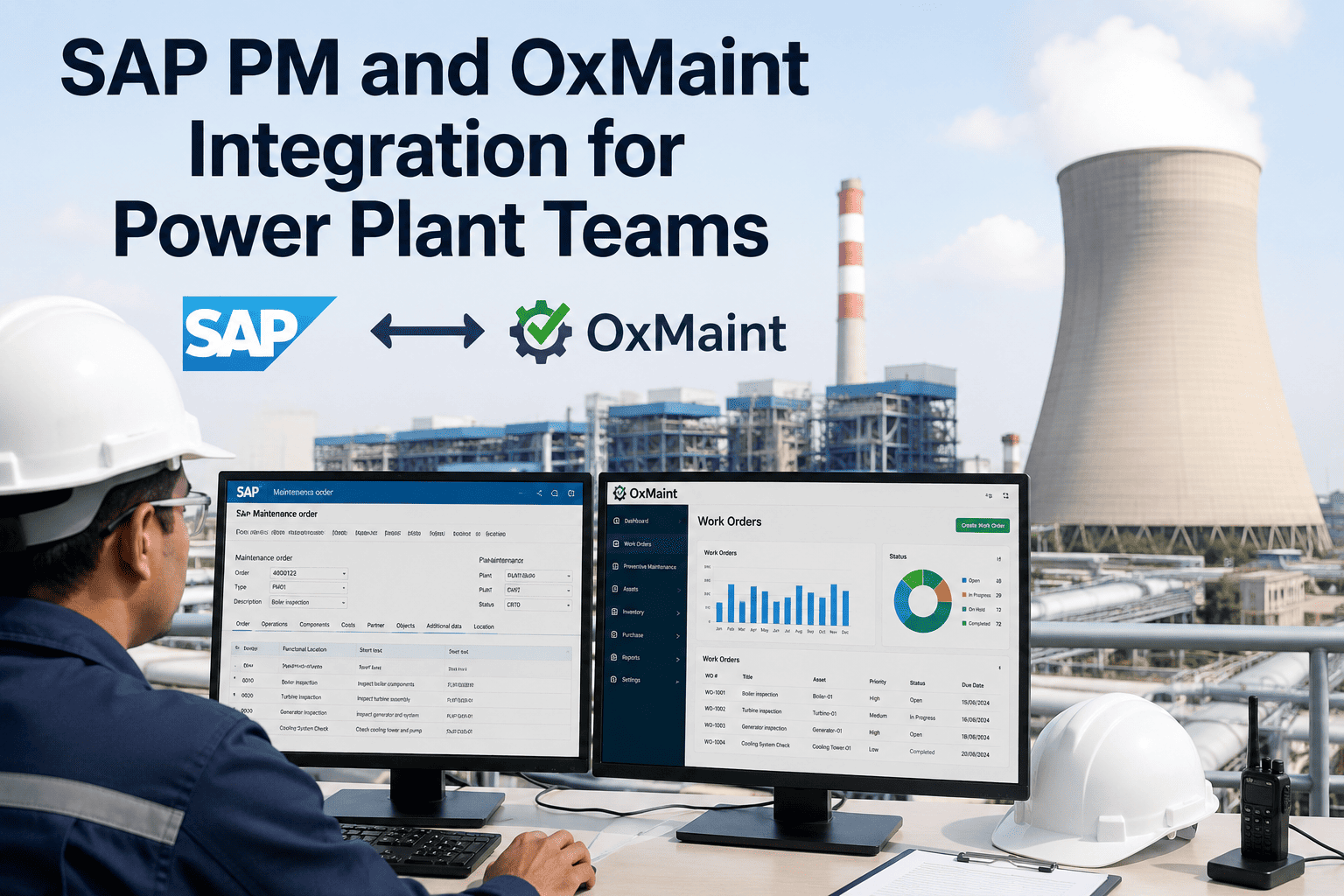
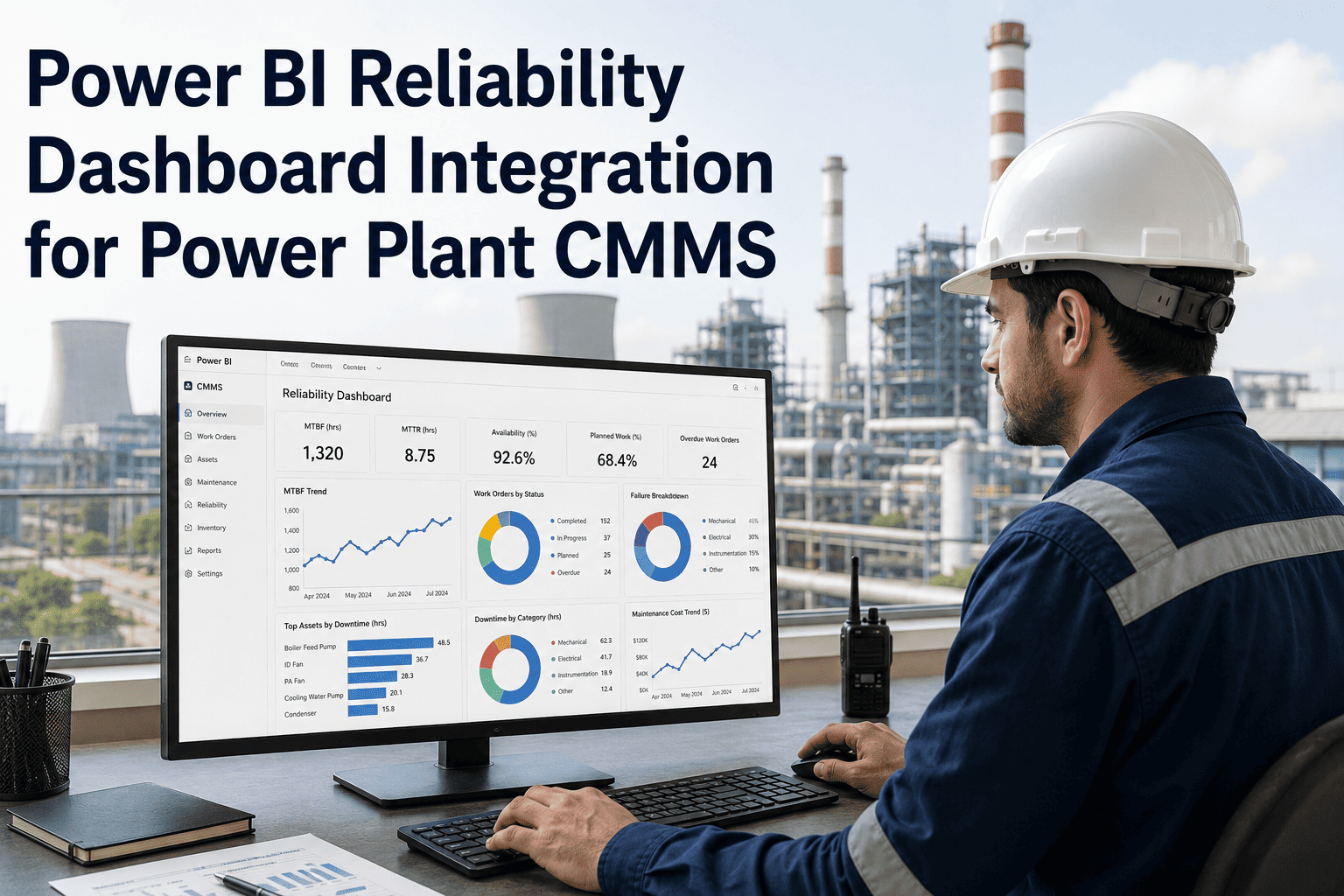
A 900 MW combined cycle power plant running SAP PM for finance and procurement had a problem that no SAP consultant could fix: technicians were not using it. Work orders were logged on paper. Maintenance histories lived in personal notebooks. Spare parts were expedited at premium prices because nobody trusted the inventory data in SAP. The procurement team was spending $3.1M annually on emergency parts runs that proper planning could have eliminated. After integrating OxMaint CMMS directly with SAP PM — keeping SAP as the financial backbone while giving field teams a mobile-first execution layer — the plant recovered $2.8M in annual savings within 14 months. Emergency callouts dropped 31%. Work order completion rates increased 47%. Every dollar of savings is still fully visible inside SAP where the CFO has always tracked it. Start your free OxMaint trial and see how integration with your existing SAP environment works before you commit to anything.
Case Study · Power Plant · SAP PM + OxMaint Integration
How a 900 MW Power Plant Saved $2.8M Annually by Integrating SAP PM with OxMaint CMMS
SAP held the financial records. OxMaint gave technicians the tool they actually use. Together, they eliminated $2.8M in emergency procurement, expediting fees, and reactive maintenance costs — without replacing a single SAP module.
$2.8M
Annual Savings Recovered
47%
Work Order Completion Increase
31%
Drop in Emergency Callouts
The Problem
SAP PM Was Live. The Plant Was Still Running on Paper.
The integration team discovered three compounding failures that no SAP configuration could solve on its own.
01
Equipment Master Drift
SAP asset records reflected what was commissioned in 2009. After years of upgrades, replacements, and modifications, the equipment master was 40% out of date. Technicians stopped trusting it and started keeping their own logs.
02
Parts Catalog Chaos
The SAP materials catalog had 12,000 active part numbers — but 3,400 were duplicates with different naming conventions. Buyers could not confirm stock availability, so they ordered on emergency credit cards to guarantee delivery.
03
No Mobile Execution Layer
SAP PM's interface was desktop-only and required VPN access in a plant where field technicians worked across 14 buildings. Work orders were printed, completed, and manually re-entered — introducing delays and transcription errors at every step.
The Cost of Doing Nothing
What Three Years of Disconnected Systems Actually Cost This Plant
Emergency Procurement Premium
$1.4M / year
Parts ordered on expedite rates because planned procurement could not confirm stock — average 38% premium over contract pricing on 620 emergency orders annually.
Unplanned Downtime Losses
$890K / year
Nine unplanned outage events over 36 months traced to missed preventive maintenance — average lost generation value of $98,800 per event.
Duplicate Data Entry Labour
$340K / year
14 technicians averaging 2.4 hours per day re-entering paper work orders into SAP. At fully-loaded labour cost, this equalled 1.7 FTE positions consumed by data entry alone.
Audit Preparation Overhead
$210K / year
Three annual compliance audits required 6–8 weeks of manual record assembly per audit cycle. Maintenance managers spent 480+ hours compiling documentation that should have been instantly exportable.
Total Annual Cost of Disconnected Systems
$2.84M / year
Every dollar recoverable without replacing SAP — by giving it a modern maintenance execution layer that field teams actually use.
OxMaint · SAP PM Integration · Power Generation · Free to Start
Still Running SAP Without a Field Execution Layer?
You do not need to replace SAP. OxMaint connects in 1–2 weeks and gives your technicians the mobile-first interface SAP PM was never designed to provide — while every cost posting, PO flow, and asset record stays exactly where your finance team expects it.
The Solution
The Integration Architecture: What Changed and What Stayed the Same
The plant did not replace SAP. They added OxMaint as the maintenance execution layer — connected bidirectionally through standard SAP APIs with no middleware required.
SAP PM Continues to Handle
Asset master and functional location hierarchy
Purchase order creation and approval flows
Cost centre postings and budget tracking
Financial reporting and ERP consolidation
Vendor master and contract management
Bidirectional Real-Time Sync
OData · BAPI · RFC · IDoc
S/4HANA Ready · No Middleware
OxMaint Now Handles
Mobile work order creation and field execution
Offline capability across 14 plant buildings
PM schedule automation and escalation alerts
Parts catalog deduplication and inventory sync
Compliance audit export in minutes, not weeks
The Results
14 Months After Integration: Every Metric Moved
| Metric |
Before Integration |
After Integration |
Change |
| Work Order Completion Rate |
51% |
98% |
+47 pts |
| Emergency Callouts per Quarter |
41 |
28 |
-31% |
| Emergency Procurement Spend |
$1.4M / yr |
$310K / yr |
-78% |
| Unplanned Downtime Events |
9 / year |
2 / year |
-78% |
| Duplicate Parts Catalog Entries |
3,400 |
0 |
Eliminated |
| Data Entry Hours per Technician / Day |
2.4 hrs |
0.2 hrs |
-92% |
| Audit Preparation Time |
6–8 weeks |
1 afternoon |
-95% |
| PM Compliance Rate |
63% |
96% |
+33 pts |
How It Was Done
The Four-Phase Rollout That Took 14 Weeks Start to Full Go-Live
Phase 1
Equipment Master Audit and Sync — Weeks 1–3
OxMaint pulled the full SAP functional location hierarchy via OData API. Every asset record was cross-referenced against physical plant walkdowns. Out-of-date records were corrected in SAP and synced to OxMaint simultaneously — one cleanup pass that fixed both systems at once. The plant eliminated 40% of stale asset data in 18 days.
Phase 2
Parts Catalog Deduplication and Inventory Baseline — Weeks 4–6
OxMaint's deduplication logic identified 3,400 duplicate SAP material numbers using description matching and manufacturer cross-reference. Each duplicate was consolidated under a single master record with correct stock levels. Buyers gained real-time inventory visibility they could trust — and emergency procurement spend began dropping immediately.
Phase 3
Mobile Work Order Rollout and Technician Training — Weeks 7–10
OxMaint was deployed to 14 technicians on mobile devices with offline capability. Work orders created in OxMaint automatically posted to SAP PM as notifications. Closures in OxMaint triggered automatic labour hour and parts cost postings to the correct SAP cost centre — zero manual re-entry. Technician adoption reached 94% within the first two weeks because the interface worked where they worked.
Phase 4
PM Schedule Automation and Compliance Setup — Weeks 11–14
All existing SAP PM maintenance plans were imported into OxMaint and converted to automated work order schedules with escalation alerts. Compliance audit configurations were set up for three regulatory frameworks simultaneously. The first audit package after go-live was assembled and exported in four hours — against a previous benchmark of six weeks of manual preparation.
“
SAP told us what maintenance cost. OxMaint told us how to stop spending so much on it. We kept SAP for procurement and finance and layered OxMaint on top for everything the technicians actually touch. Emergency callouts dropped 31% in the first eight months and the maintenance team finally stopped spending their mornings re-entering paper into a system nobody wanted to use.
Maintenance Director, 900 MW Combined Cycle Power Plant
Frequently Asked Questions
SAP PM and OxMaint Integration — What Plant Teams Ask First
Does integrating OxMaint require replacing or modifying our SAP configuration?
No SAP configuration changes are required. OxMaint connects through standard SAP interfaces including OData, BAPI, RFC, and IDoc protocols — compatible with both SAP ECC and S/4HANA environments. Your SAP configuration, cost centre structure, and approval workflows stay exactly as they are.
Start a free trial to see the integration in your environment.
How long does the SAP PM and OxMaint integration actually take to go live?
Most power plants complete the initial integration in 1–2 weeks. Full go-live with mobile work orders, PM schedules, and inventory sync typically takes 10–14 weeks depending on asset count and data quality. The plant in this case study reached full operation in 14 weeks.
Book a demo to see a scoped rollout timeline for your plant.
What happens to cost postings and purchase orders — do they still go through SAP?
Yes, completely. When a technician closes a work order in OxMaint, labour hours, material consumption, and contractor costs post automatically to the linked SAP cost centre and maintenance order. SAP remains the financial system of record. OxMaint handles field execution and feeds SAP automatically — no manual reconciliation.
Can OxMaint handle offline work in areas without network coverage?
Yes. OxMaint is built for offline-first field work. Technicians can create, update, and close work orders without connectivity. Data syncs automatically to both OxMaint and SAP PM when the device reconnects. This was a core requirement for the plant in this case study, which had 14 buildings with inconsistent network coverage.
How does OxMaint handle parts catalog deduplication with existing SAP material numbers?
OxMaint's catalog sync uses description matching and manufacturer cross-reference logic to identify duplicate SAP material numbers and flag them for consolidation. The plant in this study eliminated 3,400 duplicate entries during their Phase 2 rollout. Buyers gained real-time inventory visibility they could trust for the first time.
Start free to see how your materials data maps.
OxMaint · SAP PM Integration · Power Plant · 1–2 Week Setup
Your SAP Investment Is Already There. OxMaint Makes It Work on the Plant Floor.
No SAP replacement. No middleware. No rip-and-replace. Just a mobile-first maintenance execution layer that connects to SAP in weeks, puts work orders in technicians' hands, and posts every cost back to SAP automatically. Plants report measurable ROI within the first quarter.