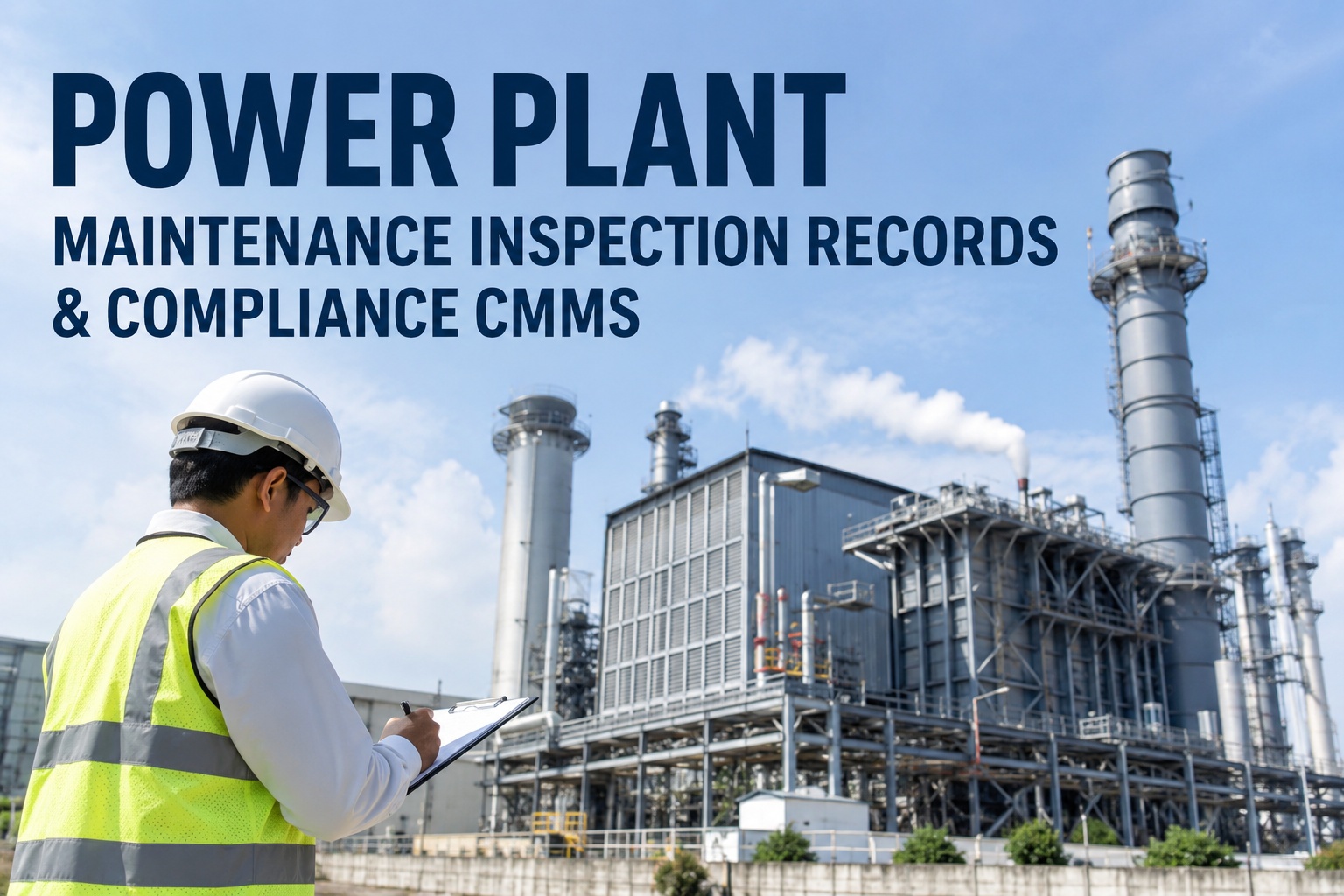
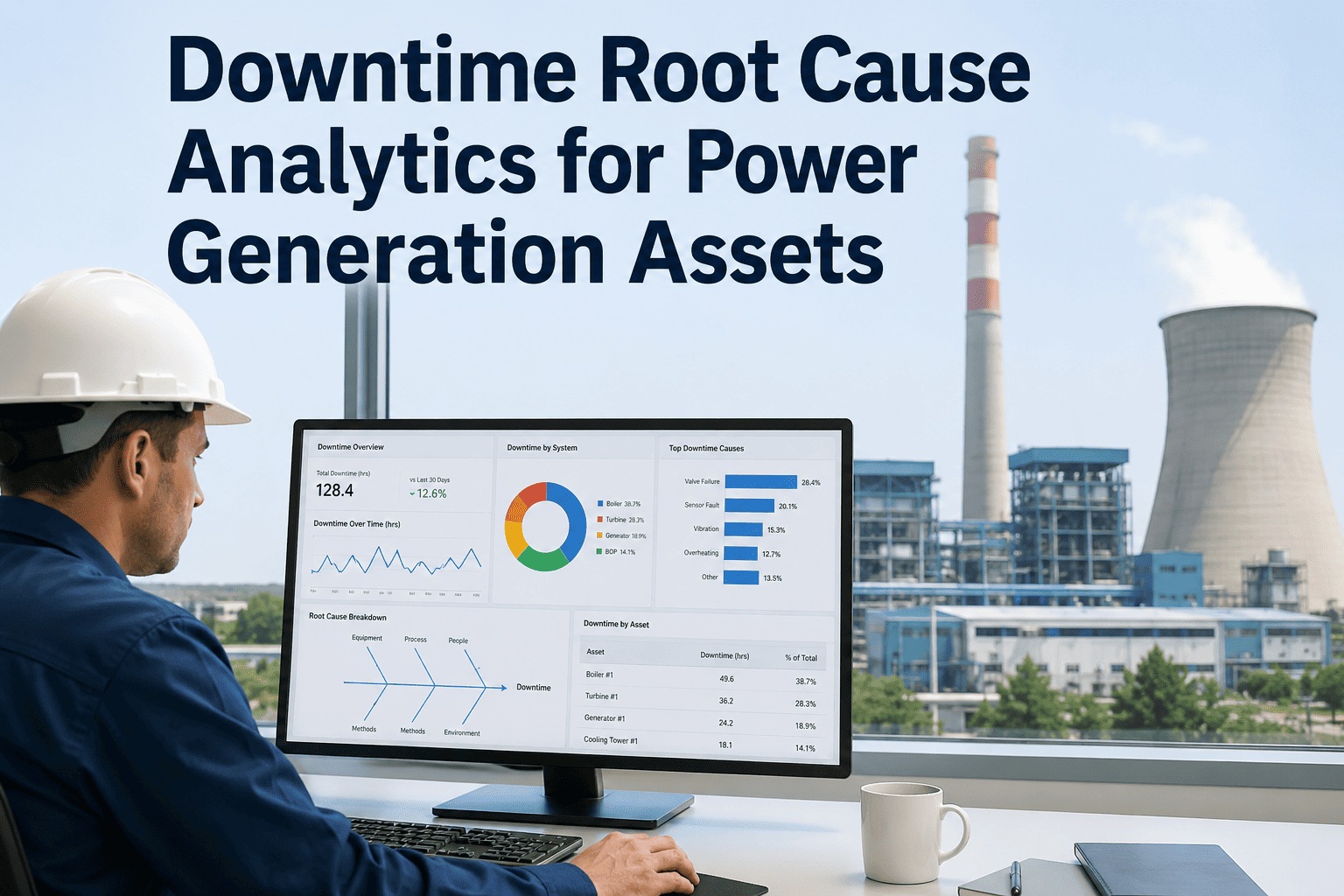
More than 22 cents of every boiler and machinery insurance premium dollar gets spent on inspection service — which tells you almost everything about how insurers actually price power plant risk. OxMaint's CMMS gives plant operators a structured maintenance and inspection record that underwriters can verify in minutes instead of requesting separately every renewal cycle. Book a 30-minute demo to see how your inspection history translates into a cleaner underwriting file, or start free to organize your records before the next renewal.
RISK & INSURANCE · COMPLIANCE TRACKING
Your Maintenance Records Are Part of Your Insurance File — Whether You Treat Them That Way or Not
Boiler and machinery insurers don't just cover a plant — they underwrite the discipline behind how it's maintained. Scattered logs and missing sign-offs read as risk, even when the maintenance itself was sound.
WHY INSPECTION RECORDS DRIVE THE PREMIUM
The Underwriter Isn't Just Pricing the Equipment
Boiler and machinery insurance exists because equipment failures at power plants are rare but expensive — a single pressure vessel accident can cause damage running into the millions once business interruption and replacement lead time are factored in. Because the loss potential is so concentrated, insurers lean heavily on inspection as their primary risk control, which is why such a large share of every premium dollar funds inspection rather than claims payout.
What that means in practice: when a plant shows up to renewal with a clean, dated, signed inspection trail — internal and external boiler checks on schedule, pressure relief devices verified, corrective actions closed out — that record itself becomes a pricing input. A plant that can't produce the same history quickly looks riskier on paper, regardless of how well the equipment has actually been run.
THE INSPECTION CYCLE INSURERS EXPECT TO SEE
A Typical Jurisdictional and Insurance Inspection Calendar
Every 6 Months
External operating inspection on high-pressure boilers — verifying safety devices, relief valves, and gauges while the unit runs.
Annually
Full internal inspection — unit shut down, cooled, and opened for a licensed inspector to examine internal surfaces directly.
Every 3 Years
Unfired pressure vessel inspection cycle in most jurisdictions, following the initial inspection at installation.
Within 90 Days of Any Finding
Defects identified during inspection must be corrected and a subsequent inspection filed — late filings carry escalating penalties.
Walk Into Your Next Renewal With a Complete Inspection File
See how OxMaint links jurisdictional and insurer inspection records directly to each pressure vessel, boiler, and piece of regulated equipment in your asset registry.
WHAT SHOWS UP AS RISK ON PAPER
Documentation Gaps That Affect Underwriting and Claims
| Documentation Gap |
How It Reads to an Underwriter |
Claims-Time Risk |
| Missing internal inspection record |
Possible lapsed compliance, equipment unverified |
Coverage dispute on equipment breakdown claim |
| No sign-off date on corrective action |
Defect possibly left unresolved past deadline |
Insurer questions maintenance adequacy |
| Inconsistent PM completion logs |
Suggests deferred maintenance pattern |
Premium loading at renewal |
| Inspection history scattered across files |
Slower underwriting review, more follow-up requests |
Delayed claim processing, more documentation requests |
THE LOSS PREVENTION ANGLE
Why Three-Quarters of Equipment Losses Trace Back to One Cause
Industry loss data consistently points to the same root cause behind the majority of equipment breakdown claims: a lack of routine maintenance, not a design flaw or a freak failure. That pattern matters for two reasons. First, it's exactly the kind of risk an insurer can price more confidently when the maintenance record is visible and consistent. Second, it's the one variable a plant operator has direct control over, long before any inspector arrives.
~75%
of equipment breakdown losses in commercial property data are attributed to inadequate maintenance rather than sudden, unpreventable failure — making maintenance history one of the few risk factors a plant can actively improve before renewal.
EXPERT REVIEW
Boiler & Machinery Risk Engineering Consultant
14 Years — Property Risk Engineering and Insurance Loss Prevention, Power Generation
When I review a plant ahead of a renewal, the inspection paperwork tells me almost as much as walking the floor does. A plant with a clean, dated, signed history of internal inspections, relief valve testing, and corrective action closure is one I can underwrite with confidence. A plant where that same history is scattered across binders, emails, and someone's memory raises a flag — not necessarily because the equipment is unsafe, but because I can't verify the discipline behind it quickly. The plants that get the smoothest renewals are the ones where every inspection record lives in one searchable place, tied to the specific asset it covers.
FREQUENTLY ASKED
Insurance Inspection Records — Common Questions
Who is responsible for keeping boiler inspection certificates current?
In most jurisdictions, the equipment owner — not the insurer — is responsible for ensuring inspection certificates stay current and that renewal inspections are scheduled before expiration.
Start free to see how expiration tracking and renewal alerts work against your existing asset registry.
What happens if a defect is found during an insurance inspection?
Most jurisdictions require defects to be corrected within a defined window, often 90 days, with a follow-up inspection filed afterward. Missing that window typically triggers escalating penalties and can affect the certificate's validity, which is why timestamped corrective action tracking matters as much as the original inspection.
Can a structured maintenance record actually influence the premium amount?
Underwriters price risk based on available evidence, and a complete, easily verified maintenance and inspection history is one of the clearest signals of how a plant manages risk. While individual outcomes vary by insurer and policy, a consistent documentation record removes one source of uncertainty from the underwriting decision.
Book a demo to see how your records would present to a reviewer today.
Do jurisdictional inspections and insurance inspections need to be tracked separately?
They can be tracked together against the same asset record, since both ultimately verify the same physical equipment. Keeping them linked to one asset profile, rather than in separate systems, is what makes pulling a complete history fast when either a regulator or an underwriter asks for it.
OXMAINT · COMPLIANCE TRACKING
Make Your Maintenance Record Work in Your Favor at Renewal
Tie every jurisdictional inspection, insurer visit, and corrective action to the specific asset it covers — so the next underwriting review starts from a complete file, not a request list.