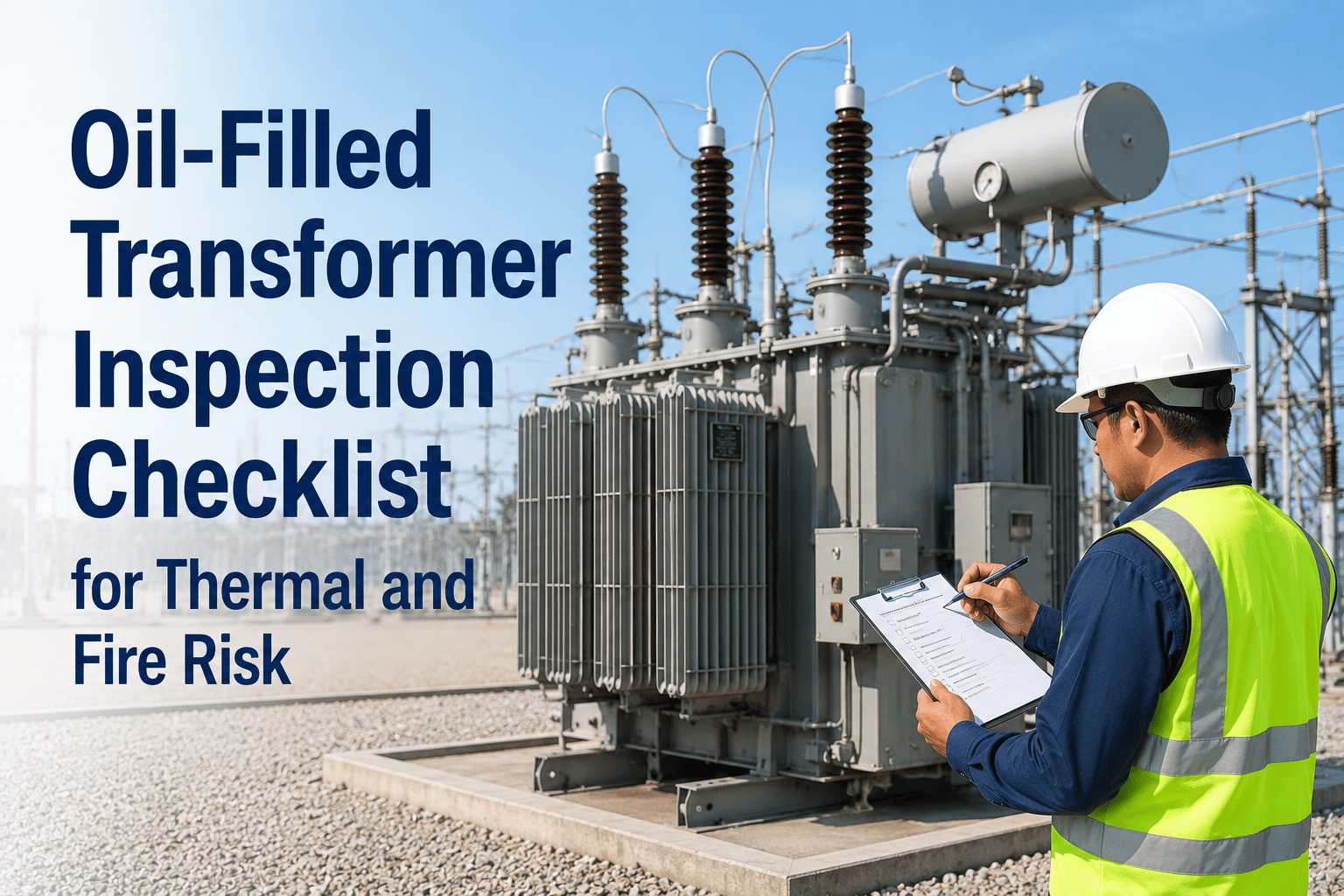
An oil-filled transformer failure does not announce itself — it builds silently through rising dissolved gas levels, degraded insulation, and contaminated oil until the day it doesn't. Transformer fires and cascading electrical faults are the most catastrophic single-asset failure events in industrial and utility environments, and the majority are preceded by warning signs that a structured inspection program would have caught weeks or months earlier. OxMaint's inspection management platform digitizes transformer inspection checklists, enforces completion at every interval, and links findings directly to corrective work orders so nothing falls through the cracks between shifts. Book a demo to see how transformer-dependent facilities are using OxMaint to stay ahead of thermal and fire risk.
Monthly
Quarterly
Annual
On Alarm
MONTHLY INSPECTION
High Risk
Moderate Risk
Visual and Oil Level Checks
Inspect main tank and conservator oil level via sight glass — low level indicates active leak, escalate immediately
High
Check silica gel breather color — blue to pink indicates moisture saturation, replace before pink becomes white
Moderate
Inspect all gasket joints and inspection covers for oil seepage — any active drip requires same-shift documentation and tagging
High
Check tank paint condition for rust, flaking, or corrosion blistering — surface degradation accelerates in coastal and industrial environments
Moderate
Thermal and Protection Checks
Record Oil Temperature Indicator (OTI) and Winding Temperature Indicator (WTI) readings — confirm indicators move freely and match SCADA values
High
Inspect bushing oil level (oil-filled bushings) through sight glass — low level signals internal leak with immediate flashover risk
High
Check Buchholz relay oil level and test tap operation — relay must be full and gas accumulation alarm functional
Moderate
Test Pressure Relief Valve (PRV) and pressure relief vent for blockage — blocked PRV creates catastrophic over-pressure failure risk
Moderate
Bushing and Terminal Condition
Inspect HV and LV bushings for cracks, chips, carbon tracking, or flashover marks — any visible damage requires immediate replacement scheduling
High
Clean bushing surfaces from contamination, bird droppings, and industrial deposits — contaminated bushings create creepage paths under rain conditions
Moderate
QUARTERLY INSPECTION — ADD TO MONTHLY TASKS
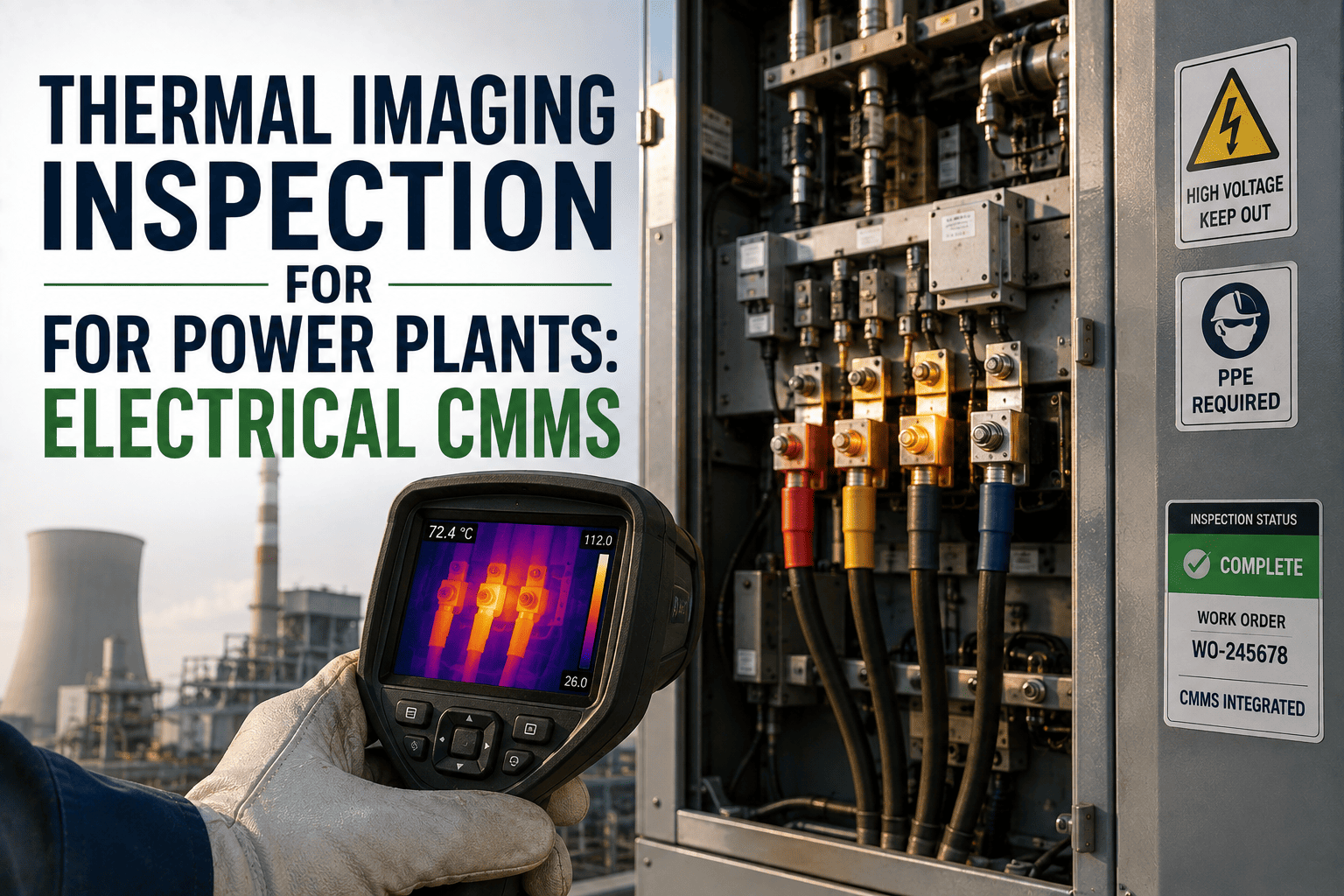
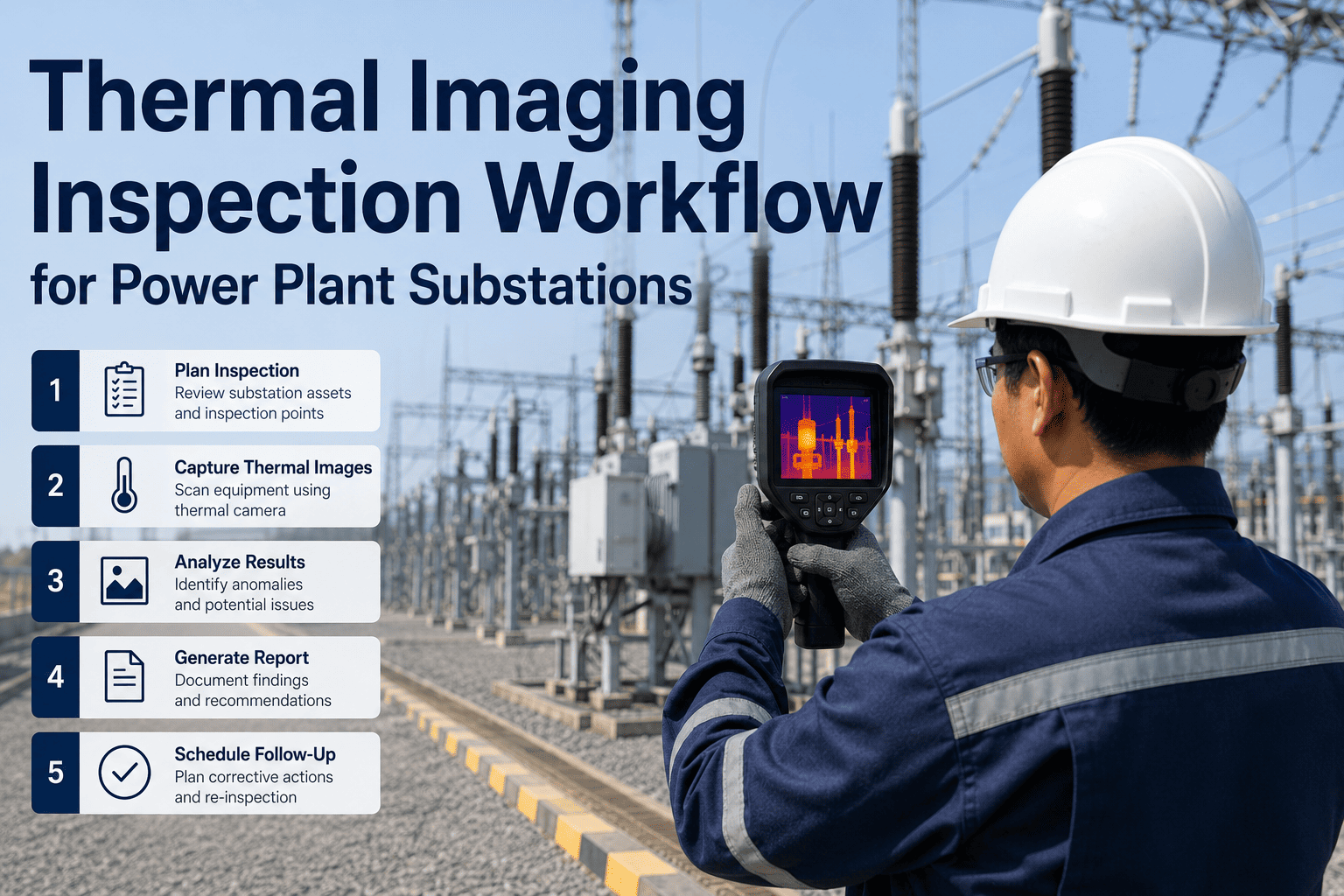
Perform infrared thermography scan of all bushing terminations, cable connections, and bus joints under load — hotspots above 80°C require same-day action
High
Test relay and alarm contacts — clean contacts, verify alarm setpoints, and confirm trip signals reach control room correctly
High
Inspect cooling system: verify radiator fins are clear of debris, confirm cooling fans and oil pumps operate correctly at all stages, check oil flow indicators
Moderate
Clean and inspect On-Load Tap Changer (OLTC) oil conservator and verify tap position indicator matches SCADA reading
Moderate
Verify fire suppression system: check deluge valve, detector heads, and suppression agent pressure — confirm last test date is within 12 months
High
ANNUAL INSPECTION — SPECIALIST TESTS REQUIRED
Dissolved Gas Analysis (DGA) — oil sample to laboratory for hydrogen, acetylene, ethylene, and CO analysis. Acetylene above 3 ppm indicates active arcing requiring immediate investigation
High
Dielectric Strength (BDV) test on oil sample — three consecutive readings, average below 30 kV/2.5mm requires oil filtration or replacement
High
Insulation Resistance (IR) test — measure winding resistance between HV-earth, LV-earth, and HV-LV. Calculate Polarization Index (1-minute vs 10-minute ratio)
Moderate
Bushing capacitance and power factor test — power factor increase exceeding 1% from previous baseline requires engineering review before next operation cycle
High
Earth resistance measurement — verify grounding below 5 ohms for standard substations, below 1 ohm for high fault current installations
Moderate
Transformer Inspections Fail When They Live on Paper
OxMaint digitizes every transformer inspection interval — monthly, quarterly, and annual — with mandatory fields, photo capture, and automatic escalation when readings exceed safe thresholds. No finding goes unrecorded. No overdue inspection goes unnoticed.
DGA QUICK INTERPRETATION GUIDE
Dissolved Gas Analysis — What the Numbers Mean
Hydrogen (H2)
Below 100 ppm
Normal
Background level from normal aging. Monitor trend; rapid rise signals partial discharge.
Acetylene (C2H2)
Above 3 ppm
Critical
Any acetylene indicates electrical arcing. Above 3 ppm: immediate investigation required before next energization.
Ethylene (C2H4)
Above 50 ppm
High Thermal
Elevated ethylene indicates oil overheating. Combined with high methane: serious thermal fault in progress.
Carbon Monoxide (CO)
Above 350 ppm
Paper Degradation
CO from cellulose paper degradation — insulation is breaking down thermally. Compare with prior year baseline.
FREQUENTLY ASKED
Transformer Inspection for Thermal and Fire Risk
How often should a DGA oil sample be taken from an oil-filled transformer?
Annual sampling is the minimum for stable transformers. Any transformer with prior abnormal readings, rising gas trends, or recent overcurrent events should be sampled quarterly. A baseline DGA reading at commissioning is essential — without it, trend comparison is impossible. Sign up free to configure DGA sampling schedules and link lab results directly to transformer asset records in OxMaint.
What is the most critical monthly check for fire risk prevention?
Oil level verification and bushing inspection. A transformer losing oil through an undetected gasket leak will overheat, degrade insulation, and reach fire conditions without triggering a standard protection relay trip. Bushing failures cause the most severe transformer fires — catastrophic tank rupture and oil ignition. Monthly physical inspection catches both risks before they escalate.
Does OxMaint support photo capture during transformer inspections?
Yes. OxMaint's mobile inspection forms include mandatory photo fields for key checkpoints — bushing condition, oil level, infrared scan results, and any identified anomalies. Photos are timestamped, geo-tagged, and permanently attached to the inspection record. This creates a visual history across inspection cycles that identifies gradual physical degradation not visible in numerical readings. Book a demo to see the mobile inspection workflow.
How should transformer inspection findings link to corrective work orders?
Every finding that exceeds a threshold — low oil level, abnormal DGA reading, cracked bushing, relay alarm — should auto-generate a corrective work order before the inspection is closed. OxMaint allows technicians to create linked work orders directly from the inspection form, so nothing is recorded and then forgotten. The corrective work order inherits the asset ID, finding description, and priority classification from the inspection finding.
OXMAINT · INSPECTION MANAGEMENT · TRANSFORMER RELIABILITY
Stop Finding Transformer Problems After the Fire.
OxMaint gives your team a structured monthly, quarterly, and annual inspection workflow — with enforced checklists, photo documentation, DGA tracking, and automatic corrective work order creation — so thermal and fire risks are caught in the inspection, not the incident report.