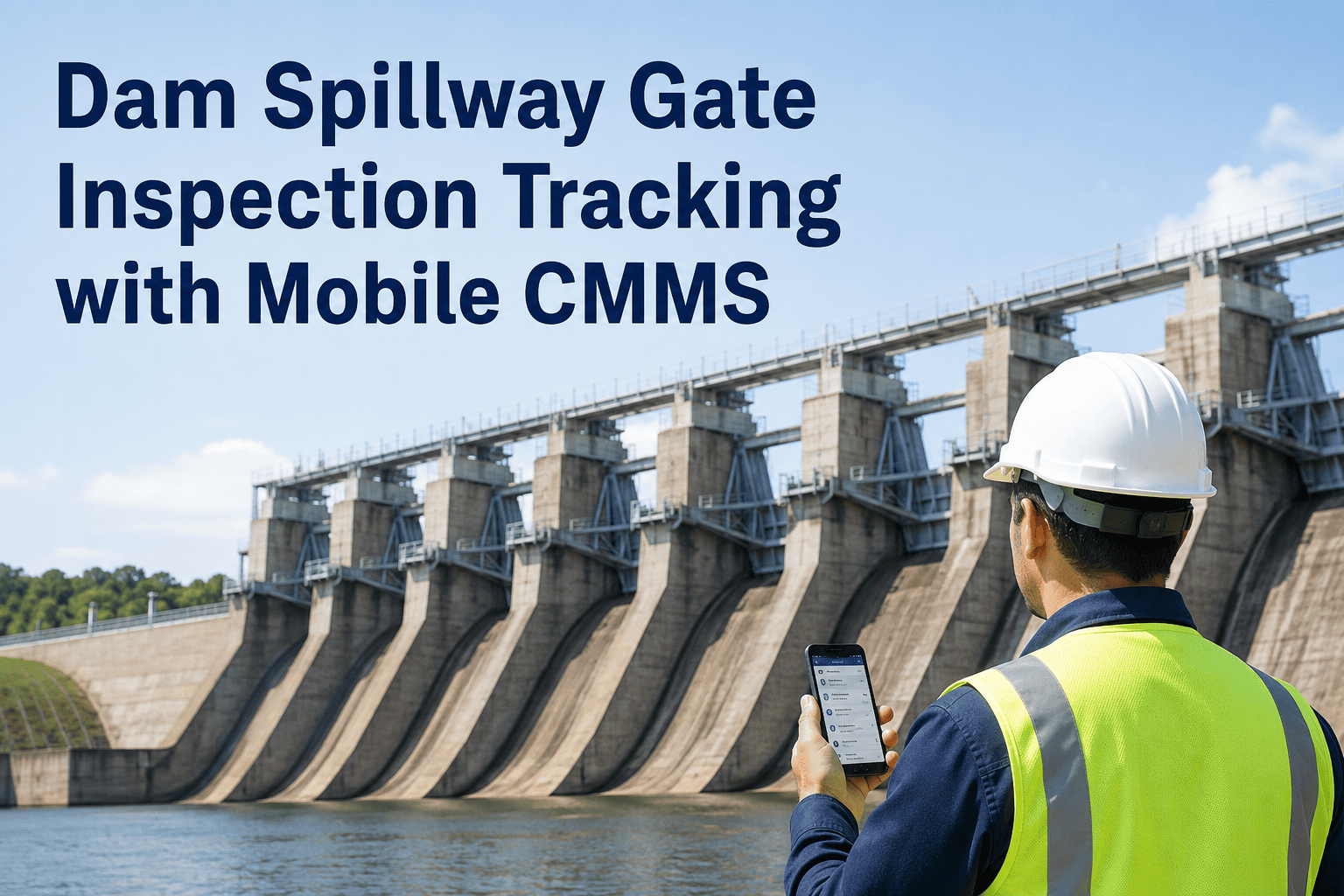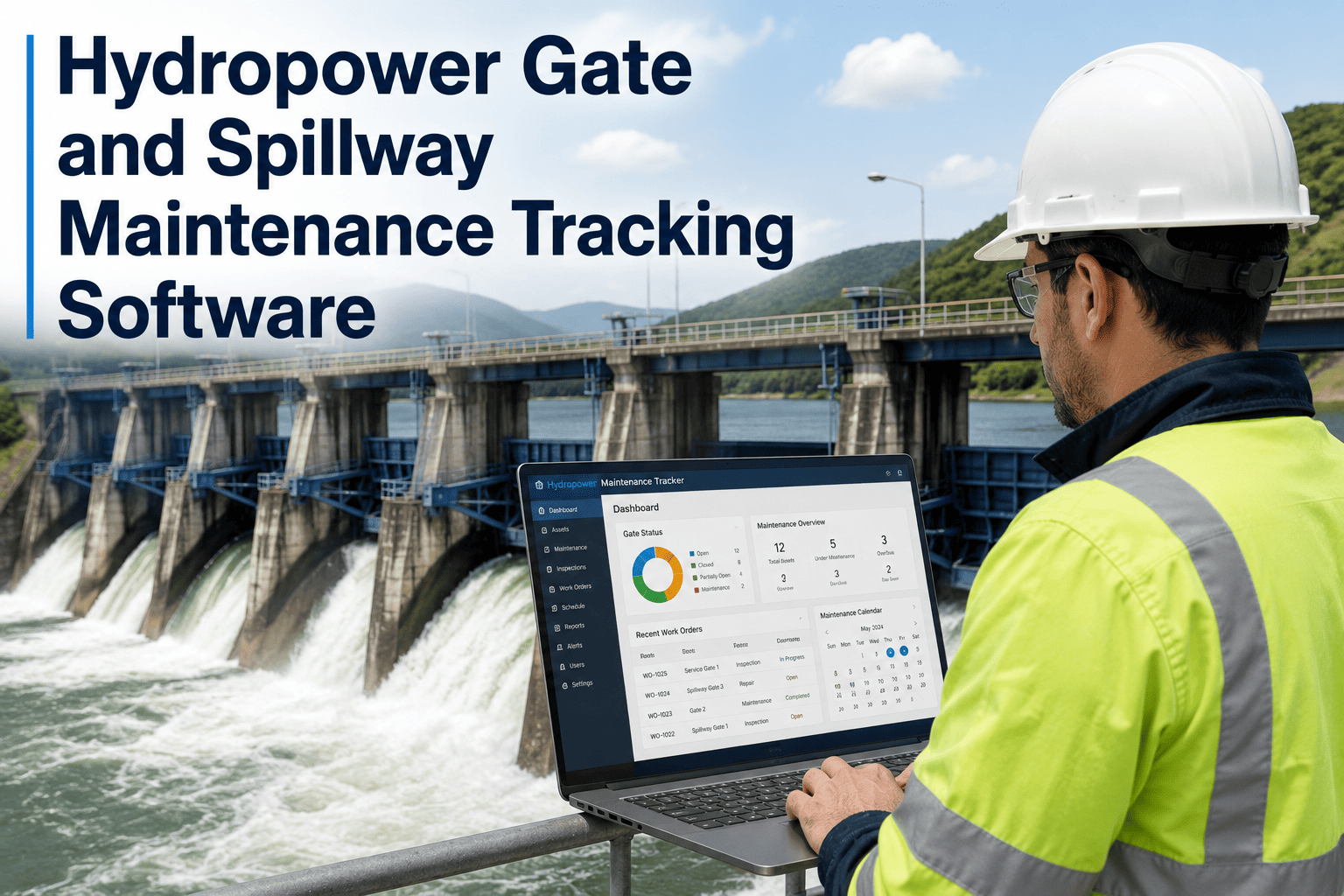
Every hydropower facility with untracked spillway gates, undocumented seepage readings, and paper-based gate test logs is one FERC inspection away from a license condition — or one missed piezometer threshold from a directive that halts generation entirely. Gate operability failures, unchecked seepage trends, and inspection record gaps are not rare events at aging hydro facilities; they are predictable outcomes when maintenance operations run on disconnected spreadsheets and manual logging. OxMaint CMMS digitizes your gate inspection schedules, spillway maintenance records, and dam instrumentation readings into a single audit-ready platform — so your team arrives at every Part 12 review fully prepared, not scrambling.
What Gate and Spillway Maintenance Actually Requires
Gates and spillways are civil-mechanical hybrid assets — part structural element, part electromechanical system — that demand a maintenance record structure most CMMS platforms are never designed for. Radial gates, tainter gates, sluice gates, and drum gates each have specific seal wear patterns, hoist system maintenance intervals, and operability test requirements. Spillway concrete demands separate inspection sequences covering apron erosion, joint sealant condition, and stilling basin scour. OxMaint structures all of this into asset-specific PM templates, mobile inspection checklists, and gate test records that meet FERC O&M Manual requirements from the first field inspection.
Get Your Gate and Spillway Records FERC-Ready
OxMaint structures gate operability tests, spillway inspections, and hoist PM schedules into audit-ready records from day one — no paper chase before your next Part 12 review.
How OxMaint Tracks Gate Maintenance: From Field to FERC
Gate Failure Modes, Detection Methods, and Cost Impact
| Gate Component | Failure Mode | Detection Method | Cost if Undetected | Cost if Caught in PM |
|---|---|---|---|---|
| Trunnion Bearing | Seizure under load | Torque measurement trend | $180K–$650K gate removal | $4,000–$12,000 bearing replacement |
| Seal Rubber | Leakage exceeding FERC threshold | Leakage measurement at test | License condition, directed study | $2,000–$8,000 seal replacement |
| Hoist Wire Rope | Strand failure during operation | Visual + broken strand count | $50K–$200K uncontrolled gate | $3,000–$9,000 rope replacement |
| Skin Plate Coating | Section corrosion through-thickness | Pit depth measurement history | $800K+ structural repair or replacement | $15,000–$40,000 coating restoration |
| Actuator / Motor | Gate inoperable during flood event | Torque, travel time, limit switch test | $2.4M+ emergency outage + FERC review | $6,000–$18,000 actuator overhaul |
| Spillway Apron | Scour undermining slab stability | Depth survey per inspection cycle | $1.2M–$5M emergency concrete repair | $40,000–$120,000 planned repair |
FERC Compliance Gaps OxMaint Closes
Frequently Asked Questions
What gate inspection records does FERC require hydropower operators to maintain?
FERC-licensed facilities must maintain gate operability test records, seal leakage measurements, hoist and actuator test results, and finding remediation documentation per the project's FERC-approved O&M Manual. These records must be available for owner-conducted annual inspections and Part 12 independent consultant inspections every five years. OxMaint structures all required records into digital asset profiles with searchable history and audit-ready export for every gate and appurtenance at your facility.
How does OxMaint handle multi-gate facilities with different inspection frequencies?
OxMaint assigns PM schedules at the individual asset level — so a flood control gate tested monthly, a low-level sluice tested seasonally, and a penstock isolation valve tested annually each carry their own automated schedule. Work orders generate in advance per each asset's O&M Manual requirements, with separate escalation alerts and completion tracking per gate. No shared schedule that forces all gates onto the same cycle.
Can OxMaint integrate with existing SCADA systems for gate position and status data?
Yes. OxMaint integrates with plant SCADA via OPC-UA, Modbus, and BACnet — pulling gate position signals, actuator status, and alarm data directly into asset records. Gate position anomalies can trigger automatic work order creation, closing the gap between a SCADA alarm and a documented maintenance response. Book a demo to see SCADA integration configured for a hydro gate asset.
How long does it take to set up gate and spillway assets in OxMaint?
Most hydro facilities complete full asset registration for all gates, hoists, and spillway sections within 2–4 weeks of deployment. OxMaint's implementation team works from your existing asset inventory, O&M Manual PM schedules, and prior inspection records to pre-populate the system. Mobile work orders are live from day one, with historical records imported in the background during initial configuration.
What happens when a gate operability test reveals a deficiency that requires immediate reporting?
OxMaint generates an immediate notification to designated dam safety personnel when a field finding meets reporting thresholds — gate fails to achieve full stroke, seal leakage exceeds O&M Manual limits, or actuator torque exceeds rated capacity. The notification is time-stamped, linked to the gate asset record, and initiates a condition report workflow that tracks investigation and response documentation through closure — creating the auditable chain FERC expects.
Start Tracking Gate and Spillway Maintenance in OxMaint
Connect your gate inspection schedules, hoist PM records, and FERC finding remediation into one platform. Most hydro facilities are fully operational in OxMaint within 2–4 weeks.