A heat wave doesn't just raise ambient temperature, it removes the cooling margin that every thermal system on your site was designed around. Condensers reject heat into hotter water, transformers run with less thermal headroom, and cooling towers fight evaporation efficiency loss exactly when demand is highest. Calendar-based maintenance schedules miss this because heat waves don't follow a calendar, they follow a forecast. Set up forecast-triggered heat wave readiness in OxMaint or book a live demo to see threshold-based PM scheduling in action.
Climate Resilience for Power Generation
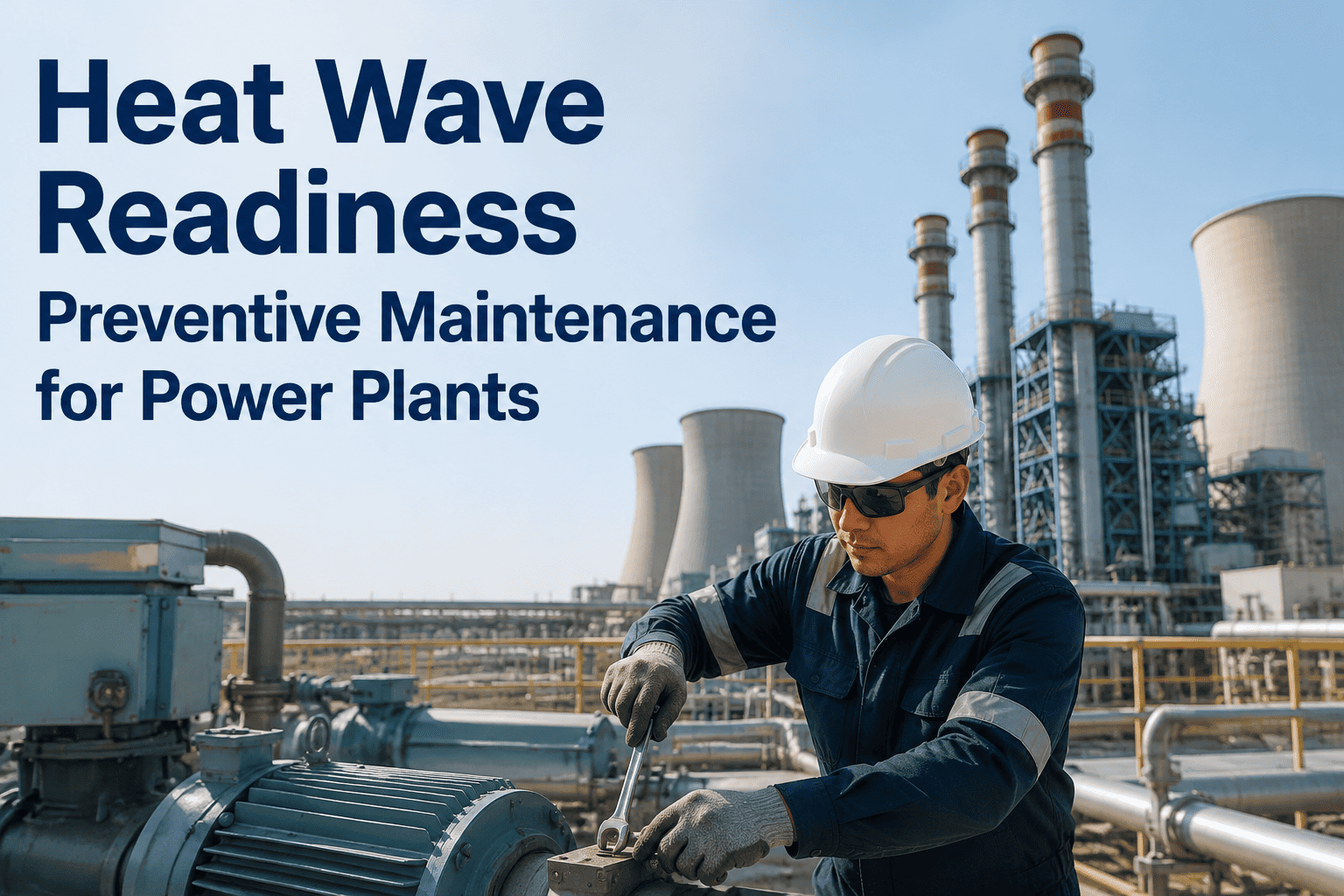
Heat Wave Readiness Preventive Maintenance for Power Plants
Your equipment doesn't fail on a schedule during a heat wave. It fails on a temperature threshold.
Why Heat Waves Break Equipment That Survives Every Other Day
A piece of equipment running near its thermal design limit on a normal day has margin to absorb a bad bearing, a partially fouled cooler, or a slightly under-rated connection. A heat wave consumes that margin before the equipment defect ever gets the chance to show up on a routine inspection, turning a minor weakness into a trip or a derate within hours.
Below Threshold
Normal Operations
Standard PM schedule continues. No additional monitoring frequency required beyond routine readings.
Watch Threshold
Heat Advisory Forecast
Pre-heat checklist triggered automatically. Cooling system performance verified, deferred cooling-related work orders closed before peak heat arrives.
Warning Threshold
Sustained Extreme Heat
Monitoring frequency increases to multiple checks per shift on cooling and electrical systems. Non-critical PM work paused to protect response capacity.
Post-Event
Heat Wave Has Passed
Full inspection of every system that operated near its thermal limit, regardless of whether an alarm occurred during the event.
The Four Systems That Lose Margin First
Condenser and Cooling Water
Hotter intake or cooling tower water directly raises condenser backpressure, reducing turbine efficiency exactly when output is needed most.
Cooling Towers
Wet-bulb temperature rises alongside dry-bulb temperature during a heat wave, reducing the evaporative cooling capacity the tower was designed around.
Transformers and Switchgear
Ambient temperature rise reduces the thermal headroom available before equipment hits its rated operating limit, even with load held constant.
Auxiliary Cooling Fans and Pumps
Equipment cooling fans and auxiliary pump motors run continuously at higher duty during a heat wave, accelerating bearing and insulation wear.
Pre-Heat Wave Checklist -- Trigger on Forecast, Not Calendar
| System |
Pre-Heat Action |
Why It Matters |
| Cooling Tower |
Fill cleaning, basin inspection, fan blade and gearbox check |
Restores evaporative cooling margin before wet-bulb temperature rises |
| Condenser |
Tube cleaning, waterside pressure drop verification |
Reduces backpressure penalty from hotter circulating water |
| Switchgear and Transformers |
Thermal imaging survey of all connections under current load |
Identifies marginal connections before ambient heat removes thermal headroom |
| Auxiliary Motors and Fans |
Bearing vibration check, lubrication verification |
Confirms equipment can sustain continuous high-duty operation |
| Backup Cooling Systems |
Functional test of any redundant cooling or emergency makeup water system |
Ensures backup capacity is actually available if primary cooling is stressed |
Forecasts Move Faster Than Maintenance Calendars
Let OxMaint Trigger Readiness Work Orders Automatically
OxMaint can trigger pre-heat checklists based on a temperature threshold rather than a fixed date, so your cooling tower, condenser, and switchgear checks happen ahead of an approaching heat wave instead of after the fact. Monitoring frequency steps up automatically as conditions move from watch to warning tier.
What Changes During Sustained Extreme Heat
Monitoring Frequency
From: Once per shift
To: Multiple checks per shift on cooling and electrical systems
Routine PM Work
From: Standard schedule
To: Non-critical work paused, capacity protected for response
Alarm Response
From: Standard escalation path
To: Immediate escalation on any cooling or thermal alarm
Expert Review
"The plants that handle heat waves well aren't reacting to the forecast, they're reacting to the same forecast three or four days earlier, when there's still time to clean a cooling tower fill or run a thermal scan. By the time the heat wave actually arrives, the only thing left to do is watch the trends and respond fast. Readiness has to be built before the temperature climbs, not during it." Reviewed by OxMaint's Reliability Engineering Advisory Team, drawing on extreme weather readiness programs across thermal generation sites.
Frequently Asked Questions
How does heat wave readiness maintenance differ from routine seasonal PM?
Heat wave readiness is triggered by a weather forecast crossing a defined temperature threshold, rather than a fixed calendar date, since a heat wave can occur outside the typical peak season window. Routine seasonal PM follows a set schedule, while heat wave readiness needs to activate dynamically based on conditions.
OxMaint supports both calendar and threshold-based triggers for these different readiness types.
Which systems are most at risk during an extreme heat event?
Cooling towers, condensers, and electrical connections in switchgear and transformers are typically the most exposed, since all three lose thermal margin directly as ambient and wet-bulb temperatures rise. Auxiliary cooling fans and pump motors also face accelerated wear from continuous high-duty operation.
Book a demo to see a heat-wave risk profile built for your specific equipment.
Should routine maintenance be paused during a heat wave?
Non-critical PM work is typically paused during sustained extreme heat to free up technician capacity for increased monitoring and rapid alarm response on cooling and electrical systems. Paused work should be logged and automatically rescheduled rather than simply forgotten once conditions normalize.
OxMaint automatically reschedules paused work into the post-event inspection window.
What should a post-heat-wave inspection cover?
A post-event inspection should cover every system that operated near its thermal limit during the heat wave, even those that showed no alarms, since sustained thermal stress can cause degradation that doesn't show up until the next demand cycle. This inspection also informs threshold settings for the next event.
Talk to OxMaint about structuring a post-heat-wave review.
Can a CMMS trigger work orders based on weather forecasts?
Yes, a CMMS can be configured to generate pre-heat checklists and increase monitoring frequency automatically when a forecast temperature threshold is approaching, rather than relying on a technician to manually start the process. This closes the gap between forecast and actual readiness action.
Configure threshold-based triggers in a free OxMaint trial.
The Forecast Already Told You It Was Coming
Get Cooling Systems Heat-Wave Ready Before the Margin Disappears
Heat wave readiness only works if it starts before the heat arrives. OxMaint turns forecast thresholds into automatic readiness work orders, so your cooling and electrical systems are checked ahead of the event, not during it.