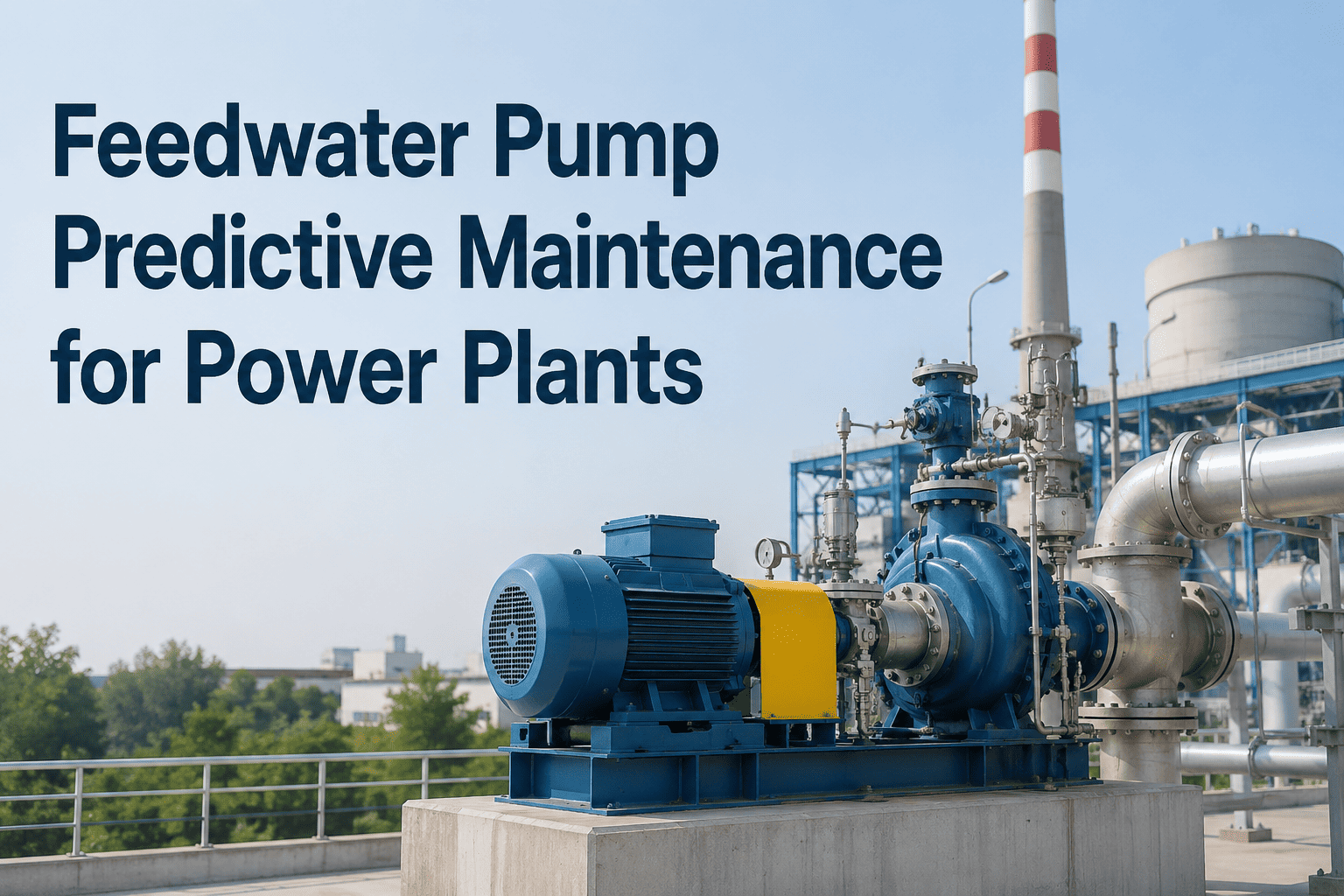
At 3:12 AM on a Tuesday, a feedwater pump begins vibrating at 7.2 kHz — the onset frequency of bearing fatigue. Without a connected predictive maintenance system, the next person to see that data is the vibration analyst arriving for the morning shift, eight hours later. By then the bearing has accumulated millions of additional stress cycles, bearing temperature has risen, and the plant is facing a choice between risking catastrophic failure during peak demand or an emergency shutdown costing hundreds of thousands in lost generation revenue. Feedwater pump failures account for a significant portion of combined-cycle and thermal plant balance-of-plant forced outages — and because their failure modes are progressive, every one of them is detectable and preventable with a structured vibration-based predictive maintenance plan. OxMaint's Predictive Maintenance module gives your maintenance team a checklist-driven, sensor-connected vibration program that turns frequency data into work orders before bearing fatigue becomes bearing failure. Book a demo to see how OxMaint applies this framework to your specific pump configuration and site.
Feedwater Pump Vibration Predictive Maintenance Plan
A complete vibration-based predictive maintenance framework for high-pressure feedwater pumps — covering fault detection, trending, alert thresholds, and OxMaint work order integration.
Feedwater Pump Failure Modes and Vibration Signatures
Each failure mode produces a characteristic vibration frequency signature. OxMaint's AI monitors spectral data continuously and flags frequency patterns associated with each failure type before amplitude reaches alarm levels.
| Failure Mode | Vibration Signature | Frequency Range | Additional Indicators | Typical Warning Lead Time |
|---|---|---|---|---|
| Bearing Race Defect | BPFO / BPFI defect frequency sidebands | 1–10 kHz | Rising bearing temperature, lube oil metal content | 60–90 days |
| Rotor Imbalance | Elevated 1× running speed component | 1× RPM | High radial vibration, axial stability | Weeks to months |
| Shaft Misalignment | Elevated 2× and 3× harmonics, high axial vibration | 2–3× RPM | Coupling temperature, seal wear rate | Days to weeks |
| Cavitation | Broadband noise in 1–10 kHz range; random subharmonics | 1–10 kHz | Flow rate vs. design, NPSH margin, suction pressure | Hours to days |
| Impeller Wear / Erosion | Vane pass frequency (VPF) increase; broadband elevation | Blade count × RPM | Efficiency drop >3%, discharge pressure trending | Weeks to months |
| Balance Disc Wear | Increased axial thrust vibration; instability during load changes | Sub-synchronous | Axial float measurement, discharge recirculation flow | Weeks |
The OxMaint Feedwater Pump Vibration PM Plan: 4 Measurement Tiers
A complete program requires continuous monitoring, periodic analysis, and offline confirmation measurements. OxMaint manages all four tiers from a single platform.
See Your Feedwater Pump Vibration Program in OxMaint
Our 30-minute demo walks through sensor integration, spectral alert configuration, performance trending, and automated work order creation — using a feedwater pump asset configuration matching your plant type.
Feedwater Pump Predictive Maintenance Readiness Checklist
Use this before your next reliability review to assess whether your current program catches failure modes early enough to plan, not just react.
What Rotating Equipment Engineers Recommend
The most important discipline in feedwater pump predictive maintenance is asset-specific baselining. Generic ISO vibration limits tell you when a machine is about to fail — not when it is trending in the wrong direction. A pump that runs at 3.5 mm/s overall vibration from day one due to its design and operating conditions will alarm constantly against a generic threshold. A pump that normally runs at 1.2 mm/s and trends to 2.8 mm/s over four weeks is telling you something specific and actionable. The entire value of a vibration program depends on trending against that machine's own baseline, not an industry table. The second discipline is connecting the alert to a maintenance action. I have seen plants with excellent vibration programs where the data sits in a standalone monitoring platform and never reaches the work order system. The analyst identifies a developing bearing defect, writes a recommendation email, and nothing happens until the pump trips. When the alert creates the work order automatically, response is consistent regardless of who is on shift and how many other priorities are competing for attention that day.
Frequently Asked Questions
Turn Vibration Data Into Maintenance Actions — Before the Bearing Fails
OxMaint connects your feedwater pump vibration monitoring to a complete predictive maintenance workflow: spectral alert, automatic work order, performance trending, and outage scope planning — in one platform designed for power plant rotating equipment teams.