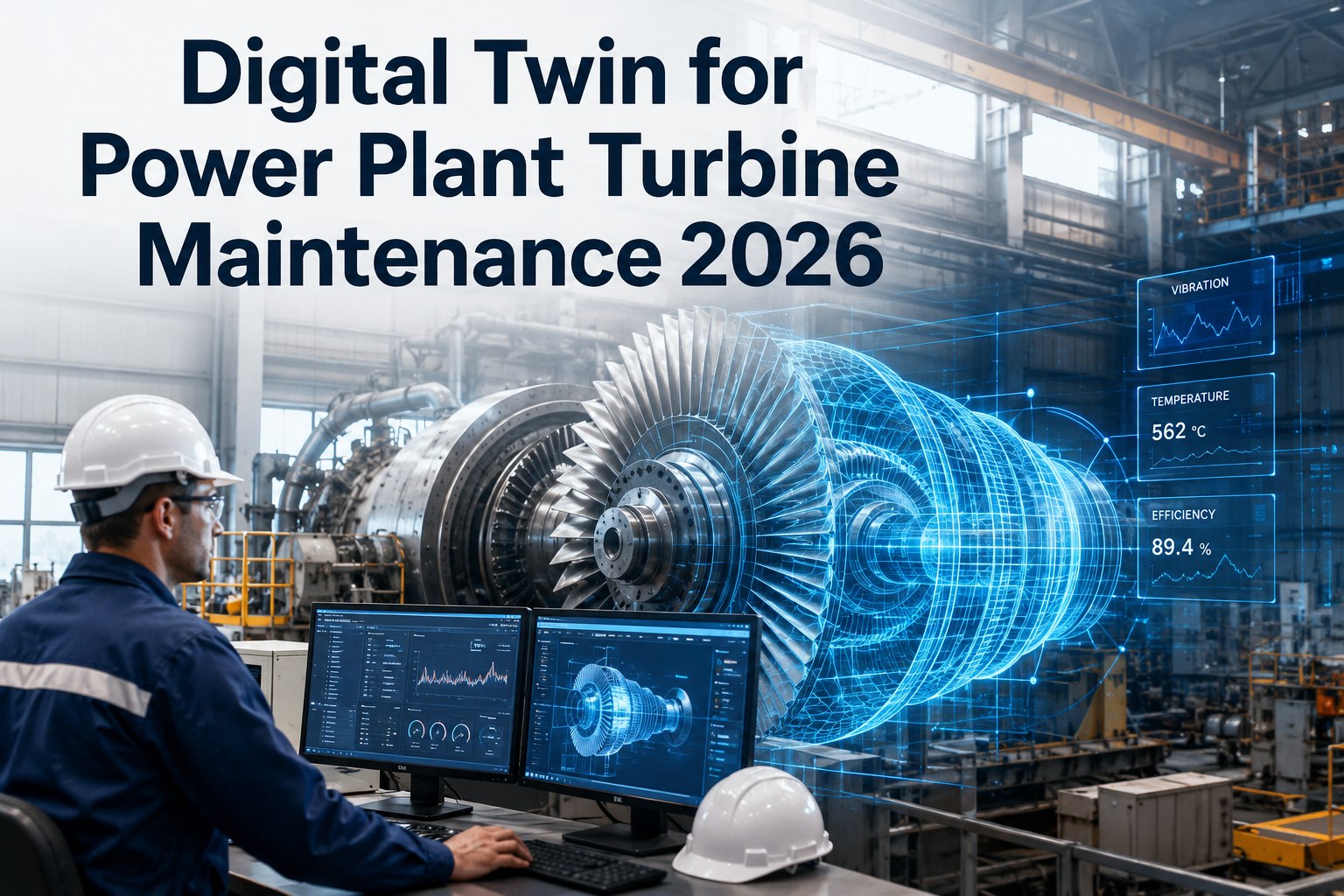
A digital twin for power plant turbine maintenance is a real-time virtual replica of a physical turbine — combining sensor data, thermodynamic models and maintenance history to simulate failure scenarios, predict performance degradation and optimize upkeep schedules before breakdowns occur. By 2026, turbine digital twin maintenance is expected to become the standard for any generation fleet serious about cutting unplanned outages, extending asset life and protecting multi-million-dollar revenue streams. When paired with an AI-powered CMMS like OxMaint, a power plant digital twin stops being a visualization tool and becomes an automated workflow engine — turning predictive insights into dispatched work orders, spare-parts reservations and audit-ready compliance records. See it on your assets when you Start Free Trial or book a personalized walkthrough below.
Digital Twin Turbine Guide · 2026
What if your turbine could warn you 14 days before it fails?
A turbine digital twin models every blade, bearing and combustion stage in real time — then feeds those predictions straight into OxMaint work orders so your team fixes the right asset, at the right time, with the right parts. No spreadsheets. No guesswork. No $2M unplanned outages.
Power Plant Simulation
What Is a Digital Twin for Power Plant Turbine Maintenance?
A power plant digital twin is a living, physics-based virtual model of a turbine that continuously ingests SCADA, vibration, temperature, pressure and oil-analysis data — then mirrors the physical asset's condition in real time. Unlike a static 3D CAD file, a turbine digital model recalculates stress, creep, fatigue and thermodynamic efficiency every few seconds, flagging the exact moment a component drifts outside its safe operating envelope. Industry studies show that generation fleets using digital twin analytics achieve 20–35% fewer unplanned outages and 10–15% longer intervals between major overhauls. By 2026, the IEA expects over 60% of large thermal and gas turbines globally to run some form of twin-based predictive maintenance — making it a competitive necessity, not a pilot experiment.
Virtual Turbine Modeling
A high-fidelity 1D/3D model captures rotor dynamics, blade-path thermodynamics and bearing oil-film behavior — calibrated against OEM design data and your plant's historical operating curves.
Failure Scenario Simulation
Engineers inject fault modes — blade fouling, rotor unbalance, seal degradation — to simulate how the turbine will respond days or weeks before the actual condition surfaces in SCADA trends.
Degradation Prediction
Machine-learning models project remaining useful life (RUL) for each critical component, giving planners a 7–21-day window to mobilize crews, reserve cranes and order long-lead spares.
ROI & Cost Impact
How Much Does a Turbine Digital Twin Save? The 2026 ROI Breakdown
A single 500 MW gas turbine that trips unexpectedly can lose $8,000–$15,000 per hour in lost generation alone — before you count startup fuel, grid penalties and crew overtime. The math makes digital twin maintenance one of the highest-ROI investments a reliability team can make. Below is the worked example for a 180-asset coastal combined-cycle plant spending roughly $42K per year on reactive turbine repairs.
Annual Savings Formula
(Outage Hours Avoided × $/hr Lost Generation) + (Spares Rush-Freight Avoided) + (Overtime Reduced) − (Twin Platform Cost)
= Net Year-1 Savings
| Savings Lever | Before Twin (Reactive) | After Twin (Predictive + OxMaint) | Annual Impact |
|---|---|---|---|
| Unplanned outage hours | 86 hrs/yr | 31 hrs/yr | $412K saved |
| Rush-freight on critical spares | $38K/yr | $6K/yr | $32K saved |
| Major overhaul interval | 24,000 hrs | 27,600 hrs (+15%) | $95K deferred |
| Maintenance overtime | $21K/yr | $8K/yr | $13K saved |
| Twin + CMMS platform cost | — | $54K/yr | −$54K cost |
| Net Year-1 Savings | $498K | ||
"The twin flagged a second-stage blade anomaly nine days before our SCADA alarms moved. We scheduled the repair during a planned outage — zero lost megawatt-hours, zero rush freight."
— Reliability Lead, 1,200 MW Combined-Cycle Plant
Implementation Timeline
How to Deploy a Turbine Digital Twin: Step-by-Step
Most plants can move from data audit to live predictive maintenance in 10–16 weeks. The timeline below assumes a steam or gas turbine with existing SCADA historians and at least 18 months of operational data.
Data Audit & Asset Hierarchy
Map every turbine sub-assembly, sensor tag and spare part into OxMaint's asset tree. Clean and validate historian data — gaps, sensor drift and duplicate tags are resolved before modeling begins.
Twin Model Build & Calibration
Physics-based thermodynamic and rotor-dynamic models are built from OEM design documents, then calibrated against your plant's actual operating data. Baseline performance and health envelopes are established.
Predictive Model Training
Machine-learning algorithms train on historical failure events, vibration signatures and oil-analysis trends to produce RUL estimates and anomaly-detection thresholds for each critical component.
CMMS Integration & Automation
Twin alerts are wired directly into OxMaint. When degradation crosses a threshold, a work order auto-generates with the fault description, recommended repair procedure, required spares and assigned technician — no manual entry.
Pilot Validation & Scale
Run the twin in advisory mode for two weeks alongside existing maintenance routines. Compare predictions to actual findings during the next planned inspection, then switch to automated work-order generation and scale to remaining turbines.
Before vs After
Reactive Maintenance vs Digital Twin + OxMaint CMMS
The gap between time-based and twin-driven maintenance is not incremental — it is transformational. Here is what changes when your turbine simulation maintenance is connected to an AI-powered CMMS.
| Dimension | Reactive / Time-Based (Today) | Digital Twin + OxMaint (2026) |
|---|---|---|
| Failure detection | After SCADA alarm — often too late | 7–21 days before failure, with RUL estimate |
| Work order creation | Manual, paper or spreadsheet | Auto-generated with fault, procedure & spares |
| Spare parts | Rush-order at premium freight | Reserved automatically from optimized stock |
| Overhaul scheduling | Fixed calendar interval (24,000 hrs) | Condition-based — extended up to 15% |
| Compliance & audit | Days of report compilation | ISO 55000-ready logs, exported in one click |
| Cross-team visibility | Siloed emails and logbooks | Live dashboard for ops, maintenance & management |
Platform Integration
How OxMaint Turns Digital Twin Insights Into Action
A digital twin without a CMMS is like a weather radar without an emergency-response system — it sees the storm but cannot dispatch the crews. OxMaint closes that loop, converting every twin prediction into an automated, auditable maintenance action with measurable outcomes.
Auto-Generated Predictive Work Orders
When the twin detects a degradation threshold breach, OxMaint instantly creates a work order pre-loaded with the fault description, OEM repair procedure, required spare parts and skill-matched technician — cutting planning time by up to 80%.
Outcome: Unplanned downtime cut 30–50%
Intelligent Spare-Parts Reservation
OxMaint checks inventory levels the moment a twin alert fires and reserves critical spares — or auto-generates a purchase requisition with lead-time tracking so parts arrive before the planned repair window.
Outcome: Rush-freight spend reduced 70–85%
Live Maintenance Analytics Dashboard
Every twin prediction, work order and repair outcome feeds OxMaint's analytics engine — giving reliability engineers real-time MTBF, MTTR, OEE and degradation-trend dashboards across the entire turbine fleet.
Outcome: Mean time to repair reduced 25–40%
ISO 55000 Audit-Ready Compliance
Every action triggered by the twin — from alert to work-order completion to spare-part consumption — is time-stamped, geo-tagged and stored in an immutable audit trail aligned with ISO 55000 and NERC CIP requirements.
Outcome: Audit prep cut from days to minutes
See OxMaint's digital twin CMMS on your turbines — live in 30 minutes
Book a personalized demo and we'll show you exactly how twin-driven work orders, auto-reserved spares and real-time analytics will fit your plant's asset hierarchy — no slide deck, just your data.
Frequently Asked Questions
Digital Twin Power Plant Turbine Maintenance — FAQs
What is a digital twin in power plant turbine maintenance?
A digital twin is a real-time virtual model of a physical turbine that continuously ingests sensor data — vibration, temperature, pressure, flow — and uses physics-based and machine-learning models to mirror the asset's actual condition. In maintenance, it predicts component degradation, simulates failure scenarios and estimates remaining useful life so teams can plan repairs before an unplanned outage occurs. When integrated with a CMMS like OxMaint, those predictions automatically trigger work orders, spare reservations and compliance logs.
How much does a turbine digital twin cost in 2026?
For a mid-size combined-cycle plant, a turbine digital twin platform typically costs $40,000–$70,000 per year including modeling, calibration and CMMS integration. Most plants recover that investment within 3–6 months through avoided outage hours alone — a single prevented trip on a 500 MW unit can save $200K–$400K in lost generation. You can see the full ROI breakdown and test it on your own asset data when you Start Free Trial.
How does a CMMS work with a digital twin?
The digital twin acts as the "brain" that detects and predicts problems; the CMMS acts as the "hands" that execute the fix. When the twin identifies a degradation threshold breach, it sends a structured alert to OxMaint, which auto-generates a work order with the fault description, repair procedure, required spares and assigned technician. This closed loop eliminates manual data entry, reduces planning time by up to 80% and ensures every prediction is tracked to completion for audit readiness.
How long does it take to deploy a power plant digital twin?
A typical deployment takes 10–16 weeks from data audit to live predictive maintenance. The first two weeks are spent mapping asset hierarchies and cleaning historian data; weeks 3–10 build and calibrate the physics and ML models; weeks 11–14 integrate twin alerts into the OxMaint CMMS for automated work-order generation; and the final two weeks validate predictions against a planned inspection before switching to full automation. Plants with mature SCADA historians and clean tag data can compress this to 8 weeks.
Can OxMaint connect to our existing turbine monitoring and SCADA systems?
Yes. OxMaint integrates with industry-standard SCADA, historians (OSIsoft PI, Aspen InfoPlus.21), vibration monitors (Bently Nevada, SKF) and DCS platforms via REST APIs, OPC-UA and MQTT. This means twin predictions and existing condition-monitoring data flow into a single maintenance workflow — no siloed dashboards. To see how it fits your specific stack, book a 30-minute demo and we'll map it live.
Ready to make unplanned turbine outages a thing of the past?
Join the generation teams using OxMaint's AI-powered CMMS and digital twin integration to cut downtime 30–50%, extend overhaul intervals 15% and turn every maintenance decision into data-driven action.
Free 14-day trial · No credit card
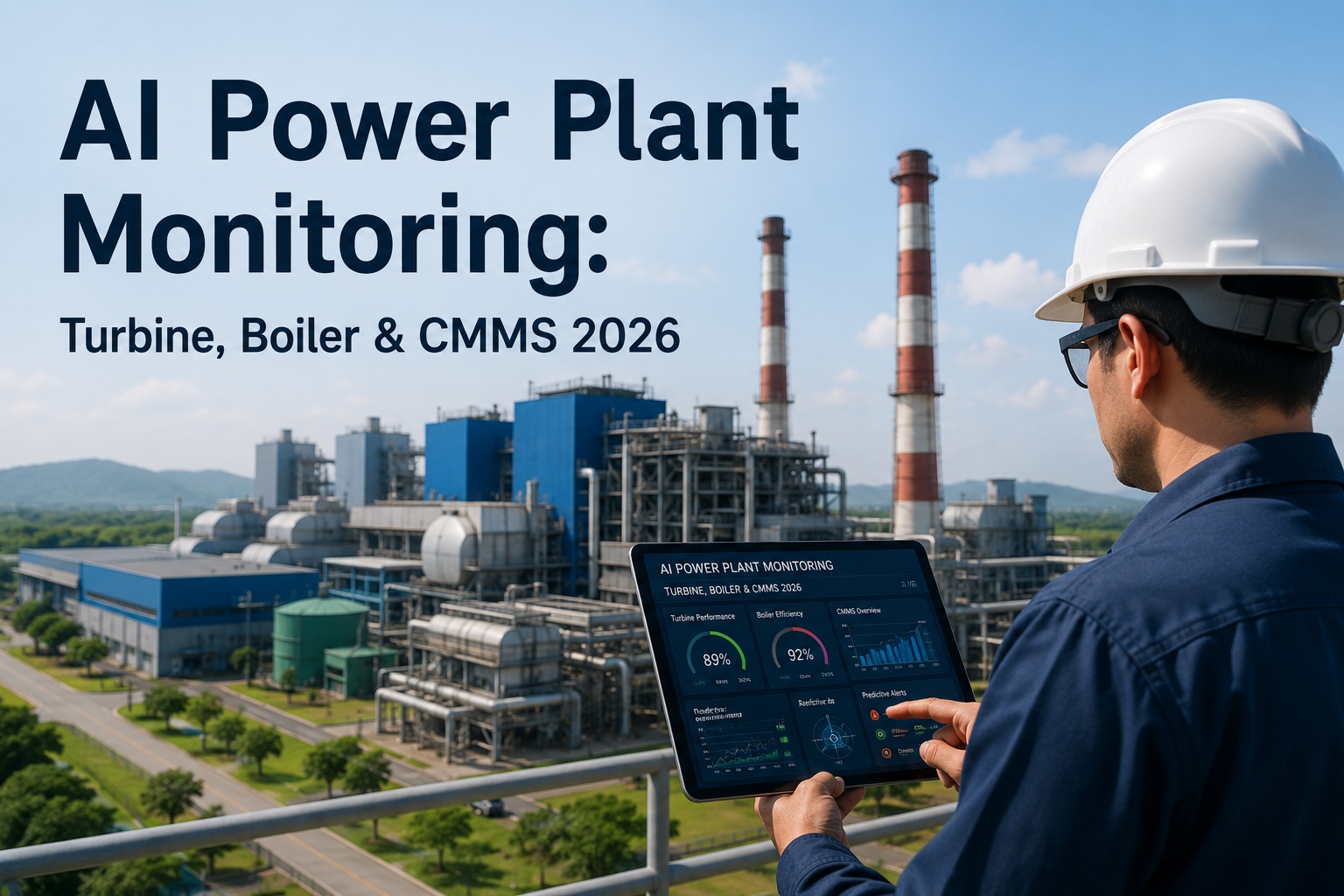
.png)


