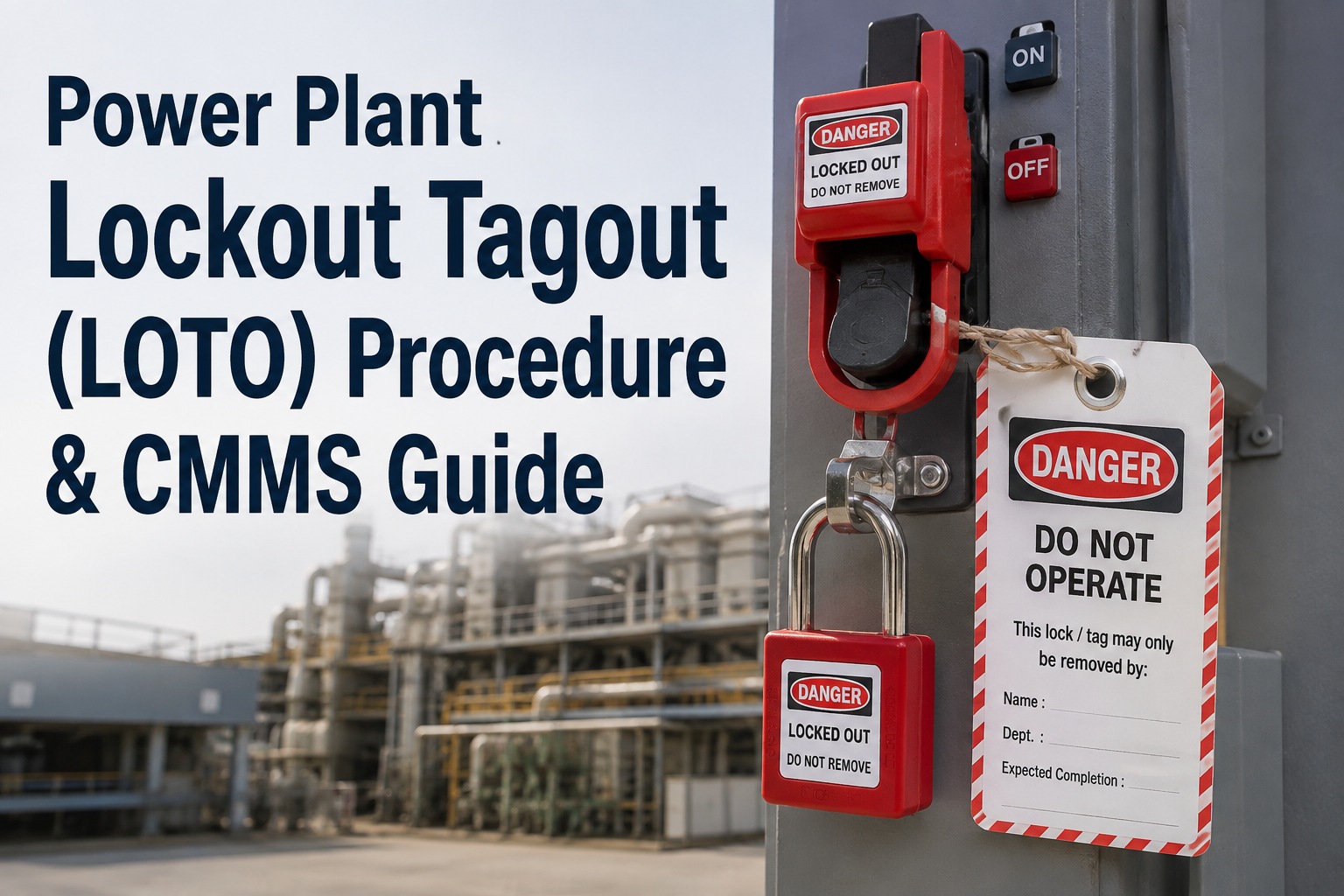
A turbine technician clears a steam valve blockage. Fifty feet away, a control room operator restarts the system—not knowing anyone is still inside the isolation zone. The result: third-degree burns, a $1.46 million liability, and an OSHA investigation that shuts down the unit for weeks. This scenario plays out across power generation facilities every year because paper-based lockout tagout procedures fail silently. Tags get lost. Binders hold outdated steps. Shift handoffs miss critical isolation points. Digital LOTO eliminates these blind spots by replacing guesswork with guided, auditable, real-time energy control workflows—purpose-built for the complexity of power generation equipment.
2,655
OSHA Citations
LOTO violations in FY 2024—ranked 5th among all OSHA standards
120
Deaths Prevented
Estimated fatalities prevented annually by proper LOTO compliance
50,000
Injuries Prevented
Worker injuries avoided each year when LOTO procedures are followed correctly
$20.7M
In Penalties
Total OSHA fines from LOTO citations in a single fiscal year
Why Paper-Based LOTO Fails in Power Generation
Power generation equipment operates with multiple hazardous energy sources simultaneously—electrical, mechanical, hydraulic, pneumatic, thermal, and stored energy. A single gas turbine isolation can involve 30+ lockout points across different systems. Paper-based procedures were never designed for this complexity. When a technician flips through a worn binder looking for the right procedure at 2 AM during an emergency outage, errors become inevitable. Digital LOTO replaces that fragile chain with a system that guides, validates, and documents every step in real time.
Paper LOTO vs. Digital LOTO in Power Plants
Procedures buried in binders—hard to locate during outages
Version control failures lead to outdated isolation steps
Shift handoffs rely on verbal communication
No real-time visibility into active lockout status
Audit trails reconstructed after the fact
Training verification is manual and inconsistent
Scan equipment QR code—procedure loads instantly on mobile
Single source of truth updated by engineering in real time
Digital handoff logs with timestamps and e-signatures
Live dashboard shows all active isolations plant-wide
Automatic audit trail generated with every action
Training records linked to procedure authorization
The 7-Step Digital LOTO Workflow for Power Generation
OSHA's 29 CFR 1910.269(d) governs LOTO requirements specifically for power generation facilities. Digital LOTO doesn't change the mandatory steps—it strengthens each one by adding validation checkpoints, photo documentation, and real-time supervisor oversight. Here is how the workflow operates when backed by a digital platform.
Digital LOTO Execution Workflow
1
Preparation
Identify all energy sources on the equipment. The digital system pulls the asset's energy map—electrical feeds, steam lines, hydraulic circuits—so nothing is missed.
2
Notification
All affected employees receive automated alerts via mobile push notification. The system logs who was notified, when, and their acknowledgment status.
3
Shutdown
Operator follows the guided sequence to bring equipment to a safe state. Each step requires confirmation before proceeding to the next.
4
Isolation
Energy-isolating devices are activated per the digital procedure. The technician photographs each isolation point as proof of completion.
5
Lock & Tag Application
Physical locks and tags are applied. The digital system records lock numbers, assigned personnel, and timestamps with e-signatures.
6
Stored Energy Verification
Residual energy—capacitors, pressurized lines, elevated components—is released and verified. The system enforces this step before clearing work authorization.
7
Isolation Verification
Equipment is tested to confirm zero-energy state. Digital sign-off by the authorized employee completes the LOTO and opens the work permit.
Plants using OXmaint's digital LOTO—sign up free to get started report that guided workflows reduce procedure execution errors and significantly cut the time spent on LOTO documentation during outages.
Energy Sources in Power Generation Equipment
Power generation facilities handle more types of hazardous energy than almost any other industrial environment. A single turbine-generator set can expose workers to six or more energy types simultaneously. Missing even one isolation point during maintenance can be fatal. Digital LOTO maps every energy source to its corresponding isolation device, ensuring complete de-energization before any wrench turns.
Hazardous Energy Sources & Isolation Requirements
Electrical
Generators, transformers, switchgear, MCCs, control circuits
Circuit breakers, disconnect switches, grounding devices
Electrocution, arc flash, burns
Mechanical
Turbines, pumps, fans, conveyor systems, rotating shafts
Shaft locks, brake engagement, coupling disconnection
Crushing, amputation, entanglement
Thermal
Steam lines, boilers, exhaust systems, heat recovery units
Block valves, bleed valves, cool-down verification
Burns, scalding, heat stroke
Hydraulic
Actuators, control valves, turbine governing systems
Pressure relief, line disconnection, accumulator bleed
Injection injuries, struck-by
Pneumatic
Instrument air, control valves, pneumatic actuators
Supply valve closure, pressure venting, gauge verification
Sudden release, projectile hazards
Chemical
Fuel systems, water treatment chemicals, hydrogen cooling
Double block and bleed, purging, atmospheric testing
Toxic exposure, fire, explosion
OSHA Compliance: What Inspectors Actually Look For
LOTO violations increased 29% between 2022 and 2023. In FY 2024, LOTO climbed to the 5th most-cited OSHA standard with 2,655 violations. Inspectors aren't just checking whether you have a written program—they're verifying execution, training documentation, and periodic inspection records. Here are the top citation categories and how digital LOTO addresses each one.
The average OSHA penalty for a serious LOTO violation is $16,131. Willful violations jump to $161,323 per instance. A single inspection finding multiple violations across equipment can cost hundreds of thousands—before counting legal fees, lost production, and reputational damage.
Audit-Ready LOTO Documentation in Minutes
OXmaint generates timestamped, e-signed LOTO records automatically. When an OSHA inspector arrives, your compliance evidence is one click away—not buried in filing cabinets.
Expert Perspective: What Separates Compliant Plants from Safe Plants
Compliance gets you past an OSHA inspection. Culture keeps people alive. The plants with the best safety records don't just have LOTO procedures on file—they have systems that make doing the right thing easier than cutting corners. Digital LOTO achieves this by removing friction from the process. When a technician can scan a QR code and get a step-by-step guided procedure with photos of every isolation point, there's no incentive to skip steps. When supervisors can see every active lockout on a single dashboard, they catch problems before they escalate. The technology doesn't replace the lock on the breaker—it makes sure the right lock gets on the right breaker, every single time. The 80% of LOTO injuries that involve untrained workers would be nearly eliminated if authorization was digitally enforced. That's not incremental improvement—that's a fundamental shift in how we protect people.
01
Enforce Authorization Digitally
80% of workers injured in LOTO-related incidents lacked proper training. Digital systems prevent unauthorized personnel from initiating or modifying lockout procedures by linking training certifications directly to system access.
02
Eliminate Shift Handoff Gaps
Power plants operate 24/7. Digital LOTO provides incoming shift crews with complete visibility into all active isolations, pending verifications, and lock ownership—eliminating the dangerous ambiguity of verbal-only handoffs.
03
Build Institutional Memory
When experienced operators retire, their knowledge of complex isolation sequences often walks out the door. Digital LOTO preserves every procedure, every revision, and every lesson learned in a system that persists beyond any individual.
Power Generation Equipment: LOTO Complexity by Asset Type
Not all power plant equipment carries the same LOTO complexity. A condensate pump may require five isolation points while a main turbine-generator set can demand 40 or more. Understanding this complexity spectrum helps maintenance planners allocate resources and prioritize which assets benefit most from digital LOTO implementation.
LOTO Complexity Spectrum by Equipment
Gas/Steam Turbine Generator
30-50 isolation points across electrical, thermal, mechanical, hydraulic, and chemical energy
Boiler / HRSG
25-40 points including steam, fuel gas, feedwater, and electrical systems
High-Voltage Switchgear
15-25 points with critical arc flash hazards and stored capacitive energy
Coal Handling / Fuel Systems
15-20 points covering conveyors, crushers, feeders, and dust suppression
Feedwater / Condensate Pumps
5-12 points for electrical, mechanical, and piping isolation
Cooling Tower Fans
4-8 points primarily electrical and mechanical energy sources
Group LOTO & Shift Transfers: Where Most Plants Fail
Major outages in power plants involve multiple crews working on interconnected systems simultaneously. OSHA's 29 CFR 1910.269(d)(8) specifically addresses group lockout and shift transfer requirements for power generation. These are among the most complex and error-prone aspects of LOTO management—and the most dangerous when handled with paper systems.
Multiple authorized employees applying individual locks to shared isolation points
Group lock boxes requiring physical coordination across trades and contractors
Complex equipment boundaries where one crew's isolation overlaps another's work scope
Premature lock removal when one crew finishes before others
System tracks every individual lock within group lockout—no lock removed until all crews clear
Real-time dashboard shows lock ownership, crew assignments, and completion status
Automated alerts prevent re-energization while any crew retains active locks
Shift transfer requires digital sign-on/sign-off with incoming and outgoing crew verification
Building Your Digital LOTO Program
Transitioning from paper to digital LOTO doesn't require a plant-wide overhaul on day one. The most successful implementations start with high-complexity, high-risk equipment—turbine-generators, boilers, and switchgear—where the gap between paper and digital delivers the most immediate safety and efficiency gains. From there, the program expands systematically until every isolation procedure in the plant lives in one auditable, accessible system. Sign up free and start building your digital LOTO program today.
Protect Your People. Prove Your Compliance.
OXmaint's digital LOTO workflows give your power plant guided procedures, real-time lockout visibility, and instant audit-ready documentation. See how facilities are eliminating LOTO errors and reducing outage turnaround times.
Frequently Asked Questions
Does digital LOTO replace physical locks and tags?
No. Digital LOTO is not a replacement for physical lockout devices—it is a management layer that ensures the right physical locks get applied to the right isolation points in the correct sequence. OSHA still requires physical energy-isolating devices. What digital LOTO replaces is the paper documentation, verbal coordination, and manual verification that create gaps in traditional programs. The physical lock remains on the breaker; the digital system ensures it got there correctly and documents the proof.
Which OSHA standards apply to LOTO in power generation facilities?
Power generation facilities fall under 29 CFR 1910.269(d), which contains LOTO requirements nearly identical to the general industry standard 1910.147 but includes additional provisions for electrical energy control specific to power generation. Equipment within the plant that is not integral to the generation process may fall under 1910.147 and Subpart S. Facilities must also comply with NFPA 70E for electrical safety work practices and arc flash protection during LOTO activities.
How does digital LOTO handle shift transfers during extended outages?
Digital LOTO manages shift transfers through a formal sign-on/sign-off process that meets OSHA's 1910.269(d)(8)(iii) requirements. The outgoing shift crew's authorized employee digitally transfers lock ownership to the incoming crew's authorized employee. The system requires positive identification and acknowledgment from both parties, creates a timestamped transfer record, and ensures no gap exists in lock coverage during the transition. This eliminates the dangerous ambiguity that occurs with verbal-only shift handoffs.
What is the cost of implementing digital LOTO in a power plant?
Implementation costs vary based on plant size and equipment complexity, but the return on investment is typically realized within the first year. Consider that a single serious LOTO injury costs approximately $43,000, a fatality averages $1.46 million in direct costs, and OSHA penalties can reach $161,323 per willful violation. Beyond cost avoidance, digital LOTO reduces outage duration by streamlining procedure execution and documentation, delivering direct savings in lost generation revenue. OXmaint offers free trials so you can evaluate the platform before committing.