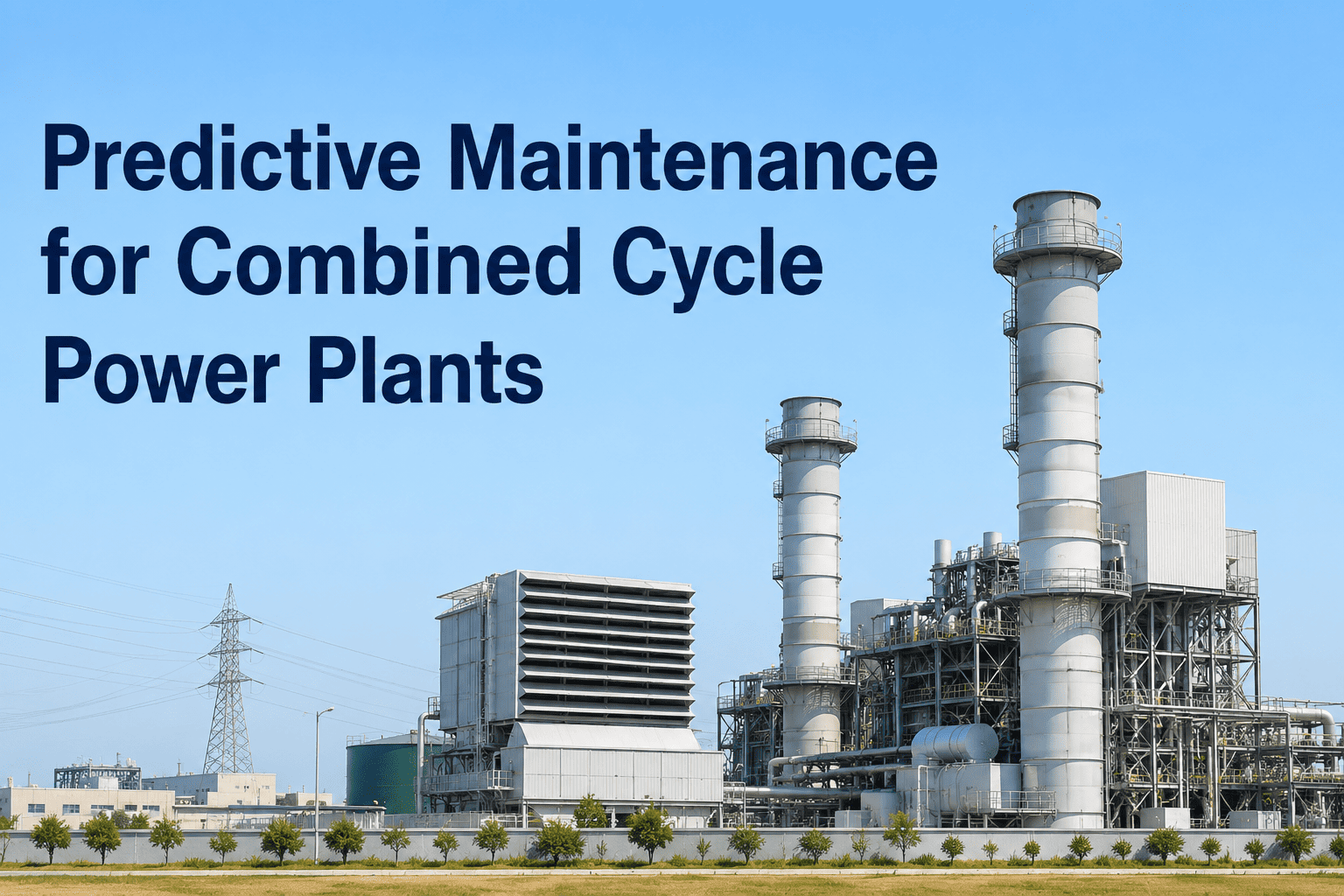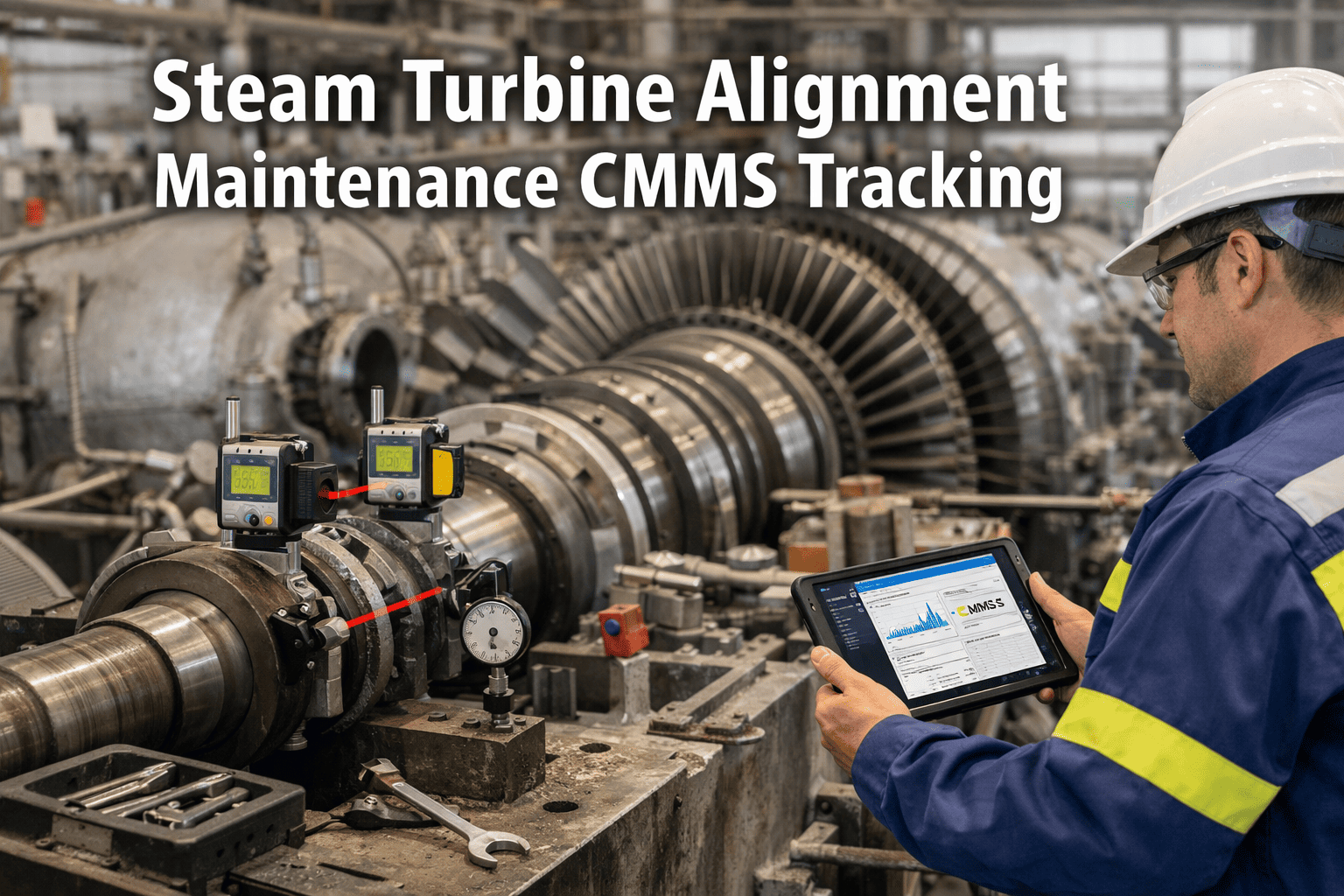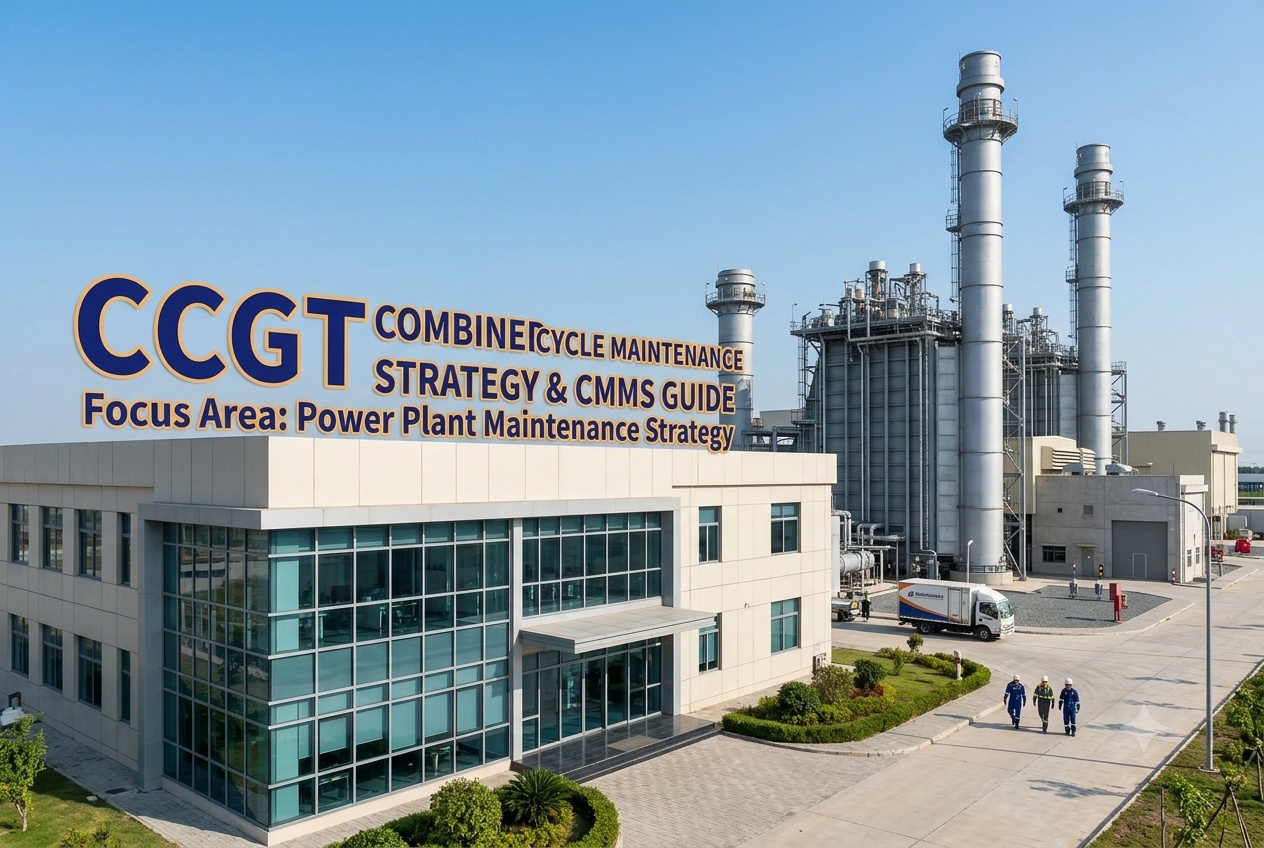
Coordinating a combined-cycle gas turbine plant means synchronizing gas turbine, HRSG, and steam turbine maintenance on a single outage clock — not scheduling each asset in isolation. This guide walks through integrated outage planning, fired-hour and steam-cycle trigger alignment, and how a CMMS built for multi-asset trains keeps every component on the same plan. Start a free OxMaint trial or book a demo to see the platform model your full CCGT train.
CCGT Combined Cycle Maintenance Strategy & CMMS Guide
Three interdependent machines — one gas turbine, one heat recovery steam generator, one steam turbine — all sharing a single outage envelope. This guide shows maintenance and reliability managers how to synchronize inspection intervals, align fired-hour and steam-cycle triggers, and build an integrated outage plan that sequences work across the entire train.
Why Independent Scheduling Breaks the Train
Most CMMS platforms treat each asset as a standalone maintenance island. In a combined-cycle plant, that approach forces redundant outages, extends downtime, and creates cascading risk when one component's inspection window drifts out of sync with the others.
Siloed Scheduling
- Gas turbine combustion inspection at 8,000 fired hours scheduled independently
- HRSG tube inspection triggered by a separate calendar date
- Steam turbine overhaul planned on its own 100,000-hour cycle
- Result: three partial outages, repeated cooldown and startup cycles, lost generation revenue
Integrated Train Scheduling
- GT, HRSG, and ST inspections aligned to a shared outage envelope
- HRSG tube condition feeds back into GT outage timing decisions
- Generator work slotted into the same cooldown window
- Result: one coordinated outage, single startup, minimal lost megawatt-hours
How HRSG Condition Constrains Gas Turbine Outage Timing
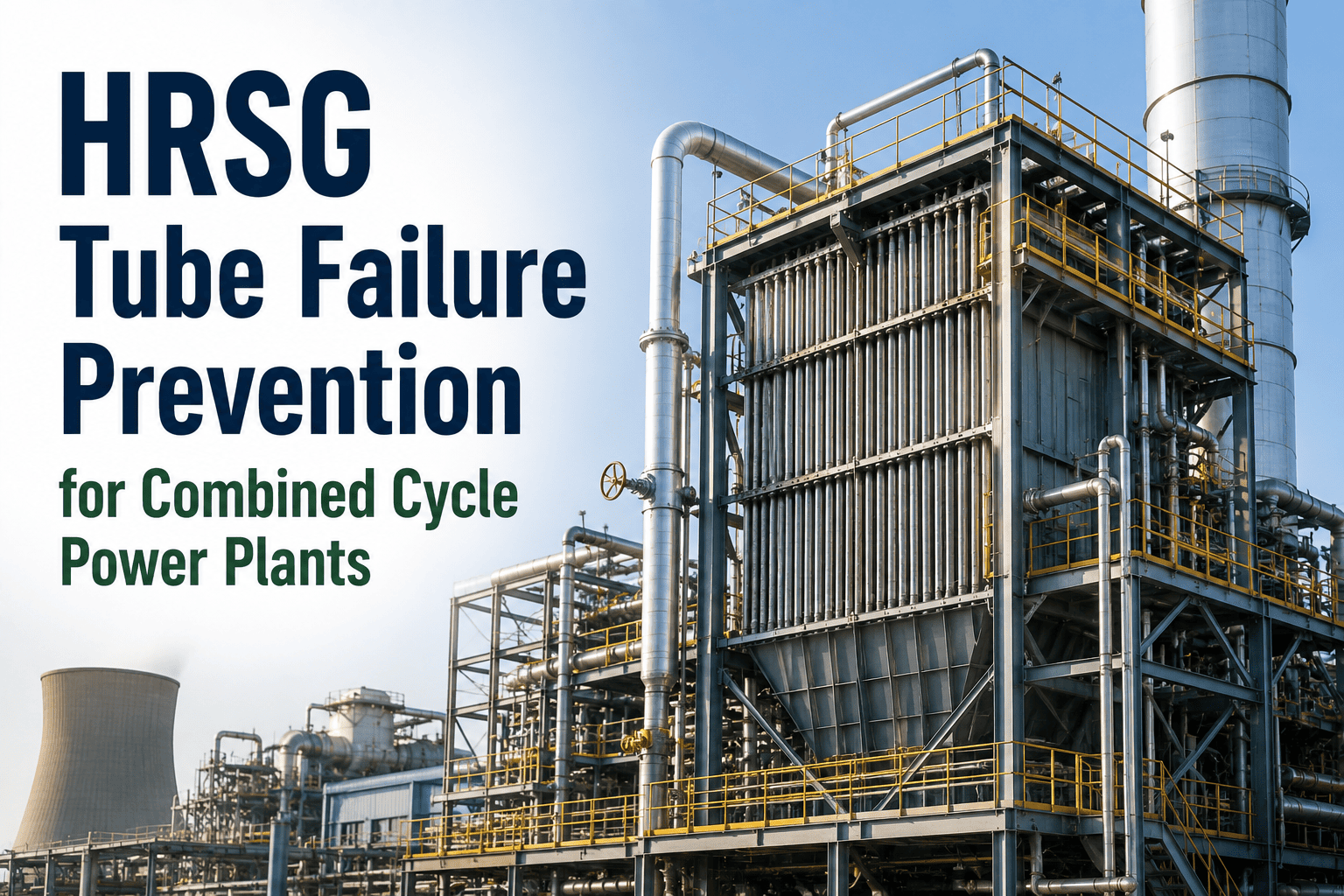
The heat recovery steam generator is the physical and operational bridge between the gas turbine and steam turbine. Its tube and duct condition directly determines when the gas turbine can safely come off line — and how long the overall outage must last.
HRSG Tube Condition Sets the Floor
HP evaporator and superheater tube creep, fatigue cracking, and tube-to-header weld integrity dictate minimum inspection scope. If NDT reveals degradation, the GT outage window must expand to accommodate extended HRSG repair time — pulling the gas turbine offline longer than its fired-hour trigger alone would require.
GT Exhaust Temperature Affects HRSG Life
Gas turbine firing temperature and exhaust flow directly drive HRSG thermal cycling stress. A GT operating at peak load accelerates HRSG tube fatigue, meaning the HRSG inspection interval may need to compress based on actual GT operating profile — not just calendar time.
Duct Burner Operation Links Both Assets
Supplemental firing increases HRSG heat input and steam generation, which in turn affects steam turbine blade erosion and nozzle deposits. Duct burner fired hours become a shared trigger variable that influences maintenance timing across all three assets simultaneously.
Cooldown and Startup Sequence Locks the Timeline
HRSG tube metal temperatures govern how quickly the gas turbine can be restarted after inspection. The cooldown curve, inspection window, and controlled startup ramp rate form a fixed sequence — any slippage in HRSG scope pushes GT restart and ST rollout downstream in lockstep.
Using Fired-Hour and Steam-Cycle Counters to Align Triggers
A combined-cycle train runs on multiple counters simultaneously. Aligning them is the mechanical heart of an integrated maintenance strategy — and the area where most legacy CMMS platforms fall short.
| Counter Type | Asset | Typical Trigger Interval | What It Gates |
|---|---|---|---|
| Fired Hours | Gas Turbine | 8,000 / 24,000 / 48,000 hrs | Combustion, hot-gas-path, major inspections |
| Starts / Stops | Gas Turbine | Per OEM cycle chart | Rotor life consumption, transient inspection |
| Operating Hours | Steam Turbine | 100,000 hrs major | Bolt inspection, blade NDT, valve overhaul |
| Steam Cycles | Steam Turbine | Per start-stop count | Rotor stress, casing fatigue assessment |
| Duct Burner Hours | HRSG | Supplemental-fired hours | Tube creep, superheater inspection scope |
| Calendar + Starts | Generator | Per OEM + condition | Stator winding, rotor inspection, bearing |
The Alignment Challenge
When a gas turbine hits 24,000 fired hours but the steam turbine is only at 72,000 operating hours, the maintenance manager must decide: pull the ST in early at 72% of its interval, or risk running the GT past 24,000 and deferring the HRSG inspection that shares the outage. A CMMS that models the train as a linked system surfaces this conflict months in advance — not the week before mobilization.
Building an Integrated Combined-Cycle Outage Plan
A coordinated outage sequences inspection, repair, and startup across all three assets — plus the generator — within a single shutdown envelope. Here is the six-phase sequence that an integrated CMMS should model and track.
Trigger Convergence Forecast
Project fired-hour, operating-hour, and start-stop counters 12–18 months ahead. Identify the window where GT, HRSG, and ST triggers converge closest to their limits. This becomes the target outage date.
Scope Development Across the Train
Define inspection and repair scope for each asset based on OEM intervals (API 616 for GT, ASME PTC 4.4 for HRSG, API 612 for ST), NDT findings from the prior outage, and condition-monitoring data. Generator scope is layered in based on IEEE 62 recommendations and bearing vibration trends.
Long-Lead Procurement
Gas turbine consumables (combustion liners, transition pieces, first-stage blades), HRSG tube sections and header material, steam turbine valve internals, and generator retaining rings often have 20–40 week lead times. The CMMS must flag these against the outage date automatically.
Cooldown and Isolation
Gas turbine comes off line first; HRSG cools on its natural thermal curve (typically 48–72 hours to reach safe tube-entry temperature). Steam turbine isolation follows once main steam pressure decays. The CMMS tracks permit-to-issue sequencing and lockout/tagout status across all three assets.
Parallel Inspection and Repair
GT combustion/hot-gas-path inspection runs in parallel with HRSG tube NDT and repair, and ST inner casing inspection. Generator stator and rotor work slots into the same window. Critical path is tracked dynamically — if HRSG tube replacement overruns, GT reassembly holds at a defined hold point.
Coordinated Startup and Rollout
GT restart, HRSG warm-up, and ST rollout follow a controlled ramp sequence. Steam-metal-temperature matching constraints govern ST startup rate. The CMMS records actual startup data against the plan for post-outage review and next-cycle trigger calibration.
Bringing Generator Maintenance Into the Same Envelope
The generator is often the forgotten fourth asset in combined-cycle outage planning. Its maintenance must fit inside the same cooldown window — and its scope depends on operating data from the entire train.
Stator Winding Inspection
Scheduled based on operating hours and partial discharge trending. Visual and EL-CID testing requires the generator to be stationary and isolated — which it already is during the GT/HRSG/ST outage. Scheduling this outside the train outage means a second shutdown.
Rotor Inspection and Bearing Work
Rotor removal is a critical-path activity that can extend the outage by 5–10 days. Bearing journal condition and oil seal wear correlate with GT and ST vibration trends — data that should live in the same CMMS as the rest of the train.
Exciter and Brush Gear
Brushless exciter diode testing and brush replacement on static excitation systems slot into the outage window with minimal schedule impact — but only if parts are pre-staged and work orders are pre-built in the CMMS.
Hydrogen and Seal Oil System
Seal oil system integrity directly affects generator hydrogen purity. Testing and seal replacement should align with the rotor inspection cycle, not a separate calendar trigger that could force a standalone derate.
Modeling the Full CCGT Train in One CMMS
OxMaint was built to model multi-asset trains — not standalone equipment lists. Here is how it handles the coordination challenges unique to combined-cycle plants.
Linked Asset Hierarchy
Define the gas turbine, HRSG, steam turbine, and generator as a single train with parent-child relationships. Maintenance triggers on any asset can reference counters from the others — so an HRSG scope expansion automatically flags the GT outage timeline for review.
Multi-Counter Trigger Engine
Track fired hours, operating hours, starts, duct burner hours, and steam cycles simultaneously. The engine projects convergence points and alerts planners 12+ months out when triggers are drifting apart — giving time to adjust operating dispatch or pull an asset in early.
Integrated Outage Workbench
Build the outage plan as a single critical-path network spanning all four assets. Drag a scope change on the HRSG and see its downstream impact on GT restart and ST rollout in real time. Long-lead parts are flagged against the outage date automatically.
Permit and LOTO Sequencing
Manage permit-to-work and lockout/tagout across the train in the correct cooldown sequence. The system enforces isolation dependencies — no HRSG entry permit issues until GT is confirmed offline and depressurized.
Condition-Based Scope Adjustment
NDT results, vibration trends, oil analysis, and partial discharge data feed directly into the next outage scope. If HRSG tube NDT reveals accelerated creep, the system recommends compressing the next inspection interval and flags the GT counter alignment impact.
Post-Outage Analytics
Compare planned versus actual scope, duration, and cost across the full train. Startup ramp data feeds back into trigger calibration — refining the next convergence forecast and improving interval accuracy cycle over cycle.
CCGT Maintenance Strategy — Common Questions
Why can't I schedule gas turbine, HRSG, and steam turbine maintenance separately?
Because they share a single physical outage envelope. The gas turbine must be off line for the HRSG to cool enough for safe entry, and the steam turbine depends on HRSG steam output. Scheduling them independently means multiple shutdowns, repeated thermal cycling, and lost generation revenue — often 40–60% more downtime than a coordinated outage.
How do fired-hour and steam-cycle counters stay aligned in a CMMS?
The CMMS must track multiple counters per asset and project them forward against their respective trigger intervals. OxMaint's trigger engine runs all counters in parallel and flags convergence or divergence months in advance — so planners can adjust dispatch, pull an asset in early, or defer within OEM limits before the outage window locks.
What happens when HRSG tube condition forces a scope change mid-outage?
If NDT reveals unexpected tube degradation, the HRSG repair scope expands and the outage critical path extends. In an integrated CMMS, this automatically pushes the GT restart hold point and ST rollout timeline — and flags any long-lead material needs. Without that linkage, the schedule slip cascades into unmanaged delays.
Should generator maintenance really be in the same outage plan?
Yes. The generator is already stationary and isolated during the train outage, so stator winding inspection, rotor work, and bearing maintenance can proceed without an additional shutdown. Scheduling generator work separately typically forces a second derate of 3–7 days — avoidable lost revenue that no combined-cycle plant should accept.
How does OxMaint handle NERC and OEM compliance reporting for the full train?
OxMaint stores inspection records, NDT results, repair histories, and counter readings for every asset in the train under a unified data model. Compliance reports for NERC PRC-005, OEM interval adherence, and API standards can be generated across the full CCGT unit — not asset by asset — giving auditors a complete view of train-level maintenance execution.
See How OxMaint Models Your Full CCGT Train
Stop scheduling gas turbine, HRSG, steam turbine, and generator maintenance in isolation. OxMaint's CMMS synchronizes multi-asset triggers, coordinates outage scope, and tracks the full train on a single critical-path plan.
.png)