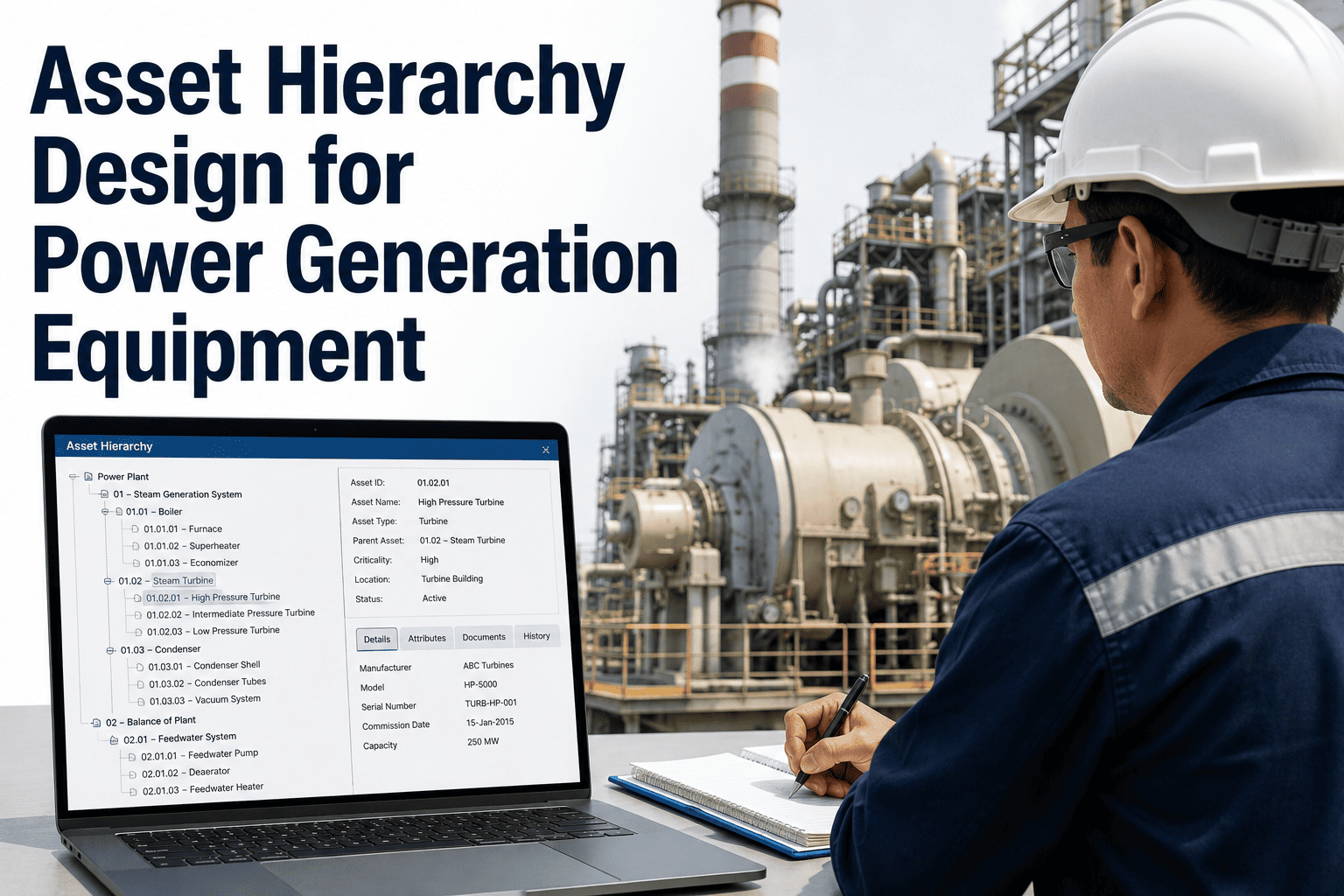
Power generation assets — turbines, generators, transformers, heat exchangers, and rotating auxiliaries — represent capital investments measured in tens of millions of dollars and operational lifespans measured in decades. Yet most power plants today manage these assets the same way they did in the 1990s: react when something breaks, schedule inspections by the calendar, and replace equipment when it looks worn out. Asset Performance Management changes that equation entirely. APM treats every asset as a continuously monitored, data-driven investment — tracking health in real time, predicting failure windows months in advance, and optimizing every maintenance and capital decision across the full equipment lifecycle. OxMaint's APM platform brings that intelligence to power plant operators of every scale, from a single 50MW gas peaker to a multi-site utility portfolio exceeding 5GW.
Power Plants Operating Without APM Leave 23–38% of Their Asset Value Unrealized
Reactive maintenance, calendar-based inspections, and intuition-driven replacement decisions erode equipment life, inflate maintenance costs, and multiply unplanned outage frequency. OxMaint APM replaces guesswork with measurable, data-driven asset intelligence across your entire fleet.
The APM Maturity Ladder: Where Does Your Plant Sit Today?
Asset Performance Management is not a binary on/off capability — it is a maturity progression. Most power plants operate at Level 1 or Level 2 today, and each step up the ladder delivers compounding financial returns. Understanding your current position is the starting point for building an APM roadmap with measurable milestones.
Equipment runs until it fails. Maintenance triggered by trips, alarms, or obvious degradation. No proactive health visibility. Emergency repair costs 4–6x planned repair costs.
Scheduled inspections and replacements at fixed intervals based on OEM recommendations. Reduces catastrophic failures but wastes resources replacing healthy components and misses condition-based degradation.
Continuous sensor monitoring and AI fault detection. Maintenance triggered by actual equipment condition, not calendar dates. Catches 73–85% of failures 3–12 weeks before occurrence.
Full asset lifecycle optimization. AI not only predicts failures but recommends the optimal action — repair now, monitor, defer, or replace — with financial justification, parts coordination, and crew scheduling built in.
Six Core APM Capabilities That Drive Power Plant Performance
Effective APM for power generation is more than vibration monitoring. It is an integrated capability stack that connects equipment health data to financial decisions, maintenance workflows, and lifecycle planning. These six capabilities, working together inside OxMaint, transform raw sensor data into a continuously optimized asset portfolio.
Real-Time Asset Health Scoring
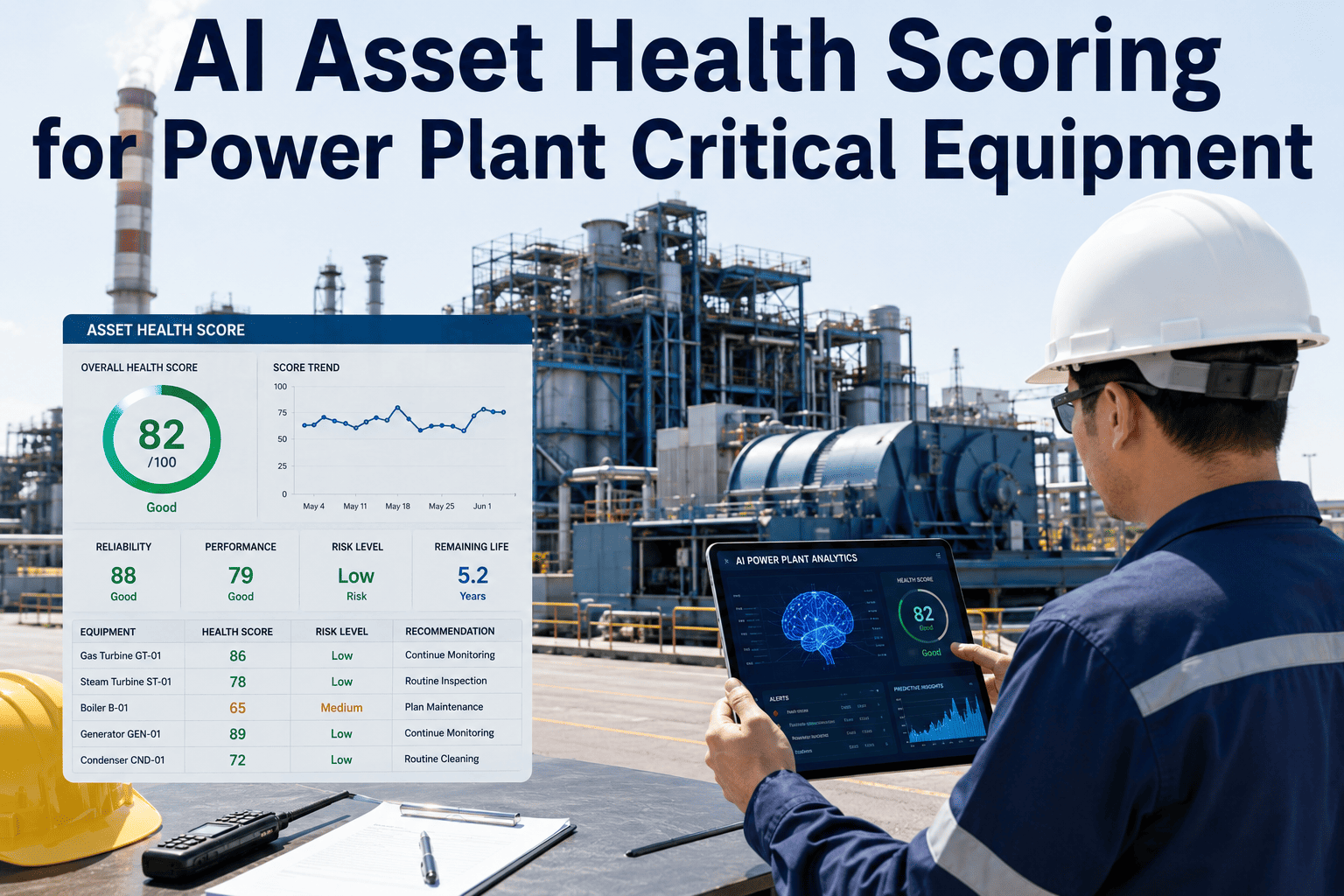
Every asset receives a continuous health score (0–100) updated every 30 seconds from vibration, thermal, electrical, and process parameters. Dashboard-visible across the entire fleet.
Remaining Useful Life (RUL) Estimation
AI models project when each component will reach end-of-serviceable-life based on current degradation trajectories, load history, and operating environment — weeks to months in advance.
Failure Mode & Risk Analysis
AI identifies not just that an asset is degrading, but which specific failure mode is developing — bearing spalling, winding insulation breakdown, impeller erosion — with risk scores tied to generation and safety impact.
Prescriptive Action Engine
For each degrading asset, OxMaint generates ranked action options — repair now, monitor and re-assess, defer to planned outage, or replace — each with cost-benefit calculations and parts/crew requirements.
Lifecycle & CapEx Optimization
APM data feeds capital planning with RUL curves, failure probability forecasts, and cost-to-rehabilitate vs. replace analysis for every major asset — enabling evidence-based investment decisions 3–5 years out.
Fleet-Level Portfolio Intelligence
Compare asset health, reliability, and cost performance across multiple units or sites. Identify systemic issues, benchmark best-performing assets, and prioritize capital allocation across the full generation portfolio.
Asset Health Dashboard: What APM Looks Like in Practice
The most powerful thing about APM is not any single alert — it is the unified visibility across your entire asset portfolio. The dashboard below represents how OxMaint presents asset health across a 400MW coal-to-gas transition plant operating 180 monitored assets.
APM Across the Power Generation Asset Lifecycle
Traditional maintenance programs manage assets episode by episode — a repair here, an inspection there. APM manages the full lifecycle arc: from installation health baseline through peak performance, managed degradation, rehabilitation decisions, and capital replacement timing. OxMaint tracks every asset across all five lifecycle stages simultaneously.
See Every Asset's Health, Risk & Remaining Life in One Platform
OxMaint APM gives your operations and asset management teams unified visibility across every turbine, generator, pump, and auxiliary in your plant — with prescriptive actions, lifecycle forecasts, and automated work orders built in.
APM Financial Model: 600MW Combined Cycle Power Plant
The financial case for APM in power generation is built on four value streams that compound annually as AI models mature and asset health data accumulates. The model below uses 2024 benchmark data from combined cycle plants that deployed comprehensive APM programs within the last three years.
Frequently Asked Questions
Your Assets Are Degrading Right Now. The Question Is Whether You Can See It.
OxMaint APM gives your power plant the full-spectrum asset intelligence that turns equipment data into proactive decisions, longer asset lives, and measurably lower cost of generation. The plants winning on reliability are not lucky — they are running APM.