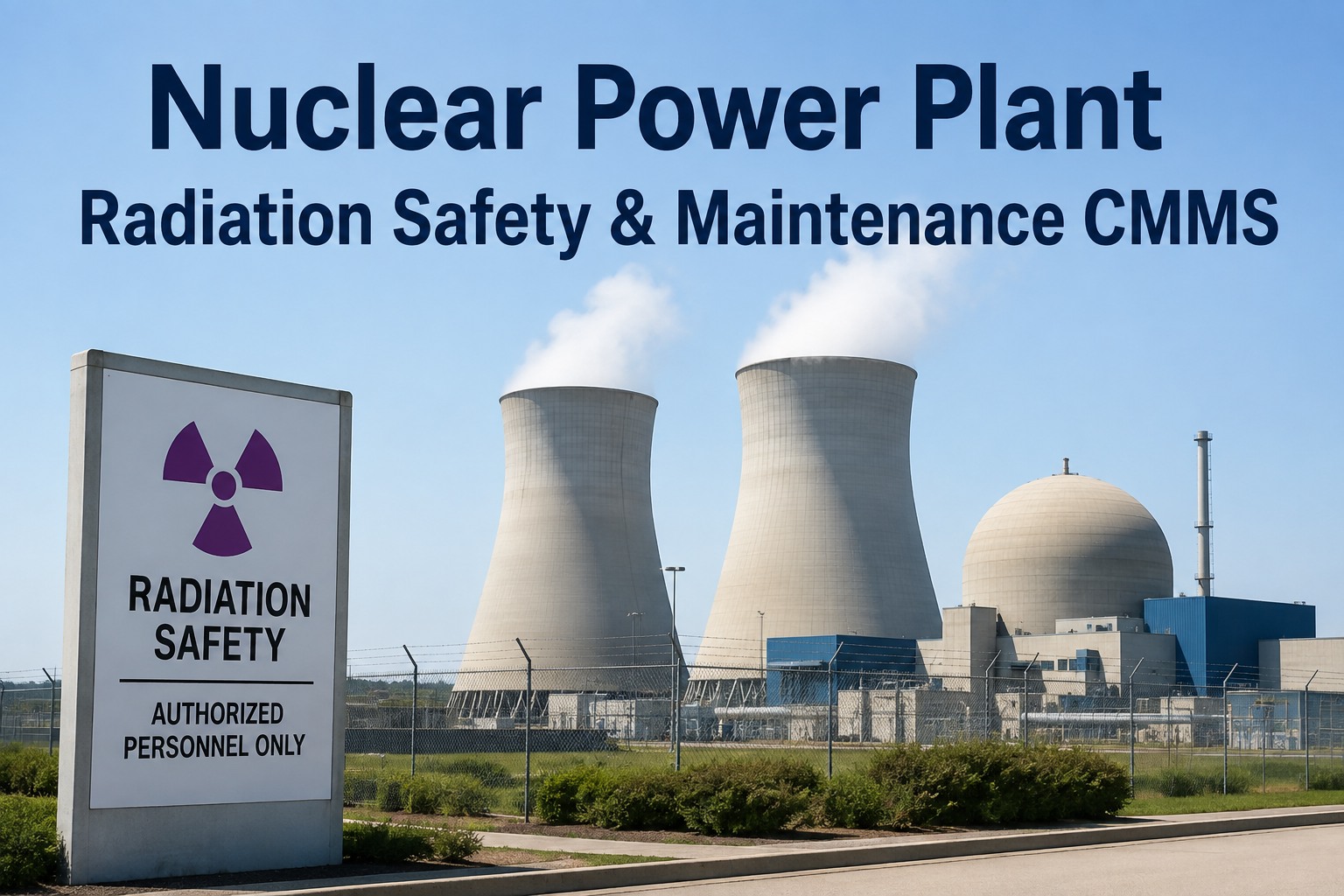
Every nuclear plant has zones where no human should walk — high-radiation corridors, underground waste tunnels, flooded inspection chambers. For decades, those zones meant delayed data, missed anomalies, and workers in protective suits doing jobs that took hours. ANYmal, the autonomous quadruped robot from ANYbotics, changes all of that. And when its findings flow directly into OXmaint CMMS, your maintenance team has work orders, records, and compliance data before the robot even docks to recharge. Sign up free on OXmaint to connect robot inspection data to your plant's maintenance workflow today.
Quadruped Robot Intelligence
400m+
Underground depth navigated autonomously at Finland's Onkalo nuclear repository
IP67
Full water and dust protection rating — operational in flooded, contaminated environments
1.5%
Documented production uptime increase from thermal inspection rounds at industrial deployments
ANYmal At a Glance
Speed1.3 m/s walking
Weight50 kg chassis
Gap crossing30 cm clearance
Fall tolerance0.5m+ survivable
Navigation360° LiDAR + 6 depth cameras
Light requiredNone — operates in total dark
PayloadUp to 10 kg additional
Compute3 independent onboard computers
The Problem It Solves
Nuclear Inspection Was Built Around Human Limits. ANYmal Removes Them.
Traditional nuclear plant inspection runs on compromise. Workers wear protective suits, carry dosimeters, and log readings by hand. Access to high-radiation zones is rationed by cumulative dose budgets. Overnight inspections don't happen because nobody is scheduled. Critical equipment goes unmonitored for hours between rounds.
ANYmal was developed specifically to eliminate that compromise. It navigates stairs, gaps, slopes, and wet floors — terrain that defeats wheeled robots. It operates in total darkness. It doesn't accumulate dose. And it can run inspection routes at 2 AM on a Tuesday without a supervisor present.
01
Radiation Zone Navigation
ANYmal enters areas where dose limits prevent sustained human presence. Operators define the route once — the robot executes it repeatedly, consistently, and without accumulating exposure.
02
No-Light Underground Operation
LiDAR sensors and depth cameras allow full navigation without ambient light. In underground tunnel systems like Onkalo — 400m deep, 5km long — ANYmal mapped and patrolled without lighting infrastructure.
03
24/7 Autonomous Patrol
ANYmal docks autonomously when battery is low, recharges, and resumes its route. Multiple docking stations extend inspection range. The plant never has an uninspected overnight window again.
What ANYmal Sees, Hears, and Measures
The robot's value is in its sensor stack. Each payload capability maps directly to a specific nuclear plant inspection requirement — and every reading becomes a timestamped record in OXmaint.
Thermal Camera
-40°C to 550°C
Detects overheating motors, hot spots in electrical panels, and coolant anomalies without physical contact. Precision readings logged per asset.
Optical Zoom Camera
Pan ±165° / Tilt ±90°
Visual monitoring of gauges, valves, levers, and indicator lights at range. Reads analog dials the way a human technician would — but from a safe distance.
Acoustic Microphone
0 – 384 kHz range
Detects gas leaks and partial discharge events in both audible and ultrasonic frequencies — catches failures invisible to every other sensor type.
Gas Detection
Up to 2 simultaneous sensors
Continuous gas concentration monitoring across configurable detection zones. Alerts before concentrations reach threshold — not after.
360° LiDAR
Full environment mapping
Real-time spatial awareness for autonomous navigation, obstacle avoidance, and 3D model generation. Creates and updates facility maps on every run.
Haptic Foot Sensors
Surface contact feedback
Rubber feet with embedded sensors allow safe locomotion even in complete darkness or sensor-degraded conditions — the robot feels its way across uncertain terrain.
Documented Deployment
Onkalo: The World's Deepest Nuclear Challenge
Finland's Onkalo facility is the world's first permanent repository for spent nuclear fuel — 400 meters underground, accessed via a 5km spiral tunnel network with over 100 deposition chambers. No other legged robot was assessed at the site. ANYmal was.
Championed by the European Commission and Finland's Posiva Oy, ANYmal autonomously patrolled tunnel sections, performed visual monitoring of gauges and structural markers, and captured 3D reality data — all without requiring lighting infrastructure or human accompaniment. It documented nuclear waste storage conditions without any human presence in the zone.
400m
Operational depth below surface
5km
Spiral tunnel network navigated
100+
Deposition tunnels mapped autonomously
0
Humans required inside the zone during inspection
From Robot Detection to CMMS Work Order: How It Flows
Inspection data is only valuable when someone acts on it. OXmaint closes the loop — turning ANYmal's sensor readings into timestamped, prioritized work orders your maintenance team sees immediately.
Step 1
ANYmal Completes Inspection Round
The robot executes its autonomous route — thermal readings on all flagged assets, acoustic scans at compressors and valves, visual checks of gauges and indicators. Data is collected at the exact same position every run, ensuring trend comparability over time.
Step 2
Anomaly Detected, Alert Generated
ANYmal's onboard analytics flag deviations from baseline — a 4°C temperature rise on a motor bearing, an ultrasonic signature shift at a valve, a gauge reading outside tolerance. The alert carries asset ID, sensor type, reading, and deviation from baseline.
Step 3
OXmaint Creates Prioritized Work Order
The alert routes via API into OXmaint. A work order is created automatically — pre-populated with the asset, failure mode, sensor evidence, and urgency tier. The assigned technician receives it on their mobile device before they've even heard about the issue from anyone.
Step 4
Compliance Record Generated Automatically
Every completed inspection round creates a timestamped, digitally signed record in OXmaint. NERC, NRC, and EPA documentation for the relevant asset is built as the team works — not assembled manually before an audit.
Inspection Before ANYmal vs. After
Manual Inspection
High-radiation corridor inspected once per shift — when dose budget allows. Gaps between readings measured in hours.
Underground tunnels require two-person entry protocols, protective equipment, and shift handover documentation.
Gauge readings recorded by hand, transcribed to spreadsheet, reviewed days later. Trend data unreliable due to positional variation.
Overnight anomalies go undetected until morning rounds — 8-hour blind window every night.
Compliance documentation assembled manually before each audit — 2-3 weeks of labor per review cycle.
VS
ANYmal + OXmaint
Same corridor inspected every 2 hours, 24/7. ANYmal accumulates zero dose. Baseline deviations trigger immediate OXmaint work orders.
Single operator deploys ANYmal remotely. Robot navigates tunnels autonomously, returns to dock when complete. No entry protocols required.
Readings captured from identical coordinates every run. Trend data is statistically valid and automatically logged in OXmaint with timestamps.
ANYmal runs overnight routes on schedule. Any anomaly detected at 3 AM generates a work order the maintenance lead sees at shift start.
Every inspection generates a signed digital record. Audit documentation is complete before the auditor calls.
Your Robot Is Already Collecting the Data. OXmaint Makes It Actionable.
Connect ANYmal's sensor outputs to automated work orders, asset trend analytics, and compliance documentation — and stop losing inspection data in dashboards nobody checks.
Which Nuclear Plant Assets Benefit Most
ANYmal's inspection ROI concentrates on the assets with the highest failure cost and the hardest human access conditions.
Primary Coolant Pumps
Thermal and acoustic signatures monitored continuously. Bearing degradation detected weeks before failure.
High-Radiation Zone Equipment
ANYmal enters zones restricted to humans. Inspection frequency goes from shift-limited to unlimited.
Underground Waste Storage
Visual and structural monitoring in deep tunnel systems. Documented at Onkalo with zero human entry required.
Electrical Switchgear Panels
Thermal imaging detects hot spots before they become arc flash events. Panel doors stay closed during inspection.
Ventilation and Gas Systems
Continuous gas concentration monitoring across the plant. Acoustic imaging detects leaks before any reading trips an alarm.
Structural Integrity Points
3D reality capture on every round builds an evolving model of facility geometry. Deformation detected by comparison, not by eye.
Frequently Asked Questions
Can ANYmal actually operate in high-radiation environments?
ANYmal was specifically assessed in nuclear environments, including Finland's Onkalo spent nuclear fuel repository — the world's deepest underground nuclear facility. The robot navigated 400+ meter depths, 5km tunnel networks, and multiple deposition chambers autonomously. Unlike humans, the robot has no dose limit, enabling it to perform extended inspections in zones that would otherwise require worker rotation or protective suit protocols. Radiation hardening requirements vary by site — ANYbotics works with facilities on payload configurations appropriate to the specific radiation environment.
How does OXmaint receive data from ANYmal?
OXmaint operates as an asset-agnostic CMMS that receives condition-based triggers via API from autonomous inspection platforms including ANYmal. When ANYmal's onboard analytics detect an anomaly — a temperature deviation, acoustic signature shift, or gas reading outside threshold — the alert routes into OXmaint automatically. Work orders are created with asset context, sensor evidence, and urgency pre-populated. No manual handoff or dashboard review required.
Book a demo to see the integration in detail.
Does ANYmal need light to navigate?
No. ANYmal's 360° LiDAR and depth cameras provide full spatial awareness in complete darkness. The Onkalo deployment operated in unlit underground tunnels without any lighting infrastructure. For visual inspection tasks requiring camera imagery, ANYmal's pan-tilt head includes up to 3,790 lm of integrated LED lighting — but navigation and locomotion are fully independent of ambient light conditions.
What happens when the battery runs low during an inspection round?
ANYmal monitors its battery state continuously and autonomously returns to a docking station when charge falls below the configured threshold. Multiple docking stations can be positioned along extended inspection routes to increase range. The robot recharges and resumes its route without any human intervention. This means a plant running ANYmal on a continuous patrol schedule will have no gaps in coverage — the robot manages its own energy lifecycle.
How does this affect compliance documentation?
Every ANYmal inspection round that routes through OXmaint generates a timestamped, digitally signed record tied to the specific asset, inspection type, and sensor readings collected. For nuclear plants, this creates an automatic audit trail for NRC inspection requirements, radiation zone access documentation, and predictive maintenance evidence. NERC and EPA reporting elements relevant to plant operations are built as the team works — not assembled manually before each review cycle. This alone reduces audit preparation time by weeks per cycle.
Ready to Deploy?
ANYmal Inspects the Zones Humans Can't. OXmaint Turns Those Inspections Into Maintenance Action.
Connect autonomous robot inspection data to the work orders, compliance records, and performance trend analytics your team needs to keep your plant running safely.