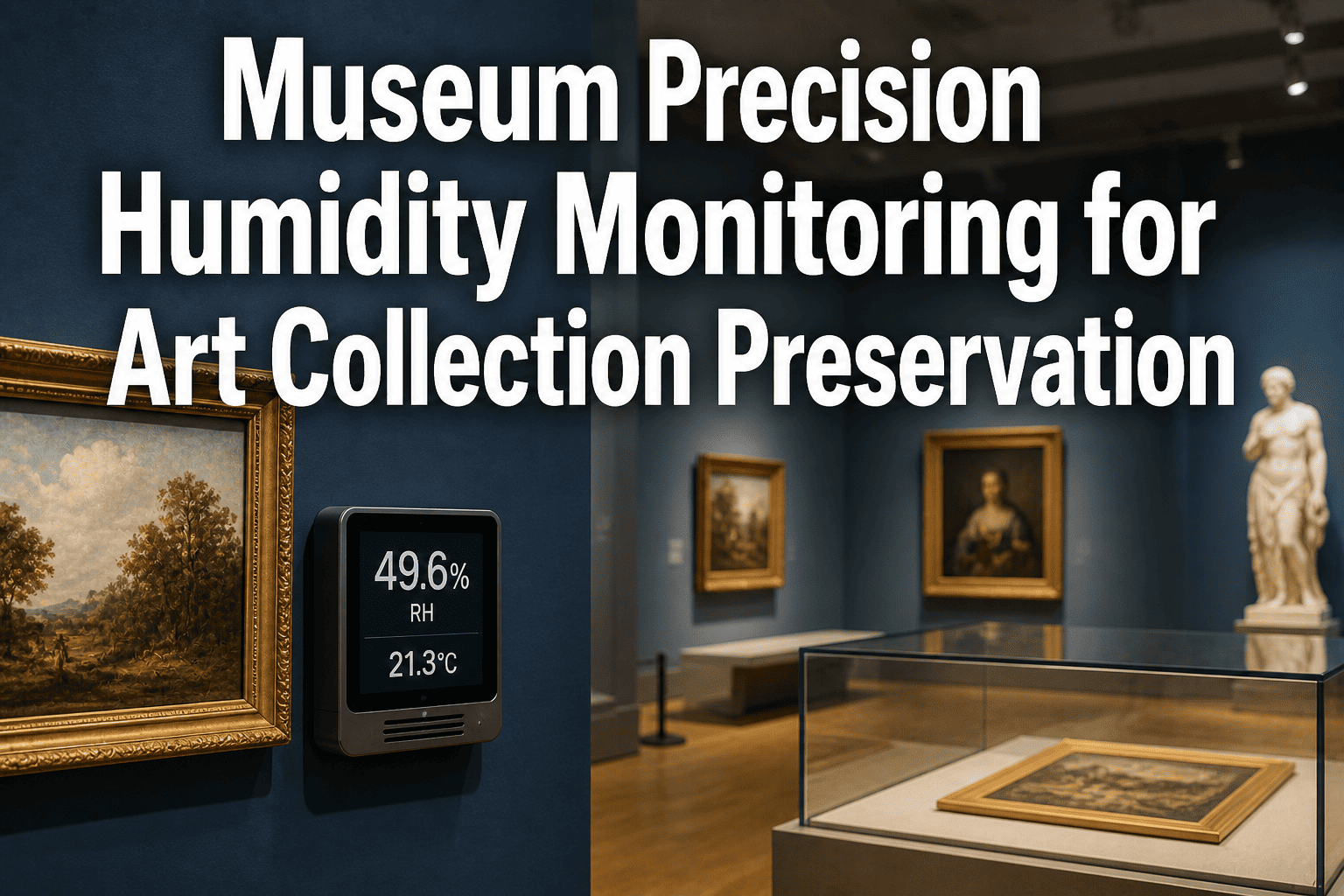
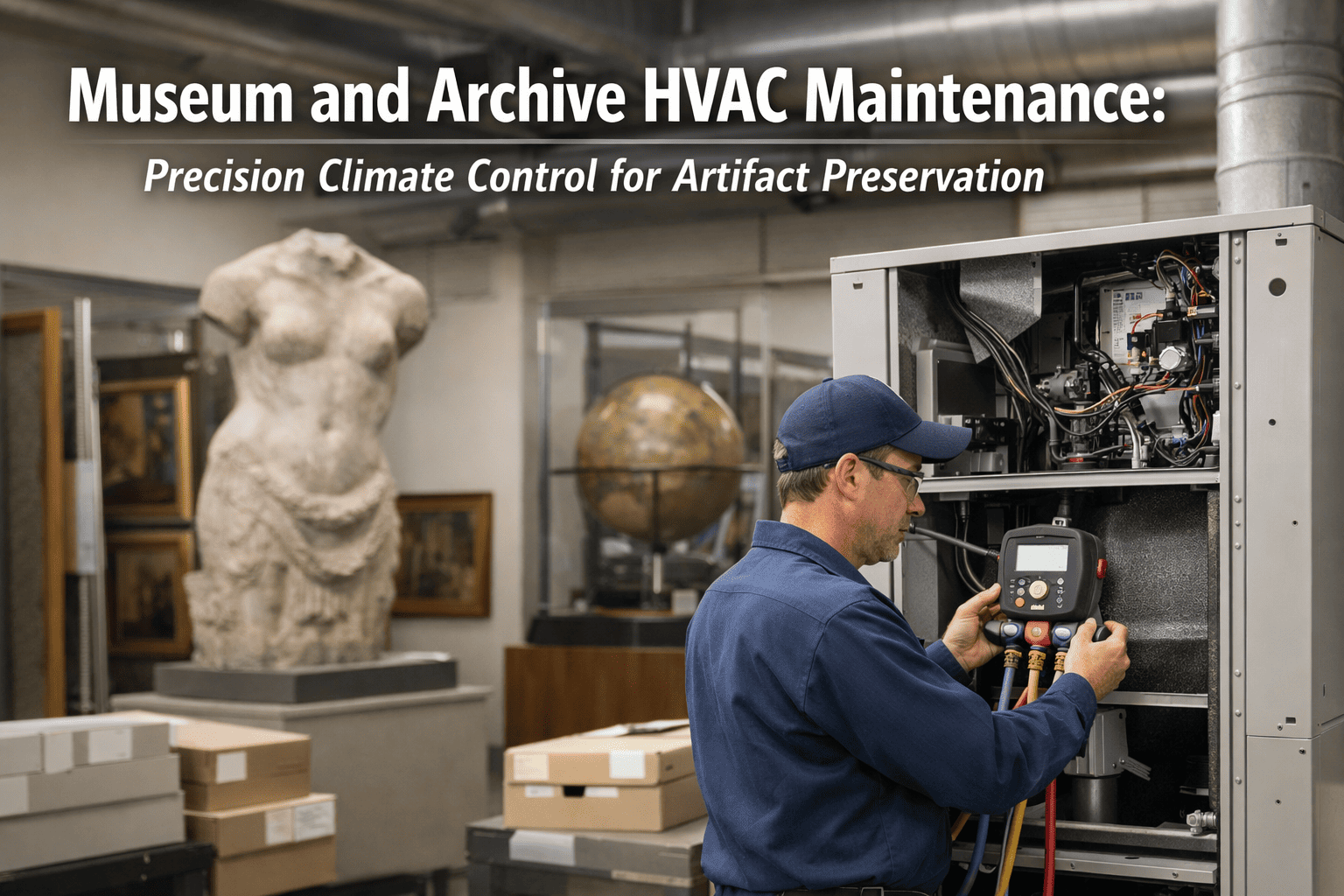
Indoor humidity control in museums and archives is not a comfort parameter — it is a collection preservation requirement. When relative humidity drifts outside specified bands, organic materials absorb or release moisture, metals corrode, adhesives fail, and paper becomes brittle or distorted at a rate determined by how long drift goes undetected and uncorrected. Sign Up Free to start logging humidity excursion events, tracking drift duration, and linking HVAC response time to collection risk documentation in OxMaint before environmental instability reaches exhibit spaces. Book a Demo to see how OxMaint structures environmental monitoring workflows for facilities teams responsible for collection preservation across museum galleries, archive vaults, and climate-controlled storage areas.
Cultural Facility Operations · Environmental Control · 2026
Indoor Humidity Control for Museums and Archives
Protect collections from humidity drift, stop environmental excursions before they reach exhibit spaces, and keep archive storage within safe relative humidity bands through structured monitoring and CMMS-supported response.
48%Of collection damage events in museums are linked to undetected humidity excursions
−34%Excursion duration reduction when humidity drift is monitored with automated alerts
4×Faster HVAC response when drift events trigger structured work orders vs. manual rounds
98%Environmental compliance documentation when excursions are CMMS-tracked per space
Where Humidity Control Fails in Museum and Archive Environments
Humidity control failure in cultural facilities develops through operating gaps that standard building HVAC monitoring is not designed to detect. The six failure patterns below represent the most common environmental management gaps in museum and archive operations — and the points where OxMaint's fault detection, inspection scheduling, and work order workflows give facilities teams a structured view before humidity drift reaches irreversible collection damage thresholds. Sign Up Free to configure OxMaint's environmental monitoring workflows for your museum or archive and start mapping humidity excursion history against collection storage zone records.
01
Humidifier Capacity Shortfall at Low Outdoor Humidity
Risk Window: Dry winter months
High RiskSteam or ultrasonic humidifiers sized for average winter conditions cannot maintain setpoint during extreme cold dry spells — allowing relative humidity to fall below conservation thresholds in storage and gallery spaces within hours of outdoor conditions changing.
02
Dehumidification Lag During High-Occupancy Events
Risk Window: Peak visitor periods
Load RiskLarge visitor groups introduce significant moisture load through respiration and activity. Dehumidification systems without occupancy-responsive control cannot remove humidity fast enough — driving relative humidity above safe collection bands during exhibition opening periods.
03
Sensor Drift in Long-Term Monitoring Points
Risk Window: Annual calibration gaps
Measurement GapHumidity sensors installed in archive vaults and storage rooms drift from calibration over time — reporting conditions within setpoint while actual relative humidity has moved outside safe bands by 5–10% RH without any alert triggering.
04
Envelope Infiltration Bypass
Risk Window: High outdoor humidity
Largest VariableAir infiltration through loading dock doors, unsealed penetrations, and deteriorated weatherstripping introduces uncontrolled moisture directly into storage areas — bypassing the dehumidification system entirely and raising local relative humidity rapidly around vulnerable collection areas.
05
HVAC Maintenance Interval Gaps
Risk Window: Between scheduled service
Service GapHumidifier scale buildup, desiccant wheel saturation, and cooling coil contamination reduce humidity control capacity progressively between service intervals — creating a drift window that widens over weeks before the next scheduled maintenance visit identifies the cause.
06
Excursion Documentation Gap
Risk Window: Post-excursion
Prevention InputHumidity excursion events identified in BAS trend data are often not logged as maintenance records — so duration, severity, and affected zones are not transferred to collection risk documentation or preventive maintenance triggers.
Environmental Monitoring — Without vs. With OxMaint
The difference between passive BAS monitoring and a structured CMMS-supported environmental management workflow is measurable in excursion response time, sensor calibration compliance, and collection risk documentation quality. The comparison below shows what changes when OxMaint structures humidity excursion alerts, sensor maintenance scheduling, and root cause documentation for museum and archive facilities teams. Book a Demo to walk through your facility's current environmental control structure and identify the gaps OxMaint can close.
Humidity Control Maturity — Where Does Your Institution Score?
Environmental management maturity in museums and archives ranges from entirely reactive — staff notice visible collection changes before humidity data is reviewed — to fully structured monitoring with automated alerts, sensor maintenance programs, and mandatory excursion documentation. The maturity framework below maps where your facility's current environmental control structure sits. Book a Demo to assess your institution's environmental monitoring maturity with an OxMaint solutions engineer.
Museum and Archive Humidity Control Maturity
Score 5 = CMMS-integrated automated environmental monitoring · Score 1 = fully reactive response
5
Full Environmental Map · CMMS-Integrated · Automated Alerts
All humidity zones monitored with automated excursion alerts. Sensor calibration on structured schedule. Humidifier and dehumidification maintenance timed to seasonal demand. Every excursion documented with collection risk context.
Profile: Environmental stability is a systematic maintenance outcome. Collection risk from humidity excursion is measured, documented, and prevented — not discovered after damage occurs.
4
Structured Monitoring · Partial Excursion Documentation
Primary gallery and vault zones monitored with alerts. Major excursions documented. Sensor calibration performed but not systematically scheduled. Secondary storage zones monitored less consistently.
Action: Extend structured monitoring and documentation to all collection storage zones. Secondary storage excursions carry the same collection risk as primary gallery events.
3
BAS Monitoring · Manual Review
BAS humidity data available for all zones but reviewed manually on operator rounds. Excursions identified retrospectively in trend data. HVAC response not linked to formal maintenance records or collection risk documentation.
Gap: Manual review creates response delays that accumulate as collection exposure. Automated alert routing and structured excursion logging are highest-impact next steps.
2
Spot Check Monitoring · Reactive Response
Humidity checked during routine operator rounds. No continuous monitoring or automated alerting. Excursions discovered hours after onset. No structured HVAC response workflow or excursion documentation.
Risk: Collection exposure accumulates between rounds without any detection or response. Environmental damage is discovered through collection condition surveys — not prevented by HVAC management.
1
No Structured Environmental Monitoring
Humidity not continuously monitored in collection zones. HVAC maintained on calendar intervals without condition-based assessment. Environmental compliance documentation assembled retroactively if required for insurance or accreditation.
Risk: Every humidity excursion adds untracked collection risk. Environmental stability is a function of luck and visual observation, not maintenance design.
Protect Collections From Humidity Drift Before It Becomes Irreversible Damage.
OxMaint structures humidity excursion alerts, sensor calibration scheduling, and environmental compliance documentation for museums and archives managing collection preservation across multiple climate-controlled zones.
How OxMaint Structures Environmental Control for Museums and Archives
OxMaint connects humidity excursion alerting, sensor maintenance scheduling, HVAC response workflows, and compliance documentation into a single system for cultural facility operations teams. Every environmental deviation becomes a documented record — with collection zone context captured, HVAC response time logged, and sensor calibration status tracked per monitoring point. Sign Up Free to configure OxMaint's environmental monitoring for your museum or archive facility. Book a Demo to see how OxMaint adapts to your building's BAS integration, collection zone layout, and institutional compliance requirements.
Excursion Alert Routing
Threshold → Alert in 60s
Automated humidity band violation detection and HVAC response
OxMaint triggers automatic work orders when humidity exits configured safe bands per zone — replacing the manual round detection model that allows excursions to persist hours before response is initiated.
Sensor Calibration Schedule
Per Sensor · Per Zone
Calibration tasks scheduled and drift readings logged per monitoring point
OxMaint schedules calibration tasks for every humidity sensor in collection and storage zones — logging calibration date, drift reading, and correction applied so sensor accuracy is documented rather than assumed.
Seasonal HVAC Preparation
Before Demand Peak
Humidifier and dehumidification system maintenance timed to season
OxMaint schedules humidifier descaling, desiccant checks, and dehumidification capacity tests before seasonal humidity demand peaks — so capacity shortfalls are found and corrected before collections are exposed to drift.
Compliance Documentation
Every Excursion · Every Zone
Environmental compliance records generated per space automatically
Every humidity excursion creates a CMMS record with zone, duration, severity, and HVAC response time — building the environmental compliance documentation required for insurance, accreditation, and lender agreements automatically.
"
Our archive vault humidity sensor had drifted 8% RH from calibration over 14 months — we had no idea because calibration was on a vague annual schedule and nobody logged the last reading. We only discovered it during a routine accreditation preparation review. After setting up OxMaint's environmental monitoring workflow with structured sensor calibration tasks and excursion alerts per zone, we found two additional sensors in secondary storage with similar drift. Our environmental compliance documentation is now complete, current, and automatically maintained for every collection space in the building.
Facilities Director — National Archive and Records Institution, Wellington, New Zealand
Frequently Asked Questions
What relative humidity levels should museums and archives maintain?
Most conservation standards specify 45–55% RH for mixed collections, with tighter bands of ±3–5% RH for sensitive materials including paper, photographs, and organic artifacts. Specific requirements vary by collection type and institutional policy — the critical factor is maintaining stability within the specified band, not just hitting a target value.
How does humidity drift cause collection damage in archives?
Organic materials including paper, leather, wood, and textiles absorb and release moisture in response to relative humidity changes — expanding and contracting with each cycle. Repeated cycling causes dimensional fatigue, adhesive failure, and surface cracking. High humidity accelerates mold growth and metal corrosion; low humidity causes brittleness and crumbling in paper and textile collections.
How does OxMaint support humidity control compliance in museums?
OxMaint logs every humidity excursion with zone, duration, and HVAC response time; schedules sensor calibration and HVAC maintenance tasks on structured cycles; and generates environmental compliance documentation per space — supporting insurance, accreditation, and lender environmental requirements automatically.
How often should humidity sensors be calibrated in archive and museum environments?
Calibration at least every 6 months for sensors in critical collection storage zones, and annually for general gallery spaces. Sensors should also be checked immediately following any HVAC work or excursion event that suggests measurement discrepancy between adjacent zones.
Does OxMaint integrate with existing environmental monitoring systems in cultural facilities?
OxMaint integrates with leading BAS platforms and accepts manual excursion inputs from operators — deployable in facilities using existing environmental monitoring hardware without requiring sensor replacement or infrastructure changes.
Turn Every Humidity Excursion Into a Structured Compliance Record — Not a Missed Collection Risk.
OxMaint automates humidity excursion alerts, schedules sensor calibration, and documents environmental compliance per zone — protecting collections at the HVAC management level before drift becomes damage.