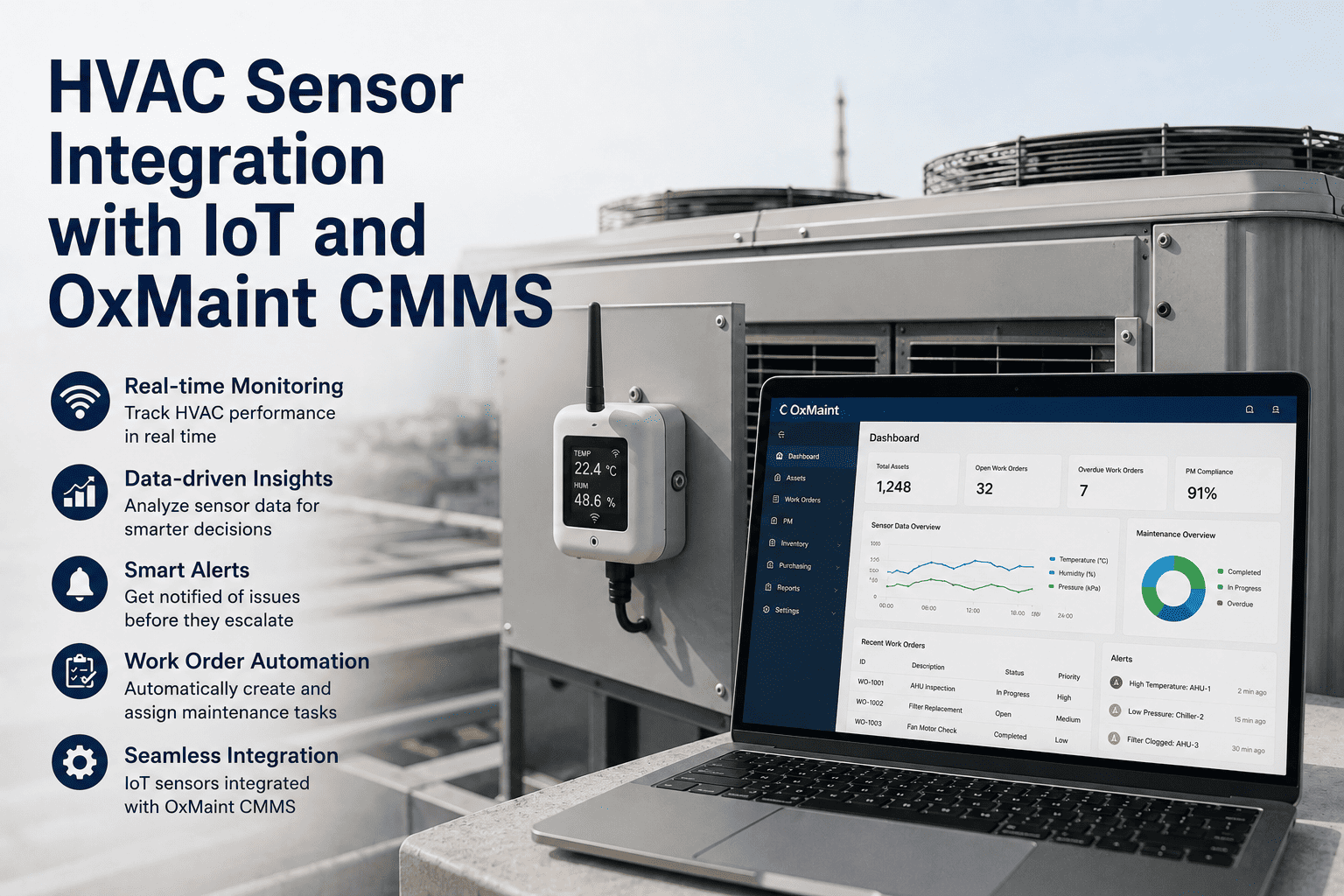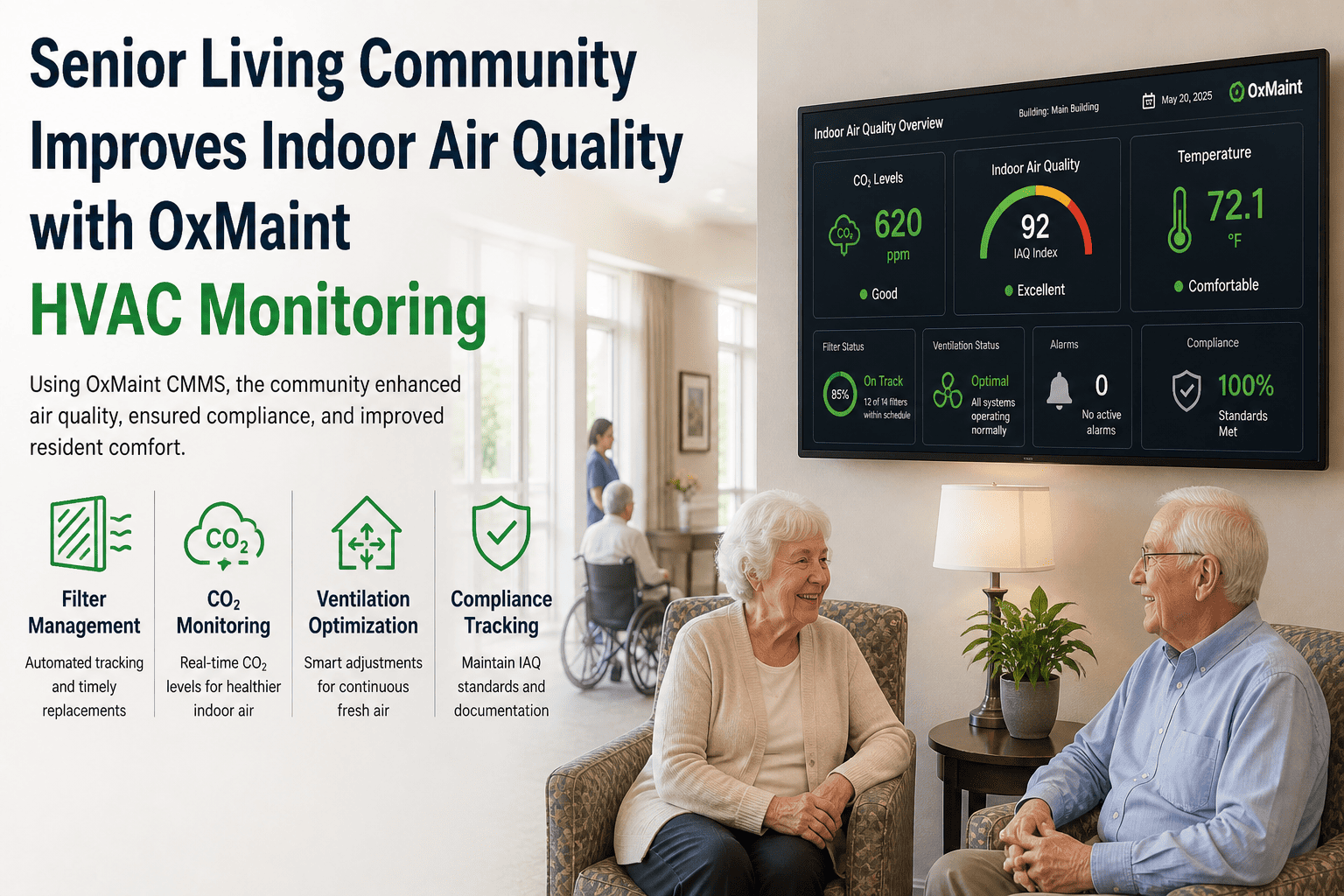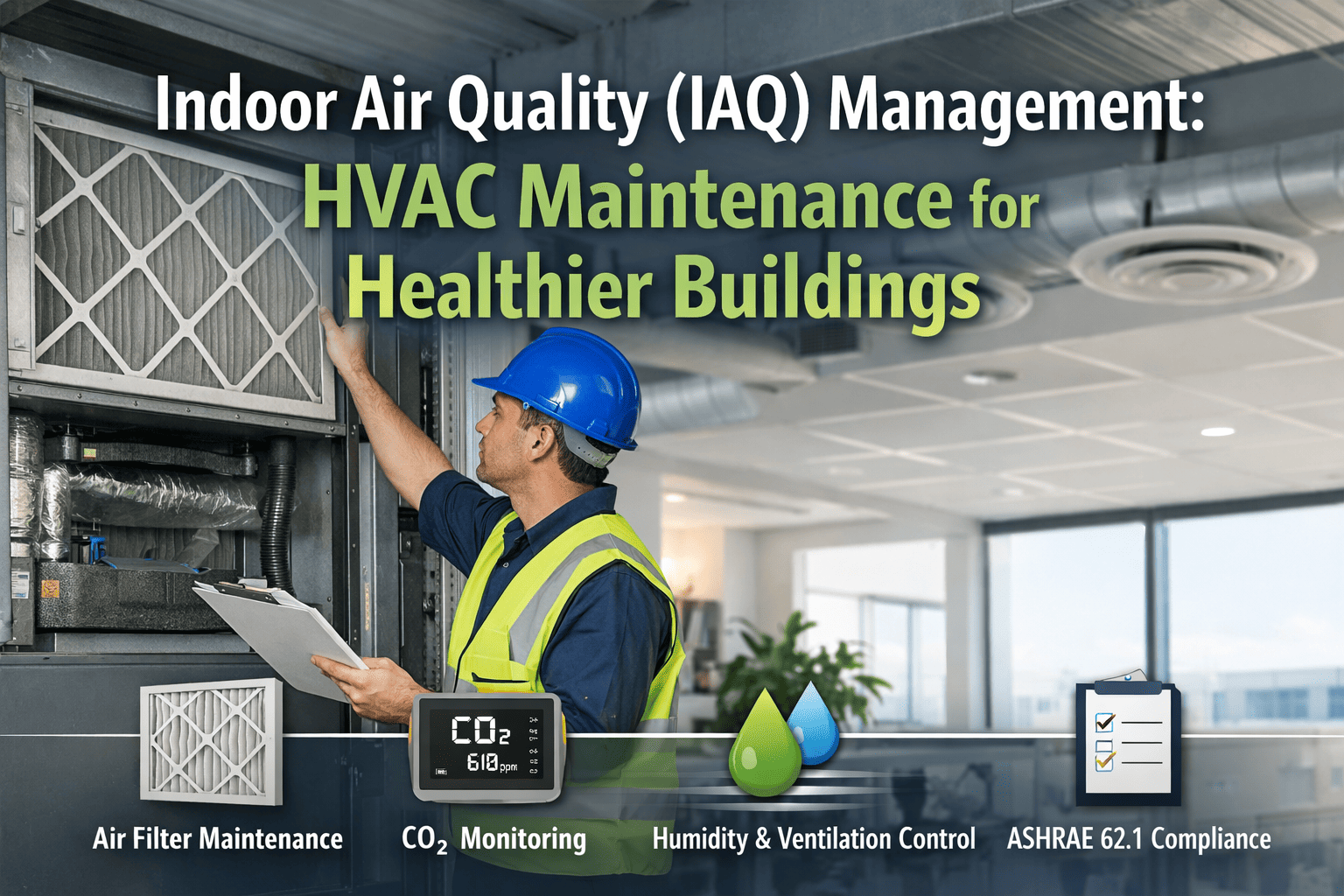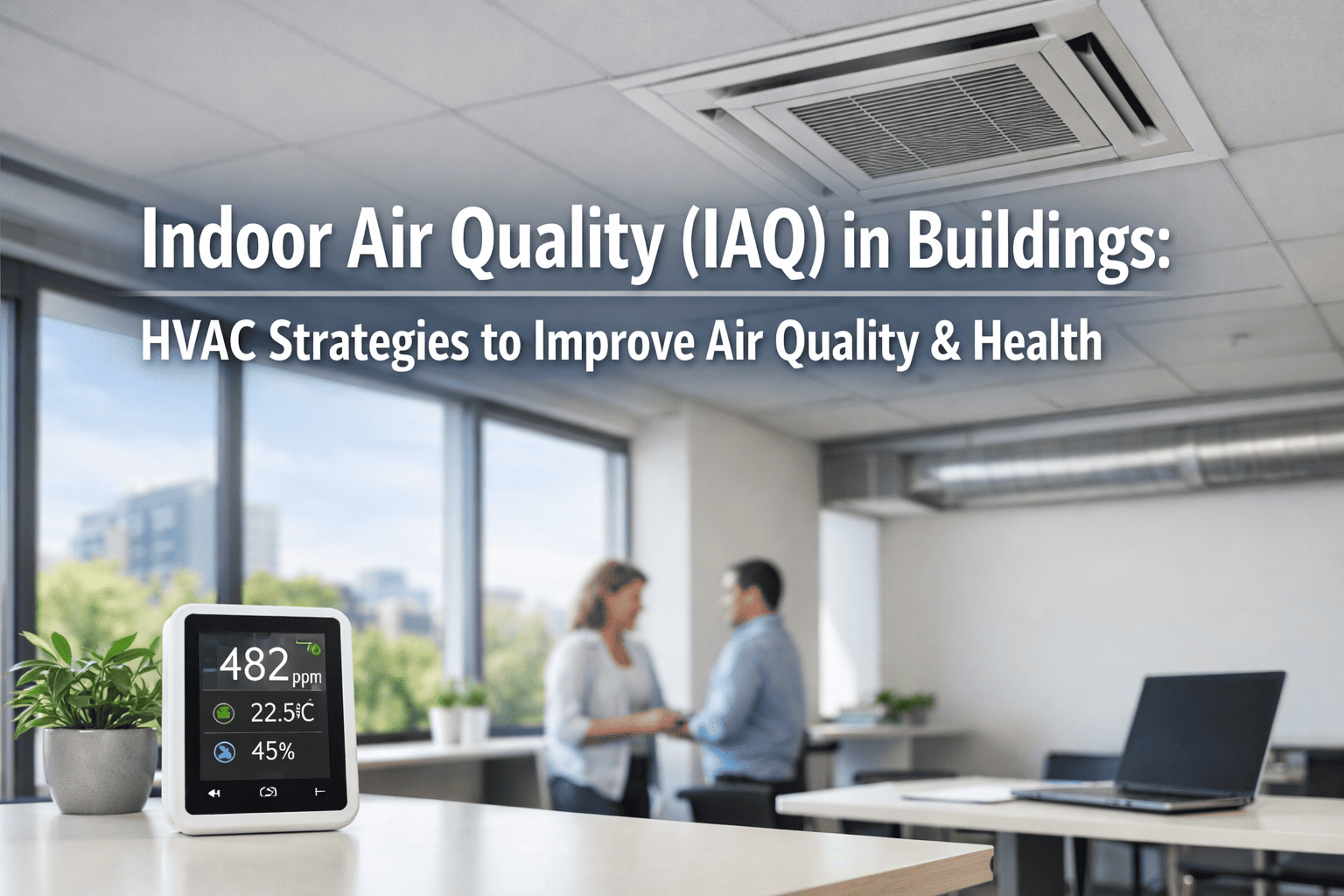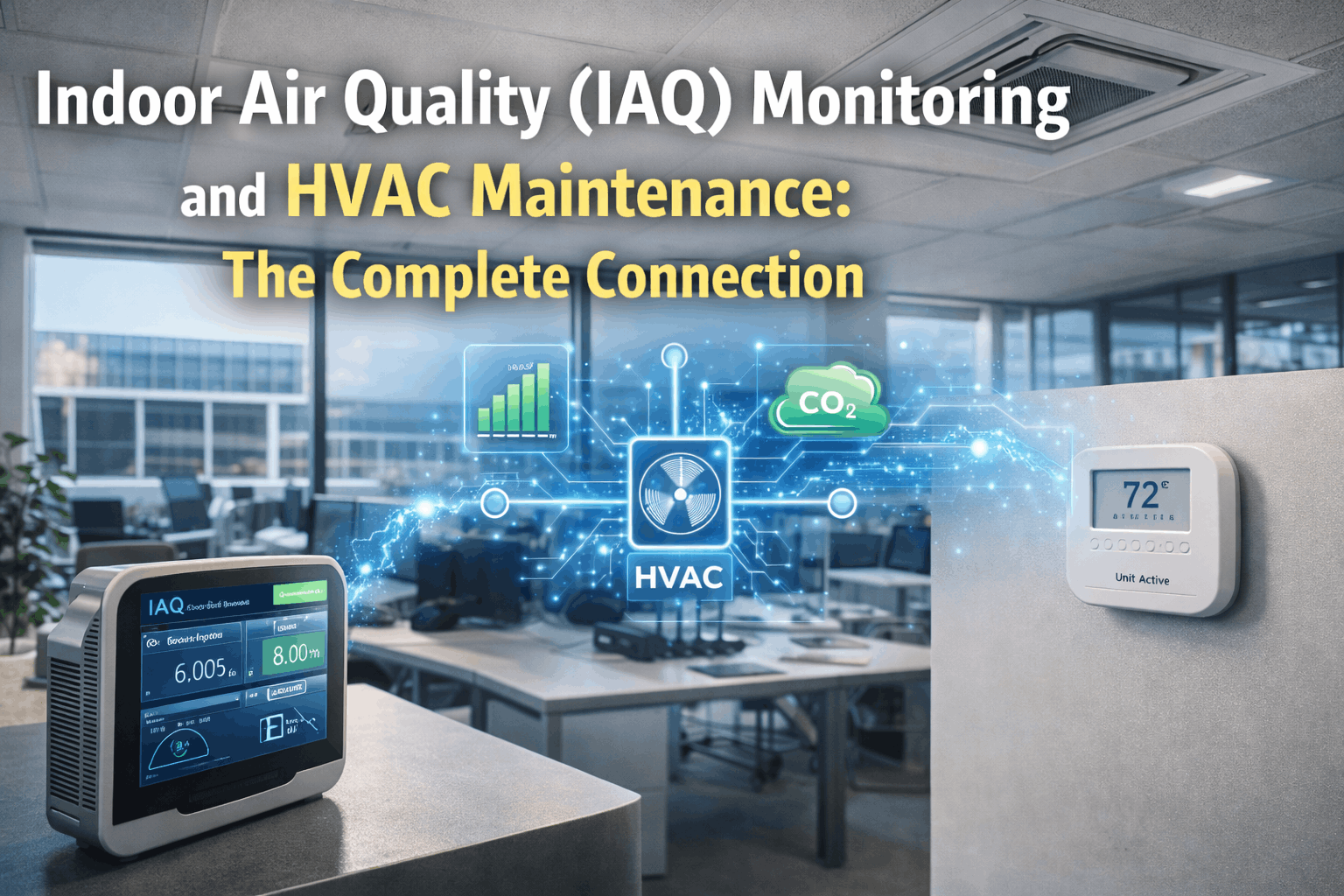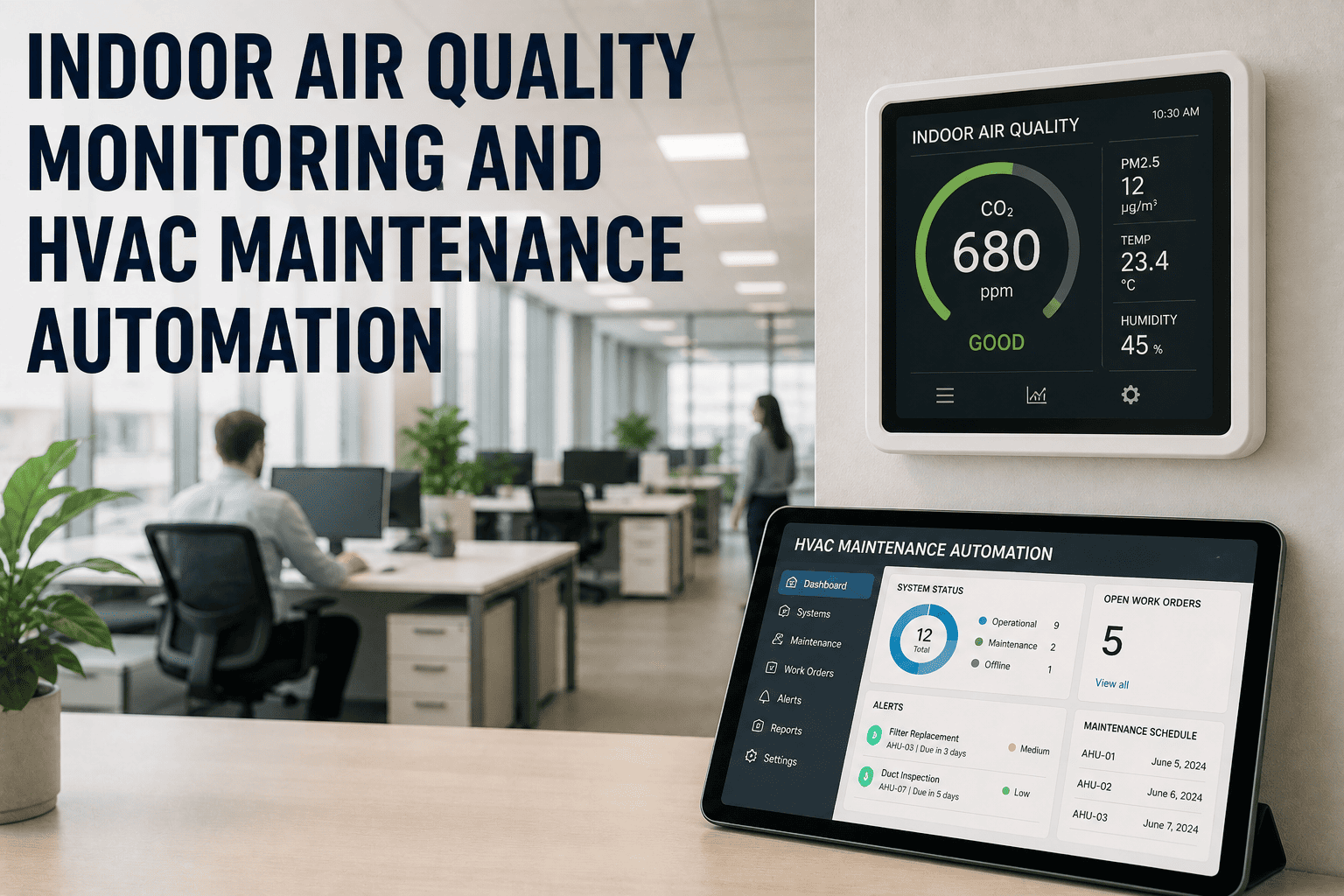
Indoor air quality monitoring has moved from an optional building feature to a continuous compliance obligation. ASHRAE 62.1-2025 now requires ventilation to respond dynamically to real-time occupancy and pollutant levels, EPA documentation failures carry fines starting at $10,000, and buildings pursuing WELL or LEED certification require continuous IAQ data they can audit. OxMaint's IoT sensor integration connects your CO2, PM2.5, VOC, and humidity sensor feeds to HVAC asset records and automatically generates maintenance work orders when thresholds are breached — so facility teams fix problems before occupants notice them. Book a demo to see IAQ-triggered work orders on live sensor data.
Indoor Air Quality Monitoring & HVAC Maintenance Automation
How connecting CO2, humidity, PM2.5, and VOC sensors to your HVAC work order system resolves air quality problems faster — and proves compliance automatically.
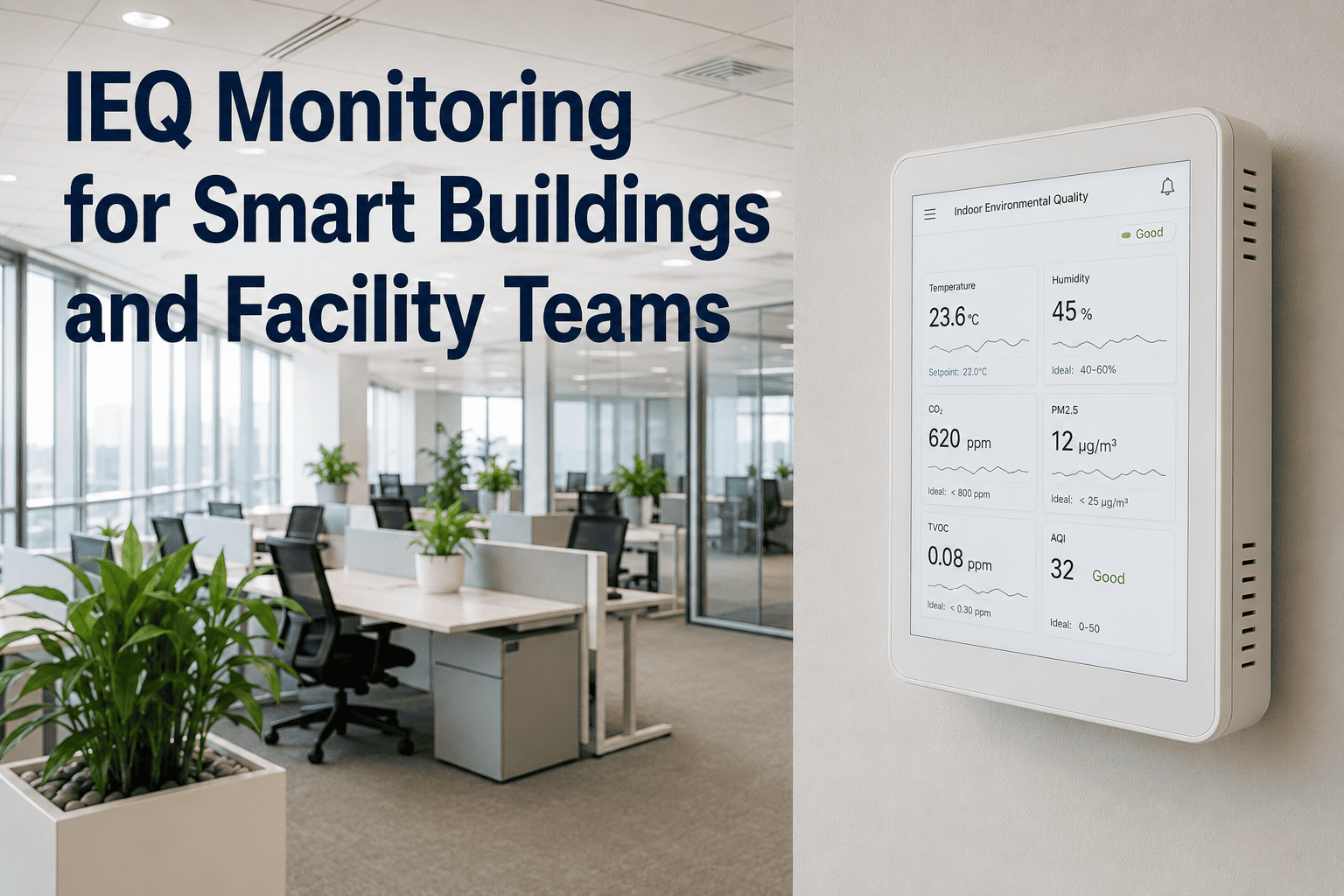
The 5 IAQ Parameters That Trigger HVAC Work Orders
Carbon Dioxide
Alert: above 1,000 ppm | Action: above 1,200 ppm
Accumulates in occupied spaces with insufficient outside air. Directly linked to reduced cognitive performance and occupant drowsiness. Primary indicator of ventilation adequacy per ASHRAE 62.1-2025.
Fine Particulate Matter
Alert: above 12 µg/m³ (EPA annual average)
Penetrates deep into lung tissue. Sources include degraded building envelopes, printer emissions, overloaded HVAC filters, and outdoor infiltration events. Linked to cardiovascular and respiratory outcomes.
Volatile Organic Compounds
Alert: above 400 µg/m³ TVOC
Off-gassed from flooring, cleaning products, and renovation materials. MOX sensor sensitivity drifts up to 400 µg/m³ within 18 months — annual calibration required for compliance evidence.
Relative Humidity
Target: 30–60% RH per ASHRAE 55
Below 30% accelerates virus transmission and causes occupant discomfort. Above 60% promotes mold and biological growth. RH sensors require annual calibration for ASHRAE 62.1-2025 compliance evidence.
Temperature & Thermal Comfort
Target: 20–24°C | per ASHRAE 55
Zone-level temperature excursions from deadband drift or actuator failure generate occupant complaints before facility teams are aware. Real-time trending identifies AHU and VAV performance degradation early.
Sensor Alert to Resolved Work Order — How OxMaint Closes the Loop
CO2 exceeds 1,000 ppm in Zone 3 conference cluster. PM2.5 rises to 14 µg/m³ post-construction in atrium. OxMaint receives the sensor feed via API.
OxMaint creates a work order linked to the responsible AHU or ventilation zone — with corrective task, technician assignment, and ASHRAE compliance tag pre-populated.
Technician arrives with the specific IAQ data, asset history, and corrective checklist. No dashboard watching required — the right person gets the right task automatically.
Work order closure is logged with timestamp, action taken, and sensor reading at closure. Compliance report exports with one click for ASHRAE 62.1 or WELL certification audits.
Connect Your IAQ Sensors to OxMaint
CO2, PM2.5, VOC, and humidity sensor feeds connected to your HVAC asset records — with threshold-triggered work orders and one-click compliance reports.
Filter Replacement — The Highest-Leverage IAQ Action
| Filter Grade | MERV Rating | Best For | OxMaint PM Trigger |
|---|---|---|---|
| Standard Commercial | MERV 8 | 70% of standard commercial buildings — low pressure drop | PM2.5 threshold + time interval |
| Office Enhanced | MERV 11–13 | Most offices — higher dust capacity, pollen/wildfire resilience | PM2.5 load trend + calendar trigger |
| WELL / Healthcare | MERV 14–16 | WELL v2 required, EPA post-pandemic recommended | Operating hours counter + PM2.5 alert |
| High Density / Lab | HEPA H13/H14 | Healthcare, labs, high-occupancy buildings — 99.95%+ capture | Differential pressure sensor trigger |
"Indoor air quality used to be a quarterly checklist item. That era ended in 2025. ASHRAE 62.1-2025 now expects ventilation to adjust dynamically to real-time occupancy and pollutant levels. CO2 at 1,450 ppm in a conference room, PM2.5 at 18 µg/m³ after construction, VOCs spiking after carpet replacement — none of these show up in a quarterly walk-through, and all of them trigger tenant complaints, cognitive performance losses, and compliance flags. The facility teams ahead of this are those that closed the loop between sensor data and maintenance action."