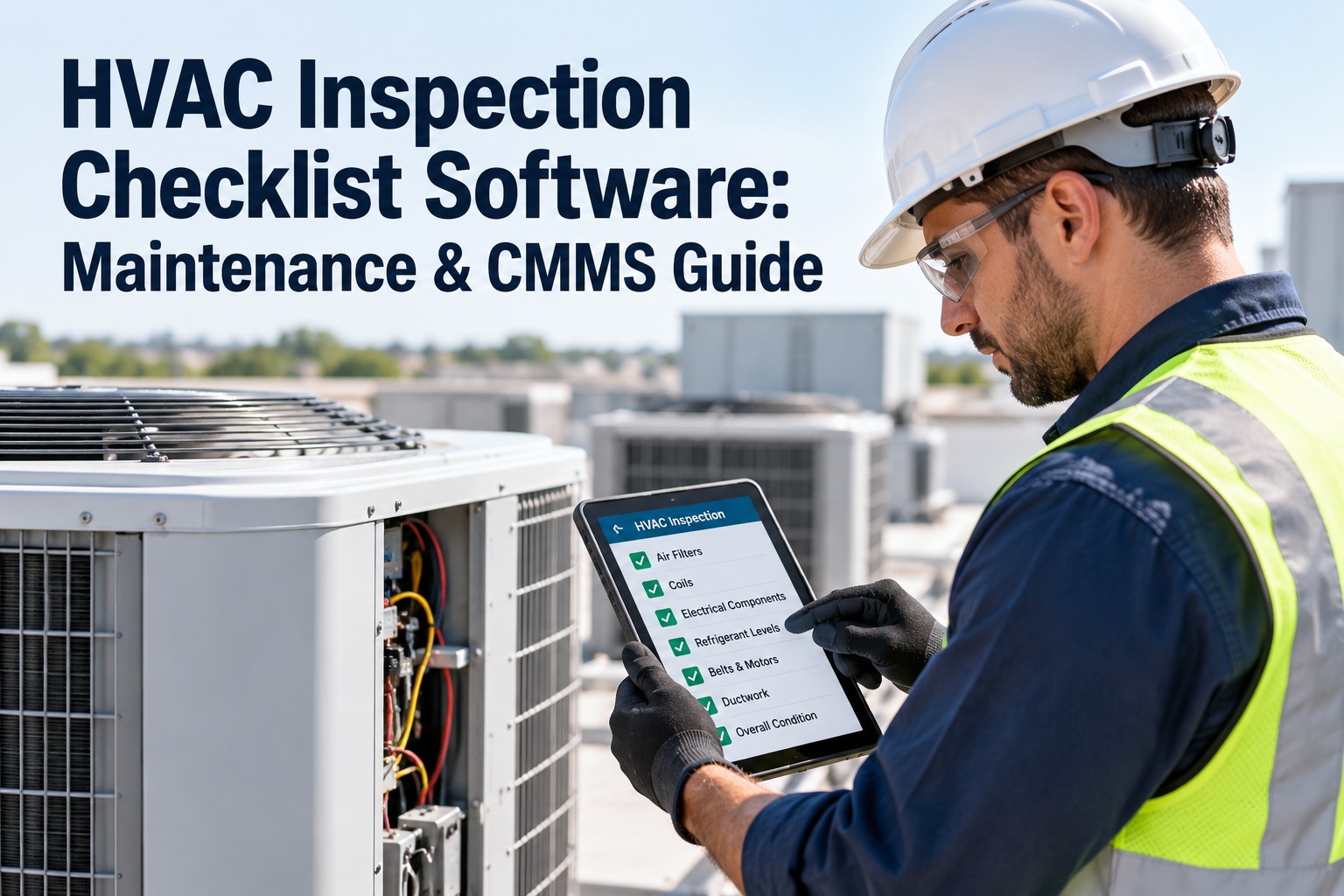
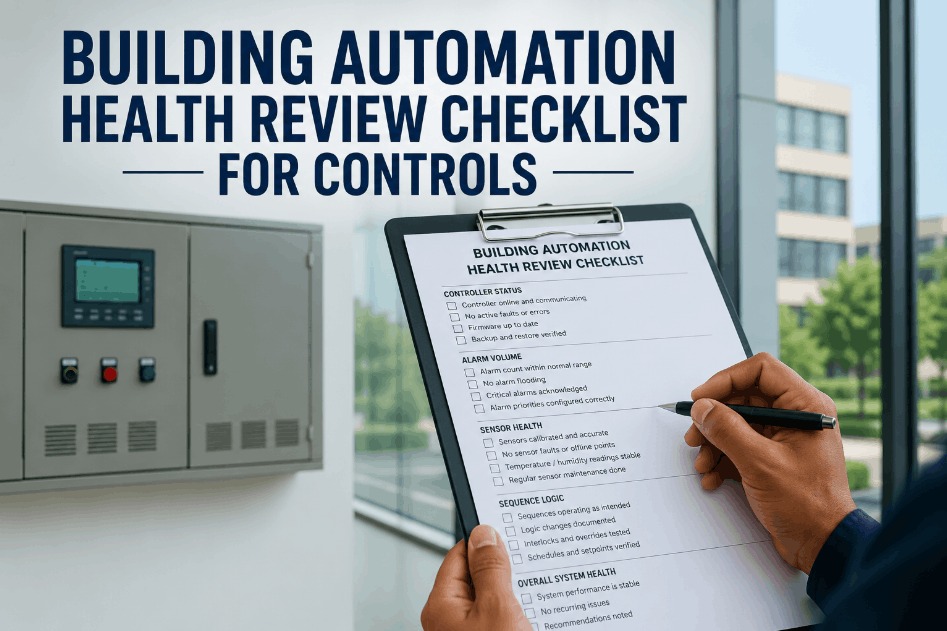
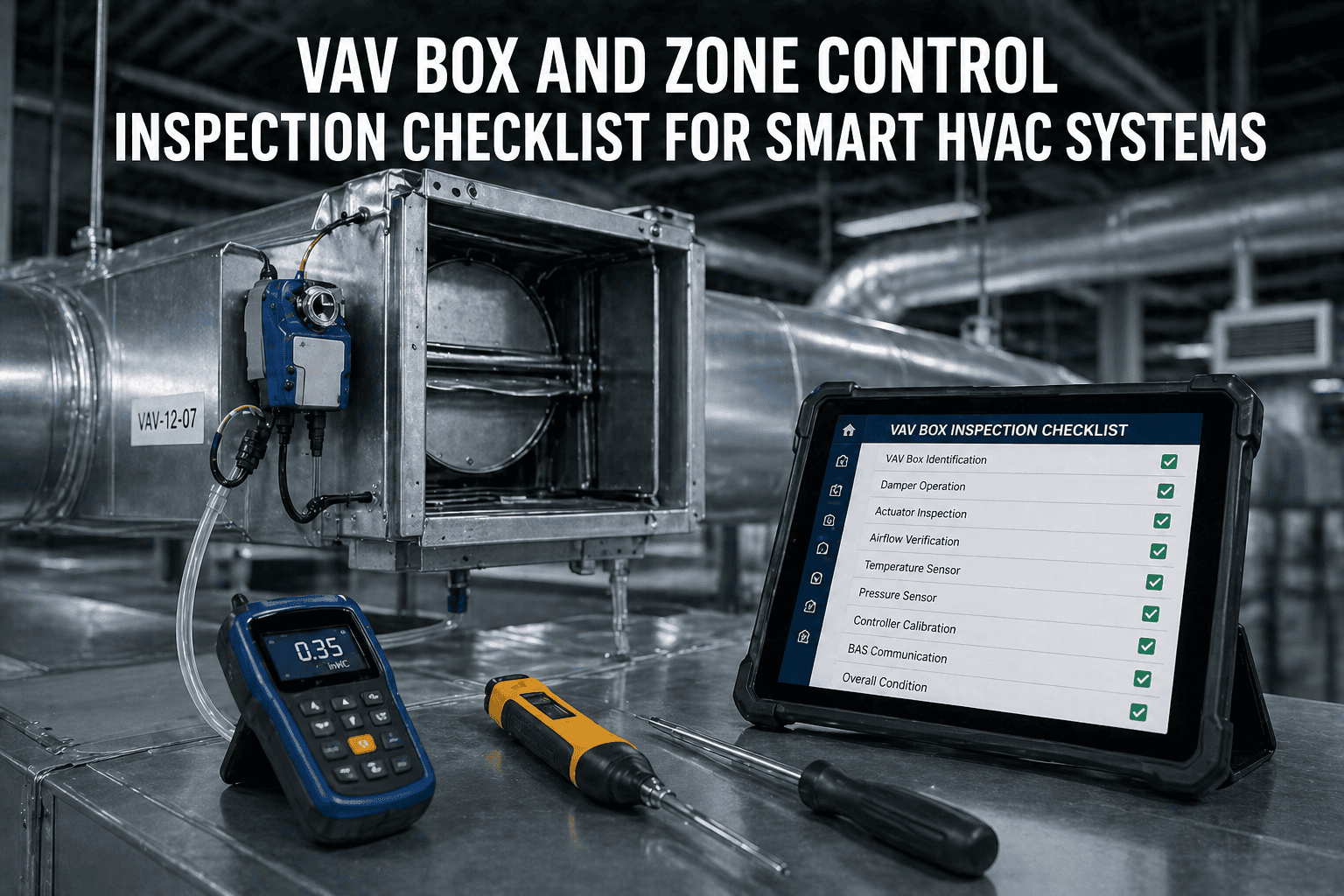
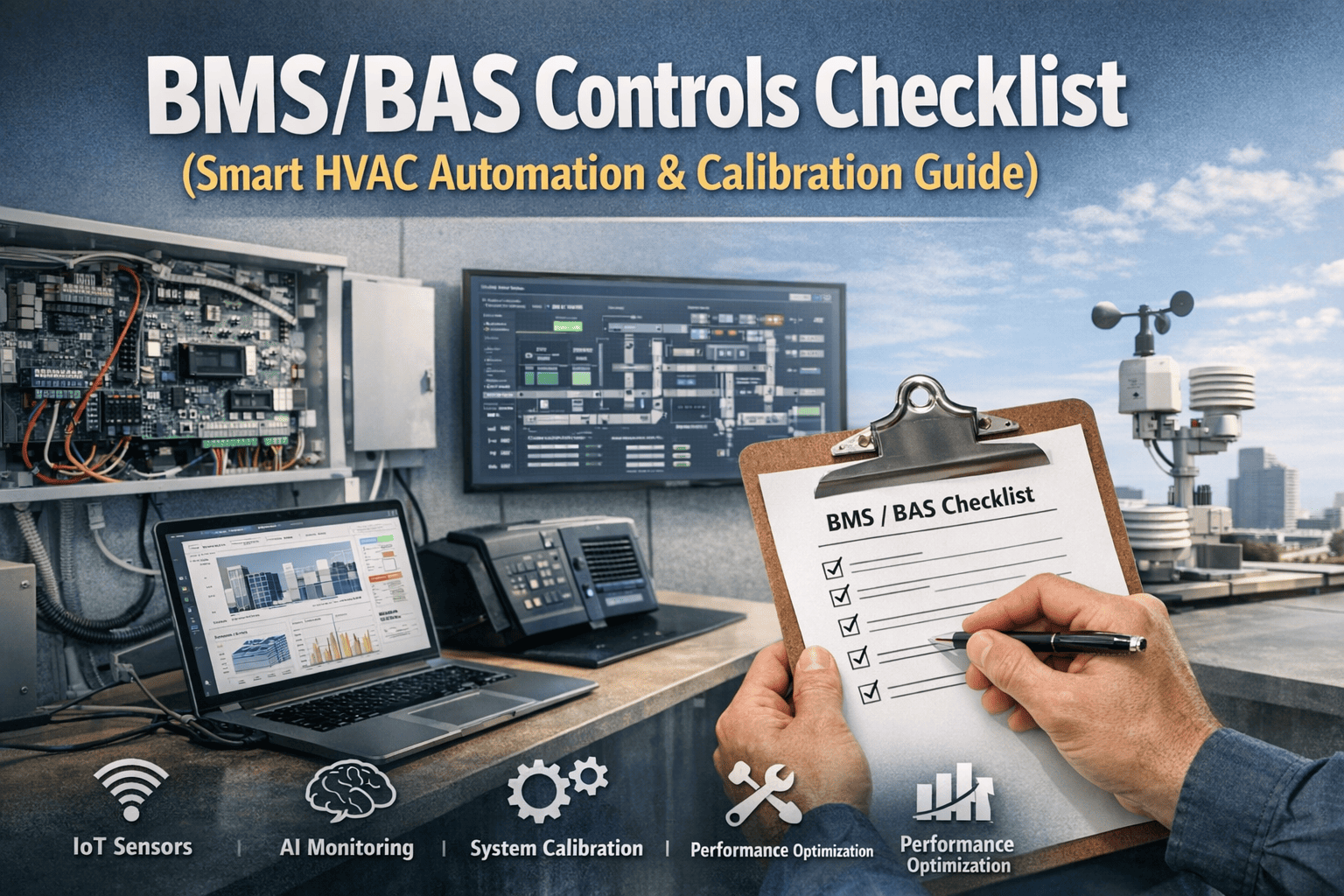
A building automation maintenance checklist is the operational backbone of any facility team managing BMS, BAS, or HVAC control systems at scale — where undetected sensor drift, stale overrides, missed alarm responses, and controller failures silently erode energy efficiency and system reliability before they surface as costly breakdowns. Smart building operations demand structured, repeatable inspection protocols across every automation layer — from field-level controllers and actuators to supervisory dashboards and integration points — with documented evidence that withstands commissioning audits, energy compliance reviews, and service contract performance benchmarks. This HVAC building automation maintenance checklist 2026 covers BMS point verification, sensor calibration, alarm management, schedule validation, override tracking, controller health, and automation workflow integrity across commercial and industrial facilities. Sign Up Free to digitize your building automation maintenance workflows in Oxmaint's AI-powered CMMS platform, where BMS inspection checklists connect directly to work orders, asset histories, and predictive maintenance triggers across your entire facility portfolio. Oxmaint enables facility and EHS teams to Book a Demo and see how real-time automation inspection workflows replace paper-based BAS logs that fail to surface control system degradation before it impacts occupant comfort, energy spend, or compliance standing.
Your BMS Deserves More Than a Paper Log and a Calendar Reminder
Oxmaint gives facility teams digital BAS inspection checklists, automated preventive maintenance scheduling, real-time work order management, and asset-level control system histories — built for smart building operations where automation uptime is non-negotiable.
BMS Point List Verification and I/O Mapping Checklist
Building management system accuracy depends entirely on the integrity of every configured point — analog inputs, digital outputs, calculated values, and virtual points that drive sequences of operation. Unmapped, orphaned, or incorrectly scaled points generate false readings that propagate through control logic, producing equipment short-cycling, comfort failures, and energy waste that appear invisible in dashboard views. A structured BMS point verification checklist ensures that every active point in your system reflects actual field conditions, is correctly mapped to physical hardware, and is named according to your facility's naming convention for downstream analytics and fault detection platforms. Sign Up Free to link your BMS point lists directly to Oxmaint's asset registry and auto-generate inspection work orders whenever point health anomalies are detected across your building systems.
HVAC Sensor Calibration and Field Device Verification Checklist
Sensor drift is the most common and least visible cause of HVAC control system performance degradation — a temperature sensor reading 2°F high forces cooling systems to overcool, a CO₂ sensor reading low disables demand-controlled ventilation, and a differential pressure sensor reading incorrectly drives variable frequency drives to wrong speed targets. ASHRAE Standard 180 preventive maintenance requirements and ASHRAE Guideline 36 sequence compliance both depend on field sensor accuracy as the foundation of correct control behavior. A sensor calibration checklist structured around signal verification, field comparison, and calibration documentation ensures that BAS control decisions are grounded in accurate physical measurements across all building systems. Book a Demo to see how Oxmaint tracks sensor calibration due dates, stores calibration certificates against asset records, and auto-schedules recalibration work orders based on your preventive maintenance intervals across every floor and zone in your facility portfolio.
BMS Alarm Management and Active Override Audit Checklist
Unmanaged alarm floods and persistent manual overrides are the two most consistent indicators of a building automation system that has drifted from its designed operating intent. Facilities operating with hundreds of active low-priority alarms train operators to ignore alert notifications, creating conditions where critical equipment failures go undetected for hours or days. Manual overrides left in place after maintenance activities defeat control sequences, disable safeties, and cause energy waste that compounds invisibly across billing cycles. A structured alarm and override audit checklist brings both failure modes under control by establishing documented workflows for alarm rationalization, override expiry tracking, and corrective action closure — forming the audit trail that energy managers and commissioning authorities require. Sign Up Free to connect your BMS alarm log to Oxmaint's work order engine and automatically generate maintenance tasks when alarm patterns indicate equipment degradation requiring inspection across your facility systems.
HVAC Schedule Validation and Setpoint Compliance Checklist
Incorrect HVAC schedules and drifted setpoints are responsible for a significant share of commercial building energy waste — systems running full occupancy mode through nights and weekends, heating and cooling setpoints set tighter than occupant requirements, and seasonal setpoint adjustments never applied after tenant changeovers all compound into measurable utility cost penalties. ASHRAE Guideline 36 and ENERGY STAR building certification requirements both mandate documented evidence of schedule currency and setpoint accuracy as components of building performance compliance. A schedule and setpoint validation checklist ensures that BAS programming reflects actual building occupancy, seasonal conditions, and current energy management targets. Book a Demo to see how Oxmaint's preventive maintenance platform integrates with your BMS schedule audit process and tracks setpoint change history against energy performance benchmarks across all building zones.
DDC Controller Health and Network Communication Inspection Checklist
Direct digital controllers and the BACnet, Modbus, or LON networks connecting them form the physical infrastructure layer that all building automation logic depends on — and controller hardware failures, communication faults, and firmware issues produce control system behavior that looks identical to programming errors until hardware is systematically ruled out. A controller health and network inspection checklist ensures that every field controller is operating within its design parameters, communication buses are free of errors and collisions, and firmware versions are maintained at vendor-supported levels that receive security patches and bug fixes. Facilities that skip controller-level inspection in their BAS maintenance program eventually face cascading control failures when aging hardware fails without documented condition history to guide response. Sign Up Free to register every DDC controller as an asset in Oxmaint and track firmware version, battery replacement history, communication fault logs, and scheduled controller health inspections from a single maintenance management dashboard.
Automation Workflow, Integration, and Sequence of Operations Verification
Building automation sequences of operation are the programmed intelligence that converts sensor inputs and setpoints into correct equipment control decisions — and sequence degradation through unauthorized programming changes, software updates that reset parameters, or integration failures with third-party systems produces energy waste and comfort failures that are invisible in standard monitoring views. A sequence verification and integration checklist gives commissioning engineers and facility managers the structured framework to confirm that primary and secondary HVAC system control logic is executing as designed, that third-party integrations with lighting control, access control, and energy metering systems are passing data correctly, and that the automation workflow audit trail required for LEED, ENERGY STAR, and green building certification is current and complete. Book a Demo to see how Oxmaint connects your BAS sequence verification checklists to equipment work orders, commissioning records, and compliance documentation in one auditable facility management platform.
BMS Maintenance Frequency and Standard Reference by Inspection Category
| Inspection Category | Key Actions | Recommended Frequency | Governing Standard |
|---|---|---|---|
| BMS Point List Audit | I/O mapping, orphaned point removal, naming review | Annual | ASHRAE 180 / NIBS |
| Sensor Calibration | Temperature, humidity, pressure, CO₂, flow verification | Annual / Semi-Annual for critical | ASHRAE 180 / ISO 17025 |
| Alarm Rationalization | Active alarm review, setpoint adjustment, routing verification | Quarterly | ASHRAE Guideline 13 |
| Override Audit | Active override review, return-to-auto, documentation | Monthly | ASHRAE 180 / ASHRAE Guideline 36 |
| Schedule Validation | Occupancy schedule update, setpoint verification, DCV check | Quarterly / Seasonal | ASHRAE 90.1 / ENERGY STAR |
| Controller Health | Hardware inspection, battery replacement, firmware review | Annual | BACnet ANSI/ASHRAE 135 |
| Network Communication | Bus error review, device list verification, latency test | Semi-Annual | BACnet ANSI/ASHRAE 135 |
| Sequence Verification | Functional test, program comparison, staging logic test | Annual | ASHRAE Guideline 36 / NIBS Cx Guide |
| Integration Health | Third-party data exchange, trend log, metering verification | Semi-Annual | LEED v4.1 / ASHRAE Guideline 36 |
Stop Tracking BMS Inspections in Spreadsheets That Nobody Updates
Oxmaint digitalizes your entire building automation maintenance program — sensor calibration scheduling, controller asset tracking, alarm workflow management, override audit logs, and sequence verification records — giving your facility team one audit-ready platform for every BAS compliance obligation.
Frequently Asked Questions — HVAC Building Automation Maintenance Checklist
Your BAS Maintenance Program Needs Documentation That Holds Up to Audit
Oxmaint gives facility and controls teams automated PM scheduling, digital inspection checklists, calibration certificate storage, CMMS-linked work orders, and ASHRAE-ready compliance reports — so your building automation maintenance program is always current, traceable, and inspection-ready.