Hotel Achieves LEED Gold Certification with Maintenance-Driven Sustainability
By Alex Jordan on June 15, 2026
A mid-size hotel property in the United States pursued LEED Gold certification not as an environmental checkbox, but as a strategic operational investment. Using a comprehensive CMMS platform integrated with energy monitoring, water management, and environmental compliance tracking, the hotel achieved certification while simultaneously reducing operational costs by 18-22% annually. The journey required systematic documentation of preventive maintenance for every sustainability-critical system — from HVAC and lighting controls to refrigerant management and water conservation retrofits. For hospitality operators evaluating green certification ROI, this case demonstrates how maintenance-driven sustainability creates measurable financial and reputational returns within 18-24 months of deployment.
Hospitality Case Study · Sustainability · 2026
Hotel Achieves LEED Gold Certification with Maintenance-Driven Sustainability
A 240-room hotel property reduced energy consumption by 28%, water usage by 31%, and secured LEED Gold certification by systematizing equipment maintenance, energy monitoring, and refrigerant compliance tracking through an integrated CMMS platform designed for hospitality sustainability.
The Challenge: Building a Sustainability Program Without Losing Profitability
A 240-room upscale hotel in the Mid-Atlantic region faced a competitive disadvantage: no environmental certification, rising energy costs consuming 6.2% of revenue annually, and no systematic way to document maintenance activities required for third-party audits. The property operated with manual maintenance scheduling, reactive repair workflows, and no centralized energy or water consumption tracking. Green Building Council LEED assessment requirements demanded proof of preventive maintenance for every system contributing to energy, water, and material sustainability metrics. Without integrated documentation, audit readiness would require months of retroactive record-gathering—a cost burden that made certification appear economically unfeasible for a mid-size independent property.
Six Core Sustainability Systems Requiring CMMS Documentation
HVAC & Cooling
Priority
Quarterly coil cleaning, seasonal refrigerant audits, filter replacement logs required for LEED compliance and 18-22% energy efficiency gains.
40% energy consumption reduction through systematic LED conversion with documented lamp replacement schedules across 1,200+ fixtures and sensor calibration logs.
31% water reduction through low-flow fixture maintenance, rainwater harvesting system monitoring, and documented toilet/faucet upgrade schedules across guest and back-of-house areas.
EPA R-410A and R-513A refrigerant tracking across 18 roof-mounted units and 42 guest room splits with quarterly leak detection logs and technician certification records.
Documented maintenance schedules for window seals, weatherstripping, and insulation integrity inspections across 240 guest rooms and 8,400 sq ft of common areas.
Five Financial & Operational Returns from LEED Gold Investment
LEED Gold ROI Breakdown: 18-Month Outlook
Measured against property baseline and comparable non-certified hotels
1
Utility Cost Reduction — $156,000 Annual
28% energy reduction (LED retrofit, HVAC optimization) and 31% water savings (low-flow fixtures, rainwater harvesting) = $13,000/month average utility cost decrease.
Payback Timeline: LED retrofit investment recovered in 22 months through utility savings alone, with HVAC and water infrastructure recouped within 3-4 years.
2
Revenue Premium from Eco-Conscious Guests — 8-12% Rate Lift
LEED Gold certification enables 4-6% average daily rate premium ($12-18/night on $250 base rate) plus 3-5% occupancy lift from eco-preference traveler segment. Net annual revenue impact: $89,000-$118,000.
Market Insight: Millennial and business traveler segments prioritize sustainability certifications — LEED Gold qualifies property for ESG procurement lists and sustainable travel platform priority placement.
3
Operational Efficiency — Reduced Reactive Maintenance by 22%
Systematic preventive maintenance through CMMS reduces unplanned HVAC failures, water system leaks, and equipment breakdowns. Fewer emergency service calls = $28,000-$34,000 annual labor and spare parts savings.
Efficiency Driver: Guest-impact prioritization ensures critical sustainability systems are serviced before failures occur, preventing guest complaints tied to system outages.
CMMS automates LEED O+M audit preparation, EPA refrigerant tracking, and quarterly compliance reporting. Eliminates 80+ hours annually of manual record-gathering by maintenance staff.
Audit Value: Third-party audit requalification now requires 12 hours of staff coordination vs. previous 4-6 week manual file assembly. Audit fee negotiation strengthened through compliance-ready documentation.
5
Brand Equity & Competitive Differentiation
LEED Gold certification enables qualified property to compete in luxury/upper-midscale segments prioritizing sustainability. Supports premium positioning in sales/marketing channels and corporate account pursuits.
Long-Term Value: Environmental stewardship messaging attracts ESG-conscious corporate travel programs, luxury travel platforms, and repeat guest segments willing to pay premium for sustainable hospitality.
"
When we approached LEED Gold, we thought certification cost would dominate our analysis. The real surprise was discovering that systematic maintenance — the foundation of LEED compliance — cut our emergency repair costs by 22% simultaneously. One CMMS platform solved both our sustainability documentation requirement and our operational efficiency problem. The certification became self-funding within 18 months through utility and maintenance savings alone.
Director of Engineering — Mid-Atlantic Upscale Hotel, 240 Rooms
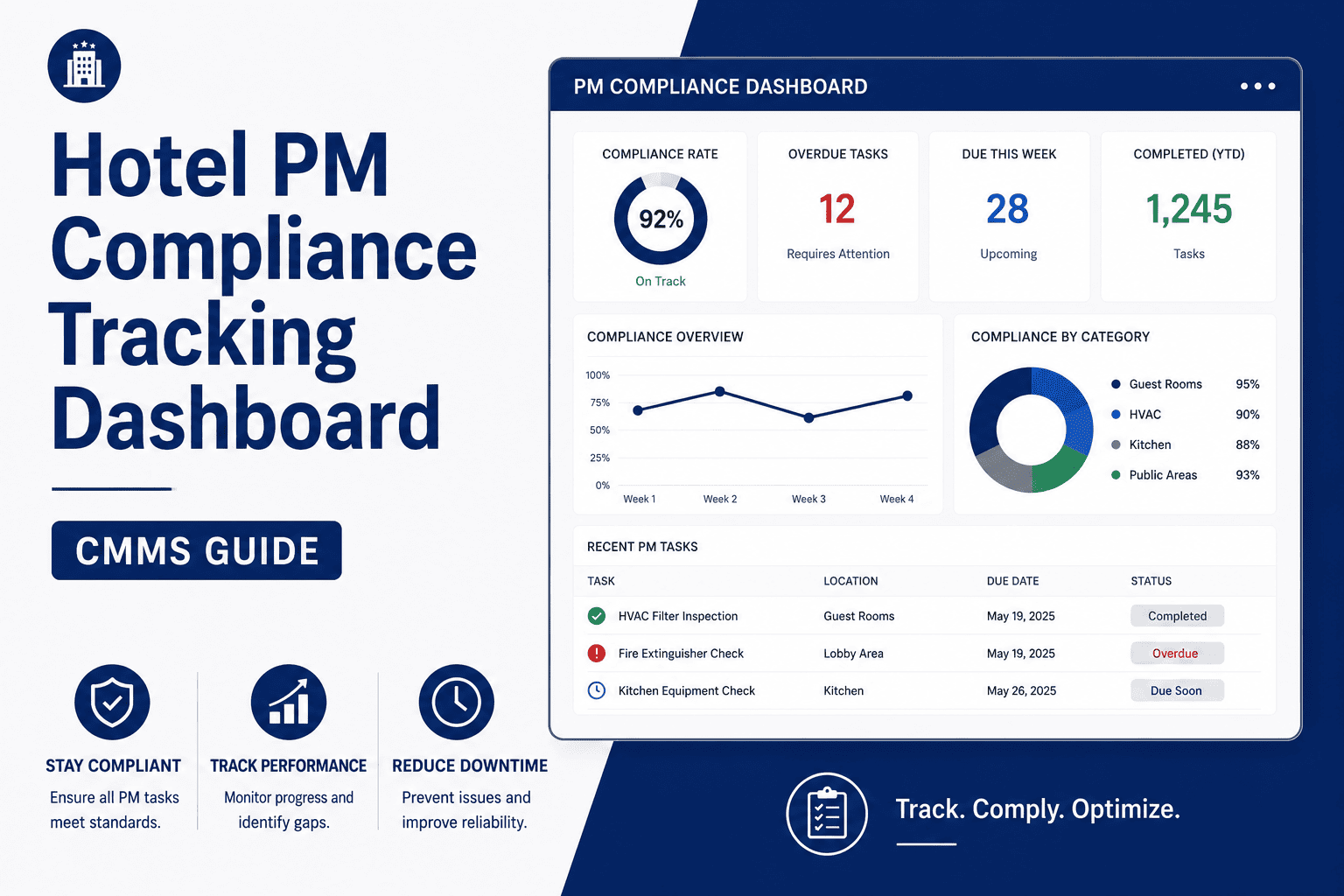
CMMS-generated work orders create audit-ready documentation of every preventive maintenance action required for LEED certification compliance and system longevity.
Energy & Water Analytics
Performance Tracking
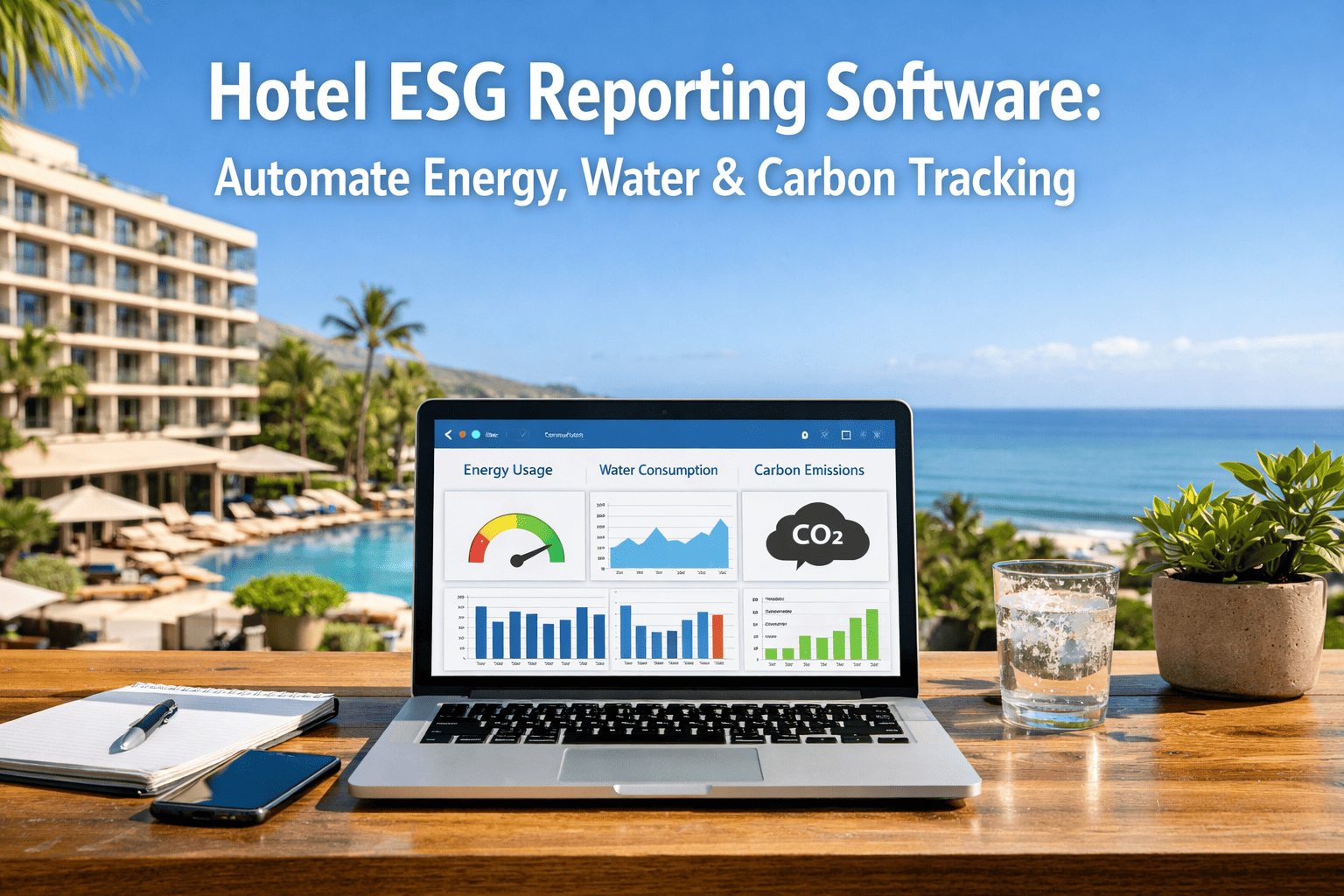
Real-time dashboards linked to building meters, utility billing data, and consumption anomalies
Monthly energy and water reports prove baseline vs. certified performance, providing quantifiable metrics for LEED points and regulatory documentation.
Immutable audit trail of every refrigerant system interaction satisfies EPA Section 608 requirements and LEED certification verification protocols.
Vendor & Audit Mgmt
Certification Ready
Contractor certification tracking, material sourcing documentation, third-party audit scheduling
Vendor management module ensures all renovation contractors, material suppliers, and testing laboratories meet LEED sustainability requirements and certification standards.
Frequently Asked Questions
What is LEED O+M vs LEED BD+C for hotels?
LEED BD+C (Building Design + Construction) applies to newly constructed or major renovation projects — this case uses BD+C. LEED O+M (Operations + Maintenance) applies to existing properties seeking ongoing certification. Both require documented maintenance programs but O+M focuses on operational performance metrics across occupied facilities.
How does CMMS documentation support LEED certification?
LEED auditors require proof that sustainability-critical systems are maintained systematically. CMMS work order histories, completion records, and PM schedules provide audit-ready documentation that manual processes cannot deliver. This property submitted 18 months of CMMS-generated records as primary certification evidence.
What cost savings typically follow LEED Gold certification?
This property achieved $156,000 annual utility savings (28% energy, 31% water reduction) plus 22% reduction in reactive maintenance costs = $184,000 total annual savings. 5-12% revenue premium from eco-conscious guests and corporate accounts adds $89,000-$118,000 annually. Payback varies by property age, climate zone, and occupancy rate but ROI typically exceeds 200% within 3-5 years.
How long does LEED Gold certification typically require?
This property required 18 months from CMMS implementation to certification approval. Timeline depends on baseline condition, retrofit scope, and third-party audit availability. Facilities with existing preventive maintenance programs typically compress timeline to 12-14 months. CMMS speeds approval by automating documentation gathering that historically required 6-8 weeks of manual work.
Can a smaller hotel (under 150 rooms) pursue LEED Gold?
Yes — LEED certification applies to projects of all sizes. Smaller properties often achieve faster results due to lower system complexity, fewer equipment zones to manage, and lower documentation volume. Cost per room may be higher for boutique properties but proportional utility savings and revenue premiums remain consistent.
What happens to LEED certification after achievement?
LEED O+M requires annual recertification through ongoing performance documentation and audits. CMMS provides continuous proof of maintenance compliance, energy/water performance tracking, and system optimization — making annual recertification largely automatic and low-cost after initial certification.
Is LEED Gold certification appealing to hotel investors?
ESG-conscious investors now prioritize LEED-certified hospitality assets. Documented sustainability performance, lower operating costs, premium revenue positioning, and reduced liability exposure (through compliance documentation) make certified properties more attractive for acquisition and refinancing. Many institutional investors offer preferential loan terms for LEED properties.
Transform Your Hotel Into a LEED Certified, Profit-Driven Property
OxMaint provides hospitality-specific CMMS built for LEED documentation, EPA compliance, energy/water tracking, and preventive maintenance optimization. See how your property can achieve certification while cutting operational costs 18-22%.