Every ICU device must be maintained reliably, yet many equipment incidents are linked to missed or incomplete preventive maintenance. Managing PM schedules, device histories, and biomedical work orders across critical care assets is difficult without digital tracking. OXMAINT AI centralizes maintenance records and schedules, keeping critical care equipment documented, compliant, and audit-ready.
Healthcare · ICU & Critical Care · Biomedical Equipment Maintenance · 2026
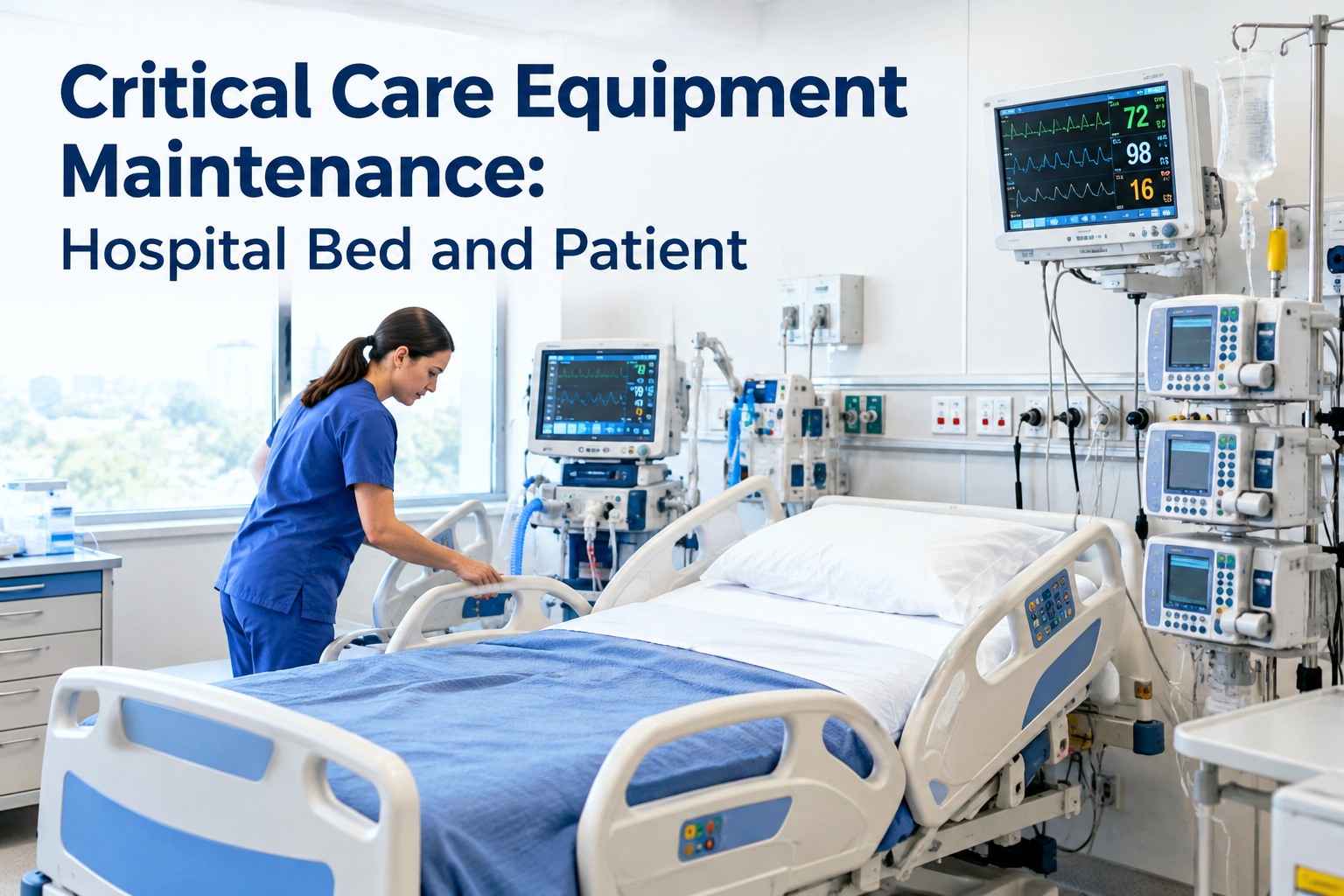
Critical Care Equipment Maintenance: Hospital Bed and Patient
Missed PM on a ventilator or untested bed mechanism can put patients at risk. OXMAINT AI automates PM schedules, tracks inspection issues as work orders, and keeps complete, timestamped service records ready for audits.
PM Scheduled by Device Class
→
Inspection Logged
→
Deviation Flagged
→
Work Order & Record Retained
72%
of ICU equipment failures are preventable with scheduled preventive maintenance
14 min
average time to identify an equipment fault and its history without digital tracking
3.4x
higher citation risk for ICUs relying on paper-based PM records
23%
of ventilator adverse events are directly traceable to skipped or incomplete PM steps
Four Critical Care Asset Classes
Each device class carries its own failure modes, calibration requirements and PM cadence — treating them all the same is exactly where gaps open up. Sign up free and set up PM schedules for your own ICU fleet today.
Mechanical Ventilators
Every 6 months + annual full inspection
Flow sensor calibration
Exhalation valve inspection
Circuit integrity check
Battery backup testing
Infusion & Syringe Pumps
Manufacturer interval + post-repair recalibration
Volume infused accuracy check
Occlusion alarm verification
Battery capacity test
Free-flow protection check
Patient Monitoring Systems
Annual electrical safety + alarm verification
SpO2 and NIBP calibration check
Alarm function verification
Battery replacement per spec
Telemetry signal integrity
Hospital & ICU Beds
Semi-annual functional inspection
Emergency lowering mechanism test
Side rail and lock integrity
Motor and actuator function
Weight sensor calibration
Where Critical Care Maintenance Actually Breaks Down
📝
Single-Signature Paper Forms
The most common documentation of a ventilator check is a paper form with one technician's signature and no timestamp — hard to verify, easy to lose.
📅
Overdue PMs Go Unnoticed
An infusion pump due for calibration keeps circulating between rooms because nothing flags its overdue status at the point of use.
🔍
No Device-Specific History
A monitor with recurring alarm issues gets serviced the same way each time because nobody can see it's the third occurrence.
⚙
Manufacturer Intervals Not Enforced
Different device models carry different service intervals, and without a system tracking each one individually, a shared calendar reminder inevitably misses some.
From PM Due to Closed, Retained Record
1
PM triggers
Manufacturer-specified interval fires for the specific device class and unit.
→
2
Inspection performed
Technician completes the device-specific checklist — calibration, alarm test, battery check.
→
3
Deviation flagged
Any failed check or out-of-tolerance reading logs against the specific device record.
→
4
Work order created
A corrective work order routes to biomedical engineering, with the finding attached.
→
5
Record retained
Timestamped, technician-attributed record stays retrievable for the documentation retention period.
A Ventilator PM With No Timestamp Isn't a Record. It's a Guess a Surveyor Won't Accept.
OXMAINT AI generates a timestamped, technician-attributed record for every PM, calibration and repair — automatically, not as an afterthought.
Paper PM Logs vs. Digital Records in OXMAINT AI
Paper Forms & Binders
Single signature, no timestamp, easy to misplace
Overdue PMs discovered only during manual review
Device history scattered across separate paper trails
Producing a full record for survey takes a manual search
Digital Records in OXMAINT AI
Timestamped, technician-attributed, every time
Overdue PMs flagged on a dashboard before they're missed
Every device's full history in one searchable record
A complete PM history exports in under a minute
What OXMAINT AI Gives Biomedical & ICU Teams
Device-Class PM Scheduling
Ventilators, infusion pumps, monitors and beds each run on their own manufacturer-specified interval, tracked individually.
Timestamped, Attributed Records
Every PM, calibration and repair logs with a technician, a timestamp and the specific checklist completed.
Deviation-to-Work-Order Linking
A failed check or out-of-tolerance reading becomes a tracked work order automatically, routed to biomedical engineering.
Overdue PM Dashboard
See which devices are approaching or past their PM due date before it becomes a compliance gap.
Full Device Service History
Every repair and PM performed on a specific device stays attached to its record, visible at the next inspection.
Fast Record Export
Pull a complete PM and repair history for any device or unit in minutes when a survey or review requires it.
"
Our ventilator PMs were technically getting done, but proving it during survey meant pulling paper forms that sometimes had one signature and no date. Since moving to OXMAINT AI, every PM is timestamped and tied to the specific device, and our last survey took a fraction of the time because the full history was already there. What surprised me was catching a recurring alarm issue on one monitor that had been serviced three separate times without anyone connecting the pattern before.
Biomedical Engineering Manager · Regional Hospital ICU
Frequently Asked Questions
How often should a ventilator receive preventive maintenance?
Ventilator PM frequency is typically every six months per manufacturer specification, with an annual full biomedical inspection covering flow sensor calibration, exhalation valve inspection, circuit integrity and battery backup testing.
What's the most common documentation gap on critical care equipment?
A paper PM form with a single technician's signature and no timestamp is the most common gap — it's difficult to verify when the check actually happened and who performed each specific step, which is exactly what a structured digital record captures automatically.
Does OXMAINT AI replace the biomedical technician's inspection work?
No.OXMAINT AI schedules the PM, presents the device-specific checklist, and records the technician's findings with a timestamp — the inspection itself is still performed by a qualified biomedical technician following manufacturer and regulatory requirements.
How does OXMAINT AI help catch a recurring issue on a specific device?
Every PM, repair and deviation logs against the specific device's record, so a pattern — like the same monitor generating repeated alarm-related service calls — surfaces automatically instead of being treated as an isolated event each time.
Every Critical Care Device Deserves a Record That Holds Up.
Ventilators, infusion pumps, monitors and beds — each on its own schedule, each with a timestamped, retrievable history. That's the workflow OXMAINT AI runs.




.png)
