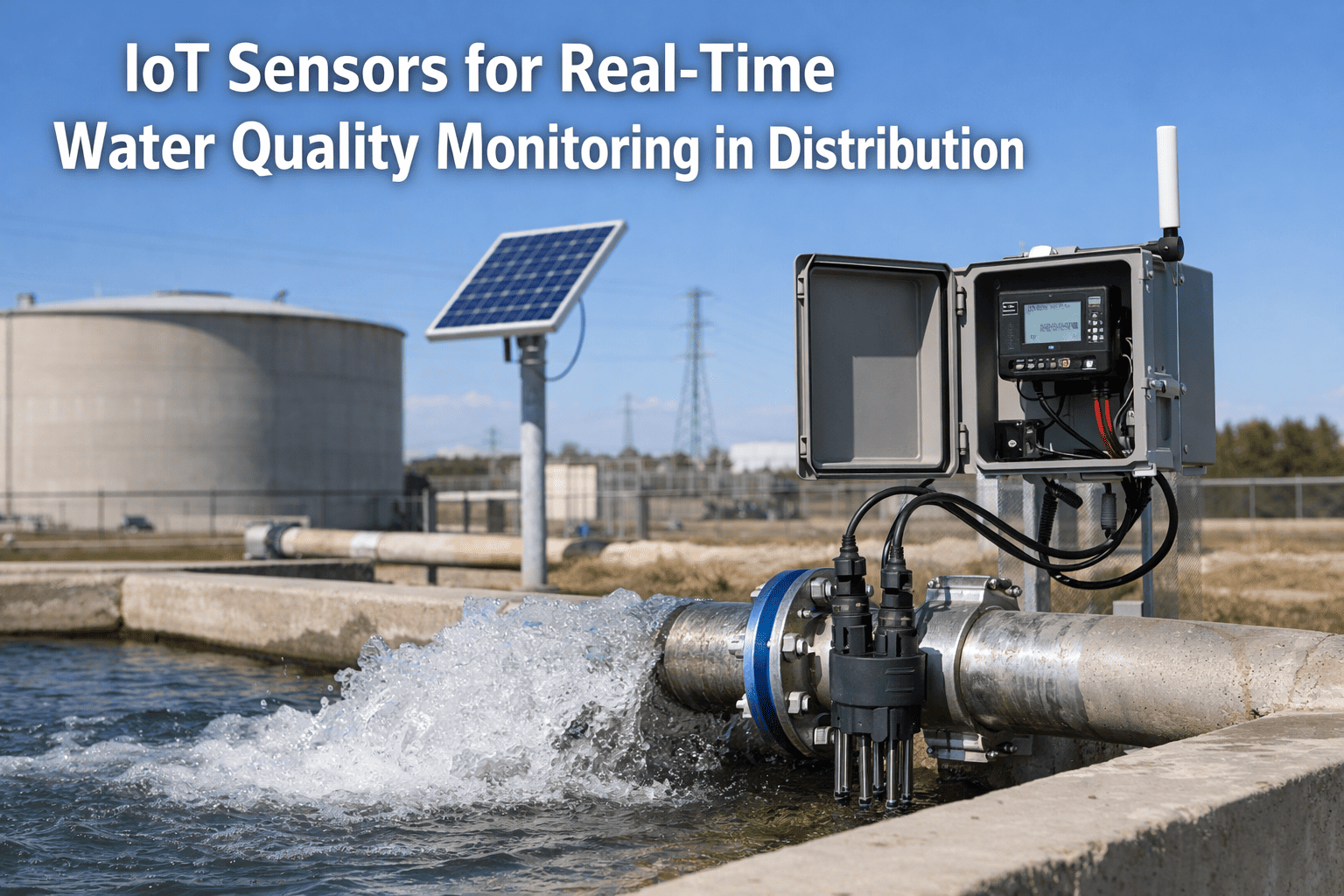
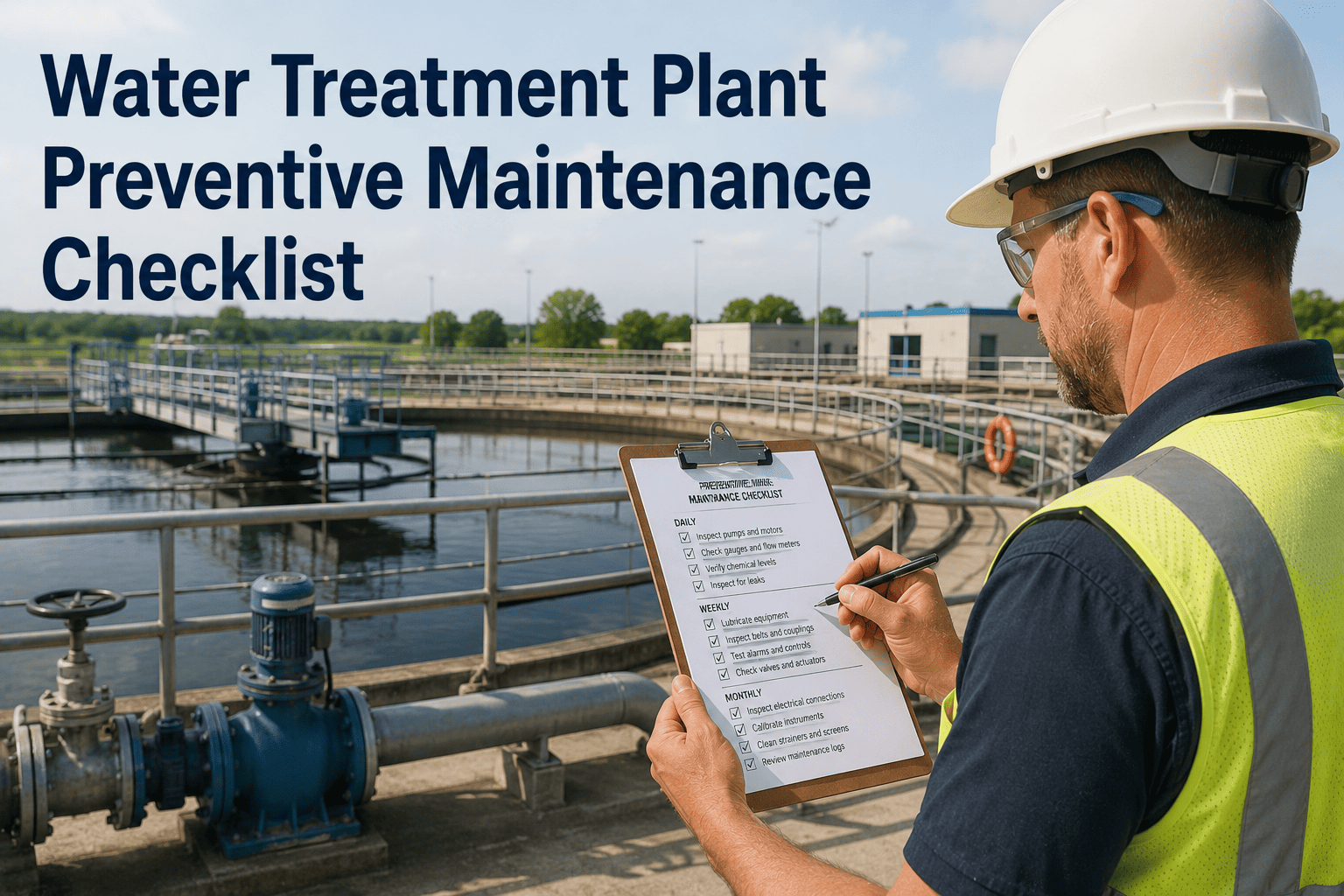
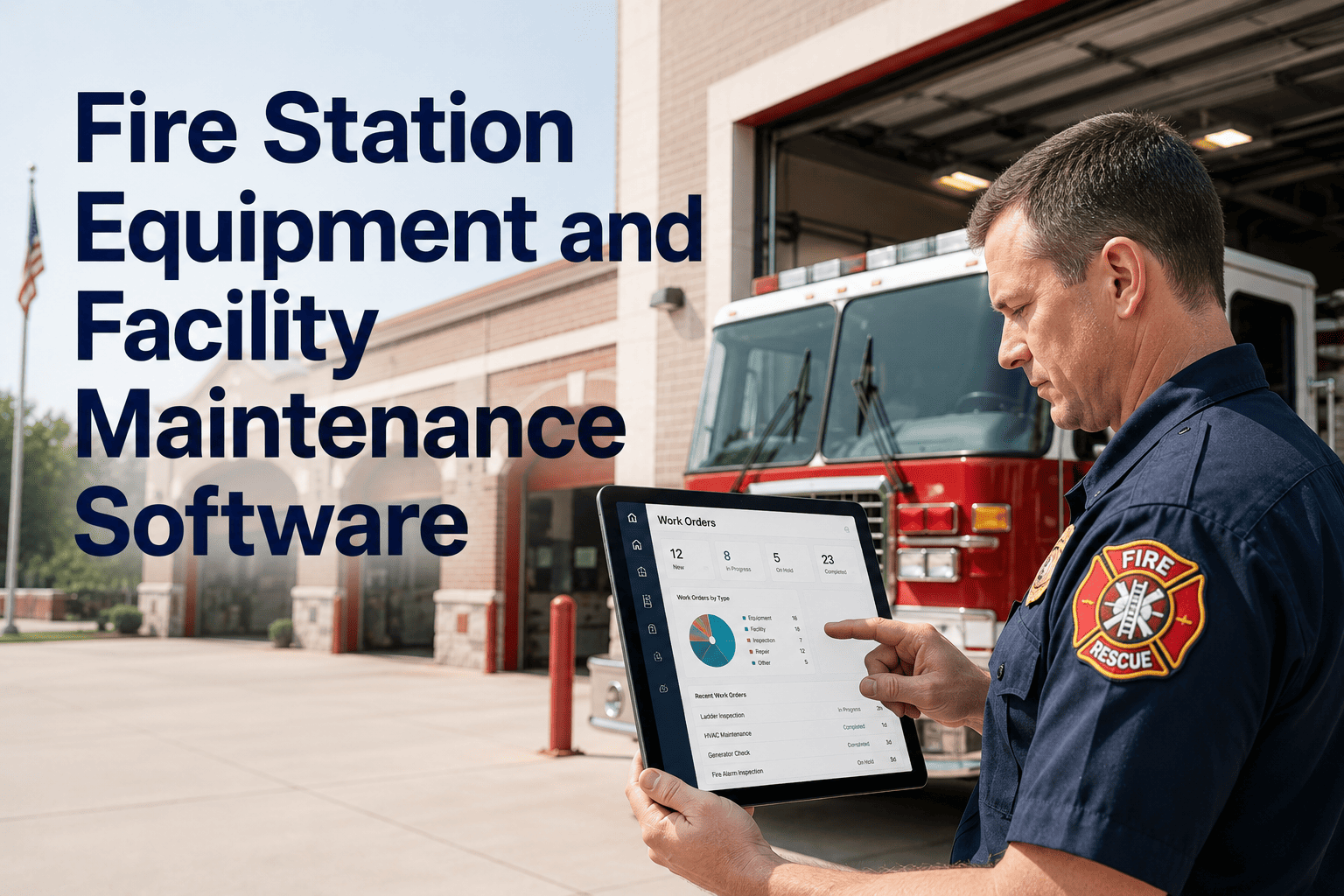
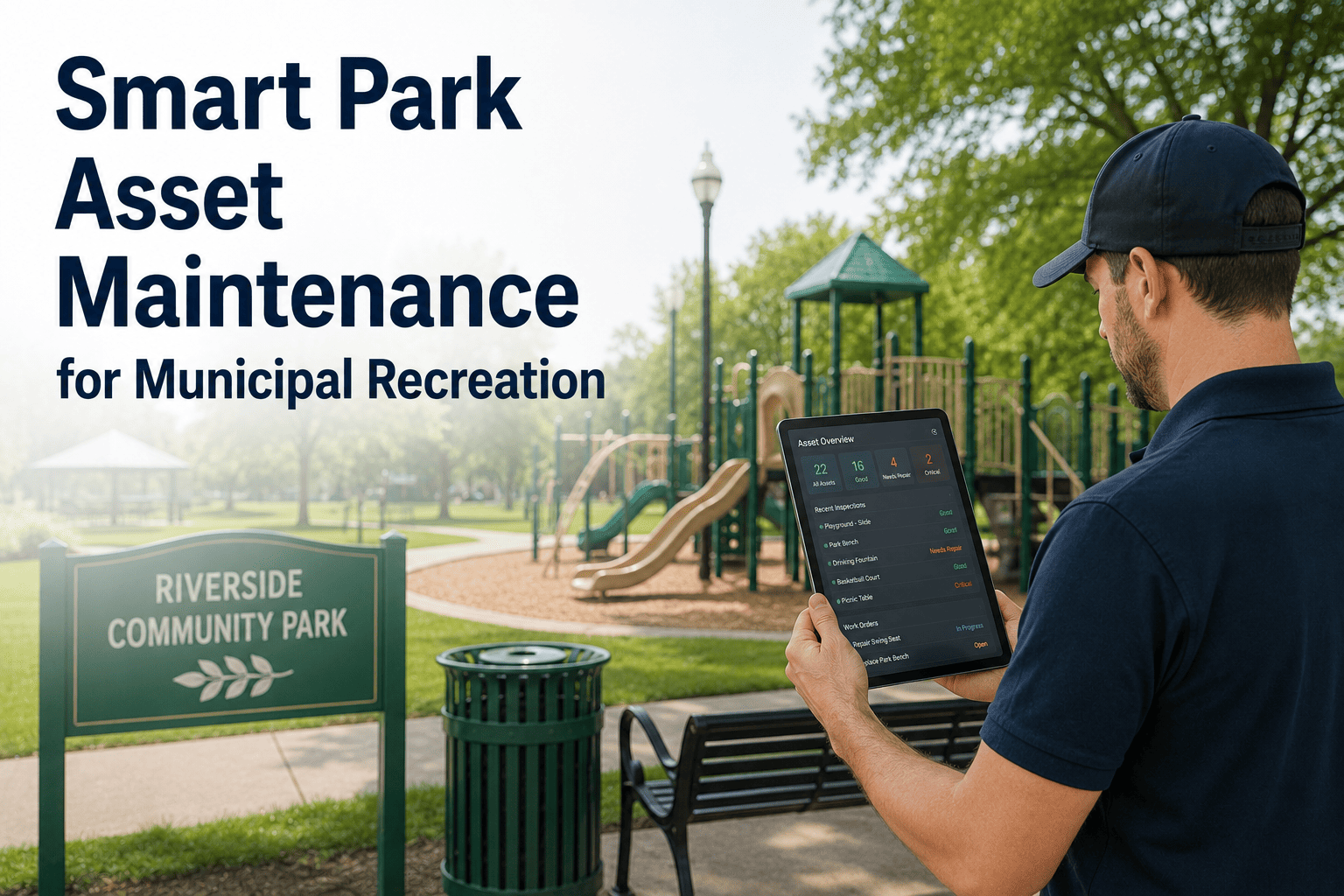
A water distribution network can pass every treatment benchmark at the plant and still deliver unsafe water to the tap. Chlorine residual decays over distance. Turbidity spikes in ageing pipes. pH shifts under pressure transients. None of these events are visible until a customer complaint arrives — or a regulatory inspection finds a gap in the monitoring record. Traditional manual sampling at fixed intervals captures a snapshot. IoT sensors capture everything, continuously. Start a free OxMaint trial to connect your sensor alert data directly to a managed maintenance workflow, or book a demo to see how water utilities track compliance and dispatch repairs from one platform.
30.9B
connected IoT devices estimated globally by 2025 — water quality monitoring is one of the fastest-growing segments
99.28%
impurity classification accuracy achieved by on-device ML models running on modern IoT water sensors
15 sec
data transmission interval achievable with in-pipe IoT sensors for pH, chlorine, turbidity, and flow
Section 01
Why Manual Sampling Is No Longer Enough
Manual water quality sampling works on a schedule. Contamination does not. A pipe burst, a pressure transient, a biofilm event, or a chlorination dosing fault can degrade water quality within hours — long before the next scheduled sample would catch it. IoT sensor networks eliminate the gap between events and detection by transmitting readings every few seconds, 24 hours a day, from sensors placed throughout the distribution system. When any parameter crosses a defined threshold, the system generates an alert immediately — not at the next sampling visit. Sign up for OxMaint to connect those alerts to work orders and track every corrective action to documented completion, or book a demo to see the full alert-to-resolution workflow.
Scenario
Manual Sampling
IoT Continuous Monitoring
Chlorine decay
Undetected between sampling visits — may breach minimum residual for hours or days
Residual sensor alerts within seconds of breach — dosing adjustment triggered before distribution reaches customers
Turbidity spike
Customer complaint is often the first indicator — regulatory violation already occurred
In-pipe turbidity sensor detects spike in real time — source identified and isolated before customer impact
pH deviation
Weekly or monthly lab sample — pH exceedance may persist for days undetected
Continuous pH sensor triggers alert within threshold deviation — treatment adjustment logged automatically
Compliance record
Manual logs assembled from notebooks and spreadsheets before every audit
Complete timestamped sensor log and corrective action history exportable in under 15 minutes
Section 02
The 5 Parameters Every Distribution Network Must Monitor
IoT sensor networks in water distribution systems are configured to monitor the parameters that regulators, health agencies, and operational teams need most. Each parameter signals a different failure mode — together they give a complete, real-time picture of water quality from the treatment plant to the tap. Sign up free to see how OxMaint logs exceedances and auto-generates corrective work orders for each parameter type.
01
Free Chlorine Residual
Disinfection
Chlorine is the primary disinfectant barrier in drinking water distribution. Residual must be maintained above the regulatory minimum at every point in the network. IoT chlorine sensors measure continuously and alert when residual falls below threshold — allowing dosing adjustments before the protection gap reaches customers.
EPA minimum residual
0.2 mg/L at point of use
Alert threshold (typical)
Below 0.5 mg/L triggers review
02
Turbidity
Particle Load
Turbidity measures suspended particles in the water column. High turbidity indicates sediment intrusion, pipe deterioration, or a treatment failure. Beyond regulatory non-compliance, high turbidity creates a protective shield for pathogens, reducing disinfectant effectiveness. IoT turbidity sensors detect changes of 0.01 NTU — far below what visual inspection or manual sampling would catch.
EPA drinking water limit
Below 1 NTU at point of use
Treatment plant target
Below 0.3 NTU at 95% of readings
pH controls corrosion rates in metallic pipes and the effectiveness of chlorine disinfection. Water that is too acidic leaches lead and copper from service lines. Water that is too alkaline reduces chlorine effectiveness and promotes scale buildup. Continuous pH monitoring with 0.01 resolution sensors detects shifts that manual weekly sampling would miss entirely.
EPA secondary standard
6.5 – 8.5 pH range
Optimal for disinfection
7.0 – 7.5 pH
Pressure is a water quality parameter, not just a hydraulic one. Pressure drops below atmospheric create conditions for pathogen intrusion through micro-cracks and service line defects. Pressure transients — sudden spikes from pump starts or valve closures — cause physical damage and stir sediment. High-resolution pressure sensors sampling at up to 128 readings per second detect transients invisible to conventional monitoring.
Minimum residual pressure
20 psi at service connection
Transient risk zone
Below 0 psi — intrusion risk
05
Temperature
Biological Risk
Water temperature directly affects biological activity, disinfectant decay rates, and the risk of Legionella and other opportunistic pathogens. Elevated distribution temperatures accelerate chlorine decay and promote biofilm formation. Continuous temperature monitoring is a core requirement of Legionella Water Management Programs and is increasingly embedded in IoT water quality sensor packages alongside chlorine and pH.
Cold water target
Below 68°F (20°C)
Legionella growth range
68°F – 122°F (20°C – 50°C)
Sensor Alerts Are Only Half the System. OxMaint Handles the Other Half.
IoT sensors detect the problem. OxMaint converts every alert into a structured work order — assigned to the right technician, tracked to completion, documented with timestamps and photo evidence, and exported as a compliance-ready report.
Start your free trial or
book a demo to see the full workflow for your distribution network.
Section 03
How an IoT Water Quality Monitoring System Works End to End
Understanding the architecture of a deployed system helps utilities evaluate what they already have, what gaps need filling, and how OxMaint fits into the workflow between detection and resolution. Book a demo to walk through how each component connects for your specific network configuration.
01
Sensors Deployed In-Network
pH, chlorine, turbidity, pressure, and temperature sensors installed at strategic points — treatment plant outlets, reservoir inlets, district meter boundaries, and high-risk zones identified through hydraulic modelling. Sensors transmit readings every 15 seconds via LoRaWAN, cellular, or Wi-Fi to a cloud gateway.
→
02
Cloud Analytics and Threshold Alerting
Data streams into a centralised cloud platform. AI and ML models classify readings against defined control limits — flagging deviations, identifying trends, and distinguishing genuine quality events from sensor noise. Alerts generated within seconds of threshold breach.
→
03
OxMaint Work Order Created
Alert triggers an OxMaint work order — parameter, location, breach value, and priority level pre-populated. Assigned to the responsible field crew with mobile notification. No manual data entry required between detection and dispatch.
→
04
Resolution Documented and Reported
Field technician closes work order with corrective action notes, photos, and confirmation reading. Compliance report generated automatically — timestamped sensor data, alert record, corrective action, and resolution time — ready for regulatory submission.
Section 04
Regulatory Compliance: What IoT Monitoring Supports
Regulatory requirements for drinking water quality monitoring are tightening across all major markets. IoT sensor networks directly support compliance documentation requirements that manual programs struggle to meet consistently. Sign up for OxMaint to build the automated compliance record your next audit requires, or book a demo to discuss specific documentation requirements for your regulatory jurisdiction.
US EPA — Safe Drinking Water Act
Total Coliform Rule, Lead and Copper Rule, Surface Water Treatment Rule, and Disinfectants and Disinfection Byproducts Rule all require monitoring at defined frequencies with documented records. IoT continuous monitoring exceeds minimum frequency requirements and provides an automated audit trail.
Ongoing — records must be retained for minimum 3–12 years by rule
EU Drinking Water Directive (2020/2184)
Updated 2021 — expanded parametric values, increased monitoring frequency for large systems, new requirements for risk-based assessments and catchment-to-tap monitoring. IoT networks support the continuous monitoring and data accessibility requirements of the revised directive.
Member state implementation required by January 2023
Australia — ADWG Framework
Australian Drinking Water Guidelines require risk-based multiple-barrier approaches and continuous monitoring where technically feasible. Water Quality Management Plans must demonstrate monitoring of microbiological, physical, and chemical parameters with documented corrective action records.
Risk-based monitoring plans — ongoing requirement
WHO — Guidelines for Drinking Water Quality
4th Edition guidelines establish Water Safety Plans as the preferred framework — requiring continuous operational monitoring, verification monitoring, and documented corrective action. IoT sensor integration is explicitly recognised as a tool for meeting operational monitoring requirements.
Adopted as national standard basis in 100+ countries
Frequently Asked Questions
What parameters do IoT water quality sensors measure in distribution systems?
+
The core parameters monitored by IoT sensors in drinking water distribution are free chlorine residual, turbidity, pH, pressure, and temperature. More advanced deployments also monitor dissolved oxygen, electrical conductivity, total dissolved solids, nitrate, fluoride, and oxidation-reduction potential. Each parameter signals a different risk — chlorine decay indicates disinfection failure, turbidity spikes indicate physical contamination, pH shifts affect corrosion and disinfectant effectiveness, pressure drops create intrusion risk, and elevated temperature promotes biological growth.
Sign up for OxMaint to connect multi-parameter sensor alerts to a single managed work order platform.
How often do IoT sensors transmit water quality data?
+
Data transmission intervals are configurable based on the sensor type and communication protocol. Research deployments have demonstrated 15-second transmission intervals for key parameters including flow, pH, free chlorine, turbidity, nitrate, and fluoride via cloud-connected systems. Pressure loggers designed for transient detection can sample at up to 128 readings per second. Standard operational deployments typically use 1–15 minute intervals for routine quality parameters, with the frequency increased automatically when readings approach threshold limits.
How accurate are IoT water quality sensors?
+
Modern IoT water quality sensors achieve high accuracy when properly calibrated and maintained. pH sensors offer resolution of 0.01 pH. Turbidity sensors detect changes of 0.01 NTU. On-device machine learning models running on IoT sensor hardware have demonstrated 99.28% accuracy in classifying water quality impurity events across normal, rainwater runoff, and chemical contamination profiles. Regular sensor probe cleaning and calibration — typically every seven days for distribution system deployments — is essential to maintaining accuracy over time.
Book a demo to see how OxMaint schedules sensor maintenance and calibration tasks automatically.
How does OxMaint integrate with water quality IoT sensor systems?
+
OxMaint receives quality alerts from IoT sensor platforms — via API, webhook, or manual entry — and converts them into structured maintenance work orders with the parameter, location, breach value, and priority pre-populated. Field crews receive mobile notifications, complete corrective actions, and close work orders with photo documentation. OxMaint generates the complete compliance record: sensor alert, work order creation timestamp, corrective action taken, and resolution confirmation — in an exportable format suitable for regulatory submissions.
Start a free trial to configure the integration for your sensor platform.
Free to Start — No IT Project Required
Real-time sensors detect the problem. OxMaint makes sure it gets fixed, documented, and reported.
OxMaint connects your IoT water quality monitoring infrastructure to a complete maintenance workflow — converting every sensor alert into a managed work order, tracking every corrective action to documented completion, and generating audit-ready compliance reports for every regulatory submission.
Start your free trial today, or
book a demo for a configuration walkthrough for your distribution network.