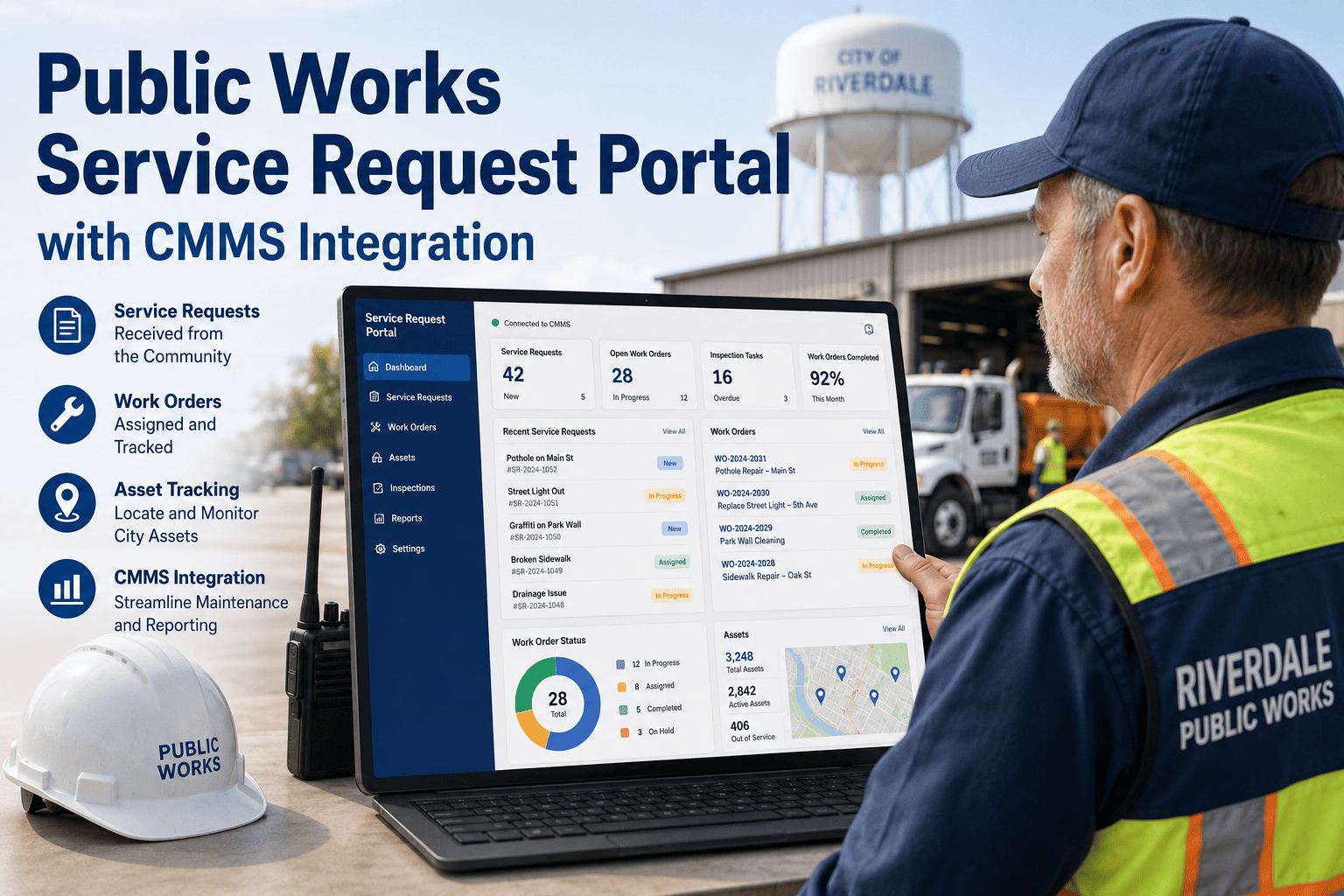
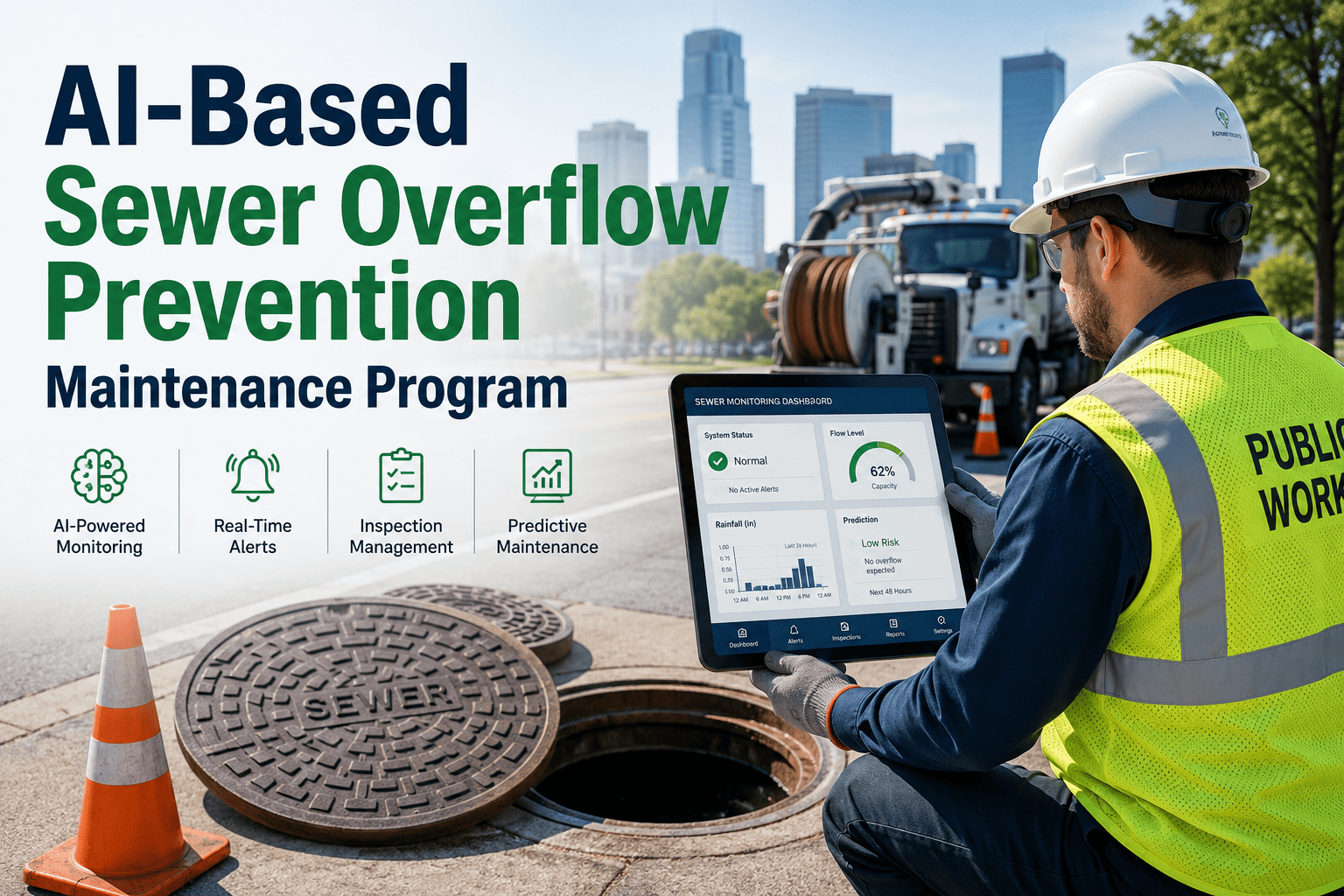
Municipal stormwater systems silently protect communities from flooding, water quality violations, and costly MS4 permit enforcement actions — until they fail. Catch basins clog with sediment, detention ponds lose capacity, outfall pipes crack, and inlet grates collapse under traffic load. Most of these failures are entirely preventable with a structured inspection and maintenance program. The problem is that most municipalities manage stormwater maintenance the same way they always have: paper work orders, crew schedules built on institutional memory, and inspection records that live in filing cabinets. OxMaint gives municipal stormwater teams one digital platform to schedule inspections, log results, document MS4 compliance, and generate permit reports — without the paperwork. Book a demo to see how it works for your municipality.
The Four Critical Stormwater Infrastructure Types — and What Fails
- Inspect sump depth — clean when sediment reaches 50% of sump
- Check grate condition for cracking, displacement, or missing sections
- Verify outlet pipe is clear and structurally intact
- Log floatables, oil sheen, or illicit discharge indicators
- Measure sediment accumulation against design capacity benchmarks
- Inspect inlet and outlet structures for erosion and blockage
- Check embankment condition for seepage, erosion, or animal burrows
- Verify emergency spillway is clear and functional
- CCTV or visual inspection of pipe interiors for cracks, joint separation, or root intrusion
- Measure sediment depth — flush when exceeding 20% of pipe diameter
- Check headwall and wingwall condition at culvert ends
- Verify flow capacity at peak design conditions
- Dry-weather inspection for non-stormwater discharges and illicit connections
- Photograph and log water quality observations at each outfall
- Inspect riprap, energy dissipators, and bank stabilisation condition
- Document pipe diameter, material, and GPS coordinates for asset register
MS4 Permit Compliance — What Your Maintenance Records Must Prove
Municipal Separate Storm Sewer System (MS4) permits require municipalities to implement and document a Stormwater Management Program (SWMP) across six minimum control measures. Maintenance records are the evidence that your program is actually operating — not just written in a plan document. Start a free OxMaint trial to see how your team can build this documentation automatically.
| MS4 Minimum Control Measure | Maintenance Documentation Required | OxMaint Evidence Generated |
|---|---|---|
| Illicit Discharge Detection and Elimination (IDDE) | Outfall inspection records, dry-weather screening results, illicit connection findings and resolution | Timestamped outfall inspection with photo log and GPS coordinates |
| Construction Site Runoff Control | Inspection records for active construction sites, BMP installation and maintenance verification | Site inspection checklists with photo evidence and corrective action tracking |
| Post-Construction Runoff Control | Inspection and maintenance records for permanent stormwater BMPs — ponds, bioretention, infiltration | Asset-specific PM schedule with sediment measurement and structural condition log |
| Pollution Prevention / Good Housekeeping | Municipal facility inspection records, street sweeping logs, catch basin cleaning records | Frequency-based catch basin PM with cleaning date, volume removed, and photo documentation |
| Public Education and Outreach | Program activity logs and outreach records — not primarily maintenance-related | Work order history can document public complaint response and follow-up actions |
| Public Participation | Meeting records and public comment responses — not primarily maintenance-related | OxMaint can log and track citizen-reported drainage complaints to resolution |
OxMaint vs Competing Platforms — Municipal Stormwater Fit
| Capability | OxMaint | MaintainX | UpKeep | Limble CMMS | IBM Maximo | Hippo (Eptura) |
|---|---|---|---|---|---|---|
| MS4-aligned inspection templates | Built-in | Generic | Generic | Generic | Custom build | No |
| Catch basin inventory and PM scheduling | Native | Basic | Basic | Basic | Advanced | No |
| GPS asset location with photo log | Native | Yes | Yes | Limited | Yes | No |
| Permit compliance export report | One-click PDF | Manual export | Manual export | Manual export | Configurable | No |
| Citizen complaint work order intake | Native | Basic | Basic | No | Enterprise | No |
| Setup time | Days | Weeks | Weeks | 1 week | Months | Weeks |
Results Municipal Teams Achieve with OxMaint
Frequently Asked Questions
How often should catch basins be inspected and cleaned?
EPA guidance recommends inspecting catch basins annually at minimum, with cleaning triggered when sediment reaches 50% of sump depth. High-traffic or high-sediment-load areas warrant quarterly inspection. OxMaint auto-schedules inspections by asset zone and triggers cleaning work orders when inspection records show the 50% threshold has been reached — without requiring a separate manual review.
What records does an MS4 permit require municipalities to keep?
MS4 Phase I and Phase II permits require documentation of activities under each of the six minimum control measures — including inspection records, cleaning logs, illicit discharge findings and follow-up actions, BMP maintenance records, and staff training logs. Records must generally be retained for at least 3 years and made available to the permitting authority on request. OxMaint stores all records indefinitely and exports them in regulator-ready format on demand.
Can OxMaint manage both stormwater and other public works assets?
Yes. OxMaint manages stormwater infrastructure alongside any other public works or utility assets — roads, water distribution, wastewater, parks, fleet, and facilities — in a single platform. Each asset type has its own PM templates, inspection checklists, and compliance dashboards. Municipal departments share one platform while maintaining asset-specific operational workflows and reporting.
How does OxMaint handle citizen-reported drainage complaints?
OxMaint supports QR-code and web-form based public issue reporting. Citizens can report flooded inlets, blocked culverts, or suspected illicit discharges directly — the report creates a work order in OxMaint, is assigned to the appropriate crew, and the resolution is logged with timestamp and photo. This creates a documented complaint-to-resolution trail that satisfies the public participation minimum control measure of most MS4 permits.