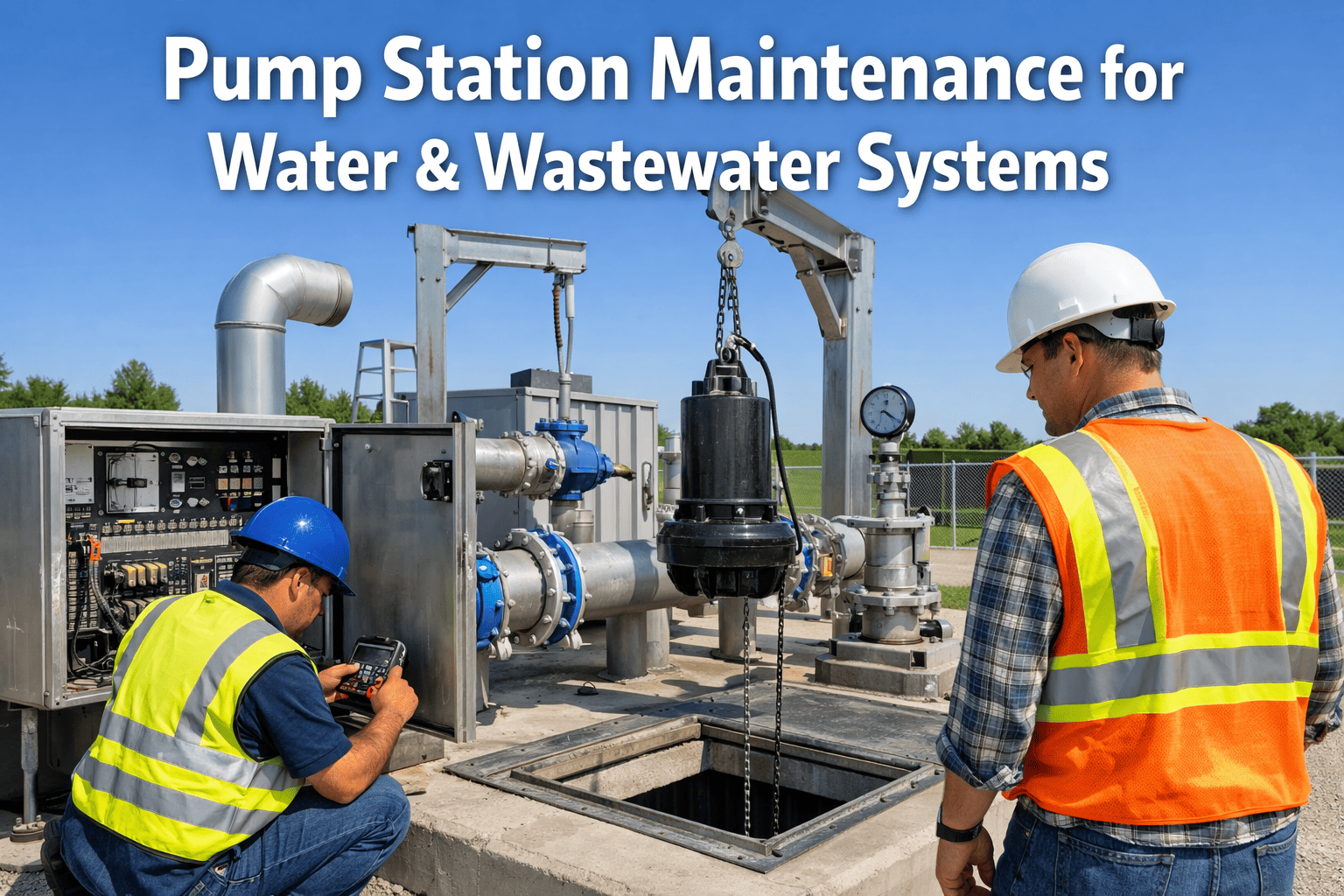
Pump stations are the mechanical heartbeat of every water and wastewater collection system — and when they fail, the consequences are immediate: sanitary sewer overflows, flooded wet wells, regulatory violations, and emergency repair costs that dwarf the price of the preventive maintenance that would have prevented the failure. A structured pump station maintenance program managed through a CMMS like OxMaint keeps lift stations and booster stations running reliably while cutting emergency callouts by 40–60%.
Automate Pump Station Maintenance with OxMaint
Preventive schedules, SCADA-triggered alerts, inspection checklists, and spare parts tracking — all in one CMMS built for water and wastewater utilities.
Why Pump Stations Fail — and What It Costs
Most pump station failures trace back to the same root causes: bearing degradation from missed lubrication intervals, seal failures from vibration left unmonitored, check valve fouling from debris accumulation, and control panel failures from moisture intrusion and corrosion. Each of these failure modes is entirely preventable with structured PM schedules and condition monitoring.
A single pump station failure in a wastewater lift station can trigger an SSO within hours — exposing the utility to EPA enforcement, state fines of $10,000–$50,000 per day, and public health liability. On the water side, booster station failures cause pressure loss across service zones, fire suppression capacity drops, and boil-water advisories. Book a demo to see how OxMaint prevents these failures systematically.
Pump Station Components: What Needs Maintenance
Every pump station — whether a wastewater lift station, stormwater pump station, or water booster station — contains the same core component groups that require structured maintenance attention.
| Component Group | Key Equipment | Common Failure Modes | PM Frequency |
|---|---|---|---|
| Pumps | Submersible, vertical turbine, centrifugal, grinder pumps | Impeller wear, seal failure, bearing degradation, cavitation | Weekly checks, quarterly PM, annual overhaul |
| Motors & Drives | Electric motors, VFDs, soft starters, motor starters | Winding insulation breakdown, overheating, VFD faults | Monthly inspection, annual thermography, 3-year testing |
| Valves & Piping | Check valves, gate valves, plug valves, force main connections | Check valve slam, seat erosion, joint leaks, FOG buildup | Quarterly exercising, annual inspection |
| Wet Well & Structure | Wet well, dry well, access hatches, ventilation, coatings | H2S corrosion, grease accumulation, structural cracking | Monthly cleaning, quarterly inspection, annual coating review |
| Controls & SCADA | Level sensors, floats, RTU/PLC, telemetry, alarm panels | Sensor drift, communication loss, false alarms, corrosion | Monthly calibration, quarterly testing, annual replacement |
| Electrical | Panels, disconnects, transfer switches, backup generators | Moisture intrusion, contact corrosion, breaker failure | Monthly visual, quarterly tightening, annual testing |
Preventive Maintenance Checklist by Frequency
A structured PM program assigns specific tasks to specific frequencies based on manufacturer recommendations, failure history, and operating conditions. OxMaint automates scheduling, assigns technicians, and tracks completion rates across your entire pump station fleet.
Weekly Checks
Operator-level inspections that catch early warning signs before they escalate into failures or compliance events.
- Visual inspection of pump operation, noise, and vibration
- Wet well level verification against SCADA readings
- Check for grease buildup, rag accumulation, and debris
- Confirm alarm panel status and communication to central SCADA
- Inspect site condition: fencing, access, signage, landscaping
Monthly Maintenance
Technician-level inspections targeting the component groups most vulnerable to progressive degradation.
- Pump amp draw measurement and comparison to baseline
- Motor temperature readings (infrared or contact)
- Level sensor calibration check against manual measurement
- Wet well cleaning and grease removal
- Electrical panel inspection: moisture, corrosion, loose connections
- Backup power system run test (15–30 minutes under load)
Quarterly Service
Deeper inspections and preventive actions targeting wear components and control system integrity.
- Vibration analysis on pump and motor bearings
- Check valve inspection and exercising
- VFD parameter review and fault log download
- Force main air release valve inspection
- Ventilation system cleaning and H2S sensor calibration
- Structural inspection: coatings, cracks, anchor bolts
Annual Overhaul
Major preventive actions, testing, and component replacements that reset equipment condition and extend service life.
- Pump pull and inspection: impeller, volute, wear rings, seals
- Motor insulation resistance testing (megger test)
- Full electrical system thermography
- Generator load bank test and transfer switch exercise
- SCADA/RTU firmware updates and communication verification
- Cathodic protection system testing (if applicable)
SCADA Integration: Condition Monitoring Between Inspections
Preventive maintenance catches degradation at scheduled intervals — but failures don't follow schedules. SCADA-connected CMMS bridges the gap by triggering automated work orders when real-time sensor data crosses defined thresholds between PM visits.
Pump Run-Time and Cycle Tracking
Track total run hours and cycle counts per pump to trigger usage-based PM instead of calendar-only schedules. Flag pumps exceeding normal duty cycles — often an early sign of check valve failure or wet well level sensor drift.
- PM triggered at run-hour thresholds, not just calendar dates
- Abnormal cycling frequency generates automatic alerts
Amp Draw and Power Monitoring
Rising amp draw indicates impeller wear, partial blockage, or bearing degradation. Falling amp draw may signal a broken impeller or lost prime. OxMaint sets baseline amp ranges per pump and alerts when readings deviate.
- High-amp alerts catch blockages before pump damage
- Low-amp alerts flag mechanical failures early
Wet Well Level and Overflow Prevention
Redundant level sensors with SCADA alarming prevent high wet well conditions from escalating to SSOs. OxMaint links high-level alarms directly to emergency work orders with pre-assigned response crews and escalation protocols.
- High-high level alarm triggers immediate work order dispatch
- Level trend analysis detects I&I events and capacity issues
Performance Benchmarks: CMMS-Managed Pump Station Programs
Utilities with structured CMMS-managed pump station maintenance consistently outperform those relying on calendar-only or complaint-driven maintenance across every reliability and compliance metric.
| Performance Metric | Reactive Baseline | CMMS-Managed Program | Improvement |
|---|---|---|---|
| Emergency Callouts per Station/Year | 8 – 15 events | 2 – 5 events | 50% – 70% reduction |
| Pump Mean Time Between Failures | 2,000 – 4,000 hours | 6,000 – 10,000 hours | 2x – 3x increase |
| SSO Events from Pump Failure | 3 – 8 per system/year | 0 – 2 per system/year | 70% – 90% reduction |
| PM Compliance Rate | 45% – 65% | 88% – 97% | 30% – 40% improvement |
| Mean Time to Repair (MTTR) | 4 – 8 hours | 1.5 – 3 hours | 55% – 65% reduction |
| Pump Rebuild Cost (annual avg) | $8,000 – $15,000 per station | $3,000 – $7,000 per station | 40% – 55% reduction |
How OxMaint Manages Pump Station Maintenance
OxMaint provides the complete CMMS framework for managing every aspect of pump station maintenance — from automated PM scheduling and mobile inspection checklists to SCADA-triggered work orders and spare parts inventory management.
Automated PM Scheduling
Calendar-based and run-hour-based PM schedules assigned per station with auto-generated work orders, technician assignment, and completion tracking across your entire pump station fleet.
Mobile Inspection Checklists
Field technicians complete station-specific inspection checklists on mobile devices — capturing readings, photos, and pass/fail results that feed directly into asset condition records without paper or re-entry.
SCADA-Triggered Work Orders
Integrate SCADA alarm data to auto-generate work orders when amp draw, run-time, vibration, or level readings exceed defined thresholds — converting monitoring data into maintenance action without manual intervention.
Spare Parts and Vendor Management
Track critical spare parts inventory per station — impellers, seals, bearings, float switches, and contactors — with minimum stock alerts and vendor lead time tracking to eliminate repair wait time.
Compliance and Audit Documentation
Generate audit-ready maintenance records for EPA, state regulators, and consent decree reporting — PM completion logs, inspection histories, SSO incident correlation, and corrective action documentation from a single platform.
Stop Reactive Pump Station Maintenance — Start with OxMaint
Automated PM schedules, SCADA integration, mobile checklists, and audit-ready documentation — everything your pump station maintenance program needs in one platform.
Frequently Asked Questions
What is included in a pump station preventive maintenance checklist?
A complete checklist covers pump operation checks, amp draw readings, vibration monitoring, wet well cleaning, valve exercising, level sensor calibration, electrical panel inspection, backup generator testing, and SCADA communication verification — organized by weekly, monthly, quarterly, and annual frequencies.
How often should pump stations be inspected?
Weekly operator-level visual inspections, monthly technician-level equipment checks, quarterly mechanical and control system service, and annual comprehensive overhauls including pump pulls and motor testing. SCADA monitoring provides continuous condition data between visits.
How does SCADA integration improve pump station maintenance?
SCADA feeds real-time data on pump run-time, amp draw, vibration, and wet well level to the CMMS. When readings exceed defined thresholds, automated work orders are generated — catching failures between PM visits before they cause SSOs or equipment damage.
What are the most common causes of pump station failures?
Bearing degradation from missed lubrication, seal failure from excessive vibration, impeller wear from abrasive debris, check valve fouling, control panel corrosion from H2S exposure, and level sensor drift causing incorrect pump cycling.
How does a CMMS reduce pump station emergency callouts?
Structured PM scheduling catches degradation before failure, SCADA-triggered work orders respond to abnormal conditions in real time, and spare parts pre-staging eliminates repair delays. Utilities typically see 50–70% reduction in emergency callouts within 12 months.
Can OxMaint manage maintenance for multiple pump stations?
Yes. OxMaint manages PM schedules, work orders, inspections, and spare parts across your entire pump station fleet from a single platform — with station-level dashboards, fleet-wide performance reporting, and technician route optimization.