Public Library & Museum Robots: Visitor Services Maintenance & CMMS 2026
By Taylor on February 13, 2026
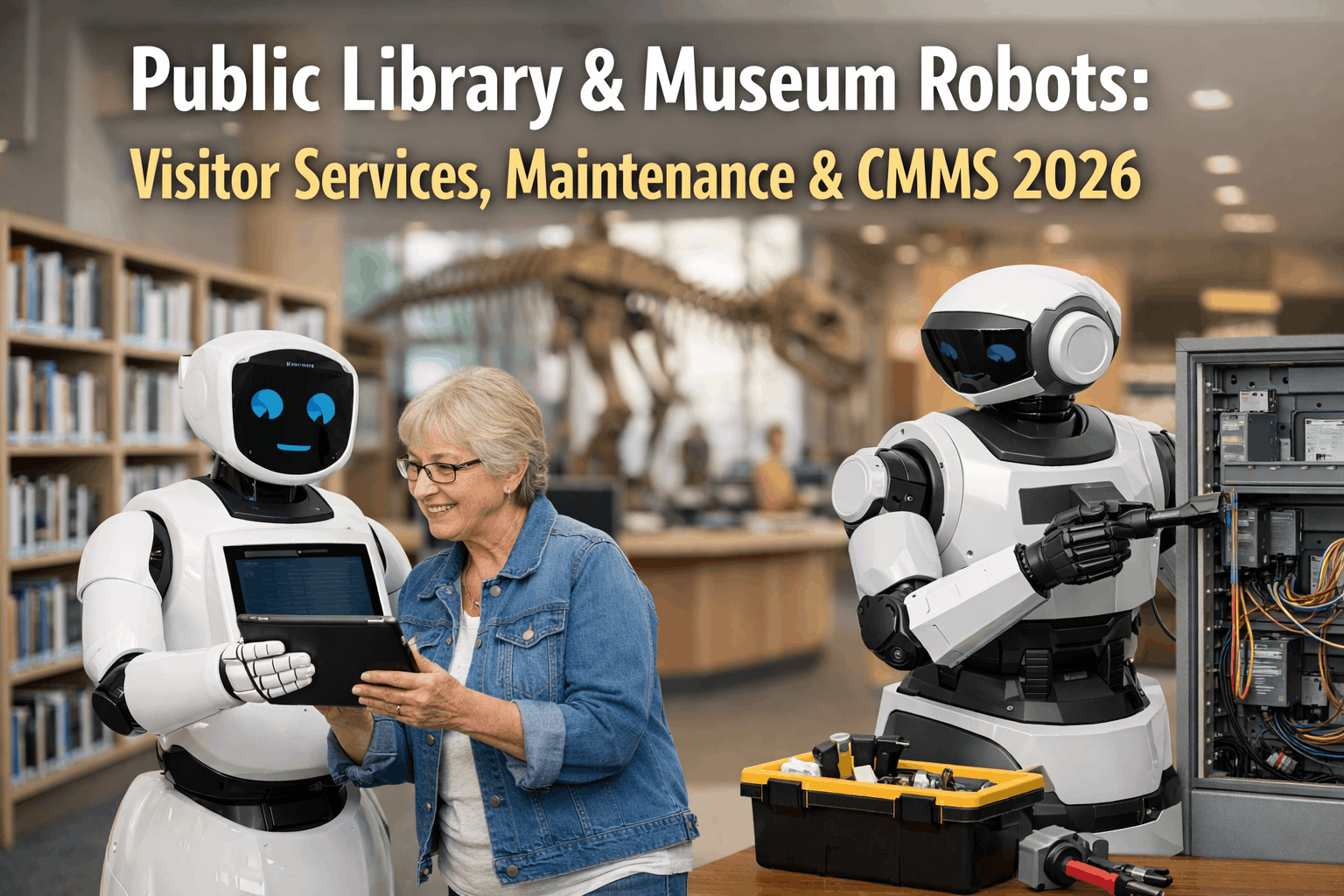
In the spring of 2025, a major metropolitan science museum faced a visitor services crisis. Their fleet of wayfinding robots, intended to guide guests through a new blockbuster dinosaur exhibit, began failing en masse during spring break. Touchscreens froze, voice modules garbled exhibit descriptions, and wheel motors jammed, leaving confused families stranded in hallways. The root cause wasn't defective hardware, but a lack of coordinated maintenance. Updates were pushed manually, calibration schedules drifted, and no one was tracking battery health against high-traffic demands. This scenario plays out in cultural institutions globally, where the novelty of robotics often outpaces the operational maturity to maintain them. Schedule a demo to explore how Oxmaint keeps your digital docents running smoothly.
Cultural Tech 2026
Robot Maintenance for Libraries & Museums
Ensure seamless visitor experiences with automated maintenance schedules for wayfinding bots, exhibit interactives, and accessibility assistants.
In high-foot-traffic environments, a "fix it when it breaks" approach is a recipe for disaster. Visitor patience is short, and a malfunctioning robot is not just an inconvenience—it's a detractor from the institution's reputation. When a robot stops working, staff are pulled from their primary duties to troubleshoot, creating a ripple effect of inefficiency. Modern cultural institutions require a proactive maintenance strategy that anticipates needs based on usage data, battery cycles, and exhibit schedules. Start Free Trial.
The Hidden Costs of Robot Downtime
01
Visitor Frustration
High
Broken tech creates negative experiences, leading to poor reviews and reduced return visits.
02
Staff Distraction
2 Hrs
Average time frontline staff spend troubleshooting a single robot failure instead of assisting guests.
03
Accessibility Gaps
Critical
When assistive robots fail, visitors with disabilities lose their primary means of independent navigation.
04
Expensive Repairs
$2.5k
Cost of emergency motor replacement due to lack of preventative lubrication and cleaning.
05
Data Inaccuracy
40%
of visitor interaction data is lost or corrupted when software updates are skipped or fail mid-operation.
06
Safety Risks
Mod
Malfunctioning sensors can lead to collisions with exhibits or, worse, with visitors, creating liability.
The Automated Maintenance Lifecycle
A robust CMMS transforms robot maintenance from a headache into a background process. By integrating maintenance schedules with exhibit calendars, libraries and museums can ensure that every update, calibration, and cleaning happens during off-hours. A usage spike during a holiday weekend triggers a proactive alert for battery checks, ensuring the fleet is ready for the next rush.
Proactive Robot Care Workflow
Automated for cultural institutions
1
Usage Monitoring & Alerting
IoT SensorsBattery Logs
CMMS monitors battery cycles and motor hours. Thresholds trigger auto-alerts for upcoming service needs before failure occurs.
2
Scheduled Preventive Maintenance
Calendar SyncExhibit Schedule
Work orders are auto-generated for non-peak times. Tasks include sensor cleaning, screen calibration, and software patching.
3
Technician Execution
Mobile AppChecklists
Techs receive tasks on mobile devices. Step-by-step guides ensure standardized calibration of voice and navigation systems.
4
Content & Software Updates
OTA UpdatesVersion Control
New exhibit data is pushed to the fleet. Verification tests run automatically to ensure accurate information delivery.
5
Return to Service & Reporting
DashboardUptime Log
Robot is flagged "Ready" in the system. Maintenance data updates the asset history for lifecycle tracking and budget planning.
See Automated Robot Care in Action
Watch how Oxmaint helps cultural institutions keep their robotic fleets operational, engaging, and ready for every visitor.
Connected Systems: The Visitor Experience Ecosystem
Effective robot management doesn't happen in a silo. It requires integration with the broader facility ecosystem. Connecting robot maintenance with the institution's Wi-Fi status, exhibit lighting schedules, and event calendars ensures that robots are not only functional but also contextually aware and available when needed most.
Integrated Cultural Tech Stack
Oxmaint CMMS
Central Hub
Work orders, asset history, inventory management, preventive scheduling
Event schedules, exhibit descriptions, language packs, interactive media
Facility Systems
Environment
Wi-Fi network status, automatic door controls, charging station power
Seamless data flow ensures robots are charged, updated, and deployed exactly when and where visitors need them.
Performance Metrics & Uptime
The success of a robot program is measured by its availability and interaction quality. Tracking metrics like Mean Time Between Failures (MTBF) and battery degradation allows facility managers to make data-driven decisions about fleet expansion and retirement. High uptime ensures that the investment in robotics translates directly into enhanced visitor engagement.
Robot Fleet Performance KPIs
Optimizing for the visitor experience
Fleet Availability
99%
Target: >98%
Percentage of fleet ready for deployment daily
Interaction Success
96%
Target: >95%
Completed wayfinding / Q&A without error
Battery Health
100%
Target: 0 Failures
Mid-shift charge depletion prevention
Content Accuracy
98%
Target: 100%
Up-to-date exhibit info & map data
Before & After: The Transformation in Numbers
Implementing a structured maintenance program for visitor services robots yields immediate and tangible benefits. From reducing the burden on IT and facility staff to ensuring that every visitor interaction is smooth and helpful, the operational shift is profound.
Ad-Hoc vs. CMMS Managed Maintenance
Emergency Repairs
Weekly
→
Rare
Staff Troubleshooting
15 Hrs/Wk
→
< 1 Hr/Wk
Visitor Satisfaction
Mixed
→
Excellent
Asset Lifespan
3 Years
→
5+ Years
Spare Parts Cost
High (Rush)
→
Optimized
Software Sync
Manual
→
Automated
Accessibility Uptime
85%
→
99.9%
Upgrade Your Visitor Services Today
Join leading museums and libraries using Oxmaint to manage their robotic fleets. Ensure reliability, reduce costs, and delight your guests with technology that works.
A standardized maintenance matrix ensures that no component is overlooked. From daily sensor wipes to annual battery replacements, defining these tasks prevents small issues from becoming expensive failures.
Robot Maintenance Task Schedule
Component
Task
Frequency
Responsible
Sensors (LiDAR/Cam)
Clean lens & verify calibration
Daily
Floor Staff
Touchscreen
Sanitize & test touch response
Daily
Floor Staff
Drive Train
Inspect wheels & remove debris
Weekly
Facilities Tech
Battery System
Deep cycle test & connection check
Monthly
Facilities Tech
Software
Install OS & Security Patches
Monthly
IT Dept
Content
Update exhibit info & maps
Quarterly
Curatorial / IT
Audio/Voice
Speaker test & mic calibration
Quarterly
IT Dept
Chassis
Inspect structural integrity
Annually
Facilities Tech
Expert Perspective: Reliability is Hospitality
"
We introduced robots to make our library more accessible, but initially, they were out of order so often it became a joke. Implementing a CMMS changed everything. We stopped reacting to dead batteries and started predicting them. Now, our 'concierge bots' are the most reliable staff members we have. They guide patrons to stacks, answer basic questions, and never take a sick day. The technology is great, but the maintenance process is what makes it magical.
— Director of Operations, City Public Library System
98%
Positive feedback
40%
Lower repair costs
100%
Event readiness
24/7
Availability
Cultural institutions that succeed with robotics understand that the machine is only as good as its support system. By prioritizing maintenance, you prioritize the visitor experience. Schedule a demo to build your robot maintenance plan.
Ensure a Flawless Visitor Experience
Oxmaint empowers libraries and museums to manage robot fleets with ease. Automate maintenance, extend asset life, and keep your focus on education and culture.
Can Oxmaint manage different types of robots from various manufacturers?
Yes. Oxmaint is hardware-agnostic. Whether you have wayfinding bots from one vendor, telepresence robots from another, and automated vacuum cleaners from a third, you can manage them all in one central system. You can create custom asset categories, maintenance checklists, and schedules unique to each model's requirements.
How does the system handle software updates versus physical repairs?
Oxmaint treats software updates as a type of preventive maintenance task. You can schedule recurring "Software Patch" work orders just like you would a "Wheel Inspection." These tasks can be assigned to your IT team, while physical repairs go to facilities staff, ensuring the right expertise is applied to every issue.
Can we track the warranty information for our robots?
Absolutely. Oxmaint allows you to store warranty details, purchase dates, and vendor contract information directly in the asset record. The system can alert you if a repair is needed on a unit that is still under warranty, potentially saving thousands in service costs by directing the claim to the manufacturer instead of using internal resources.
Is it possible to schedule maintenance around exhibit hours?
Yes, scheduling flexibility is a core feature. You can set maintenance windows to occur only during closed hours or on specific non-peak days. This ensures that technicians are not opening up robot chassis in the middle of a busy gallery, preserving the magic and safety of the visitor experience.
Do we need specialized technicians to use this software?
No. Oxmaint is designed to be user-friendly for all staff levels, from volunteer docents who might flag an issue using a simple QR code scan, to advanced IT specialists managing complex firmware rollouts. The interface is intuitive, mobile-first, and requires minimal training to get started.