Integrated Platform: Drones, Robots, and AI in Canals Maintenance
By Taylor on February 23, 2026
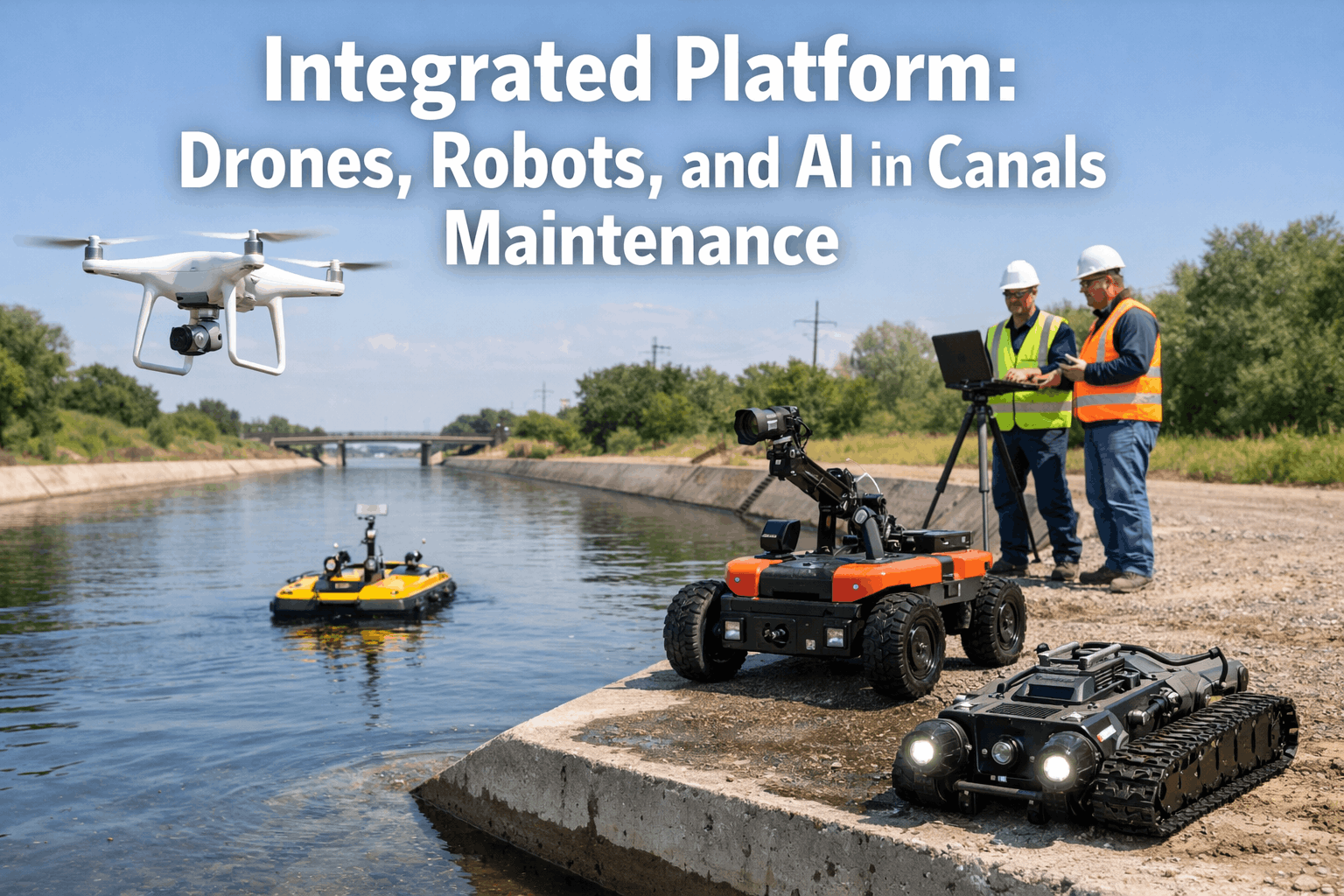
Every year, public water systems and canal networks manage trillions of gallons of water — and the infrastructure carrying that critical resource is aging fast. A significant portion of public waterways, levees, and canal systems are deteriorating, and structural inspections remain dangerously infrequent due to access constraints and high costs. Traditional maintenance methods — draining canals, deploying manual boat patrols, or using hazardous dive teams — are slow, expensive, and increasingly unable to keep pace with environmental wear. In 2026, an integrated platform of drones, robots, and AI is transforming how public works and government infrastructure agencies monitor, maintain, and protect waterway systems. Oxmaint AI integrates drones, robots, sensors, and analytics to automate inspections, reduce downtime, and keep citizens safe. Start with Oxmaint for free and see the difference AI-powered asset management makes for your public infrastructure.
The Real Cost of Failing Canals Maintenance
Before evaluating robotics and drone technology, it helps to understand what is at stake. The numbers behind deferred canals maintenance are staggering — compounding every year as agencies fall further behind on inspections, predictive maintenance, and capital planning. Here is what public agencies face without modern digital twin and IoT monitoring systems.
$85B
Annual Backlog
Estimated U.S. water infrastructure and canal maintenance backlog
15,000+
High-Hazard Miles
Miles of critical canals and levees requiring immediate inspection
75%
Faster Detection
Speed improvement with drone & robot inspections versus manual methods
These are not edge cases. They represent the daily reality for agencies operating without an integrated platform. The good news: public works agencies deploying autonomous robot patrols and drone inspection workflows report 40-60% lower inspection costs, 75% faster defect identification, and dramatically improved safety. Book a demo with Oxmaint to see how these savings apply to your specific canal infrastructure.
What Separates Great Integrated Platforms from Basic Flyovers
Not every drone or robot program delivers results. Many agencies invest in hardware only to discover that raw aerial footage without AI analytics or CMMS integration creates more data chaos than clarity. When evaluating an integrated platform for canals maintenance, these are the capabilities that turn raw footage into actionable work order automation.
Intelligence
AI Vision Defect Detection
Computer vision algorithms automatically identify concrete cracks, erosion, vegetation overgrowth, and structural spalling from drone and robot imagery — classifying severity without manual review of thousands of images.
Connectivity
IoT Monitoring & Sensors
Drones and robots carrying LiDAR and thermal sensors merge data with embedded IoT monitors (water level, flow rate, moisture detectors) for a complete structural health picture beyond what any single technology provides.
Automation
Route Planning & Mission Logs
Pre-program drone inspection workflows and autonomous robot patrols. Every mission logs precise GPS paths, ensuring repeatable data collection and triggering auto-generated work orders in your integrated CMMS.
Safety
Safety Geofencing & Alerts
Protect operators and the public with safety geofencing. Remote operations and teleoperation allow teams to inspect dangerous spillways and confined canal culverts safely from a control room, generating instant alerts for anomalies.
Compliance
Public Works Reporting
Auto-generate EPA and local water board compliant inspection reports. Document canal embankment conditions and structural element-level data to reduce report preparation from weeks to hours.
Insight
Digital Twin & Predictive Maintenance
AI tracks defect progression across inspection cycles, updating a digital twin of your canal network. This predictive maintenance model projects deterioration, so agencies fund repairs before critical failures occur.
Oxmaint integrates drone inspection, robot inspection, and AI analytics into one platform built for public works. See why government infrastructure agencies choose Oxmaint to automate maintenance.
Head-to-Head: Top Platforms for Canals Maintenance 2026
We evaluated the most capable drone and robot inspection platforms across criteria that matter to public agencies: AI defect detection accuracy, autonomous robot patrols, CMMS integration, remote operations, and total cost of deployment. Here is an honest comparison to help you shortlist the right fit for your canal networks.
Recommended
Oxmaint AI
Public works & water authorities
Full robot/drone-to-CMMS pipelineAI vision defect detection for canalsAsset health dashboard & free tier
Platform capabilities reflect publicly available data as of early 2026. Every public infrastructure mix is different — the best way to evaluate is hands-on. Create a free Oxmaint account to connect your drone inspection workflows and autonomous patrols into one CMMS.
Why Oxmaint Wins for Government Infrastructure
Plenty of platforms capture impressive aerial or underwater imagery. The real test is whether that data generates an automated work order, alerts crews via safety geofencing, and updates your asset health dashboard in real-time. Here is how Oxmaint's integrated platform translates into real capabilities for canal maintenance.
Drone & Robot to Work Order Automation
AI processes telemetry and imagery from autonomous robot patrols and drone flights on ingest. It identifies defects like concrete degradation or vegetation blockages and auto-generates work orders with GPS coordinates and repair actions.
Route Planning and Mission Logs
Easily schedule repeatable drone inspection workflows. Maintain compliance with comprehensive mission logs that track exactly when and where remote operations and teleoperation occurred across your canal network.
Safety Geofencing and Alerts
Establish strict safety geofencing parameters for autonomous units. If a drone or robot detects critical anomalies like severe water level drops or unauthorized access, the system issues instant alerts to your CMMS and mobile devices.
Asset Health Dashboard
Monitor conditions, compliance rates, repair backlogs, and AI analytics across your entire water infrastructure in real-time. Give public works leadership the data they need to justify budgets. Sign up for Oxmaint to explore live dashboards.
Before & After: What Changes With AI Analytics & Robotics
The shift from manual visual inspections to an integrated platform of drones, robots, and AI in canals maintenance is transformational. Here is what that transition looks like in practice for public infrastructure agencies.
Traditional Canal Inspections
Costly and disruptive draining of canal sections for visual checks
Inspectors deployed in boats or hazardous dive teams
Paper logs filed weeks after inspection with no digital twin updates
Reactive maintenance addressing failures only after they happen
Manual reporting for government compliance and audits
$5,000+
average cost per mile using manual canal inspection and drainage
Drones, Robots, and AI
Inspections completed via drone/ROV without draining water
Zero human exposure using remote operations and teleoperation
AI-analyzed workflows with automated CMMS work orders generated instantly
Predictive maintenance alerts triggered by continuous IoT monitoring
Compliance reports auto-generated from structured mission logs
40-60%
reduction in total maintenance costs with predictive asset management
Modernize your public works program without the risk. Oxmaint's free tier lets you run a real pilot on your canal infrastructure — seamlessly integrating your drone and robotics data.
Public works directors need hard data to justify technology adoption. The evidence from early-adopter government agencies is clear — integrating drones, autonomous robot patrols, and AI vision defect detection yields measurable returns within the first year.
60%
Lower Inspection Costs
Versus draining canals and deploying manual teams
75%
Faster Defect Detection
AI identifies structural canal erosion in hours, not weeks
95%
Reduced Inspector Risk
Near-total elimination of hazardous diving and confined space entry
45%
Predictive Maintenance
AI analytics enable proactive public infrastructure planning
These improvements compound over time as AI models learn your network's deterioration patterns. Create your free Oxmaint account and start tracking asset management metrics right away.
Your 4-Step Path to Modern Canal Asset Management
Building a drone and robotics program should not take years. Use this streamlined framework to move from evaluation to operational deployment across your government infrastructure.
1
Audit Your Inspection Backlog
Identify which canal sections, locks, and spillways have the highest risk profiles or are overdue for maintenance. Let this prioritize your drone inspection workflows.
2
Pilot on High-Priority Assets
Run autonomous robot patrols or drone flights on a small batch of infrastructure. Test the AI vision defect detection, mission logs, and remote operations against your traditional methods.
3
Validate AI Analytics & Integration
Confirm the AI accurately identifies erosion and concrete spalling. Validate that safety geofencing triggers alerts and that work order automation successfully communicates with your CMMS.
4
Scale the Digital Twin
Expand remote operations across the entire canal network. Integrate continuous IoT monitoring to feed your asset health dashboard and power predictive maintenance planning. Schedule a walkthrough to plan your agency's rollout.
The public works departments that will lead the next decade of water infrastructure management are those integrating drones, autonomous robots, and AI analytics into a single decision-making platform today. The technology is here — the only question is how fast agencies adapt.
Director of Public Works & Water Management
Your Community Relies on Resilient Public Infrastructure
Oxmaint brings together drone inspection workflows, autonomous robot patrols, IoT monitoring, and AI analytics in one CMMS integrated platform built for canal maintenance. Inspect submerged assets via remote operations, monitor levees with safety geofencing, and give your teams the predictive maintenance data they need to protect public resources.
How do drone inspection workflows handle long canal stretches?
Using route planning and mission logs, drones can be programmed for beyond visual line of sight (BVLOS) autonomous patrols along miles of canals. They capture high-resolution mapping and thermal data, which Oxmaint's AI processes to identify vegetation encroachment, erosion, or levee degradation. Schedule a demo to see automated route planning.
Can robots inspect submerged infrastructure without draining the canal?
Yes. Underwater remotely operated vehicles (ROVs) enable deep inspections of locks, spillways, and culverts without lowering water levels. Using remote operations and teleoperation, teams guide the robots safely from the surface, utilizing sonar and 4K cameras to feed data directly into the asset health dashboard.
What specific issues can AI vision defect detection find?
AI models analyze imagery from drones and robots to automatically classify structural issues like concrete spalling, cracking, exposed rebar, sediment buildup, and abnormal vegetation. It flags these defects by severity, instantly automating a CMMS work order. Sign up for Oxmaint to explore the defect library.
How does safety geofencing protect the public and the assets?
Safety geofencing creates invisible digital boundaries around high-risk canal zones or operational areas. If an autonomous robot, drone, or unauthorized personnel crosses these parameters, the system instantly logs the event and triggers safety alerts to operators, ensuring continuous compliance and security.
How does this integrate with predictive maintenance and digital twins?
Every mission log, IoT sensor reading, and AI-identified defect feeds into your infrastructure's digital twin within Oxmaint. Over time, the platform's AI analytics detect degradation rates, shifting maintenance from reactive emergency repairs to a predictive maintenance model, optimizing government infrastructure budgets.