Maintenance Team Retention in Food Manufacturing Plants
By Josh Turley on June 3, 2026
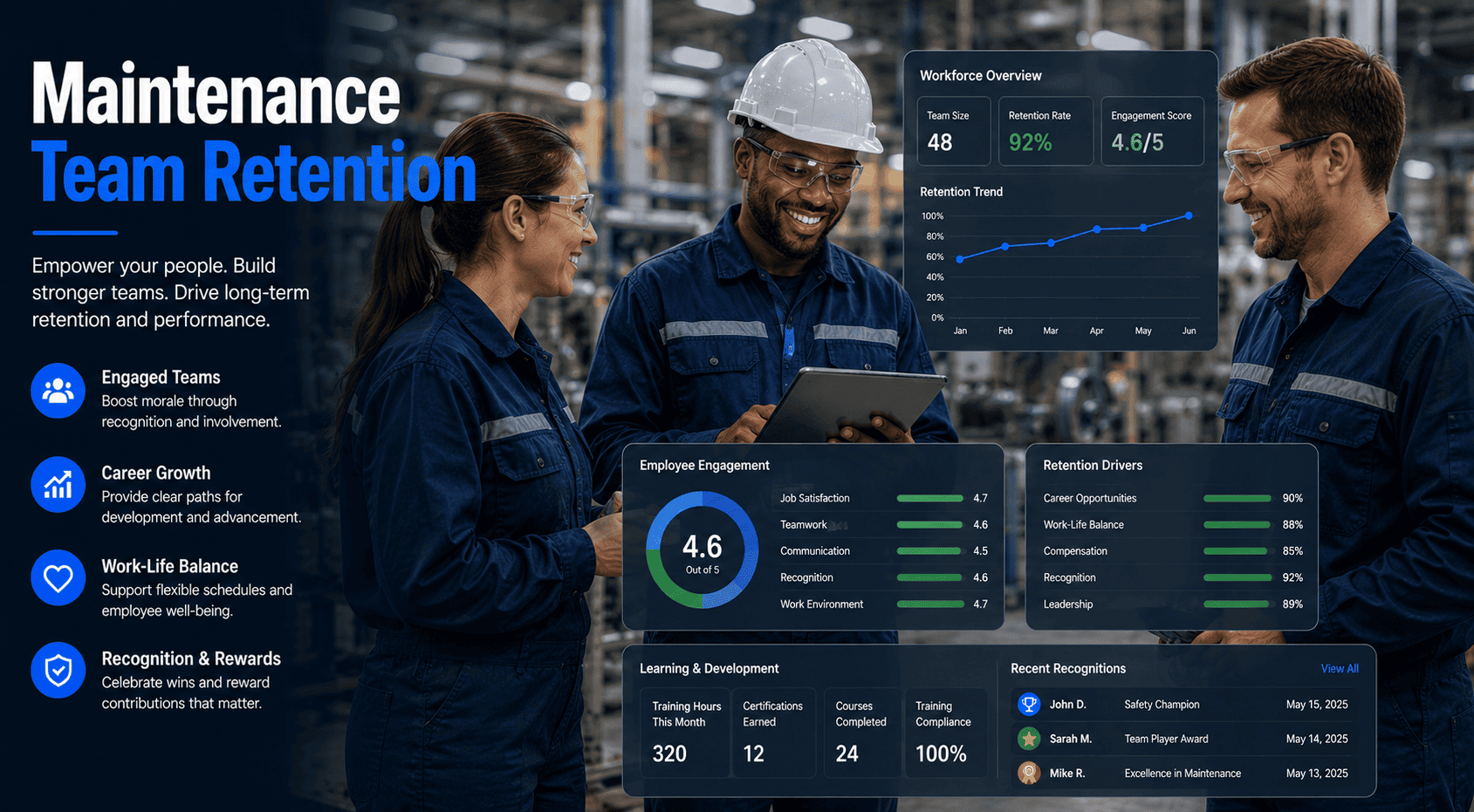
Maintenance technician retention in food manufacturing has become one of the most expensive workforce problems operations leaders manage — and most of the cost never shows up on the turnover report. Every experienced technician who leaves takes 3–5 years of equipment-specific knowledge with them, and the replacement hire needs 6–12 months to reach comparable productivity. Meanwhile, the remaining team absorbs the workload — accelerating the burnout cycle that drives the next resignation. This guide covers the practical strategies food manufacturing companies use to reduce maintenance technician turnover: from workload management and digital tools to onboarding programs that actually stick. Start a free trial of Oxmaint to see how better tools reduce technician friction, or book a demo and we'll show you how the platform is designed with technicians in mind.
Food Manufacturing Workforce Management
Maintenance Team Retention in Food Manufacturing: How to Reduce Technician Turnover
Replacing an experienced food plant maintenance technician costs $15,000–$50,000 in direct hiring and training costs — before accounting for the 6–12 months of reduced team productivity. Retention isn't an HR problem. It's a maintenance operations problem.
$15K–50K
direct cost to replace one experienced food plant maintenance technician
6–12
months for a replacement technician to reach full productivity on food plant equipment
40%
of skilled trades workers cite poor tools and inadequate technology as a reason for leaving
62%
less unplanned downtime — the operational benefit when experienced teams stay and tools support their work
Why Maintenance Technician Retention Matters in Food Manufacturing
Food plant maintenance technicians are not interchangeable labor. A technician who has spent three years maintaining your pasteurizer, your CIP systems, and your conveyor infrastructure carries knowledge that doesn't exist in any manual — quirks, failure patterns, vendor contacts, and institutional memory that makes the difference between a 2-hour fix and a 12-hour production stoppage. When that person leaves, the knowledge walks out with them.
Retention problems in food plant maintenance also compound at the team level. When experienced technicians leave, remaining team members absorb the workload. Overtime climbs, preventive maintenance compliance drops, and reactive emergency repairs — which cost 4–5× more than planned work — become the dominant mode. The maintenance program deteriorates even as the plant keeps running, until the next unplanned failure makes the degradation impossible to ignore.
The good news: most of the retention levers are within maintenance leadership's control. Workload management, proper tools, structured onboarding, and clear career paths address the majority of the reasons food plant technicians leave — and Oxmaint's mobile-first work order management directly addresses the daily friction that drives early-career technician exits.
6 Retention Strategies That Actually Work in Food Plant Maintenance
Strategy 01
Structured Onboarding with Digital Asset Library
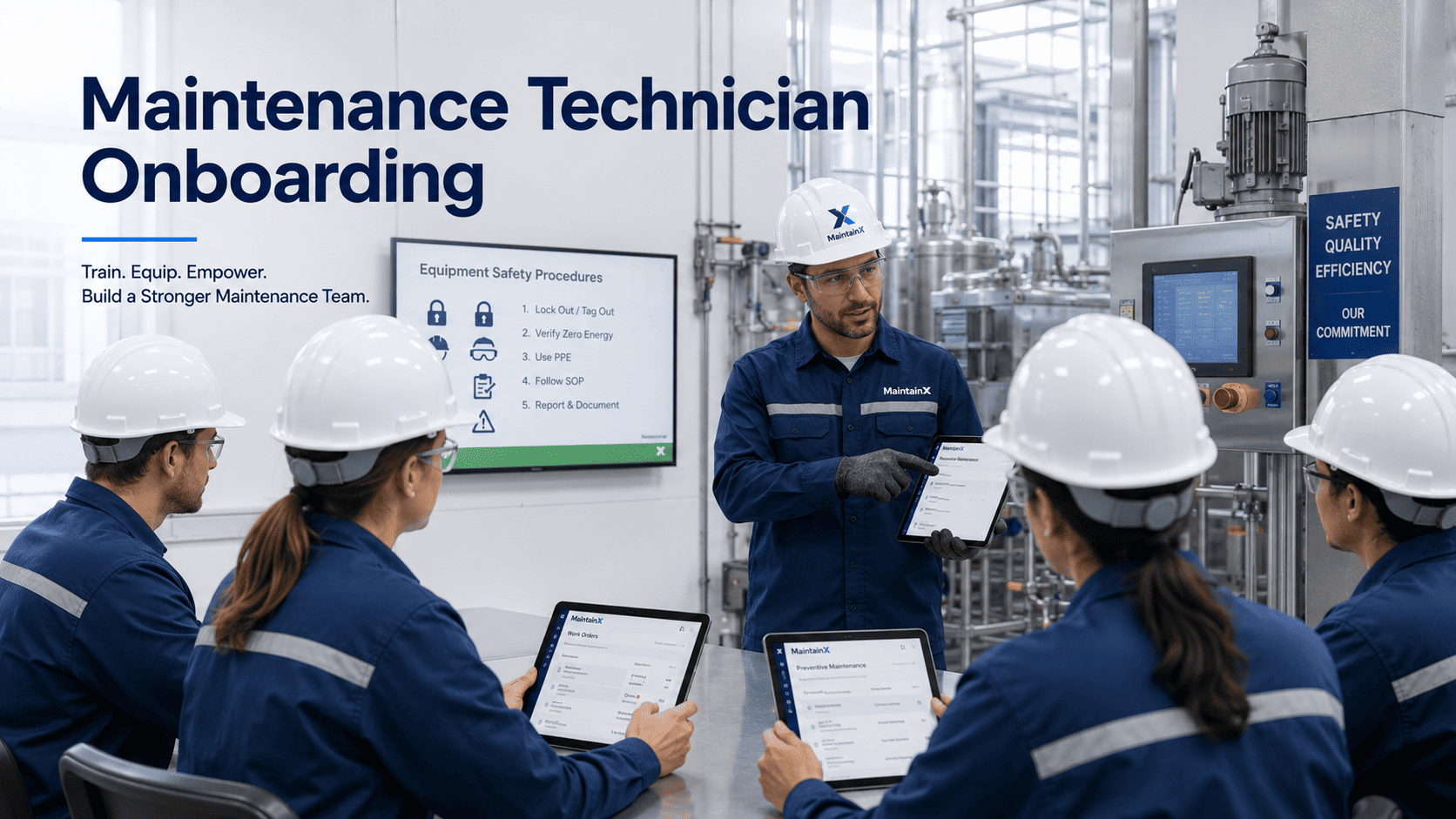
New technicians who can access complete equipment histories, repair procedures, and failure notes from day one reach productivity faster and feel less isolated in their first 90 days — the highest-risk turnover window.
Strategy 02
Reduce Administrative Burden with Mobile Tools
Technicians who spend 20–30% of their shift filling out paper forms and transcribing job cards are not doing maintenance — they're doing admin. QR-scan work orders on mobile cut this to seconds per task, restoring the work technicians were hired to do.
Strategy 03
Predictable Workload Distribution
Reactive maintenance creates unpredictable workloads — technicians don't know if today is a 6-hour day or a 14-hour day. Shifting toward planned PM work makes shifts more predictable, reducing burnout and the resentment that drives resignations.
Strategy 04
Skills-Based Work Assignment
Assigning work orders to technicians whose skills match the task prevents the frustration of under-utilization (senior techs doing basic tasks) and over-reach (junior techs attempting complex repairs without support). CMMS skill-matching makes this systematic, not personality-dependent.
Strategy 05
Clear Performance Visibility and Recognition
Technicians who can see their work history — tasks completed, PM compliance rate, response times — have data to support career conversations and performance reviews. Digital records make good work visible in ways paper systems never can.
Strategy 06
Safety Culture and Ergonomic Tool Design
Technicians who feel unsafe, or who use tools that create unnecessary physical difficulty, leave sooner. Digital LOTO workflows, mobile-first interfaces designed for gloved use, and clear safety procedures signal organizational investment in technician wellbeing.
The #1 reason food plant maintenance technicians cite for leaving within 2 years: "I spent more time on paperwork and emergency firefighting than on actual maintenance work." Better tools fix both.
4 Retention Pain Points That Maintenance Tools Can Directly Address
Emergency-Only Maintenance Culture
When reactive repairs dominate the workday, technicians spend their careers in crisis mode — always reactive, rarely proactive, and with no sense of progress or control over their work. This environment is exhausting, and it's the single biggest driver of burnout-related turnover in food plant maintenance teams.
Slow, Frustrating Maintenance Tools
Technicians who come from other industries where digital tools are standard — and then have to use paper forms, fax-era systems, or clunky desktop-only software — experience the tool gap as disrespect. Modern mobile-first CMMS tools that work the way a phone works are increasingly a retention factor, not a luxury.
No Career Visibility or Skill Development Path
Food plant maintenance technicians who cannot see a path from entry-level to senior technician to specialist roles leave — because the job has a ceiling, not a ladder. Structured skill-based work assignment in a CMMS creates the framework for documented competency progression that supports meaningful career conversations.
Poor Cross-Shift Communication
Technicians who arrive to a shift with no knowledge of what the previous shift encountered, what's still open, or what's deteriorating feel set up to fail. Paper shift logs create information gaps. A digital shift logbook and real-time work order status gives every technician the context to start their shift effectively — reducing the frustration that compounds into resignation.
If your maintenance team is losing experienced technicians faster than you can develop replacements, the tool environment is part of the answer — start a free trial to see how Oxmaint is designed for technician adoption, or book a demo and we'll walk through the technician experience.
How Oxmaint Supports Food Plant Maintenance Team Retention
Mobile-First, QR-Driven Work Orders
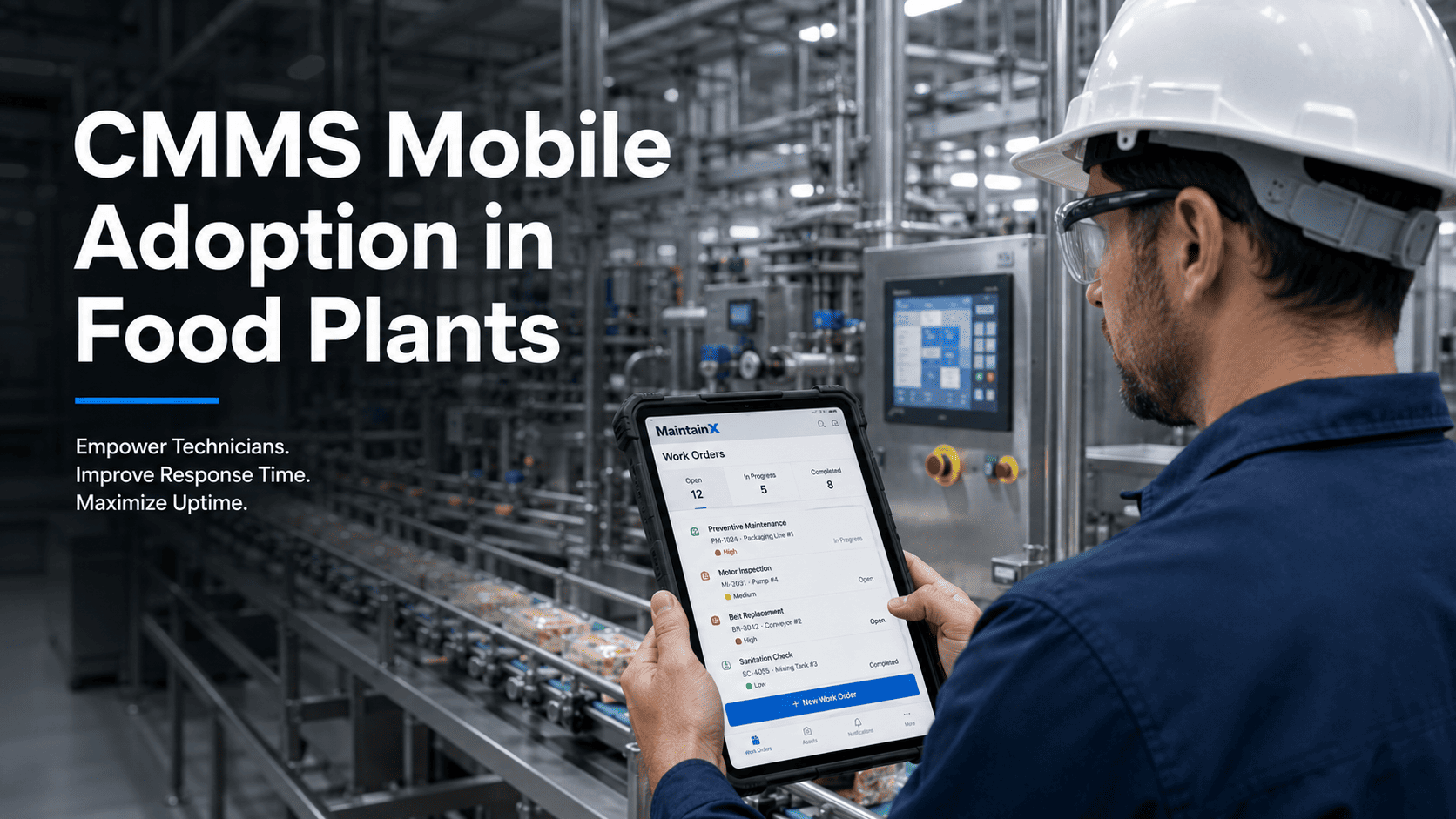
Technicians create, update, and close work orders by scanning a QR code on any asset — from a phone or tablet. No paper, no desktop login, no transcription at shift end. The tool works the way technicians already work: at the equipment, on the move.
Complete Equipment Knowledge Base
New hires access the full repair history, procedure library, and failure notes for every asset from day one — shortening the time-to-productivity curve and reducing the dependence on tribal knowledge that creates both burnout in senior techs and helplessness in junior ones.
Predictive Shift to Planned Work
AI predictive maintenance shifts your team's workload from reactive firefighting to planned repairs — making shifts more predictable, reducing overtime, and giving technicians the sense of control over their work that prevents burnout-driven turnover.
Digital Shift Logbook
Every open issue, recent repair, and equipment status note is captured in a structured digital shift log — so technicians arriving for any shift have full situational awareness without a 20-minute verbal handover that still misses half the detail.
Skills-Based Work Assignment
Oxmaint's AI routing assigns work orders to the nearest certified technician with the right skill level for the task — preventing both the frustration of overqualified techs doing basic tasks and the safety risk of under-qualified techs on complex equipment.
Performance and Contribution Visibility
Analytics and reporting give maintenance leadership and individual technicians visibility into PM compliance, work order completion rates, and response times — creating the data foundation for recognition, career conversations, and fair workload distribution.
Retention Investment vs. Turnover Cost: What the Numbers Show
$22,500–$75,000 in direct hiring and training costs
Near zero replacement cost; investment goes to development
Institutional knowledge
Lost with each departure; cycle repeats with every new hire
Captured in CMMS asset records; survives individual turnover
PM compliance rate
Drops as vacancies create workload gaps and overloads
Stable or improving; experienced team executes PM on schedule
Reactive maintenance proportion
Rises as team capacity shrinks; emergency cost escalates
Declining as experienced team drives more predictive/planned work
Onboarding burden on senior techs
Constant; reduces experienced tech capacity and accelerates burnout
Minimal; digital asset library reduces dependency on senior techs
Food safety risk from knowledge gaps
High; unfamiliar techs on food contact equipment creates compliance risk
Low; experienced team + documented procedures reduce compliance exposure
A 5-person food plant maintenance team with 30% annual turnover spends the equivalent of one full technician's annual salary on replacement costs alone — before accounting for the productivity loss during the 6–12 month ramp-up.
Results: What Better Tools and Structured Workflows Deliver
62%
Less unplanned downtime
Oxmaint client average — the operational outcome when experienced, supported maintenance teams execute AI-driven PM programs
80%
Less inspection time
AI Vision Camera automation reduces routine manual inspection rounds — giving technicians time back for meaningful maintenance work
Days
Not months to onboard
Complete digital asset library and mobile work order tools accelerate new technician productivity — shortening the highest-risk retention window
1,000+
Teams using Oxmaint
Across food manufacturing, facility management, and industrial sectors — teams where tools are designed for technician adoption, not just manager reporting
Frequently Asked Questions: Food Plant Maintenance Team Retention
What are the main reasons food plant maintenance technicians leave their jobs?
Industry surveys consistently identify four primary drivers: reactive-only work culture (constant emergency firefighting with no planned maintenance structure), poor or outdated tools that make work harder than it needs to be, lack of career development clarity, and workload imbalance — often caused by understaffing during a turnover cycle. Maintenance leadership can address the first three directly through process improvement and better tools, which reduces the fourth by making the team more efficient and less burned out.
How does a CMMS help retain food plant maintenance technicians?
A mobile-first CMMS like Oxmaint reduces the administrative friction that frustrates technicians: no paper work orders, no end-of-shift transcription, no hunting for equipment history. It also shifts the maintenance program from reactive to planned work — which makes shifts more predictable and less exhausting. Finally, digital records make technician contributions visible, supporting the performance recognition and career conversations that retention requires. Together, these address three of the four primary reasons food plant maintenance technicians cite for leaving.
What should a food plant maintenance technician onboarding program include?
Effective onboarding for food plant maintenance technicians should include: a structured 30-60-90 day plan with clear milestones, supervised access to the CMMS asset library for the assigned equipment set, paired shifts with an experienced mentor for the first 30 days, food safety and HACCP awareness training specific to the facility, LOTO certification and procedure familiarization for all relevant energy sources, and a 90-day check-in that creates a two-way feedback channel before the technician reaches the first turnover risk window.
How can food plant maintenance managers measure technician engagement and retention risk?
Leading indicators of engagement include PM compliance rate per technician, work order completion time trends, voluntary overtime patterns, and participation in shift handover communication. A technician whose metrics are declining — more missed PMs, slower response times, reduced voluntary engagement — is often showing early turnover signals 60–90 days before a resignation. Digital CMMS data makes these patterns visible in ways that paper-based systems never can, giving managers the opportunity to intervene before the decision is made.
Food Plant Workforce Retention
Your Best Maintenance Technicians Have Options. Give Them Reasons to Stay.
Outdated tools, reactive chaos, and invisible contributions are why experienced food plant maintenance technicians leave. Oxmaint gives your team mobile-first work order tools, predictive scheduling that replaces firefighting, and digital records that make their work count.
Mobile QR-scan work orders — no paper, no transcription, no administrative frustration
AI predictive scheduling that shifts your team from reactive to planned maintenance work
Digital asset knowledge base that accelerates onboarding and retains institutional knowledge
Trusted by 1,000+ maintenance teams · Live in days · Designed for technician adoption, not just manager dashboards