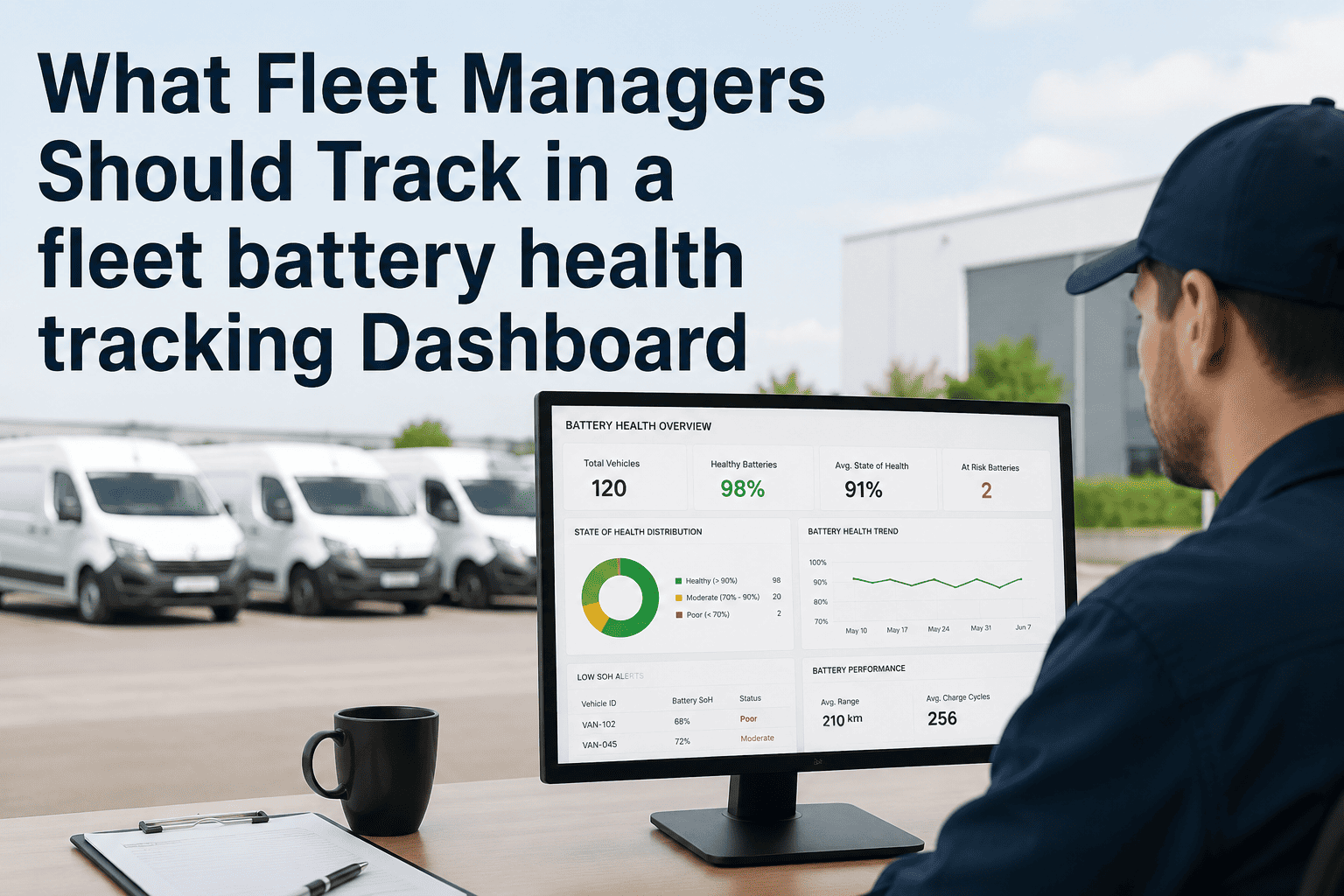
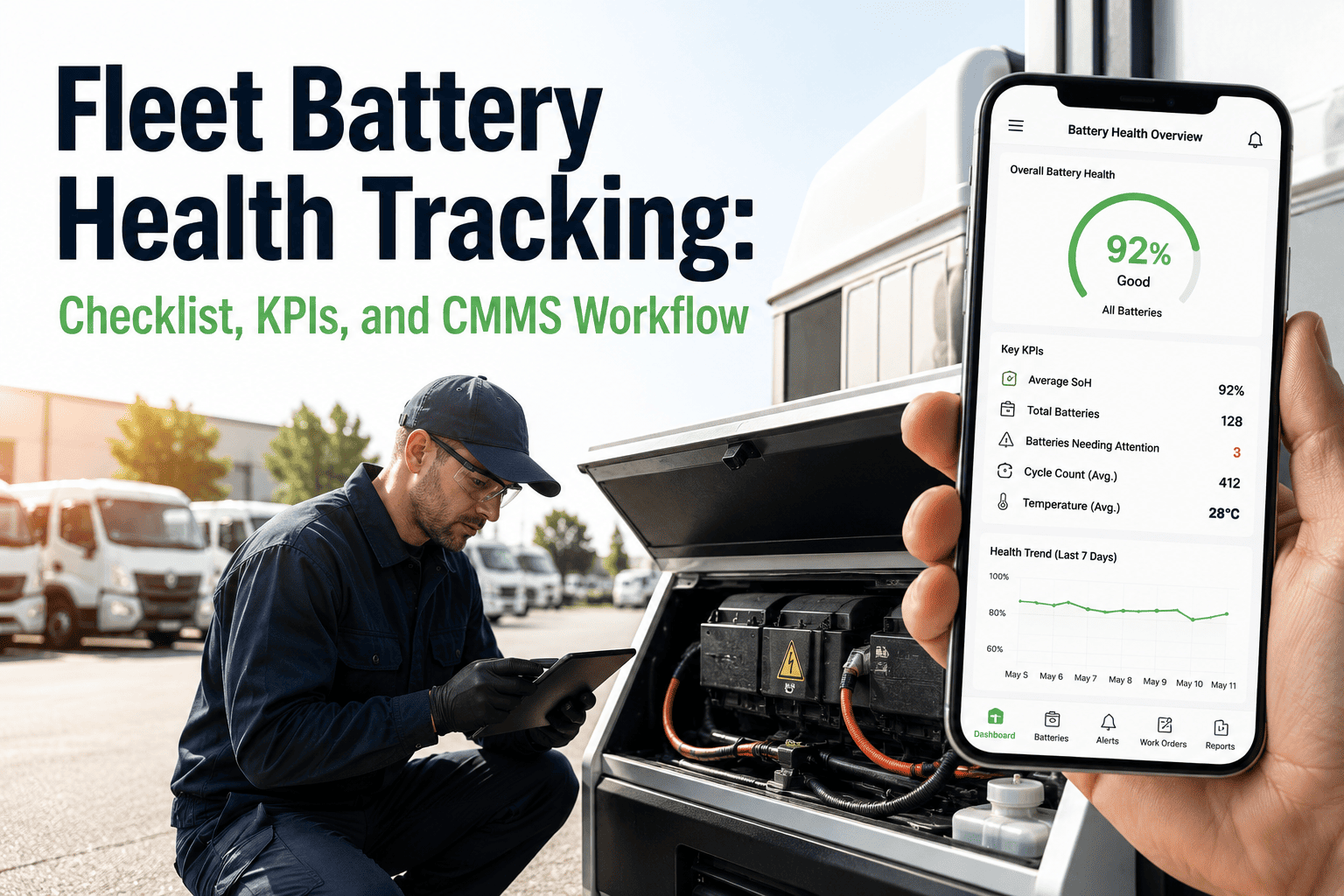
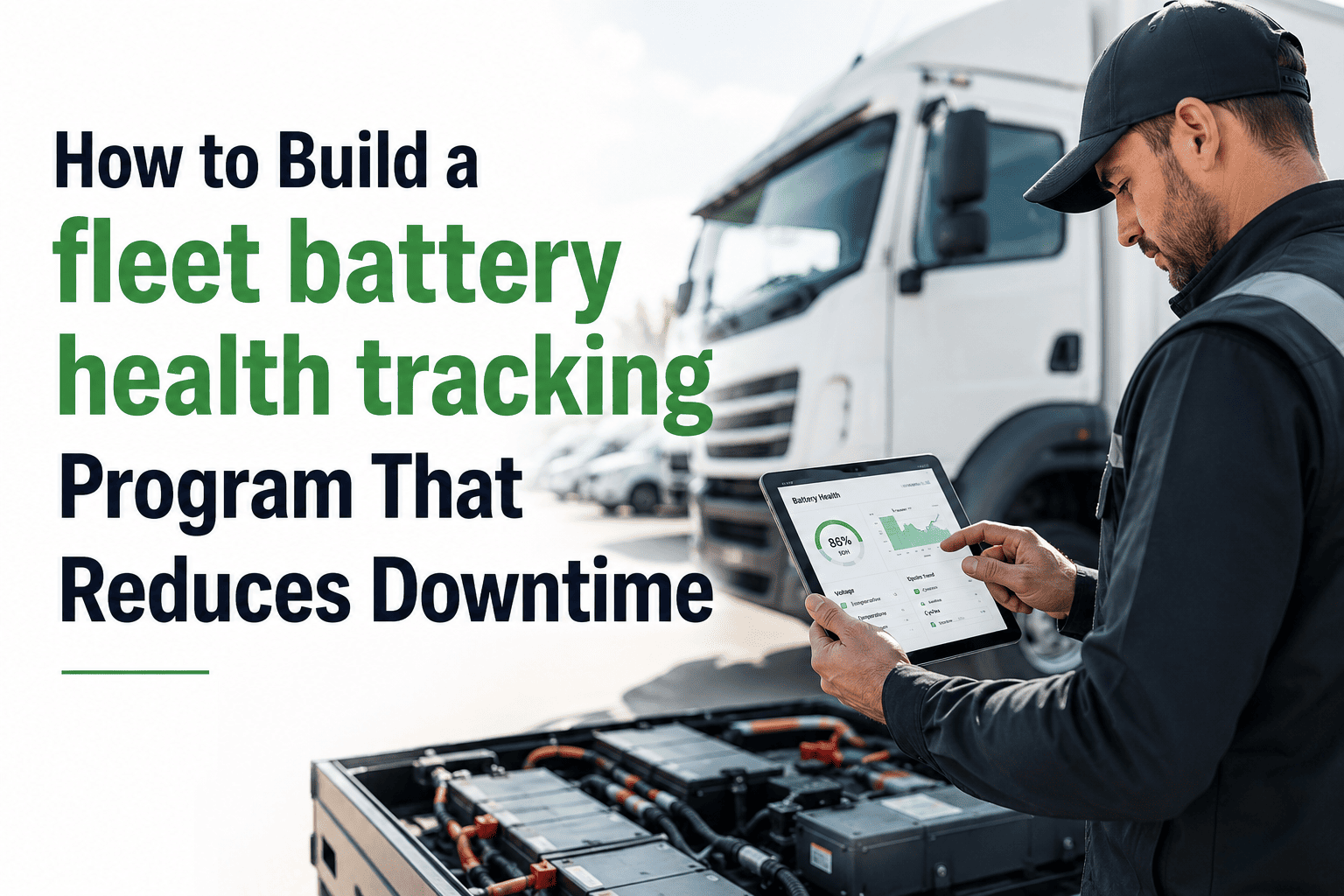
A single dead battery in a delivery van costs $180 in parts — but the hidden cost of the unplanned stop, the missed delivery window, and the roadside assistance call pushes that number past $800 before the driver is back on the road. Across a 60-vehicle fleet, battery failures account for 22% of all unplanned breakdowns, and yet most fleets have no systematic way to monitor battery health until the vehicle fails to start. OxMaint's fleet battery health tracking dashboard gives fleet managers the predictive visibility to replace batteries based on actual degradation data — not guesswork, not calendar dates, and not roadside calls. Start your free OxMaint trial or book a demo to see battery health tracking configured for your fleet's vehicle mix and operating environment.
Battery Health Tracking · Predictive Maintenance · OxMaint AI
Know Which Batteries Will Fail Before They Do — Not After Your Driver Calls You From a Parking Lot.
OxMaint monitors battery voltage, charge cycles, cold-crank performance, and charge acceptance across your entire fleet — flagging batteries entering the failure risk zone weeks before they leave a driver stranded.
22%
Battery failures cause 22% of all unplanned fleet breakdowns — the single most preventable vehicle-off-road event in commercial fleets.
Every one of them is predictable with voltage trend data. Most fleets just aren't watching it.
$800+
True cost of a single roadside battery failure including downtime and recovery
6 wks
Average early warning window OxMaint voltage trend data provides before failure
34%
Reduction in battery-related unplanned breakdowns at OxMaint customer fleets within first year
$62
Average per-vehicle annual saving from proactive battery replacement vs reactive breakdown cycle
What OxMaint Tracks
Six Battery Health Signals Fleet Managers Should Be Monitoring — And Usually Aren't
Signal 01
Resting Voltage Trend
A healthy 12V battery rests at 12.6–12.8V. OxMaint tracks resting voltage over time — a battery trending below 12.4V under no-load conditions is entering the replacement window. Trend data identifies gradual degradation that a single point-in-time check misses entirely.
Signal 02
Cold Crank Voltage Drop
The voltage drop at engine start (cold crank) is the most reliable battery health indicator available from OBD data. A battery dropping below 9.6V during cranking is operating near its minimum safe threshold. OxMaint logs cranking voltage at every startup — building a trend line that predicts failure weeks in advance.
Signal 03
Charge Acceptance Rate
A degraded battery charges faster to a lower true capacity — the charger reaches cutoff voltage sooner because less current is being accepted. OxMaint identifies abnormal charge curves from alternator and charging data, flagging batteries with reduced capacity before they affect vehicle reliability.
Signal 04
Parasitic Drain Detection
Vehicles parked overnight with electrical drains — failing modules, aftermarket accessories, or stuck relays — kill batteries faster than normal cycling. OxMaint detects abnormal voltage drop during inactive periods and flags vehicles with drain issues before the battery is fully depleted.
Signal 05
Temperature Stress Scoring
Battery capacity drops 20–35% at 0°C and accelerates degradation in sustained heat above 40°C. OxMaint correlates vehicle operating temperature history with battery health scores — applying seasonal adjustment factors for fleets operating in temperature-extreme environments.
Signal 06
Age and Cycle Count
Battery age and charge cycle count are the foundational predictive variables. OxMaint tracks installation date per vehicle and cross-references age with voltage trend data — a 3-year-old battery showing voltage degradation is treated as a higher replacement priority than a 3-year-old battery holding stable voltage.
Stop Replacing Batteries After They Fail. Start Replacing Them Before They Do.
OxMaint battery health tracking turns reactive replacement into a scheduled event — eliminating the roadside call, the customer impact, and the true $800+ cost of every unplanned battery failure.
Battery Risk Classification
How OxMaint Classifies Battery Health — From Green to Critical
| Health Status |
Resting Voltage |
Cold Crank Drop |
Age Indicator |
OxMaint Action |
Timeline |
| Healthy |
12.6V+ |
Above 10.5V |
Under 2 years |
Monitor monthly |
No action needed |
| Watch |
12.3–12.6V |
10.0–10.5V |
2–3 years |
Schedule load test |
Within 30 days |
| Plan Replacement |
12.0–12.3V |
9.6–10.0V |
3+ years + decline |
Replacement work order |
Within 14 days |
| Critical |
Below 12.0V |
Below 9.6V |
Any age, fast decline |
P1 alert — replace now |
Before next shift |
Seasonal Battery Management
Winter Risk Window
Batteries in the "Watch" category in October become "Critical" candidates in January. OxMaint runs a pre-winter fleet scan in September — identifying every battery entering its third winter with declining voltage trend, and generating replacement work orders before the first cold snap eliminates the scheduling option.
Battery capacity at 0°C: down 35%
Summer Heat Degradation
Sustained heat above 40°C is the primary driver of long-term battery degradation in commercial vehicles — particularly in engine bays with poor airflow. Fleets operating in hot climates should track battery health on a 60-day cycle rather than the standard 90-day interval. OxMaint adjusts alert thresholds by region automatically.
Heat above 40°C: 33% faster degradation
Proactive vs Reactive Battery Management
Reactive Battery Replacement
Driver stranded — roadside assistance: $180
Emergency battery delivery or tow: $120
Missed delivery window penalty: $200+
Driver downtime (3–4 hrs average): $160
Battery replacement at roadside rate: $220
Total per event: $880+
Proactive Battery Replacement via OxMaint
Scheduled depot replacement: $95 battery
Technician labour (30 min): $40
Zero downtime — scheduled off-shift
Zero delivery impact
Zero roadside call
Total per event: $135
Saving per avoided roadside battery failure: $745 — at 10 prevented failures per year on a 60-vehicle fleet, that is $7,450 directly from battery health tracking.
Frequently Asked Questions
Does OxMaint track battery health on all vehicle types including EVs and hybrid fleets?
OxMaint tracks 12V lead-acid battery health for conventional fleets and supports high-voltage traction battery state-of-health monitoring for EV and hybrid vehicles via OBD-II and CAN bus integration. EV battery health tracking includes state of charge degradation, range reduction trending, and charge cycle counts.
Book a demo to see EV battery monitoring configured for your fleet type.
What telematics hardware does OxMaint need to track battery voltage data?
OxMaint integrates with Samsara, Geotab, Verizon Connect, and Motive — all of which provide battery voltage data via their standard OBD-II connection. No additional hardware is required for most fleets. For vehicles without existing telematics, OxMaint recommends compatible plug-and-play OBD devices available through the platform. Visit
OxMaint to check compatibility with your current telematics provider.
How far in advance does OxMaint typically predict battery failure?
OxMaint's voltage trend analysis typically identifies batteries entering the failure risk zone 4–8 weeks before failure — enough time to schedule proactive replacement during a planned maintenance window. Cold crank voltage drop data provides the most reliable predictive signal, and this is collected at every engine start without any manual intervention.
Can OxMaint generate automatic work orders when a battery reaches the replacement threshold?
Yes. When a battery crosses the configured health threshold, OxMaint automatically generates a replacement work order assigned to the depot technician, with the vehicle details and battery specification pre-populated. Fleet managers can configure thresholds per vehicle class and choose whether work orders generate automatically or require manager approval.
See this in a demo to configure your automated replacement workflow.
Does OxMaint adjust battery health alerts for seasonal temperature variation?
Yes. OxMaint applies temperature adjustment factors to battery health scoring — tightening alert thresholds in winter months and for vehicles operating in extreme heat environments. Pre-winter fleet scans identify batteries in the Watch category that should be upgraded to replacement priority before cold weather reduces capacity further.
Battery Failures Are Predictable. The Only Question Is Whether You Are Predicting Them.
OxMaint battery health tracking gives fleet managers the voltage trend data, risk classification, and automatic work orders to eliminate roadside battery failures across their entire fleet.