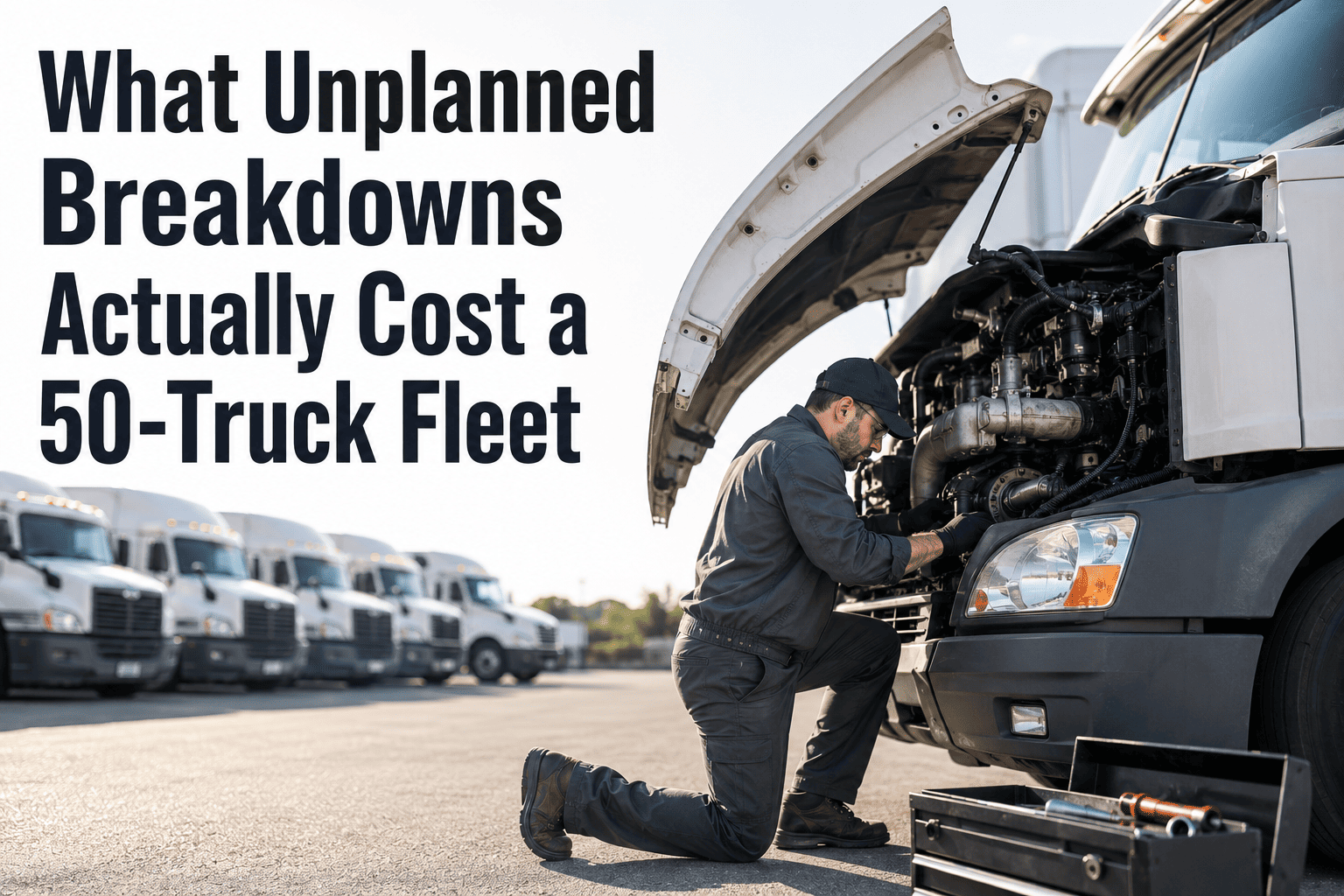
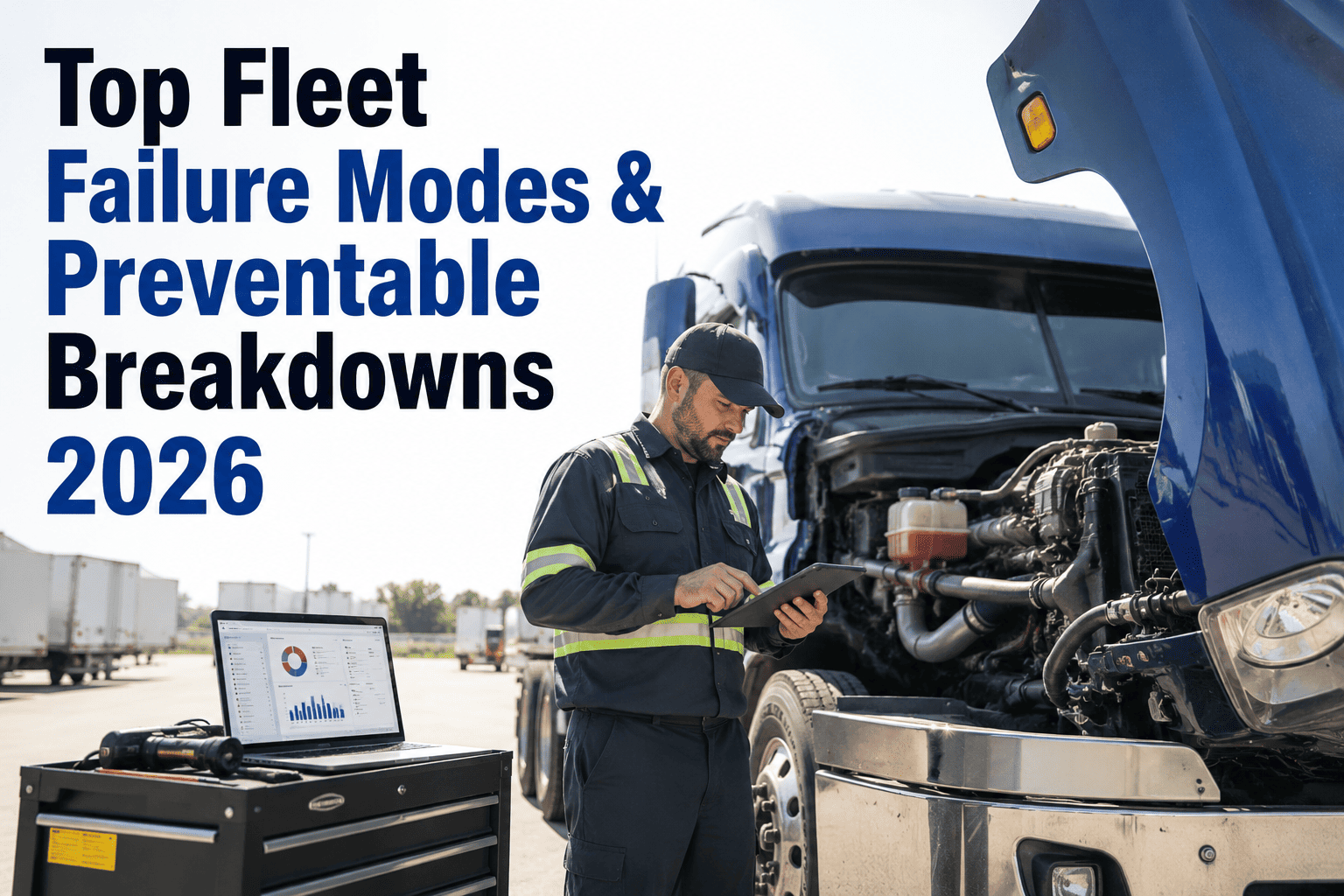
A 50-truck fleet doesn't feel the cost of an unplanned breakdown as one number — it feels it as five separate hits landing in five separate places. Towing shows up on one invoice, emergency repair labor on another, and the load that didn't get delivered doesn't show up as an invoice at all, just a customer who calls someone else next time. Add the driver stranded 400 miles from the yard and the mechanic who dropped a scheduled job to handle the walk-in emergency, and the true bill is almost always bigger than whatever gets logged as "repair cost." Most fleet managers can quote their fuel cost per mile to the cent, but ask what unplanned breakdowns cost the fleet last year and the answer is usually a shrug. OxMaint tracks every one of these costs against the vehicle that caused them, so the real number stops hiding in five different places. Start a free trial to see what your own fleet's breakdown cost looks like.
Fleet Maintenance Cost Guide · 2026
What Unplanned Breakdowns Actually Cost a 50-Truck Fleet
Roughly one in three trucks in a typical fleet has a significant unplanned event every year, at $3,000 to $9,000 in towing and repair per incident. Across 50 trucks, that alone lands between $52,500 and $162,500 annually — before a single mile of lost revenue is counted. Industrywide, unplanned commercial vehicle breakdowns are estimated at more than $25 billion a year, and the pattern behind that figure repeats at every fleet size: a small share of vehicles quietly generate most of the unplanned cost, and almost none of that cost shows up until the truck is already on the shoulder.
8.7 Days
Average unplanned downtime per truck, per year
78%
Of breakdowns are considered preventable
$25B+
Cost of unplanned breakdowns industrywide, per year
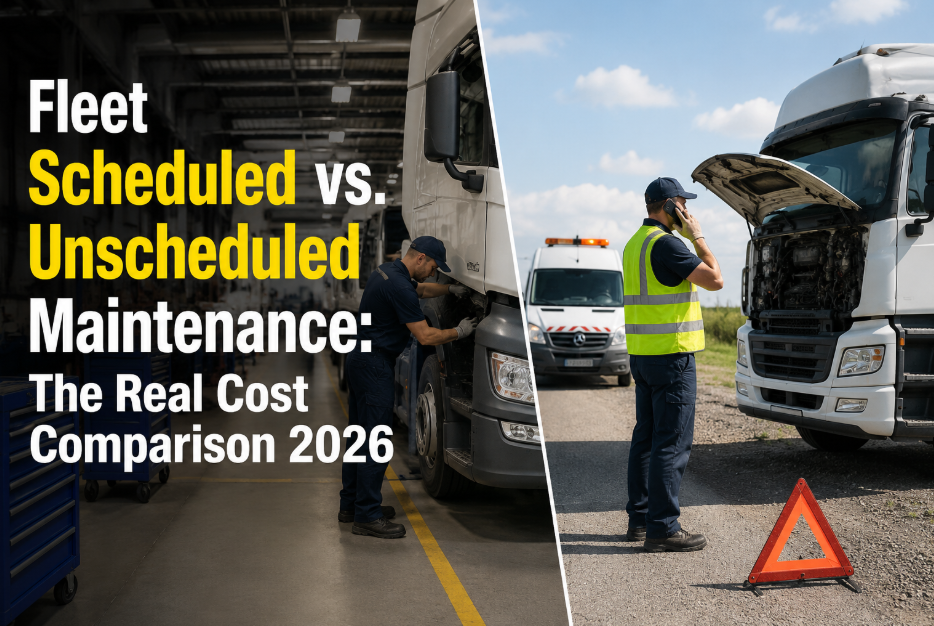
Two Kinds Of Maintenance Day
A Scheduled Service Visit Versus A 5:47 AM Phone Call
Planned PM Visit
Booked into a bay during normal shop hours, at standard labor rates
Parts ordered ahead of time, at normal pricing instead of rush pricing
Truck is back on its route the same day, no route reshuffling required
Cost sits inside the normal maintenance budget, planned months ahead
Unplanned Breakdown
Truck stops wherever it happens to be, often hours from the nearest shop
Towing, after-hours labor, and rush-shipped parts all carry a premium
Average unplanned event keeps a truck out of service for 2.3 to 2.4 days
Cost lands as a surprise, usually mid-quarter, against no budget line at all
Industry data puts 78% of unplanned breakdowns in the preventable category — meaning most of that 5:47 AM phone call was avoidable with the right data in front of the right person a few weeks earlier. The gap between the two columns above isn't really about the trucks. It's about which failures got caught while they were still a wear pattern, and which ones got caught only after they became a phone call.
The Direct Bill
One Breakdown, Two Very Different Price Tags
Not every unplanned event costs the same. A blown tire on the shoulder is a different bill than a failed aftertreatment system 300 miles from the yard — but both fall inside the same reported range, and both drain the same maintenance budget. Knowing where an incident is likely to land on that scale, before it happens, is most of what separates a fleet with a controlled maintenance line item from one that gets surprised every quarter.
$3,000
Best-Case Incident
Roadside repair, short tow, common part already in stock at the nearest shop
$6,000
Typical Incident
Mid-distance tow, standard shop labor, a part that needed a same-day order
$9,000
Worst-Case Incident
Long-distance tow, rush-order parts, after-hours labor, extended shop time
Multiply either end of that range across roughly 17 to 18 significant unplanned events a year in a 50-truck fleet, and direct repair and towing cost alone lands between $52,500 and $162,500 — a number that climbs sharply once lost revenue, at $448 to $760 per vehicle per day, is added on top of the repair bill itself.
OxMaint Fleet Maintenance
OxMaint flags the wear patterns behind the 78% of breakdowns that are preventable, so a work order gets written weeks before a driver ever calls in from the shoulder.
Where The Money Actually Goes
Six Line Items Hiding Inside Every Breakdown
A repair invoice is only the part of the bill that gets a line item. The rest of the cost is spread across dispatch, the other trucks on the road that day, and whatever the customer decides after a delivery slips — and none of it gets tracked unless someone goes looking for it.
Towing
Runs $500 to $2,000 per incident depending on distance and location, and it's the first invoice that lands, often before the driver even reaches a shop.
Emergency Labor & Parts
After-hours labor and rush-shipped parts routinely run two to three times what the same job costs when it's scheduled through a normal shop visit.
Lost Revenue
Downtime costs $448 to $760 per vehicle per day, and the average unplanned event runs 2.3 to 2.4 days before the truck is back on route.
Cascade Costs
Remaining trucks absorb the diverted load — more miles, more fuel, more fatigue, and faster wear on vehicles that were otherwise fine.
Compliance & Insurance
Missed delivery windows and safety flags from roadside incidents can push premiums up 10% to 20% at the next renewal.
Customer Penalties
Late or missed deliveries trigger contract penalties on many freight agreements, on top of the reputational cost of the miss itself.
Same Truck, Two Outcomes
How A Scheduled Job And A Roadside Failure Compare
Predictive Maintenance
Turning The 5:47 AM Call Into A Scheduled Work Order
The gap between a $162,500 year and a much smaller one usually isn't newer trucks — it's earlier warning. OxMaint reads the wear signals most fleets are already collecting, across every vehicle in the fleet at once, and turns them into a schedule instead of a surprise, so the shop hears about a problem the same week it starts rather than the day it strands a driver.
01
Component Wear Tracking
Tires, brakes, and electrical systems are logged per vehicle, since tires alone account for over half of roadside failures.
02
Preventable Event Flagging
Vehicles trending toward a known failure pattern are flagged for inspection before the pattern becomes a roadside call.
03
Automatic Work Orders
A flagged trend generates a work order on its own, with the vehicle's full service history attached for the shop.
04
Planned Vs Unplanned Reporting
A running split of planned versus unplanned events shows exactly how much of last year's breakdown bill was avoidable.
05
Fleet-Wide Age Benchmarking
Vehicles over 10 years old cost several times more per mile to maintain, so aging units are ranked by risk instead of treated as a single group.
Common Questions
Unplanned Breakdown Cost — What Fleet Managers Ask
How much does one unplanned breakdown really cost?+
Direct towing and repair typically runs $3,000 to $9,000 per incident. Add downtime at $448 to $760 a day over the 2.3 to 2.4 days a truck is usually out, and the full cost is meaningfully higher.
Start a free trial to track your own incident costs.
What does breakdown cost look like across a full 50-truck fleet?+
At roughly 17 to 18 significant unplanned events a year, direct repair and towing cost alone falls between $52,500 and $162,500 — before lost revenue and cascade costs are added on top.
Are most breakdowns actually preventable?+
Industry research puts the preventable share at around 78%, since most failures follow a wear pattern that shows up in the data well before the truck stops moving.
How does OxMaint help lower this cost without new hardware?+
OxMaint reads existing telematics and service history to flag wear trends and generate work orders automatically, no extra sensors required.
Book a demo to see it against your own fleet data.
How quickly can a fleet start seeing its true breakdown cost?+
Most fleets connect existing records and telematics and see a full planned-versus-unplanned cost picture within the first week of setup.
OxMaint · Breakdown Cost Guide
The Breakdown You See Coming Never Costs $9,000.
OxMaint turns scattered wear signals into one clear planned-versus-unplanned picture per vehicle, so the next 5:47 AM call is a lot less likely to happen at all. Fleets that catch 78% of preventable breakdowns before they happen aren't running newer trucks — they're running better data.