Fleet maintenance is entering a new era. In 2026, robotic vehicle inspection systems powered by artificial intelligence and computer vision are no longer futuristic concepts — they are operational tools delivering measurable results across transportation, logistics, construction, and public transit fleets worldwide. The AI vehicle inspection market, valued at $1.9 billion in 2024, is projected to reach $6.9 billion by 2033, growing at 15.8% annually. For fleet managers struggling with missed defects, rising repair costs, and tightening compliance mandates, robotic inspection offers a clear path forward. This guide breaks down the best systems, the technology behind them, and how platforms like OxMaint (Sign Up Free) integrate these innovations into a unified maintenance workflow.
Best Robotic Vehicle Inspection Systems for Fleet Maintenance
AI Vision. Autonomous Diagnostics. Smarter Fleets.
Why Robotic Inspection Is Replacing Manual Checks
Manual vehicle inspections have a fundamental limitation: human inconsistency. Studies show that human inspectors miss 20 to 30 percent of vehicle defects during routine checks. Fatigue, time pressure, and subjective judgment lead to inconsistent results — especially after the tenth or twentieth inspection of a shift. A single missed brake defect can result in $50,000 in liability costs and $15,000 in DOT fines. Robotic inspection systems eliminate this variability by using cameras, sensors, and machine learning to deliver consistent, objective assessments every single time. AI-powered systems now achieve 95 to 99 percent defect detection accuracy while cutting inspection time by up to 40 percent. If your fleet still relies on clipboards and visual walkarounds, it is time to explore what automation can do — book a demo with OxMaint to see modern inspection management in action.
Core Technologies Powering Robotic Fleet Inspection
Understanding the technology stack behind robotic inspection helps fleet managers evaluate which systems fit their operations. The most effective systems in 2026 combine multiple technologies into a unified inspection pipeline that feeds directly into maintenance management platforms.
Computer Vision and AI Imaging
High-resolution cameras paired with deep learning algorithms scan vehicle exteriors and undercarriages to detect dents, cracks, tire wear, fluid leaks, and corrosion. Advanced systems analyze over 163 vehicle parts and identify more than 21 distinct defect types with up to 99.96 percent accuracy. These systems process thousands of images in seconds, creating timestamped, GPS-tagged inspection records automatically.
Sensor Fusion and LiDAR
Combining camera data with ultrasonic sensors, thermal imaging, and LiDAR creates a comprehensive picture of vehicle health. Thermal cameras reveal overheating brakes and electrical faults invisible to standard cameras. Ultrasonic sensors measure material thickness and detect internal structural issues. LiDAR captures precise 3D measurements for dimensional accuracy checks on chassis alignment and panel gaps.
Machine Learning and Predictive Analytics
AI models trained on millions of real-world vehicle images continuously improve their defect recognition. Unlike rule-based systems that only catch predefined issues, machine learning adapts to new defect patterns over time. Predictive analytics uses historical inspection data to forecast when components are likely to fail, enabling proactive maintenance scheduling before breakdowns occur.
CMMS Integration and Automated Workflows
The real value of robotic inspection emerges when it connects to a CMMS platform like OxMaint. Detected defects automatically generate work orders, trigger parts procurement, and update compliance records. This closed-loop system ensures that no defect falls through the cracks between detection and repair — sign up for OxMaint to experience seamless inspection-to-repair automation.
Top Robotic Inspection Approaches for Fleets in 2026
The robotic inspection landscape has matured significantly. Fleet operators now have several proven approaches depending on fleet size, vehicle type, and operational requirements. Here are the leading categories of robotic inspection systems delivering results across the industry.
Drive-Through Scanning Tunnels
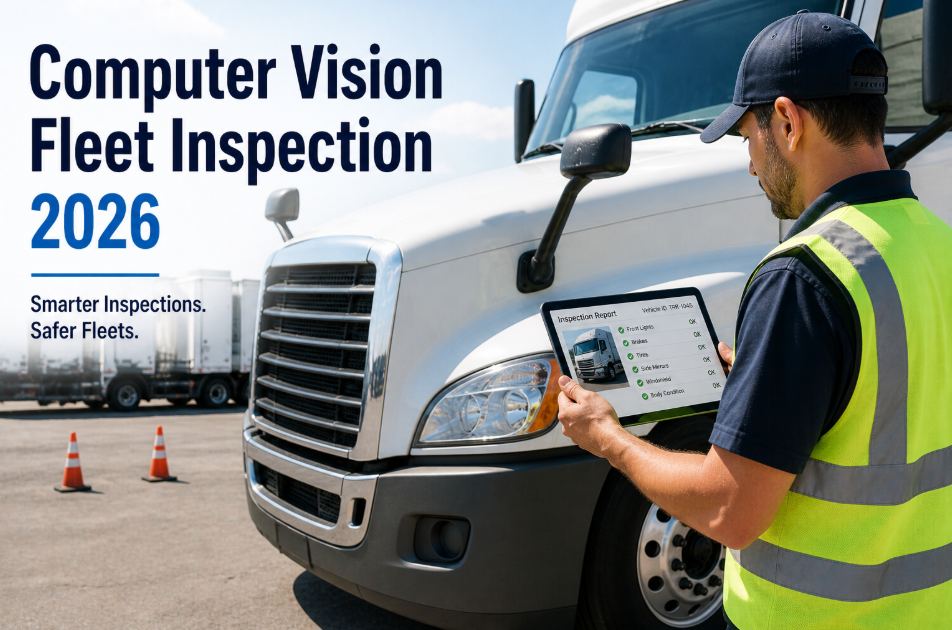
Fixed installations where vehicles pass through a scanner array equipped with multiple high-resolution cameras, LiDAR units, and undercarriage imaging systems. These tunnels perform comprehensive exterior and underbody inspections in under 60 seconds without requiring drivers to exit the vehicle. Best suited for large fleets with centralized depots where vehicles return daily. The systems generate instant digital inspection reports that integrate with maintenance management software for immediate defect routing.
Mobile AI Inspection Apps
Smartphone and tablet-based solutions that use device cameras combined with cloud AI processing to perform guided inspections. Drivers capture photos or videos following a structured sequence, and AI algorithms automatically detect and classify damage, wear, and defects. These systems are cost-effective, require no infrastructure investment, and work for distributed fleets where vehicles do not return to a single location. They generate DOT-compliant DVIRs with timestamped photos, GPS verification, and digital signatures.
Autonomous Inspection Robots
Ground-based robots and quadruped platforms like Boston Dynamics Spot that navigate around and underneath vehicles autonomously, using onboard cameras and sensors to perform detailed inspections without human involvement. These robots operate 24/7 in depot environments, inspecting vehicles during off-hours when they would otherwise sit idle. They excel at hard-to-reach undercarriage inspections and can detect issues like pipe vibrations, fluid leaks, and structural fatigue through specialized sensor payloads.
Drone-Based Aerial Inspection
Autonomous drones inspect vehicle rooftops, trailer tops, and large equipment surfaces that are difficult or dangerous for human inspectors to access. Equipped with high-resolution cameras and thermal imaging, drones complete exterior inspections of large vehicles in minutes. This approach is particularly valuable for fleets operating tall vehicles, refrigerated trailers requiring roof-mounted unit inspection, and heavy equipment with extensive upper surface areas.
Ready to Automate Your Fleet Inspections
OxMaint integrates with modern inspection systems to automate work orders, track compliance, and schedule preventive maintenance — all from one platform.
How CMMS Platforms Maximize Robotic Inspection ROI
Robotic inspection hardware captures defects. But without a maintenance management system connecting that data to action, defects remain just data points. The combination of robotic inspection with a CMMS like OxMaint creates a closed-loop system where every detected issue automatically triggers the right maintenance response. Here is how the integration works in practice.
This automated defect-to-repair pipeline is what separates fleets that merely inspect from fleets that truly prevent failures. With OxMaint, every inspection finding becomes an actionable maintenance task — no clipboard handoffs, no lost paperwork, no forgotten defects. Fleets using integrated inspection and CMMS systems report 35 percent lower repair costs and 99.8 percent vehicle uptime. Sign up for OxMaint to connect your inspection data to a maintenance platform that acts on it.
Fleet Compliance in 2026: What Robotic Inspection Solves
Regulatory expectations are intensifying in 2026. Federal agencies are shifting toward data-driven safety rating systems that use inspection, violation, and crash data for continuous carrier oversight. This means the accuracy and completeness of your fleet inspection records directly impacts your safety rating, insurance premiums, and operating authority. Robotic inspection systems automatically generate DOT-compliant Driver Vehicle Inspection Reports with every required element: timestamped photographs, GPS-verified locations, digital signatures, and complete component checklists. Records are stored in the cloud and can be retrieved instantly during audits — eliminating the risks of lost paperwork, illegible handwriting, and incomplete documentation that plague manual systems. The Commercial Vehicle Safety Alliance has also developed new inspection standards for vehicles equipped with automated driving systems, requiring more rigorous documentation that robotic systems handle natively. Book a demo with OxMaint to see how automated compliance tracking keeps your fleet audit-ready at all times.
Getting Started: Implementing Robotic Inspection for Your Fleet
Transitioning to robotic inspection does not require replacing your entire maintenance process overnight. The most successful fleet implementations follow a phased approach. Start with a pilot program covering 10 to 20 percent of your fleet to compare AI detection results against your current manual process. This builds internal confidence and generates baseline ROI data. Next, integrate the inspection system with your CMMS platform to automate the defect-to-repair workflow. OxMaint supports integration with leading inspection technologies, connecting scan results directly to work order creation, parts inventory, and compliance tracking. Finally, expand to your full fleet while training all drivers and technicians on the digital inspection workflow. Establish monitoring dashboards to track inspection completion rates, defect trends, and maintenance cost reduction over time. The transition from reactive to predictive maintenance starts with better inspection data — and robotic systems deliver that data at scale. Sign up for OxMaint today and take the first step toward inspection automation.
Transform Your Fleet Maintenance with Smarter Inspections
Join thousands of fleet operators using OxMaint to connect inspection data with automated maintenance workflows, compliance tracking, and predictive scheduling.
Frequently Asked Questions
What is a robotic vehicle inspection system
A robotic vehicle inspection system uses cameras, sensors, AI algorithms, and sometimes autonomous robots or drones to perform automated vehicle condition assessments. These systems detect defects like tire wear, brake damage, fluid leaks, body damage, and structural issues with higher accuracy and speed than manual inspection methods. The results feed directly into maintenance management platforms to trigger repairs and update compliance records.
How accurate are AI-powered fleet inspection systems
Modern AI inspection systems achieve 95 to 99 percent defect detection accuracy, compared to 70 to 80 percent for manual human inspection. Some specialized systems, like tire inspection technology, report accuracy rates as high as 99.96 percent. The consistency of AI-based systems is their primary advantage — they perform at the same level on the first inspection and the hundredth without degradation from fatigue or distraction.
How much do robotic inspection systems cost for fleets
Costs vary significantly by approach. Mobile AI inspection apps using existing smartphones start at low monthly subscription fees per vehicle. Drive-through scanning tunnels require higher infrastructure investment but offer the fastest throughput. Autonomous robot platforms represent the highest upfront cost but operate 24/7 without labor costs. Most fleets report positive ROI within 6 to 12 months through reduced repair costs, fewer breakdowns, and lower compliance penalties.
Can robotic inspection systems integrate with existing CMMS software
Yes. Leading robotic inspection systems offer APIs and integration capabilities that connect with CMMS platforms like OxMaint. This integration enables automated work order creation when defects are detected, seamless compliance documentation, and predictive maintenance scheduling based on inspection trend data. The integration transforms inspection from a standalone activity into a continuous maintenance improvement loop.
Are automated inspections DOT compliant
AI-powered inspection systems generate DOT-compliant Driver Vehicle Inspection Reports that include all required elements: timestamped photographs, GPS-verified locations, digital signatures, and complete component checklists. These digital records are stored securely in the cloud and can be retrieved instantly during audits, often exceeding the documentation quality of paper-based inspection processes.
What types of vehicles can robotic systems inspect
Robotic inspection systems are designed for a wide range of fleet vehicles including semi-trucks, delivery vans, buses, construction equipment, utility vehicles, emergency vehicles, and passenger cars. Different system types are optimized for different vehicle categories — drive-through tunnels work well for standard trucks and vans, while drones and autonomous robots are better suited for large equipment and specialized vehicles.
How does OxMaint support fleet inspection automation
OxMaint serves as the central maintenance management hub that connects with robotic inspection systems. When an inspection identifies a defect, OxMaint automatically generates prioritized work orders, checks parts inventory, assigns technicians, tracks repair completion, and updates the vehicle compliance history. This closed-loop workflow ensures every detected issue receives timely attention and creates a complete digital audit trail for regulatory compliance.