Every year OSHA inspectors walk into fleet yards and find liftgates with cracked platforms, missing safety chains, and mechanics working without required eye or hand protection — violations nobody documented until it was too late. A single serious citation now runs $16,550, and if the same hazard shows up twice, penalties jump to $165,514 per violation. Liftgates fall under OSHA's General Duty Clause rather than one dedicated standard, so inspectors judge your fleet on whether a hazard was recognized and left uncorrected, and a daily inspection record is what separates a clean audit from a costly one. Fleets that turn liftgate checks and PPE assessments into a routine digital habit catch the cracked weld or missing harness before an inspector, or a worker, finds it the hard way. Start a free trial with Oxmaint to build that habit into your daily workflow, or book a demo to see the liftgate and safety gear checklist system in action.
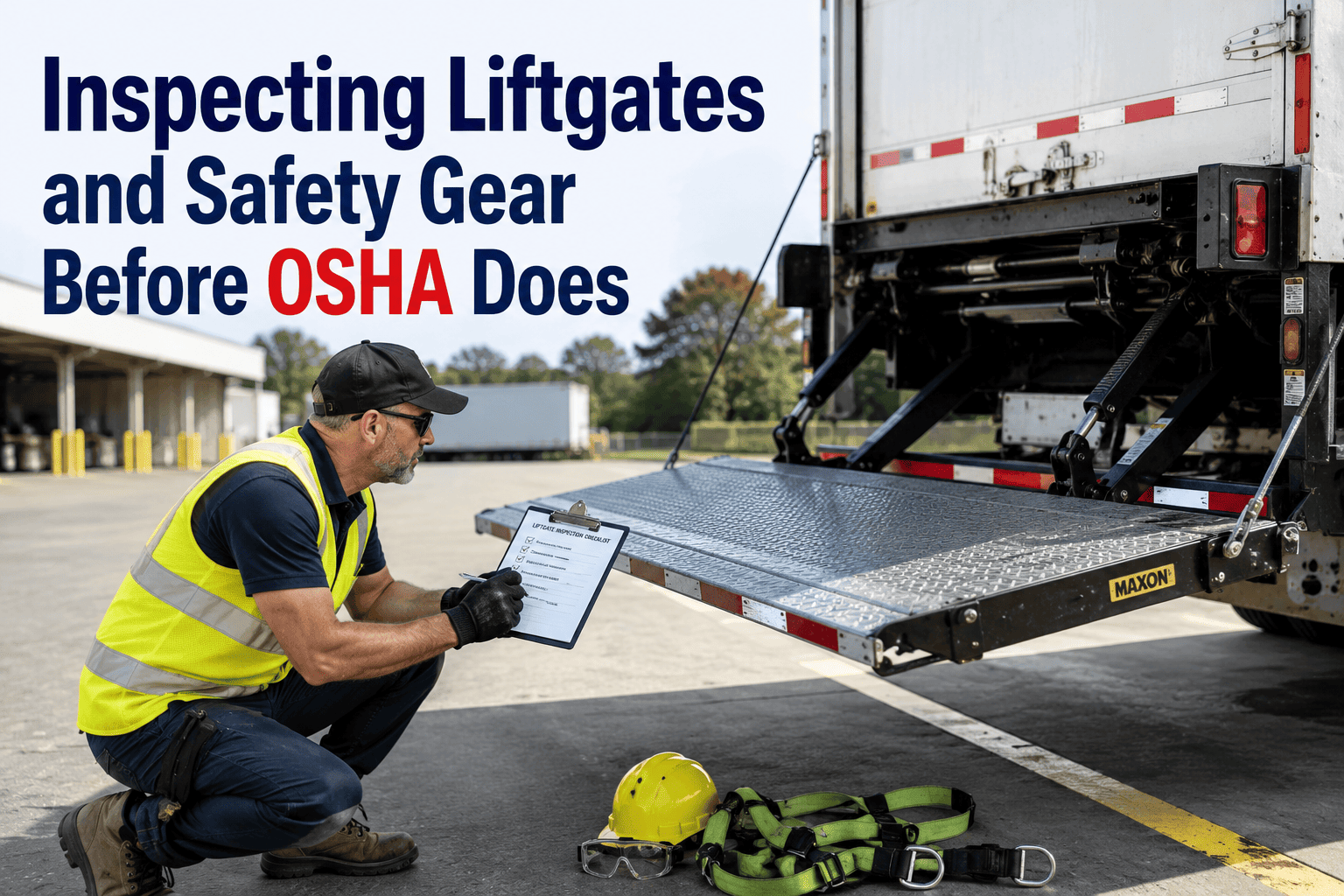
Inspecting Liftgates and Safety Gear Before OSHA Does
A practical breakdown of liftgate inspection points, PPE hazard assessments, and the digital checklist habits that keep your fleet a step ahead of citations, injuries, and downtime.
Why "No Specific Standard" Does Not Mean No Risk
Most fleet managers assume liftgates are lightly regulated because OSHA has no single rule titled "liftgate safety." That gap is exactly where fleets get caught. Inspectors fall back on the General Duty Clause, Section 5(a)(1), which requires every employer to keep the workplace free of recognized hazards that could cause serious harm or death — a cracked platform or a frayed safety strap qualifies the moment it is reported or observed.
Sprains, strains, and lifting injuries remain among the most common recordable incidents in trucking operations, and liftgate failures are a direct contributor. Without a dated inspection log, a fleet has no way to prove the hazard was addressed before it caused an injury, and that missing paperwork is often what turns a routine visit into a citation. Oxmaint closes that gap with digital liftgate checklists and PPE logs that timestamp every check automatically — start a free trial or book a demo to see it running on your fleet.
The 8-Point Liftgate Check Every Shift Should Start With
Look for cracks, bends, corrosion, or worn non-slip coating across the full platform area.
Check for looseness, excessive play, or metal fatigue at every moving joint.
Inspect for fluid leaks, cracked hoses, or slow drift while the platform is raised.
Test up, down, and stop functions daily — controls must respond immediately and reset cleanly.
Confirm restraints are present, correctly rated, and free of fraying or rust.
Verify decals are legible and operating lights or alarms function during cycling.
Confirm the rated capacity plate is visible and matches the loads it is actually carrying.
Every check needs a name, timestamp, and pass or fail status attached to the vehicle record.
Where Safety Gear Violations Actually Come From
Fall protection remains the single most cited OSHA standard nationwide. Missing harnesses, worn lanyards, or unused tie-off points near loading docks and liftgates create direct exposure.
Techs working on hydraulic lines or battery connections without safety glasses or the correct gloves account for a large share of preventable shop injuries and citations.
Servicing a liftgate or lift mechanism without locking out the power source is one of the fastest routes to a catastrophic injury and a willful citation.
OSHA requires a documented PPE hazard assessment for every task category. Employers who skip this step cannot prove they issued the right gear for the job.
Dust masks and respirators used incorrectly, or not issued at all, during brake and undercarriage work continue to climb OSHA's most-cited list.
Liftgate and lift equipment operated by staff without documented training is a recognized hazard the moment it is discovered by an inspector.
What an Uncorrected Hazard Actually Costs in 2026
| Violation Type | Maximum Penalty | Applies To |
|---|---|---|
| Serious / Other-Than-Serious | $16,550 per violation | Cracked platforms, missing PPE, undocumented checks |
| Failure to Abate | $16,550 per day | Known hazard left uncorrected past the deadline |
| Willful or Repeated | $165,514 per violation | Same hazard cited more than once across inspections |
| Posting Requirements | $16,550 per violation | Missing job safety and health posters or notices |
Turn Every Inspection Into an Audit-Ready Record
Oxmaint replaces paper liftgate checklists and PPE logs with a digital system that timestamps every inspection, flags failed checks instantly, and keeps a complete history ready for the moment an inspector walks in.
Paper Checklists vs a Digital Safety Program
How Fleets Stay Ahead of Liftgate and PPE Citations
The 8-point liftgate inspection loads on the driver or technician's phone before every shift, with photo evidence required for any failed item.
Task-based hazard assessments are tied to each job category, so the correct gloves, eyewear, or respirators are documented before work begins.
Liftgate and lift equipment service orders require a logged lockout step before a technician can close the work order.
A failed liftgate or PPE check routes straight to the shop supervisor, stopping a compromised vehicle before it leaves the yard.
Complete inspection and training history exports in one click, matching exactly what an OSHA inspector requests during a records review.
Operator training and equipment certifications trigger renewal alerts automatically, closing the training gap before it becomes a citation.
What Fleets See After Digitizing Liftgate and PPE Checks
Frequently Asked Questions
Does OSHA have a specific standard for truck liftgates?
No single standard covers liftgates directly. OSHA enforces liftgate safety through the General Duty Clause, which requires a workplace free of recognized hazards. Start a free trial to build a documented liftgate inspection habit.
Can Oxmaint track PPE hazard assessments by job type?
Yes. Each task category links to its required PPE, and technicians confirm the correct gear before a work order can be closed, keeping assessments audit-ready at all times.
What happens when a liftgate fails its daily inspection?
A failed check escalates immediately to the shop supervisor and blocks dispatch until the issue is resolved and re-inspected, preventing a compromised liftgate from leaving the yard.
How much can one uncorrected safety violation cost in 2026?
A serious or other-than-serious violation runs up to $16,550, while a willful or repeated violation can reach $165,514. Book a demo to see how automated logs reduce that exposure.
Does the platform manage lockout tagout for liftgate service?
Yes. Work orders involving liftgate or lift equipment repair require a logged lockout step before technicians can mark the job complete, closing a common compliance gap.
Get Ahead of the Inspection, Not Behind It
Oxmaint digitizes liftgate checks, PPE hazard assessments, and lockout tagout verification into one audit-ready system built for fleets that would rather prevent a citation than explain one.