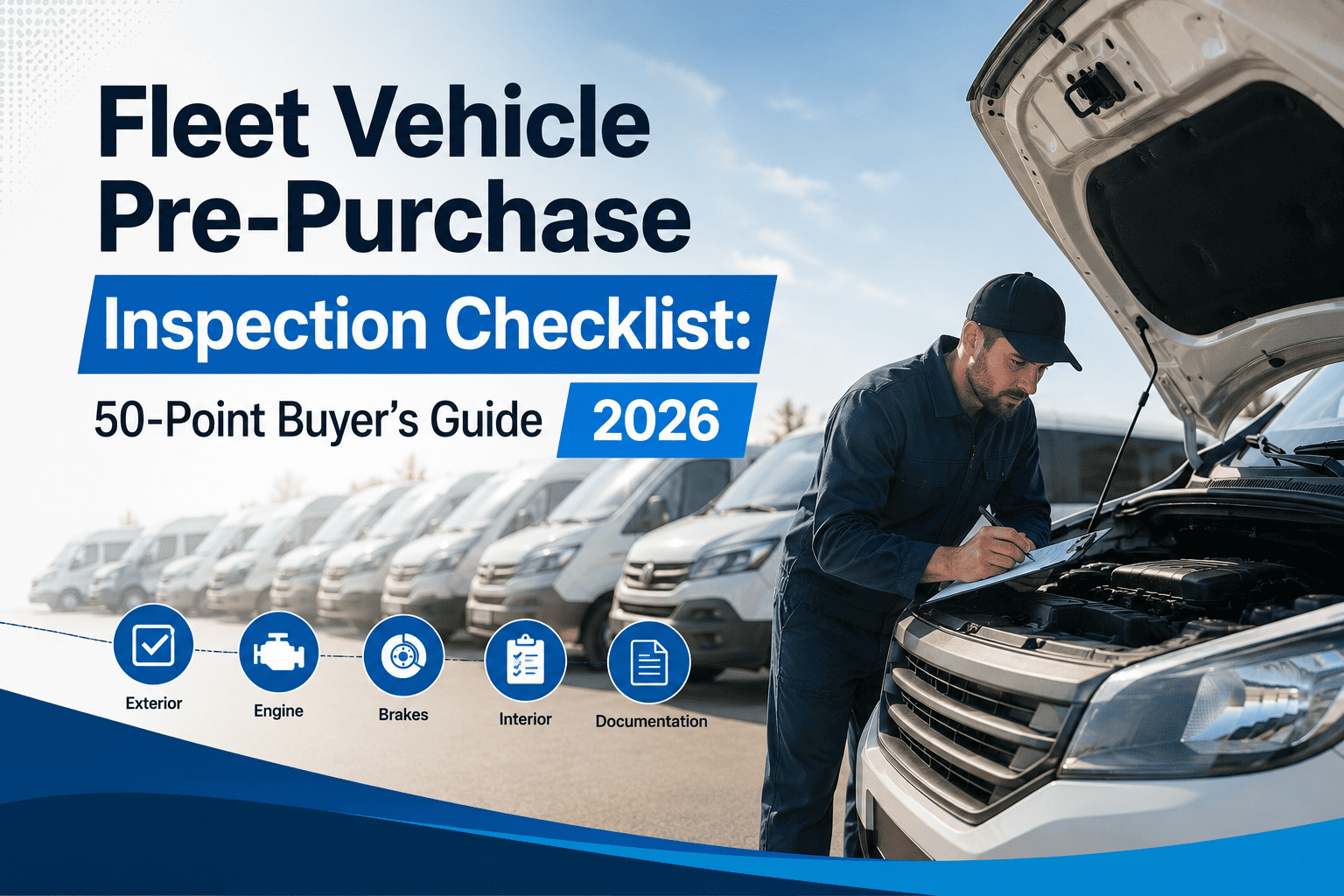
Fleet safety is not a culture — it is a system. Culture changes when incidents stop being unexpected and start being anticipated, documented, and prevented through structured programs that leave nothing to memory or goodwill. In 2026, commercial vehicle crashes cost US employers an average of $148,279 per injury accident and $672,000 per fatal crash — figures that dwarf the investment in any structured safety program. The FMCSA's data is equally clear: 87% of truck crashes are caused by driver behavior, vehicle condition, or both — categories that systematic safety checklists directly address. A fleet that runs a complete safety program — vehicle inspection checklists, driver qualification verification, safety system testing, emergency response procedures, and compliance documentation — reduces its at-fault accident rate by an average of 34–52% within 24 months of program implementation. What separates a fleet that achieves these outcomes from one that does not is rarely the quality of its safety intentions. It is the consistency of its safety execution — whether the checklist is completed the same way every time, whether defects generate repairs before dispatch, whether driver qualification documentation is verified before route assignment. OxMaint's digital safety checklist system enforces consistency at every step, for every vehicle, at every location. Sign up for OxMaint and deploy a systematic fleet safety program today.
Fleet Safety & Compliance · Checklist · 2026
Fleet Safety Checklist: Ensuring Compliance and Reducing Risks
A complete fleet safety program operates across five dimensions — vehicle mechanical safety, driver qualification and hours compliance, safety equipment readiness, emergency response preparation, and regulatory documentation currency. OxMaint manages all five dimensions digitally with real-time fleet-wide compliance visibility and automatic defect-to-work-order routing.
$672K
Average employer cost per fatal commercial vehicle crash — FMCSA data, before litigation and insurance impact
87%
Of truck crashes caused by driver behavior, vehicle condition, or both — directly addressed by structured safety checklists
34–52%
At-fault accident rate reduction in fleets implementing complete systematic safety programs within 24 months
15–30%
Commercial auto insurance premium reduction for carriers with documented systematic safety programs at renewal
The 5-Dimension Fleet Safety Framework
Fleet safety cannot be addressed by a single checklist — it operates across five distinct dimensions, each with different responsible parties, different documentation requirements, and different failure consequences. OxMaint manages all five from one platform with fleet-wide status visible in real time.
Dimension 1: Vehicle Mechanical Safety
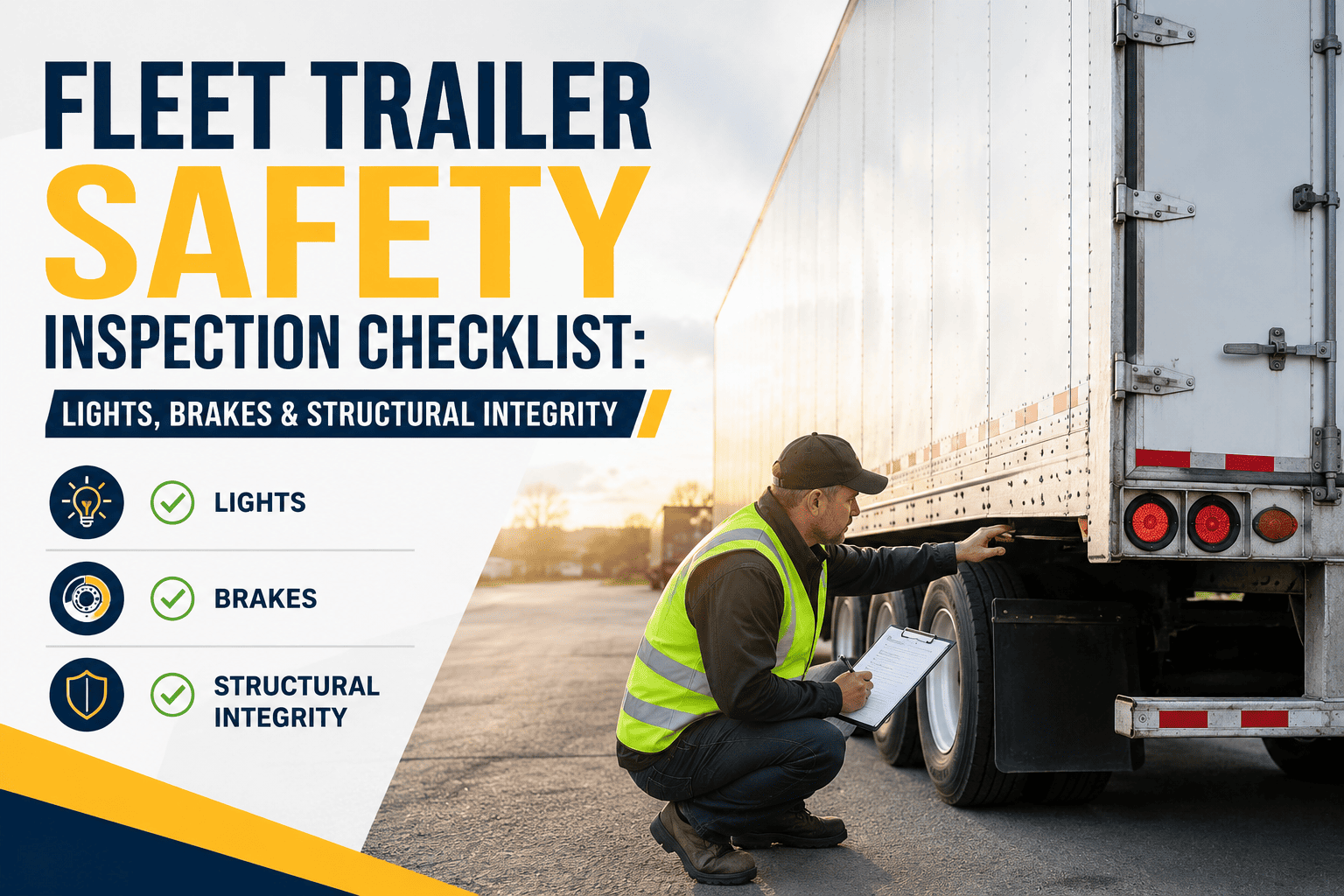
Brakes, tires, steering, lighting, coupling, and structural integrity checked before every operating day. Defects prevent vehicle dispatch until certified repaired. The FMCSA 20.8% out-of-service rate at roadside inspections represents vehicles where systematic pre-trip inspection would have caught the violation before it became a citation.
Owner: Driver (pre-trip) + Technician (PM events) | Frequency: Daily + service intervals
Dimension 2: Driver Qualification and HOS Compliance
Valid commercial driver's license, current medical certificate, hours-of-service compliance, training currency, and background check status verified before route assignment. Expired documentation is a regulatory violation at the point of departure — not at the point of audit discovery. Fleet managers who discover documentation gaps at audit time incur fines for every operating day the gap existed.
Owner: Fleet/Compliance Manager | Frequency: Onboarding + recurring verification schedule
Dimension 3: Safety Equipment Readiness
Fire extinguisher charge and inspection currency, emergency triangles present and undamaged, first aid kit contents current, safety vest present for required operations, backup warning devices functional, and load securement equipment in serviceable condition. Safety equipment failures generate regulatory citations and — in the event of an incident — liability exposure for failure to equip the vehicle with legally required safety gear.
Owner: Driver (daily check) + Technician (replacement at PM) | Frequency: Daily + service events
Dimension 4: Emergency Response Preparation
Drivers trained on accident scene procedures, emergency contact numbers visible in cab, incident reporting procedures documented and accessible, route-specific emergency resources identified for long-haul operations. Emergency response preparation determines how quickly and effectively an incident is managed — affecting injury severity, property damage, regulatory reporting compliance, and litigation exposure.
Owner: Fleet Manager (training) + Driver (execution) | Frequency: Training quarterly + daily readiness
Dimension 5: Regulatory Documentation Currency
Vehicle registration, operating authority, insurance certificate, and permits current and accessible in cab. ELD certification current. DVIR retention compliant — 90-day minimum. Hazmat placarding correct if applicable. Annual inspection sticker current. Documentation failures generate citations regardless of whether the vehicle is mechanically sound and operationally compliant in every other respect.
Owner: Fleet/Compliance Manager | Frequency: Expiration monitoring — continuous
Dimension 6: Driver Behavior Monitoring
Hard braking events, speeding frequency, distraction indicators, and harsh acceleration patterns tracked per driver per shift. Behavior scoring visible to fleet managers for coaching prioritization. AI-generated behavior alerts fed to real-time safety dashboards. Driver behavior drives 87% of crash causation — monitoring and coaching programs document that 34% reductions in at-fault accidents are achievable within 6 months of deployment.
Owner: Fleet Manager (monitoring) + Safety Manager (coaching) | Frequency: Continuous + weekly review
The Complete Fleet Safety Checklist: All 6 Categories
Each safety category below represents a checklist domain that must be verified systematically — not occasionally. OxMaint enforces digital completion of all categories with required photo documentation for defects and automatic work order generation for any item requiring repair.
Category 1: Braking and Stopping Systems
Service brake function — pedal feel, fade test, and deceleration adequacy at controlled speed
Parking brake hold — confirmed on required grade without service brake engagement
Air brake system — pressure build-up rate, low-pressure warning, and governor function
Brake lines and hoses — no audible air leaks, no visible chafing or cracked fittings
ABS warning light — not illuminated after warm-up cycle
Brake lining thickness — at or above FMCSA minimum (quarterly technician measurement)
FMCSA out-of-service: inoperative brakes on 20%+ of service brake positions — automatic out-of-service
Category 2: Tire and Wheel Safety
Tire pressure — all axles verified to placard specification ±5 PSI
Steer tire tread depth — minimum 4/32" at any two adjacent tread grooves
Drive and trailer tire tread — minimum 2/32" tread depth at any two adjacent grooves
Sidewall condition — no bulges, cuts, or tread separation visible
Wheel fasteners — no loose, missing, or visibly damaged lug nuts
Dual tire spacing — no contact between dual tires at any point
Tires are the #2 out-of-service violation category — 16.2% of inspected vehicles cited for tire defects
Category 3: Lighting and Visibility Safety
Headlights — both low and high beam, aimed within horizontal specification
Stop lights and tail lights — function confirmed, visible 500 feet minimum
Turn signals — both sides, front and rear, 60–120 flashes per minute
Clearance, marker, and identification lights — all required positions functional
Windshield and mirrors — no vision-obstructing cracks, mirrors properly adjusted
Windshield wipers — adequate contact, washer fluid present and spray functional
Lighting defects are the #3 out-of-service violation — 12.7% of inspected vehicles cited
Category 4: Driver Qualification Documents
Commercial driver's license — valid, correct class and endorsements for vehicle and cargo
DOT medical certificate — current, not expired, in driver's possession
Hours-of-service status — legal hours available, ELD functioning, RODS current
Annual review of driving record — completed within last 12 months
Drug and alcohol testing — random program current, no pending results
Safety training currency — all required training completed within intervals
Driver qualification violations generate fines per violation per day — backdated to when the documentation lapsed
Category 5: Emergency and Safety Equipment
Fire extinguisher — minimum 5 B:C rating, charged, in-date inspection tag, accessible
Emergency reflective triangles — 3 present, undamaged, stored accessibly
First aid kit — contents current and complete (carrier-required or shipper-specified)
Safety vest — high-visibility, present for operations requiring roadside work
Seat belt — latch, retractor, and webbing function confirmed, no fraying
Horn — audible at 200 feet, activates on first press
Missing fire extinguisher is automatic out-of-service — no continued operation until corrected
Category 6: Regulatory Documentation in Cab
Vehicle registration — current, matches vehicle identification number
Operating authority — carrier MC number documentation accessible
Insurance certificate — current liability coverage, at or above required minimums
Annual inspection sticker — current, properly displayed, not expired
Hazmat placard and paperwork — correct for cargo if applicable
Previous DVIR — reviewed, all defects certified repaired or no repair needed
Documentation violations generate citations regardless of mechanical soundness — each item carries individual civil penalty exposure
How OxMaint Builds a Systematic Fleet Safety Program
Safety checklists are only effective when completed consistently, when defects trigger immediate repair workflows, and when documentation is retained and retrievable for compliance reviews. OxMaint enforces all three requirements across every vehicle and every site.
Digital Safety Checklists on Mobile
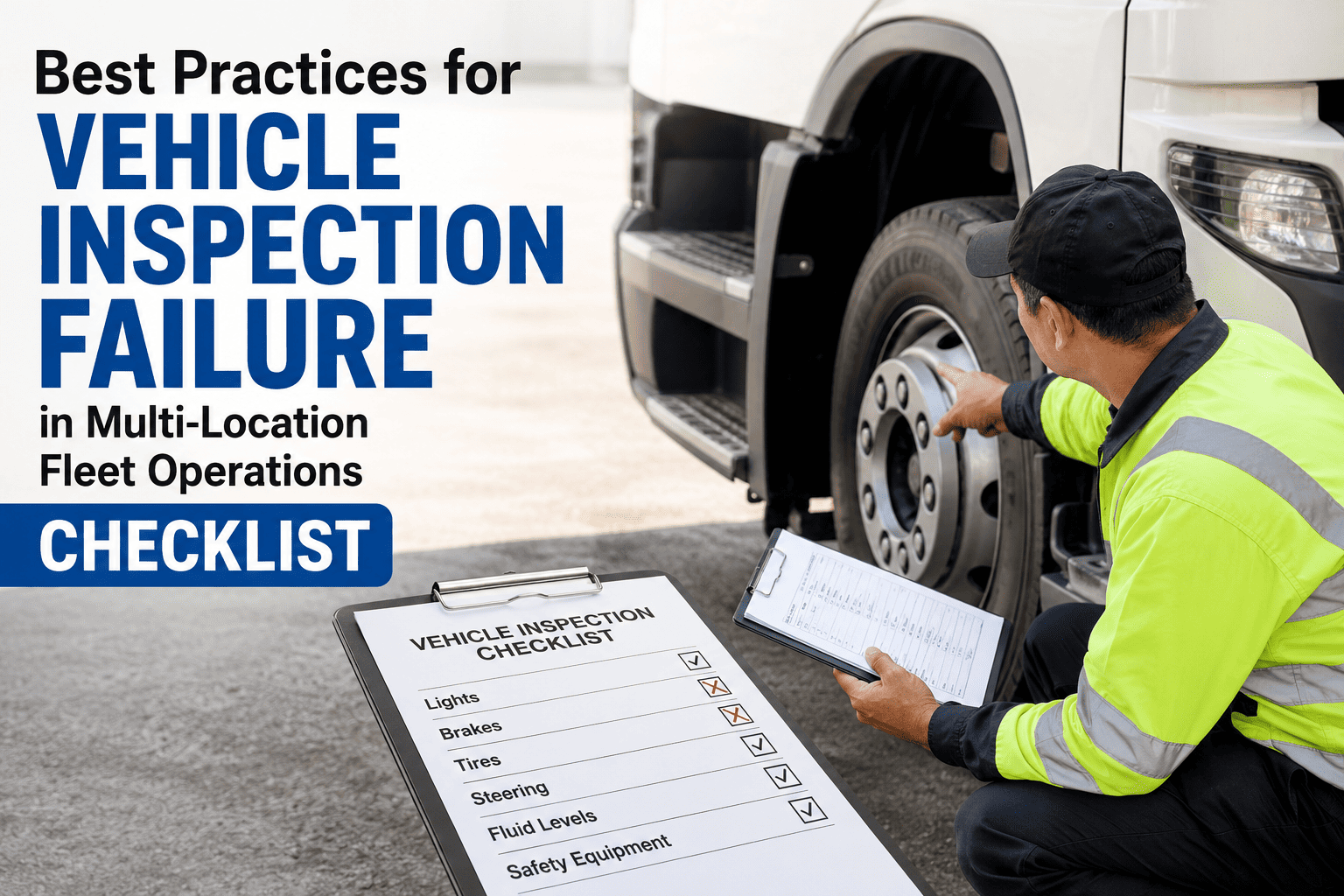
OxMaint's mobile app presents all safety checklist items in a guided format — requiring explicit pass, fail, or observation responses for every item before submission is available. Photo documentation required for any failed item. Driver digital signature on each submission. Fleet-wide safety checklist completion visible on the dashboard in real time — outstanding inspections flagged before vehicles depart.
Defect-to-Work-Order Automation
Any safety checklist item marked as defective automatically generates a prioritized maintenance work order — pre-populated with vehicle, defect description, photo documentation, and severity classification. Vehicle dispatch status updates immediately to "safety defect pending repair." Dispatchers see the status on the dashboard before allocating the vehicle to a route. Zero gap between defect report and maintenance action.
Driver Qualification Document Tracking
OxMaint stores driver qualification document expiration dates — CDL renewal, medical certificate, annual driving record review, and training currency — with configurable advance alerts at 90, 60, and 30 days before expiration. Fleet managers see the complete driver qualification status dashboard before route assignment. No driver with expired documentation dispatched without manager awareness.
Regulatory Document Expiration Monitoring
Vehicle-level regulatory documents — registration, insurance, annual inspection, operating authority — stored in each vehicle's asset record with expiration date tracking. OxMaint generates alerts at configurable lead times before expiration, ensuring renewal actions are taken before the document lapses rather than after it becomes a citation exposure. Fleet-wide document currency visible on one dashboard screen.
FMCSA-Ready Safety Record Retention
All safety inspection records, defect reports, repair certifications, and driver qualification documents are retained in OxMaint indefinitely with full-text search by vehicle, driver, date, or defect type. FMCSA compliance reviews, DOT roadside inspections, insurance investigations, and legal discovery requests that require complete safety documentation records are satisfied in under 60 seconds.
Fleet-Wide Safety KPI Dashboard
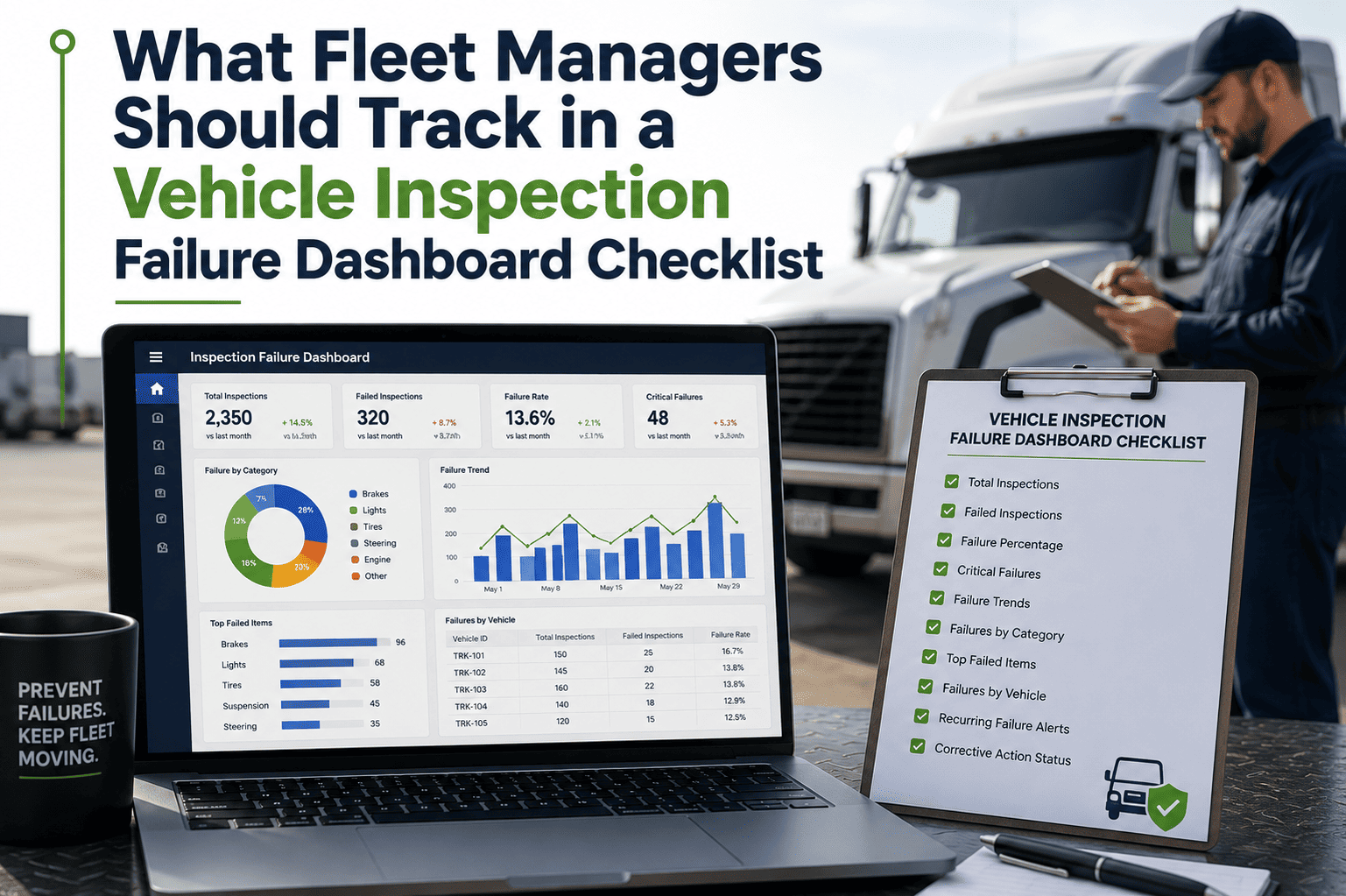
OxMaint tracks the safety KPIs that determine FMCSA safety rating and insurance premium: daily inspection completion rate, out-of-service defect frequency, repair certification timing, driver qualification currency, and PM compliance rate. Corporate operations and safety managers see fleet-wide safety performance without building manual reports from site-level data — at all times, not just at reporting cycles.
Build a Fleet Safety Program That Enforces Consistency Automatically — Free to Start
OxMaint's digital fleet safety checklist system covers all 6 safety dimensions — vehicle mechanical, driver qualification, safety equipment, emergency readiness, regulatory documentation, and behavior monitoring — with real-time compliance dashboards, automatic defect routing, and FMCSA-ready record retention. Free to start. No hardware required.
Fleet Safety Program Maturity: 4 Levels and What Each Achieves
Fleet safety programs exist on a maturity continuum — from reactive incident response to proactive risk elimination. Each maturity level has documented performance outcomes and specific OxMaint capabilities that support the transition to the next level.
$148K
Average employer cost per injury accident prevented by systematic safety programs
One prevented at-fault accident covers 3–5 years of fleet safety software investment for a mid-size fleet operation
34–52%
At-fault accident rate reduction in fleets with complete systematic safety programs
Documented within 24 months of structured safety program deployment — digital checklists, behavior monitoring, and PM compliance combined
15–30%
Insurance premium reduction for carriers with documented systematic safety programs
Insurers reward documented low-incident programs with premium discounts at renewal — OxMaint's records provide the documentation basis
60 sec
Time to retrieve complete safety documentation in OxMaint for FMCSA or legal review
vs. 4–8 hours of manual record assembly — documentation that defends the carrier in regulatory and litigation proceedings
Frequently Asked Questions
What are the FMCSA's safety rating categories — and how does a systematic safety program protect a carrier's rating?
The FMCSA assigns one of three safety ratings to motor carriers: Satisfactory (the best rating, awarded when a compliance review demonstrates the carrier has adequate safety management controls), Conditional (awarded when the compliance review identifies safety management control failures that have not yet resulted in unacceptable crash or violation rates), and Unsatisfactory (awarded when violations indicate that the carrier does not have adequate safety management controls — triggers immediate federal action including potential operations shutdown). The Safety Measurement System (SMS) continuously scores carriers across seven Behavior Analysis and Safety Improvement Categories (BASICs) using roadside inspection data and crash reports. Carriers that exceed FMCSA thresholds in any BASIC category become subject to targeted compliance investigations. A systematic safety program protects a carrier's rating through two mechanisms. First, defect prevention: completing comprehensive vehicle safety checklists before every departure catches the violations that would otherwise appear as roadside inspection findings — each prevented out-of-service event directly improves Vehicle Maintenance BASIC score. Second, documentation quality: complete digital safety records with repair certification documentation demonstrate a systematic safety program — the primary evidence standard in compliance investigations. OxMaint's digital safety system provides both: pre-departure inspection enforcement and complete audit-ready documentation.
Sign up free to start building your safety rating defense documentation from day one.
How does OxMaint track driver qualification document expiration — and what happens when a document is about to expire?
OxMaint's driver qualification tracking stores six key document types with individual expiration dates per driver: CDL expiration date, DOT medical certificate expiration, annual driving record review due date, drug and alcohol testing program enrollment date and last test date, required training completion dates per course, and background check date. Configurable alert thresholds at 90, 60, and 30 days before each document's expiration date generate dashboard alerts visible to fleet managers and compliance coordinators. At 30 days before expiration, OxMaint escalates the alert to "action required" status. When a document expires without renewal, the driver's record flags as "qualification document expired" — visible on the dispatch dashboard before any route assignment. Fleet managers cannot unknowingly dispatch a driver with expired qualification documentation when OxMaint's monitoring is active. For carriers subject to FMCSA's Driver Qualification File requirements (49 CFR 391), the documentation that must be maintained per driver includes all items above — OxMaint's driver module maintains these records in a searchable, exportable format that satisfies FMCSA inspection requirements. The penalty for dispatching a driver without a valid medical certificate is $1,270–$15,840 per violation per day, backdated to when the certificate lapsed.
Book a demo to see OxMaint's driver qualification tracking configured for your fleet's driver roster.
How does a digital safety checklist system reduce fleet insurance premiums — and what documentation do insurers require?
Commercial auto insurers evaluate fleet safety programs primarily through three data categories: FMCSA SMS safety scores (publicly visible at safer.fmcsa.dot.gov), incident history and at-fault accident frequency over a 3-year period, and documented safety management program quality. The third category — program quality documentation — is where digital safety systems create measurable premium advantages over paper-based programs. Insurers that offer fleet safety discount programs typically require evidence of: systematic daily vehicle inspections with documented completion rates (not just policy claiming inspections are performed), a process for routing inspection defects to maintenance repair (with documented repair timing and certification), driver qualification document management with no lapsed documentation, and a formal safety training program with completion tracking. OxMaint's digital safety system generates all of this documentation automatically as a byproduct of daily operations. At renewal, fleet managers can present: DVIR completion rates (typically 94–100% in digitally managed fleets vs. 60–75% in paper programs), average time from defect report to repair certification, driver qualification compliance rate, and PM inspection currency rate. Insurers who see this data from a carrier with below-average SMS scores typically offer 15–20% premium reductions. Carriers with above-average SMS scores and documented systematic programs often qualify for 25–30% discounts. For a $250,000 annual premium on a 25-vehicle fleet, a 20% reduction represents $50,000 annually — 3–5× the annual cost of OxMaint.
Sign up free to start building the insurance qualification documentation your carrier needs.
What safety documentation is required after a commercial vehicle accident — and how does OxMaint support incident response?
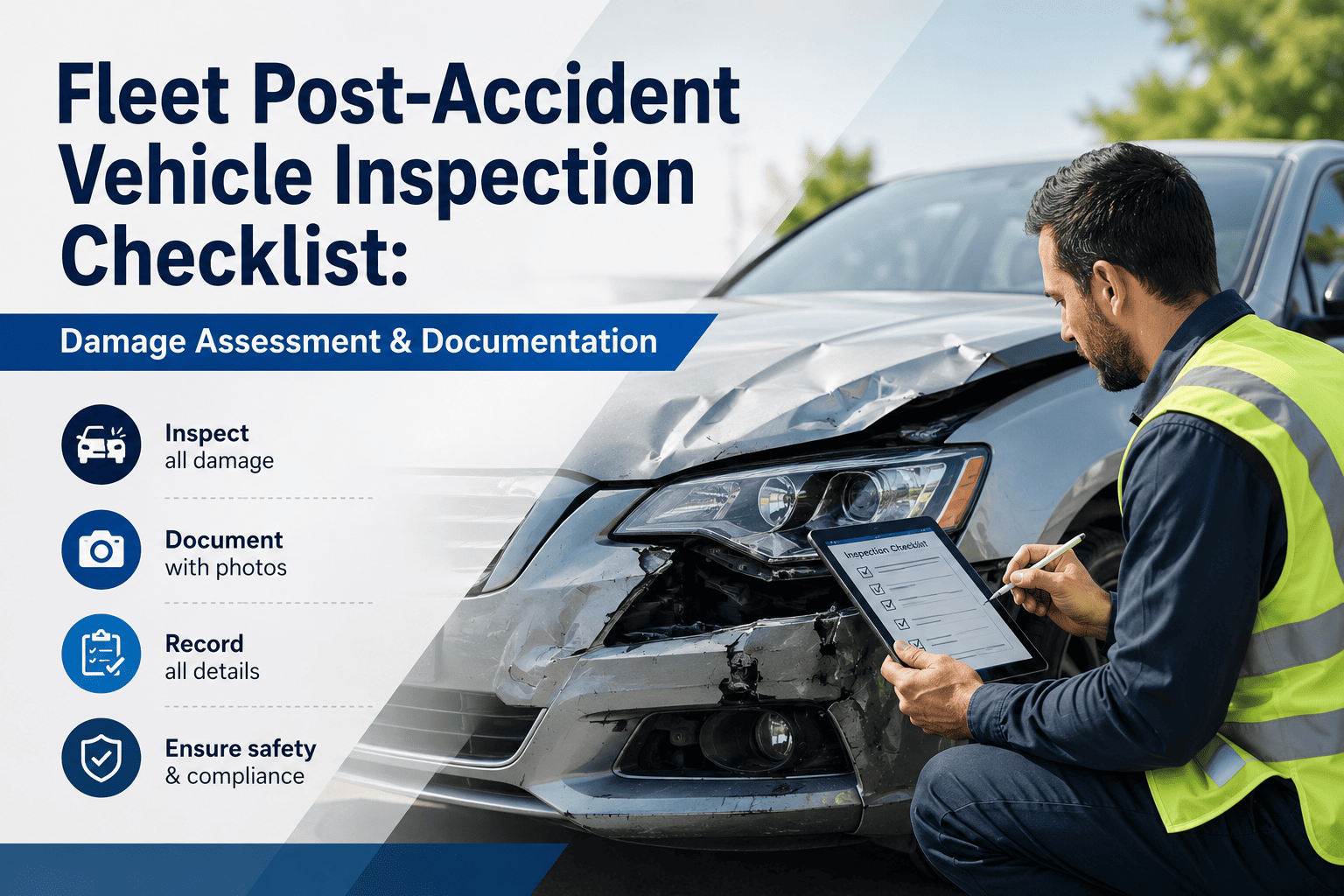
Commercial vehicle accidents generate two distinct documentation requirements: immediate incident documentation (required within hours to days) and historical program documentation (required when the incident triggers regulatory investigation or litigation). Immediate incident documentation requirements include: driver's accident report completed at scene, police report obtained (if applicable), witness information collected, vehicle damage documented with photographs, injury information documented if applicable, and FMCSA accident registry notification for qualifying accidents (involving a fatality, injury, or towing). For hazardous materials incidents, additional PHMSA reporting requirements apply. Historical program documentation requirements — the records that determine whether the carrier can demonstrate it operated a systematic safety program prior to the incident — include: complete DVIR history for the involved vehicle for at least 12 months prior to the incident, PM maintenance records for the involved vehicle for at least 24 months, driver qualification file for the involved driver, training records for the involved driver, and any prior safety checklist defects involving the failed system (if mechanical failure contributed to the incident). OxMaint stores all of this documentation in the vehicle's and driver's permanent records — retrievable in under 60 seconds at the time of need. The difference between a carrier that can demonstrate a systematic safety program and one that cannot is often the difference between a defensible incident and an indefensible one.
Book a demo to see OxMaint's incident documentation architecture for your fleet's risk profile.
87% of Truck Crashes Are Preventable. Systematic Safety Checklists Are Where Prevention Starts.
OxMaint's digital fleet safety checklist system covers all 6 safety dimensions — with guided mobile checklists, automatic defect-to-work-order routing, driver qualification document tracking, regulatory document expiration monitoring, FMCSA-ready retention, and fleet-wide safety KPI dashboards. Free to start. No hardware required. Safety documentation that defends your carrier from day one. Join 1,000+ fleets running systematic safety programs with OxMaint.