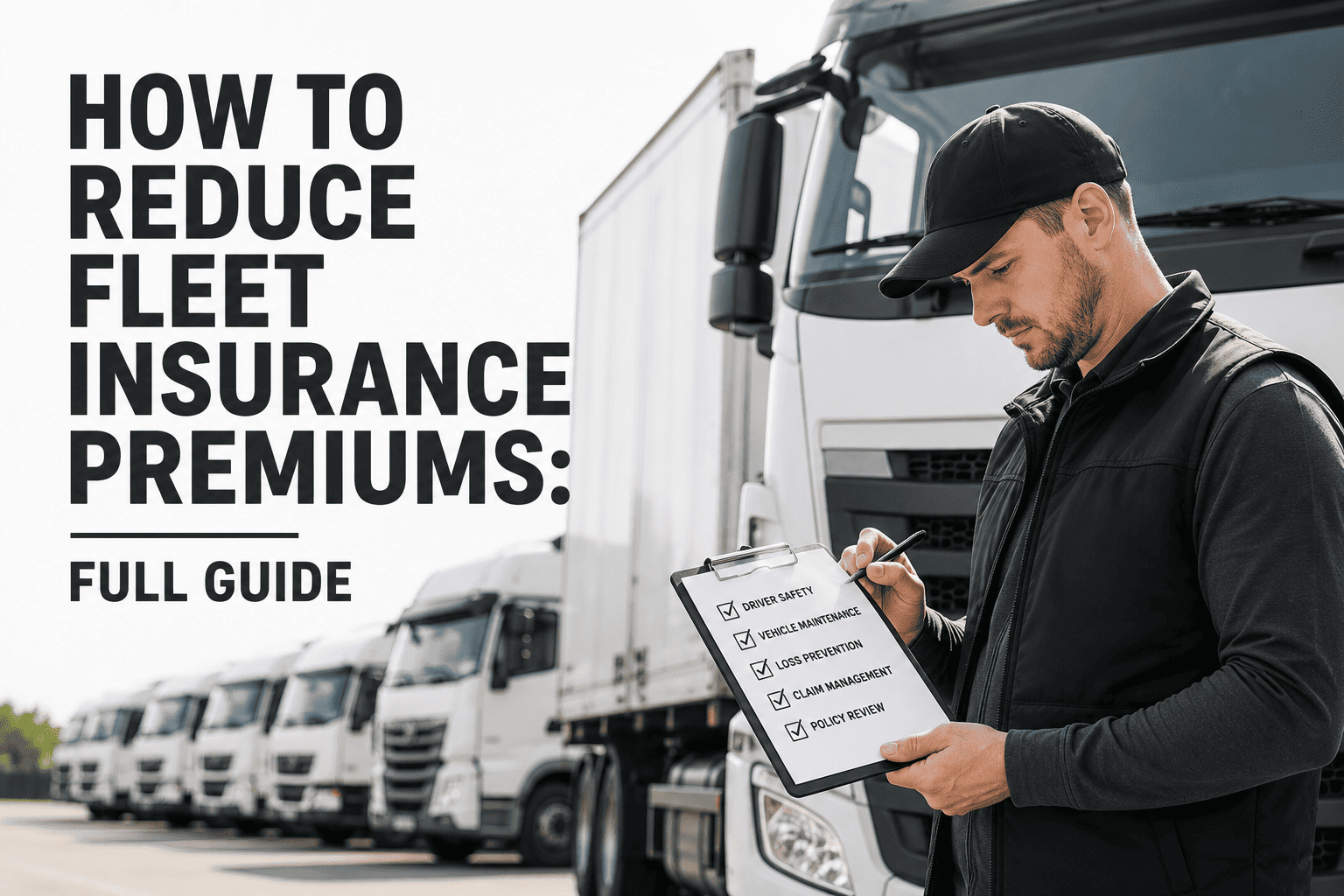
Fleet insurance premiums have climbed 15–25% across most commercial segments over the past three years, yet the premium on your renewal is not a fixed price — it is a risk-based number that underwriters will negotiate when you walk in with documented evidence of maintenance discipline, inspection compliance, and driver Vehicle Condition Report history. A deliberate fleet insurance premium reduction strategy converts the maintenance records you already keep into a measurable discount: fleets that present structured CMMS documentation during renewal routinely see 10–20% reductions. This guide walks through exactly how to reduce fleet insurance cost using a risk-based approach, and how OxMaint automates the evidence packet that makes lower fleet insurance premiums a repeatable outcome. Ready to build your underwriter packet? Start Free Trial and generate it in days, not months.
FLEET INSURANCE PREMIUM STRATEGY
Your maintenance records are worth a 10–20% premium cut. Are you using them?
Most fleets pay renewal increases without contest because they cannot produce the documented safety, DVIR, and PM evidence underwriters need to justify a discount. OxMaint turns your CMMS data into the exact evidence packet that drives fleet insurance cost reduction at renewal.
The average commercial fleet pays $1,200–$2,800 per vehicle annually in insurance. A documented risk-based fleet insurance strategy can recover a significant portion of that spend.
WHY PREMIUMS CLIMB — AND HOW TO PUSH BACK
What drives fleet insurance cost — and what underwriters actually reward
Fleet insurance premiums are calculated from loss history, vehicle type, mileage exposure, and the perceived risk management maturity of the operator. The lever most fleets ignore is that last factor: underwriters discount fleets who can prove continuous inspection compliance, preventive maintenance adherence, and rapid defect resolution.
Worked example: a 120-truck regional fleet spending $264K/yr on insurance
A regional carrier running 120 power units pays roughly $2,200 per unit annually — about $264,000 in premium. By implementing CMMS-driven preventive maintenance scheduling, daily DVIR compliance, and producing a structured underwriter evidence packet at renewal, they documented a 94% PM-on-time rate and 99.2% DVIR completion. Their broker negotiated a 14% reduction: $36,960 saved annually, plus a $14K deductible buy-down. The OxMaint subscription cost less than 8% of the savings.
STEP-BY-STEP TIMELINE
How to reduce fleet insurance premium: a 4-month renewal strategy
Fleet insurance premium management is not something you do the week before renewal. It is a 120-day campaign that builds the documentation, closes compliance gaps, and arms your broker with proof. Here is the timeline that produces measurable fleet insurance savings.
Baseline your maintenance and inspection compliance
Pull 12 months of PM completion records, DVIR logs, and defect-remedy data. Identify the gap between what you think is happening and what is documented. Underwriters discount evidence, not intentions — a CMMS like OxMaint exports this baseline in minutes.
Fix the compliance holes that signal risk to underwriters
Target the three red flags underwriters look for: late preventive maintenance, missing DVIRs, and open defect records without remedy dates. OxMaint's automated PM scheduling and DVIR enforcement close these gaps within 30–45 days and produce audit-ready logs.
Assemble the underwriter evidence packet
Compile a structured packet: PM compliance percentage, average days-to-defect-remedy, DVIR completion rate, inspection pass rate, and asset condition summaries. OxMaint generates these reports automatically — no spreadsheets, no manual aggregation, no gaps an underwriter can challenge.
Deliver the packet to your broker 60 days before renewal
Hand the evidence to your broker early enough for markets to re-rate. Fleets that deliver structured CMMS documentation 60+ days before renewal see the largest fleet premium reduction — underwriters have time to validate and price the risk improvement.
THE MATH OF FLEET INSURANCE COST CONTROL
The fleet insurance cost reduction formula
Underwriters apply risk credits to the base premium based on documented evidence. The more structured your proof, the larger the credit. Here is the simplified formula that determines how much you can save.
| Fleet Size | Avg. Annual Premium | Conservative 12% Cut | Optimized 18% Cut | 5-Year Savings |
|---|---|---|---|---|
| 25 vehicles | $55,000 | $6,600 | $9,900 | $49,500 |
| 50 vehicles | $110,000 | $13,200 | $19,800 | $99,000 |
| 120 vehicles | $264,000 | $31,680 | $47,520 | $237,600 |
| 250 vehicles | $550,000 | $66,000 | $99,000 | $495,000 |
See OxMaint build your underwriter evidence packet — book a 30-minute demo
We'll show you how OxMaint generates the PM compliance, DVIR history, and inspection reports that brokers use to negotiate lower fleet insurance premiums — live on your asset data.
HOW OXMAINT HELPS
OxMaint capabilities that directly lower fleet insurance premium
Every feature below maps to a specific discount factor underwriters evaluate. OxMaint is the AI-powered CMMS that automates the documentation, scheduling, and reporting behind your fleet insurance reduction strategy — so the evidence is always current and audit-ready.
Automated PM Scheduling
AI-driven preventive maintenance scheduling keeps every vehicle on a compliant service interval. Fleets using OxMaint achieve 90%+ on-time PM completion — the threshold underwriters reward with a 3–7% premium credit.
Outcome: 3–7% PM compliance creditDigital DVIR Enforcement
Mobile Driver Vehicle Inspection Reports with mandatory completion and defect-remedy tracking. OxMaint maintains a searchable, time-stamped DVIR history that proves daily compliance — the 2–5% credit most fleets leave on the table.
Outcome: 2–5% DVIR evidence creditOne-Click Evidence Reports
Generate the complete underwriter packet — PM compliance %, DVIR completion, defect closure time, inspection pass rate — in a single export. OxMaint eliminates the manual spreadsheet work that makes most fleets skip the evidence step entirely.
Outcome: Broker-ready packet in minutesPredictive Risk Analytics
AI predictive maintenance flags vehicles trending toward failure before they become roadside breakdowns or claims. Lower breakdown frequency means lower loss history — the single biggest driver of renewal rate increases.
Outcome: Fewer claims, cleaner loss historyFLEET INSURANCE NEGOTIATION CHECKLIST
What to bring to your renewal negotiation
Fleet insurance negotiation is won or lost on documentation. Brokers cannot argue for a discount without proof — and underwriters will not grant one without structured evidence. Use this checklist before every renewal conversation.
Compliance Documentation
- 12-month PM completion report (target: 90%+ on-time)
- DVIR completion log with driver IDs and timestamps
- Defect register showing closure dates and average remedy time
- DOT inspection results and out-of-service summary
Risk Management Proof
- Asset condition summary by vehicle age and mileage
- Breakdown frequency trend (showing decline)
- Spare-parts inventory showing critical-part availability
- Driver safety training and policy acknowledgment records
Negotiation Timing
- Deliver evidence packet 60+ days before renewal date
- Request quotes from at least three markets
- Present CMMS-generated data, not manual spreadsheets
- Offer to share ongoing quarterly compliance updates
REAL RESULT
A 75-truck fleet cut $28K from their annual premium
"We were paying $165,000 a year and getting a 12% increase at renewal. We implemented OxMaint four months before our renewal date, automated our PM scheduling and DVIR process, and generated a compliance evidence packet our broker had never seen before. The result: our renewal came in 17% lower than the prior year — $28,050 in hard savings, plus we qualified for a lower deductible tier. OxMaint paid for itself ten times over in the first renewal."
FREQUENTLY ASKED
Fleet insurance premium reduction FAQ
Can you really negotiate fleet insurance premiums down?
Yes. Fleet insurance premiums are risk-based, not fixed. Underwriters apply discretionary credits of 10–20% when a fleet can produce structured documentation of PM compliance, DVIR completion, inspection pass rates, and rapid defect remedy. The key is delivering this evidence 60+ days before renewal through your broker so markets can re-rate. Book a Demo to see how OxMaint generates this packet automatically.
How much can I reduce fleet insurance cost with CMMS documentation?
Fleets that present CMMS-generated compliance evidence at renewal typically see 10–20% premium reductions. The credits are stackable: 3–7% for 90%+ on-time PM completion, 2–5% for 95%+ DVIR completion, 1–4% for clean DOT inspections, and 1–3% for average defect closure under 48 hours. A 120-vehicle fleet saving 14% recovers roughly $37,000 annually.
What maintenance records do underwriters want to see for a fleet insurance discount?
Underwriters want 12 months of preventive maintenance completion records showing on-time service, daily DVIR logs with driver identification and timestamps, a defect register with closure dates and average remedy time, DOT inspection results, and a breakdown frequency trend. The data must be structured and verifiable — manual spreadsheets are often discounted because they cannot be audited. OxMaint exports all of this in a single report.
When should I start preparing for a fleet insurance renewal negotiation?
Start 120 days before your renewal date. Month one: audit and baseline your compliance data. Month two: close gaps in PM scheduling and DVIR completion. Month three: build the evidence packet. Month four: deliver it to your broker at least 60 days before renewal so underwriters have time to validate and re-rate. Fleets that deliver documentation less than 30 days before renewal rarely see meaningful discounts.
Does predictive maintenance affect fleet insurance premiums?
Yes, indirectly but powerfully. Predictive maintenance reduces unplanned breakdowns and roadside failures, which lowers your claims frequency over time. Loss history is the single biggest factor in renewal pricing — a fleet with fewer claims and fewer out-of-service events presents a lower risk profile. OxMaint's AI predictive maintenance flags vehicles trending toward failure before they become incidents, protecting both uptime and your insurance rate.
Stop leaving 10–20% of your fleet insurance premium on the table
OxMaint automates the PM scheduling, DVIR enforcement, and compliance reporting that underwriters reward with lower rates. Your next renewal is an opportunity — make sure you have the evidence to win it.
Free 14-day trial · No credit card

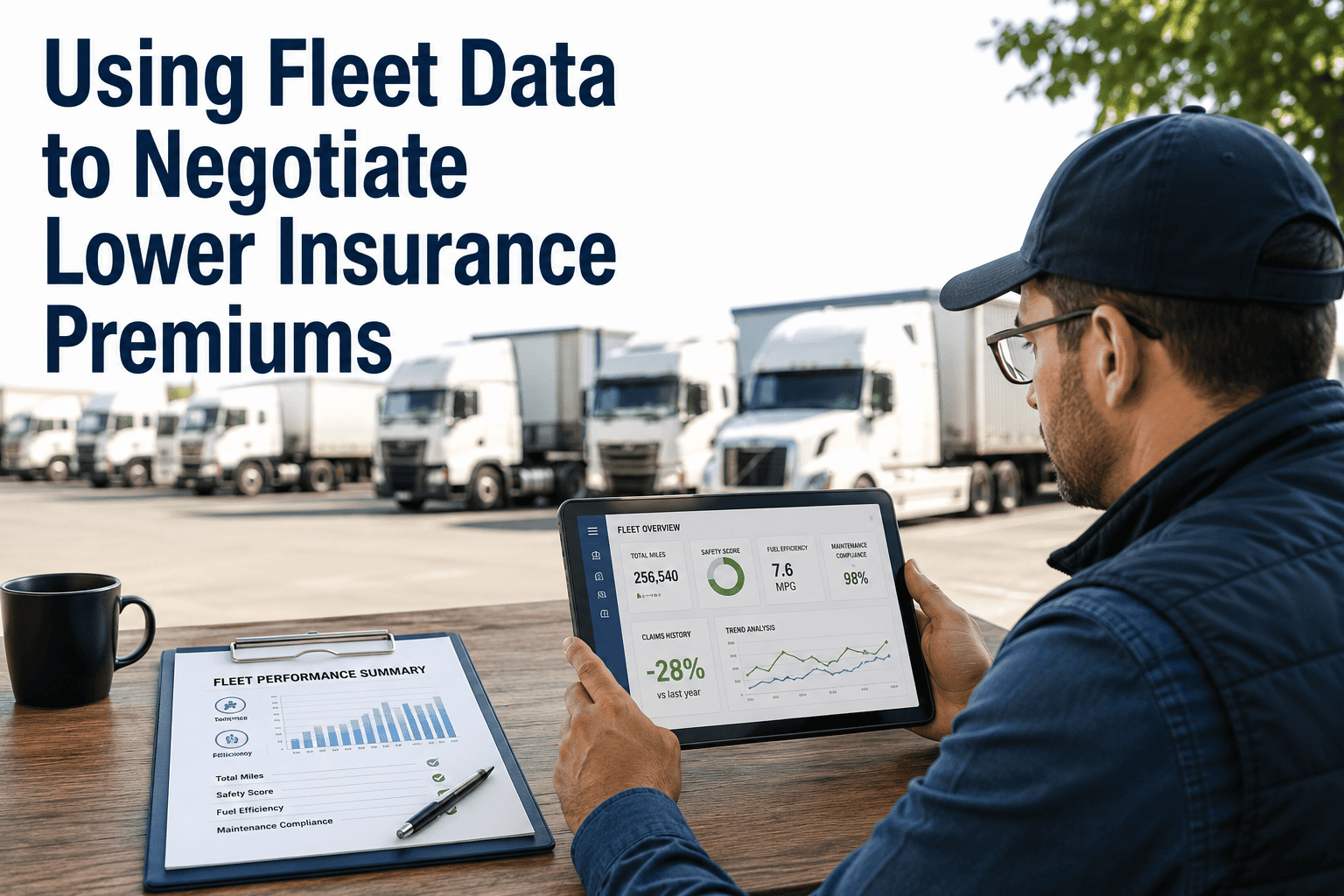
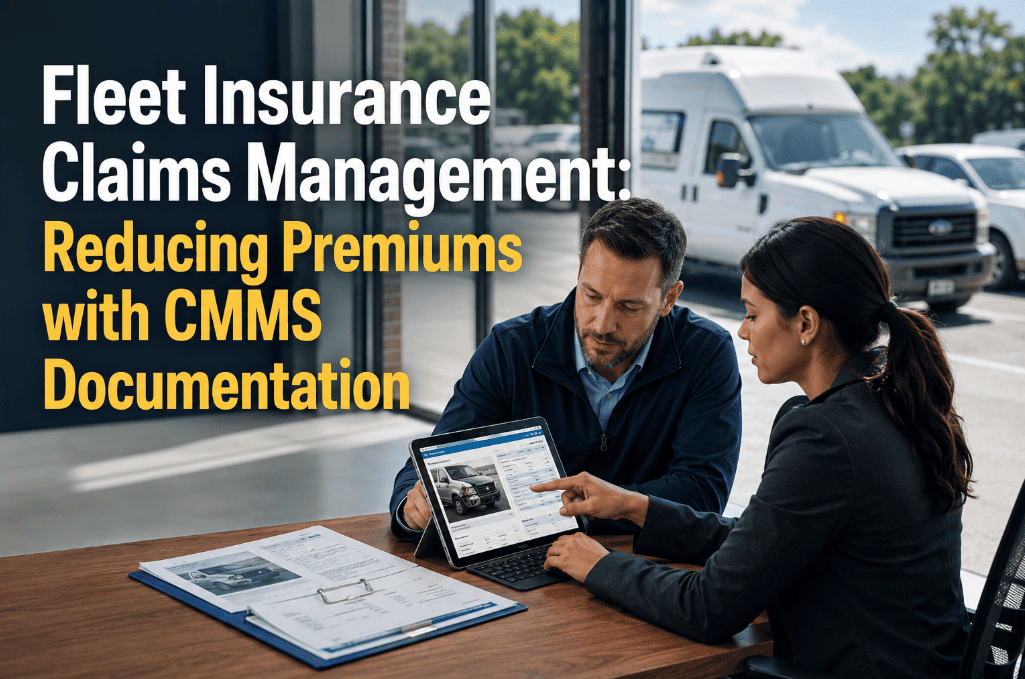


.png)