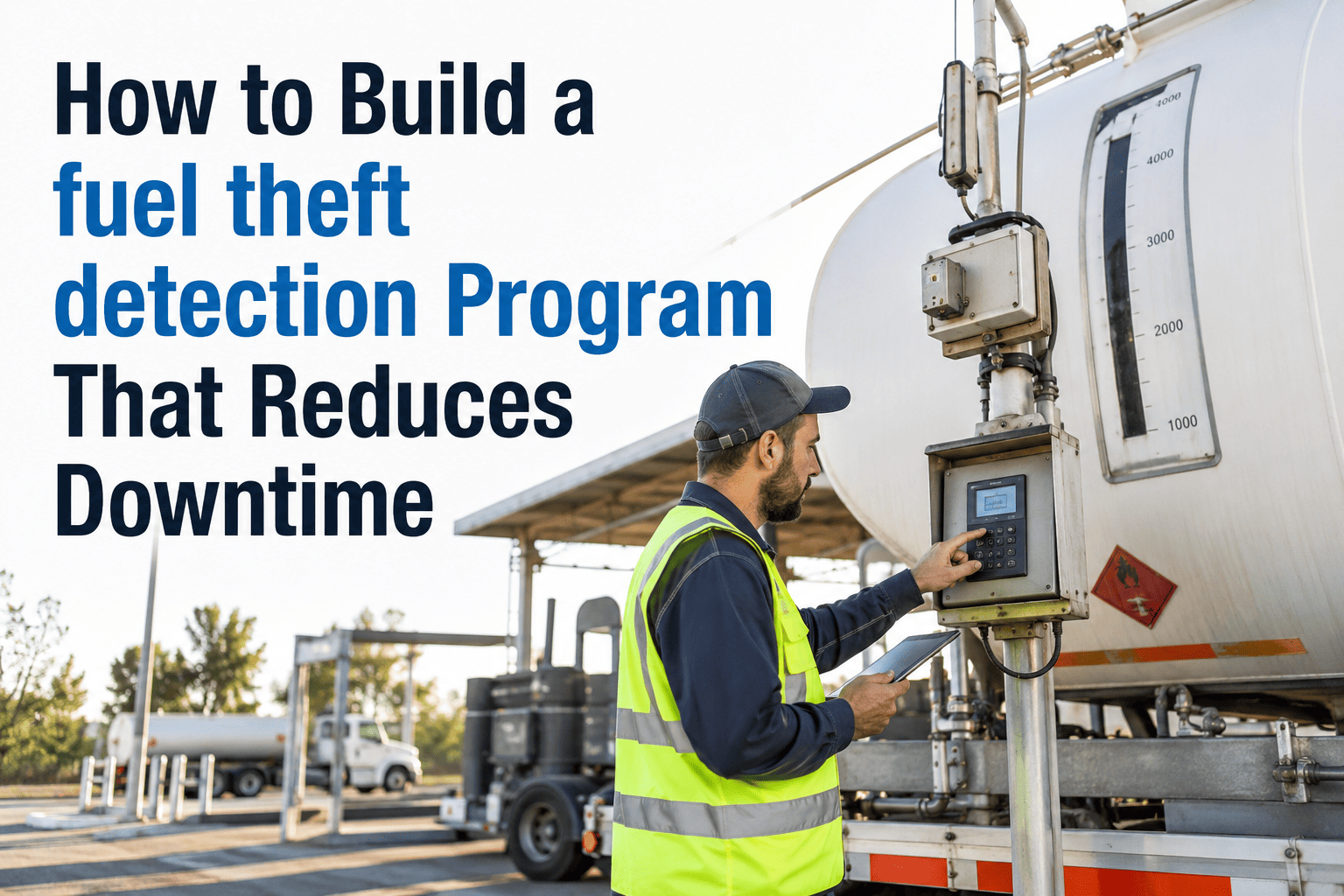
Fuel theft costs fleet operators an estimated $133 billion globally every year — and most of it happens gradually, invisibly, through skimming, siphoning, unauthorized fills, and odometer fraud that no one notices until the losses are already stacked up. For multi-vehicle fleets, the problem compounds fast: a 50-truck operation losing just 5 liters per vehicle per day loses over 90,000 liters annually. The difference between fleets that catch this early and those that don't comes down to one thing — a structured detection program backed by real-time data. OxMaint gives fleet managers the asset tracking, fuel log integration, and anomaly alerting they need to close that gap. Start your free trial on OxMaint or book a 30-minute demo to see the detection workflow in action.
Fuel Management · Fleet Operations · OxMaint CMMS
Build a Fuel Theft Detection Program That Actually Reduces Fleet Downtime
Most fleets detect fuel theft weeks after it starts. OxMaint's real-time fuel monitoring, anomaly alerts, and asset-level tracking give you a step-by-step detection program that catches losses before they become crises.
$133B
Lost globally each year to fuel theft and fraud in fleet operations
30%
Of fleet fuel losses go undetected for more than 60 days without a monitoring system
3–8%
Average fuel budget lost per vehicle per year due to theft, misuse, or unauthorized consumption
72hrs
Typical lag between theft event and detection without automated anomaly alerts
Why Most Fuel Theft Programs Fail Before They Start
01
No Baseline to Compare Against
Fleets that don't track expected fuel consumption per route, vehicle class, and load type have no reference point to identify what's abnormal. Theft hides in plain sight inside normal-looking averages.
02
Manual Logbooks Are Too Easy to Manipulate
Paper fuel logs and spreadsheet entries can be backdated, rounded, or simply left blank. Without system-generated timestamps linked to asset IDs, manual records cannot prove when or where a discrepancy occurred.
03
Alerts Come After the Loss, Not During
End-of-month fuel reconciliation tells you what already happened. Without real-time alerts triggered by fill anomalies, mileage gaps, or after-hours tank access, detection always lags the event by weeks.
04
No Asset-Level Accountability
Fleet-wide fuel reports obscure vehicle-level patterns. Theft on a specific truck, at a specific depot, by a specific shift stays invisible until you break fuel data down to the asset and driver level.
The 6-Step Program: How to Build Fuel Theft Detection That Works
1
Establish Fuel Consumption Baselines Per Asset
Before you can detect theft, you need to define normal. Use OxMaint to log baseline fuel consumption rates for each vehicle by route type, load weight, and seasonal condition. Any fill that deviates more than 10–15% from the baseline for that vehicle class triggers a flagged review.
2
Integrate Fuel Cards with Asset-Level Tracking
Link fuel card transactions directly to vehicle asset records in OxMaint. Every fill logs the vehicle ID, driver ID, location, volume, and timestamp — creating a chain of custody that makes unauthorized fills immediately visible as mismatched records.
3
Configure Anomaly Alert Rules
Set automated alert thresholds in OxMaint for: fills outside designated hours, tank volumes that exceed vehicle tank capacity, consecutive fills within short time windows, and fill locations that don't match the assigned route. Alerts route to the fleet supervisor in real time.
4
Run Weekly Odometer-to-Fuel Reconciliation
Cross-reference odometer readings against fuel consumption and route distance data weekly, not monthly. OxMaint's asset history log tracks every odometer entry against fuel fills — surfacing vehicles where fuel consumption per kilometer is drifting outside the expected band.
5
Assign Inspection Checklists at Refueling Points
OxMaint's mobile inspection tool prompts drivers to complete a structured refueling checklist at each fill event — including tank seal condition, fill nozzle verification, and receipt photo upload. This creates a verifiable record at every touchpoint.
6
Generate Monthly Fuel Audit Reports
Use OxMaint's reporting dashboard to generate per-vehicle, per-depot, and per-driver fuel audit summaries each month. Reports include variance flags, anomaly count trends, and cost-per-kilometer tracking — giving management the data needed to identify chronic loss points.
OxMaint Fuel Theft Detection
Ready to Stop Losing Fuel You Can't Account For?
OxMaint makes it simple to set up asset-level fuel tracking, anomaly alerts, and inspection checklists across your entire fleet — in days, not months.
Theft Methods Fleets Miss Most Often — and How OxMaint Catches Them
Fuel Card Skimming
A driver fills a personal vehicle using a company card at an off-route station.
OxMaint flags fills at locations outside the assigned route corridor and issues an immediate supervisor alert.
Tank Siphoning at Depot
Fuel is removed from a parked vehicle overnight, reducing the tank volume before the next fill.
OxMaint's overnight fuel level tracking detects unexpected drops between last fill and next engine start.
Odometer Rollback
Mileage is understated to make high fuel consumption appear normal relative to distance traveled.
OxMaint's odometer consistency check flags implausible mileage jumps or drops against GPS distance logs.
Duplicate Fill Entries
A fuel receipt is submitted twice under different dates or vehicles in the expense system.
OxMaint cross-references receipt photo timestamps with asset fill logs — duplicate entries fail the match check automatically.
Buddy Fueling
A driver fills a second unauthorized vehicle alongside the assigned fleet vehicle at the same stop.
Fill volume above the vehicle's known tank capacity triggers an automatic exception review in OxMaint.
After-Hours Depot Access
Unauthorized persons access the fuel tank storage at the depot outside of operating hours.
OxMaint's scheduled inspection triggers and depot access logs create a time-verified record of all tank interactions.
Downtime Impact: How Fuel Theft Cascades Into Fleet Failures
Undetected fuel loss
→
Vehicle runs low without scheduled fill
→
Unexpected breakdown mid-route
Breakdown mid-route
→
Emergency roadside recovery dispatched
→
Delivery delay + customer penalty
Inflated fuel costs flagged
→
Budget cut triggers deferred maintenance
→
Accelerated vehicle wear and failures
OxMaint Fuel Detection Features at a Glance
"We had three months of budget overruns we couldn't explain. Within two weeks of setting up OxMaint's fuel anomaly alerts, we identified four separate drivers making off-route fills. We recovered over $18,000 in a single quarter and haven't had an unexplained variance since."
— Fleet Operations Manager, Regional Distribution Company, 140-vehicle fleet
Frequently Asked Questions
How quickly can OxMaint detect a fuel theft event after it happens?
OxMaint triggers real-time alerts for anomalies like off-route fills and over-capacity volumes the moment the transaction is logged. Consumption-based alerts process within 24 hours.
Sign in to configure your alert thresholds.
Does OxMaint integrate with existing fuel card providers?
Yes. OxMaint integrates with major fleet fuel card systems via API, pulling transaction data directly into asset fuel logs without manual entry. Contact us via the
demo booking to confirm your provider's compatibility.
Can OxMaint track fuel usage across multiple depot locations?
Yes. OxMaint supports multi-location fleet operations, with depot-level fuel dashboards and cross-location anomaly reporting in a single view.
What data does OxMaint need to generate a fuel audit report?
OxMaint uses vehicle odometer logs, fuel fill records, route assignments, and driver IDs. Most fleets have this data already — OxMaint structures and automates the comparison layer on top of it.
How long does it take to set up the fuel theft detection program?
Most fleets are fully configured in 3–5 days. Asset profiles, alert thresholds, and inspection checklists are set up during onboarding.
Book a demo to walk through setup for your fleet size.
Stop Fuel Theft Before It Drains Your Fleet Budget
OxMaint gives your fleet a complete, step-by-step detection program — from asset-level fuel logging to real-time anomaly alerts and monthly audit reports. Every liter accounted for.